Ten Approachable Champions for a Focused LoL Climb
Choose a champion whose basic plan you can repeat while learning the map, waves and fights. Garen, Malphite, Amumu, Warwick, Annie, Lux, Ashe, Miss Fortune, Soraka and Nautilus offer understandable starting points across the five roles. They still require judgment; a straightforward kit is not a promise that the champion wins for you.
This selection was reviewed for patch 26.20, using Riot’s matching 16.20.1 champion data. It is aimed at players building fundamentals from Iron through Emerald, with no regional win-rate dataset or statistical tier ranking claimed. The order is by role, not by estimated strength.
Key Takeaways
- Pick one main and a familiar backup before expanding the pool.
- Low execution complexity still leaves positioning, matchup and map decisions to learn.
- Choose by the problem you want to practice, not an unsupported “free LP” promise.
- Ranged champions without a dash make spacing important, even when their damage loop is simple.
- Use current, mode-specific item and Rune recommendations rather than a permanent six-item script.
- Patch sections for Mayhem, Classic or other modes do not automatically describe ranked Summoner’s Rift.
Ability identities and interactions are checked against Riot’s 16.20.1 champion data; patch context follows the 26.20 notes. The learning recommendations are editorial judgments, not claims of a measured best champion.
Compare the Ten Picks by Role
Start with the responsibility you enjoy. A champion that makes one task easier may make another weakness more visible.
| Role | Choices | What becomes easier to understand | What still needs practice |
|---|---|---|---|
| Top | Garen · Malphite | Short trades or a clear teamfight engage | Wave state, spacing and matchup patience |
| Jungle | Amumu · Warwick | A recognizable gank and fight contribution | Clear timing, map reads and whether a lane is actually gankable |
| Mid | Annie · Lux | Stun setup or ranged spell spacing | Mana, last hits, roams and safe positioning |
| Bot | Ashe · Miss Fortune | Attack-based pressure or a clear ultimate angle | Farming, attack movement and surviving threats |
| Support | Soraka · Nautilus | Sustain or a clear engage/peel tool | Health, vision, lane state and teammate follow-up |
Choose one primary pick and one backup from the roles you intend to play, then compare their specific trade-offs in the champion sections.
Top Lane: Garen or Malphite
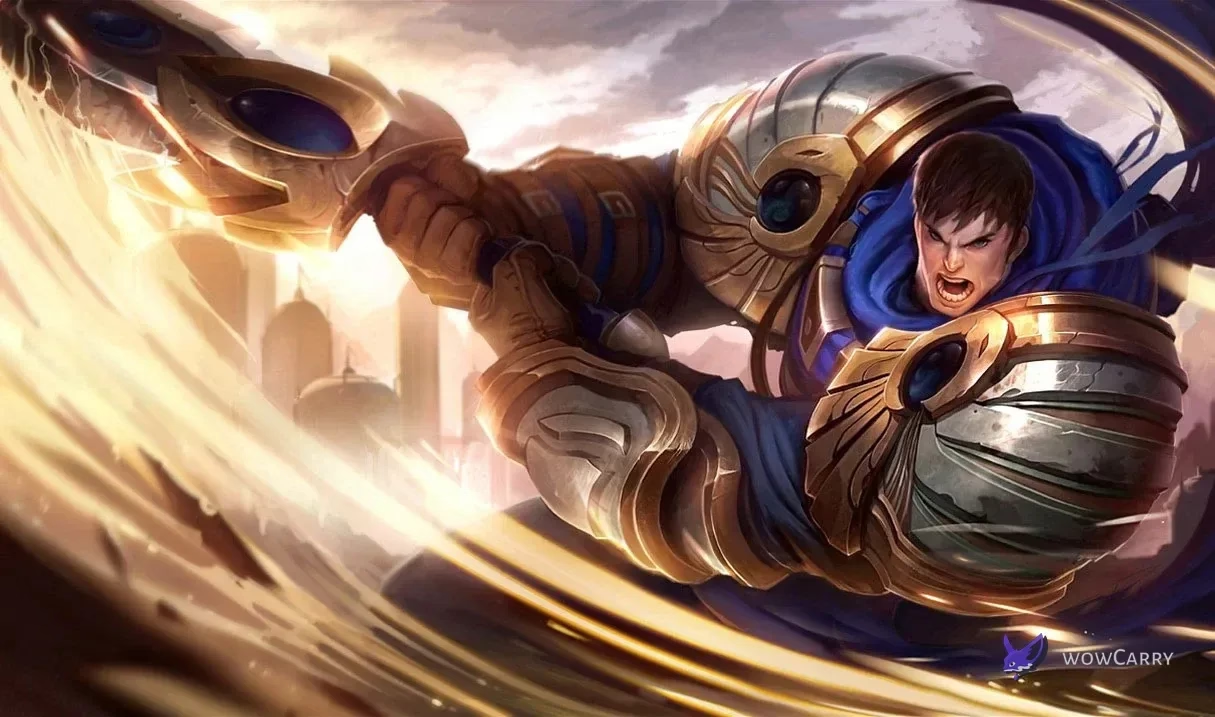
Garen: Learn a Short Trade and a Safe Exit
Decisive Strike supplies movement speed and an empowered silencing attack; Judgment supplies nearby damage. Perseverance rewards finding a safe period without incoming damage. Start by practicing when to trade and when to step away, using Courage deliberately against the dangerous response.
Garen’s weakness as a teaching pick is that a simple sequence can encourage walking forward regardless of wave position. Learn when the opponent can kite or punish the approach rather than assuming the execute solves every trade.
Malphite: Survive Lane and Choose the Engage
Granite Shield and a clear ultimate give Malphite an understandable fight plan. Seismic Shard helps manage spacing, while Unstoppable Force can start a fight or stop a threat. Check whether allies can follow before committing the ultimate.
Do not choose him solely because a guide calls tanks easy. Matchups, mana and the decision to engage or peel still matter, and one strong ultimate does not excuse several avoidable lane deaths.
Jungle: Amumu or Warwick
Amumu: A Clear Engage With a Skillshot Requirement
Bandage Toss pulls Amumu into the target he hits, and Curse of the Sad Mummy provides surrounding control. That makes the intended fight contribution easy to explain, but the opening hook still needs aim and a safe decision about who is behind the target.
Practice the initial clear and look at lane position before ganking. A successful hook into a losing fight remains a bad engage; do not confuse landing a skillshot with choosing the correct fight.
Warwick: Sustain Without Chasing Every Signal
Warwick’s attacks and Jaws of the Beast support sustain, while Blood Hunt highlights opportunities around low-health enemies. Primal Howl provides a defensive and control decision; Infinite Duress is a directional leap that can miss or select an unintended collision.
The learning trap is following every low-health signal across the map. Compare the chase with nearby camps, objectives and the risk of entering territory without support.
Mid Lane: Annie or Lux
Annie: Make the Stun State Part of Your Plan
Disintegrate’s mana refund on a killing hit provides a useful last-hitting tool, while Pyromania makes the next offensive cast’s stun state visible and important. Practice farming without accidentally spending the crowd control you intended to hold.
Annie still needs range awareness and a safe route into a fight. A clear burst sequence does not make every approach possible, and Tibbers is more useful when the engagement and follow-up are deliberate.
Lux: Learn Range and Binding Accuracy
Lux offers ranged damage, Light Binding, an area slow and a shield. She is a good learning option if you enjoy deliberate spell placement and spacing. Light Binding can affect up to two targets, but it is still a skillshot rather than guaranteed control.
Keep a retreat route and avoid spending every spell just because an opponent is visible. Lux has no ordinary dash to repair a reckless forward position.
Bot Lane: Ashe or Miss Fortune
Both picks have readable basic plans and important positioning costs. Learn to move between attacks and track threats instead of treating the role as standing still until damage arrives.
Ashe: Add Information to an Attack-Based Plan
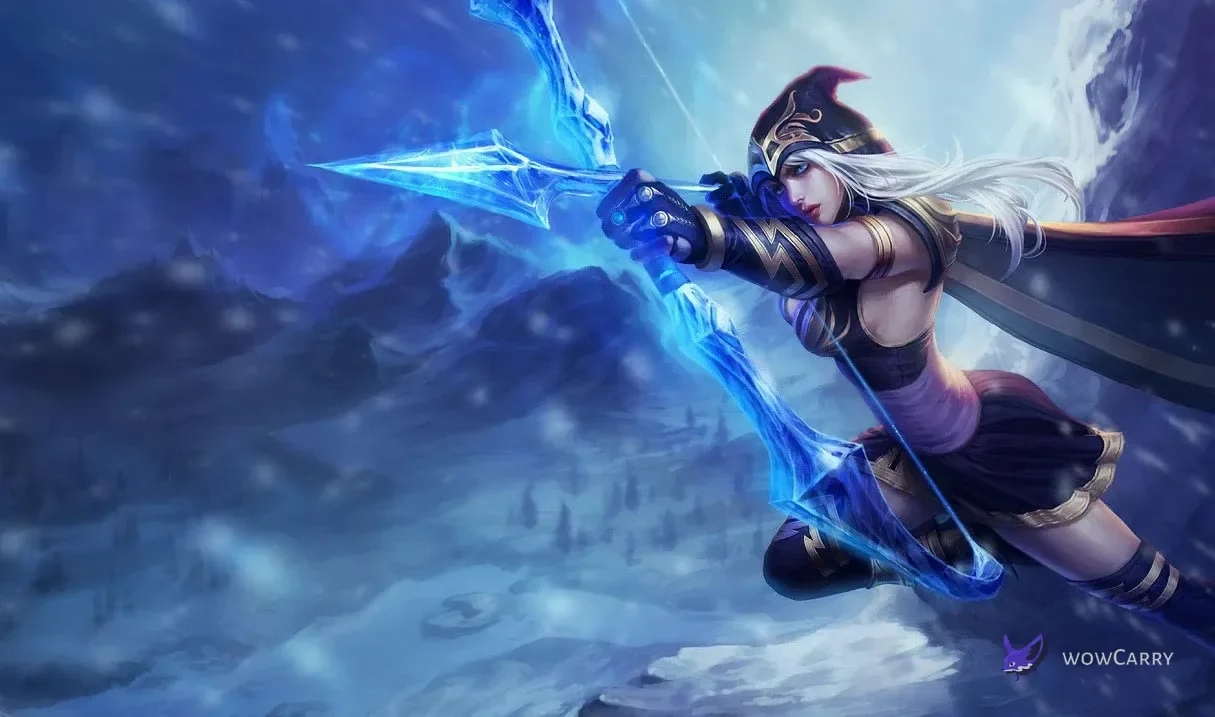
Frost Shot slows targets, Volley provides a clear ranged tool, and Hawkshot can scout the map. Enchanted Crystal Arrow gives a long-range engage option. Practice using Hawkshot before entering uncertain space and moving between attacks during a chase or retreat.
Patch 26.20 reduced Ashe’s attack-damage growth from 3.5 to 3. She is included here for utility and repeatable learning goals, rather than a claim of current statistical dominance. A long-distance arrow is not always the best arrow. A short defensive use can protect a decisive fight, especially when a threat reaches your position.
Miss Fortune: Position for Bullet Time
Double Up rewards reading target alignment, while Bullet Time creates an obvious teamfight opportunity. Find a safe angle and account for enemy interruption before beginning the channel.
Learn normal farming and attack movement too. Depending on the ultimate to compensate for poor lane decisions makes the pick much less forgiving.
Support: Soraka or Nautilus
Soraka: Manage Your Own Health While Supporting
Astral Infusion spends Soraka’s health to heal an ally, while landing Starcall helps her recover. That creates a clear resource lesson: helping a teammate should not repeatedly place you in lethal danger. Equinox also gives a positioning and timing tool beyond healing.
Watch the map and your own escape space. Running toward every injured teammate is not automatically safe simply because Salvation increases movement speed in that direction.
Nautilus: Choose the Hook and the Follow-Up
Dredge Line is a skillshot that can pull against an enemy or terrain, while the first basic attack on a target briefly roots it. Depth Charge supplies a targeted engage or protection option. Practice whether your lane partner can actually follow before using the hook.
Keeping control available to stop a diver can be better than initiating. Engaging is only one way to contribute; learning to peel makes a support pool more flexible.
Items, Runes and a Useful Practice Goal
Start with the current client’s recommendations for the champion and mode, then understand what you are changing for the matchup. Read whether the build needs damage, survival, haste, mana or utility. This guide removes older unsupported “fastest damage” item orders rather than presenting one purchase sequence as optimal in every match.
Check the relevant section of patch notes. For example, a Garen change in a rotating-mode section should not be treated as a Summoner’s Rift buff. Compare advice only when the patch, role, mode and intended playstyle match.
For LP and ladder mechanics, use our 2026 ranked guide. If a repeated decision remains hard to identify, compare coaching options with a specific replay and learning question.
FAQ
Are these the ten highest-win-rate champions?
No. They are editorial learning picks chosen for understandable plans and useful fundamentals. No region, bracket sample or win-rate dataset is used to claim a statistical top ten.
Which should I choose first?
Choose a role you enjoy and one champion whose basic plan makes sense to you. Read its specific weakness before committing, then learn a familiar backup for situations where your first choice is unavailable.
Does a simple kit guarantee an easy climb?
No. Wave decisions, positioning, map awareness, teamwork and consistency still decide games. A simpler execution pattern can leave more attention for learning those skills.
Should I copy one build every game?
Use current recommendations as a starting point and understand matchup changes. A fixed item order without patch, mode or situation context is not a reliable universal best build.
Why is a champion with a skillshot on this list?
Approachable does not mean having no skillshots. Amumu, Lux and Nautilus have clear purposes, but their key abilities still require accuracy and a sensible decision about when to commit.
What patch was the selection reviewed for?
Patch 26.20, with Riot’s corresponding 16.20.1 champion data. That review verifies the described kits, not a claim of tested live win rates or a permanent tier ranking.
Maintained by WowCarry's editorial desk. AI-assisted source research; no first-hand gameplay testing is claimed. Last reviewed 2026-10-18. Selection reviewed against Riot 16.20.1 ability data. Recommendations are explicitly learning criteria, with no unsupported win-rate ranking or universal item order.