Feral Druid Tank Guide - WoW SoD
Everything you need to play Feral Druid Tank in WoW Season of Discovery Phase 2 — runes, stats, BiS gear from Gnomeregan, rotation, and consumables for the level 40 tier.
By:
John Langan
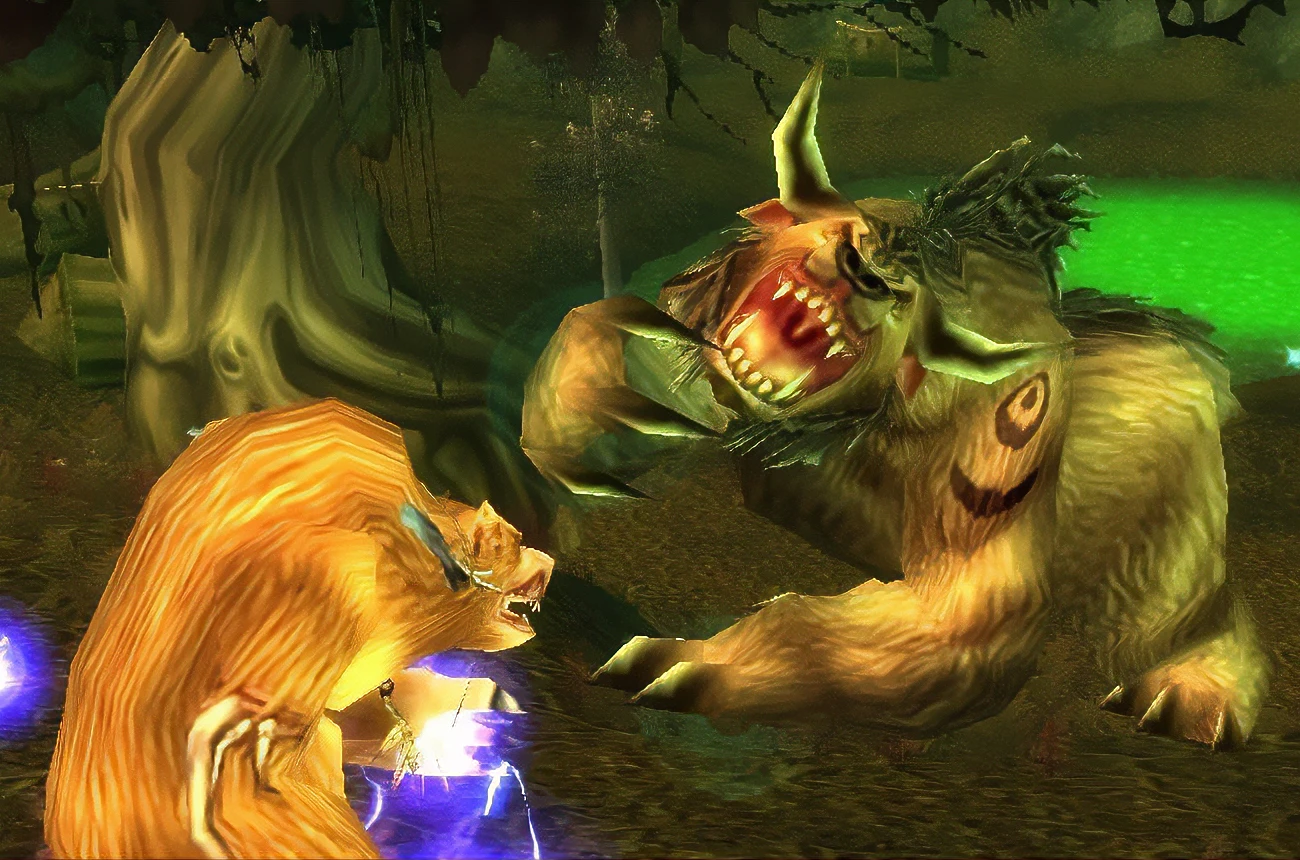
The sections below cover each element of the Feral Druid Tank kit as it stood in Phase 2.
The Season of Discovery's Rune Engraving system transformed what was historically a DPS spec into a credible main tank. Before runes arrived, Feral Druids lacked the mitigation toolkit to hold their own in Classic tanking — that changed the moment Survival of the Fittest and Lacerate became available. By Phase 2 and the Gnomeregan raid tier, a well-geared Feral Tank could hold aggro reliably and survive the encounters the phase demanded.
The strengths of the spec centred on gear scaling, hybrid utility, and out-of-combat value. No other tank in the game could drop a combat resurrection mid-fight or funnel mana to a healer between pulls. Bear Form's armour multiplier meant leather gear punched above its weight class, and the Feral tree's raw damage output made threat largely self-sustaining once the rotation clicked.
The weaknesses were equally clear. Defensive cooldowns were thin compared to a Warrior's Shield Wall or a Paladin's Divine Shield. AoE threat required careful cooldown management and was never as effortless as it was for classes with native cleave taunts. PvE itemisation in Classic favoured mail and plate wearers, so finding leather with the right stat spread meant leaning on crafted pieces and reputation rewards.
⚠️ Warning: Feral Druid Tank was viable in SoD Phase 2 but required a co-operative group that understood the spec's limitations. Pugging as a Feral Tank in Gnomeregan without a communicative healer significantly increased the difficulty of smoothing over the gaps in your defensive toolkit.
Feral Druid tanking in SoD Phase 2 revolved around maintaining Lacerate stacks, spending Rage on Mangle, and keeping Swipe on cooldown for multi-target pulls. The priority on a single target was straightforward: apply Lacerate to five stacks, refresh Mangle on cooldown, and use Swipe as a Rage dump when both are on cooldown.
Phase 2 added two meaningful tools to this rotation. Survival Instincts provided a short-window EHP spike comparable in feel (if not in magnitude) to a Warrior's Last Stand, and a buffed Berserk gave a burst window for dramatically improved AoE threat output. Both were used reactively — Survival Instincts when healers needed breathing room, Berserk when multiple targets needed snapping to the bear quickly.
Skull Bash filled the interrupt role that Bear Form previously lacked entirely. In Gnomeregan especially, where caster mobs demanded interrupts, having a native Bear-form interrupt rather than shifting to Cat to use Kick was a genuine quality-of-life upgrade for both the tank and the group.
✏️ Tip: Maintain Lacerate at five stacks before spending Rage elsewhere. Dropping stacks mid-fight costs threat in a way that is difficult to recover from — especially on a single-tank encounter where you have no co-tank to bridge the gap.
At level 40, the talent tree investment sits almost entirely in Feral Combat. Talents that increase Bear Form armour, reduce the cooldown on Feral Charge, and amplify Mangle's damage are non-negotiable. Balance and Restoration picks are situational at best — the spec functioned as a pure Feral build throughout Phase 2.
Feral Druids prioritise Hit Chance above all other secondary stats, since missed attacks generate no threat and no Rage. Haste follows, accelerating the auto-attack swing timer that feeds Rage generation. Crit Chance comes third, then Strength for flat attack power, Stamina for health, and Agility last for its modest armour and crit contribution. Understanding the interplay between threat stats and survivability stats is essential: a dead tank generates no threat, but a tank who never generates enough Rage to Lacerate will still wipe the group.
The three cornerstone runes for Feral Tank were Survival of the Fittest (damage reduction + Crit Immunity), Lacerate (stacking bleed for sustained single-target threat), and Skull Bash (bear-form interrupt). Gear slot limitations meant not every rune combination was available simultaneously, so players made deliberate trade-offs based on the encounter. For exact rune locations and unlock methods, see WowCarry's full Druid rune location guide.
Druids in WoW Classic had no race flexibility — faction locked the choice entirely. Alliance players were restricted to Night Elves, whose racial toolkit offered little direct tanking benefit. The Quickness passive provided a small dodge chance, but it was not a primary reason to evaluate the spec.
Horde Druids played Tauren exclusively, and this was the materially stronger tanking option. The Endurance racial increased base Health by five percent, a flat survivability bonus that scaled with gear and was relevant from the first pull to the last boss of Gnomeregan.
Three professions stood out for Feral Tank Druids in Phase 2. Herbalism provided consistent gold income to fund consumables without draining raid reserves. Engineering offered exclusive gadgets and explosives with genuine PvE utility, including items that supplemented the tank's limited defensive options. Leatherworking allowed self-crafting of BiS or near-BiS leather pieces that were otherwise unavailable through drops or reputation, making it the strongest throughput choice for a tank focused purely on raid performance.
📌 Common mistake: Skipping Leatherworking in favour of two gathering professions is an easy gold-making decision but leaves Phase 2 BiS slots unfilled. The crafted Leatherworking pieces — particularly the helm — were among the best available at the level 40 cap and could not be replaced by drops alone.
Consumable preparation separated reliable tanks from inconsistent ones in SoD Phase 2. The core toolkit included Elixir of Ogre's Strength for attack power and threat, Mighty Troll's Blood Potion for health regeneration between pulls, and Elixir of Fortitude as a flat health buffer. For encounters with heavy magic damage, Elixir of Greater Defense and Magic Resistance Potion replaced or supplemented the standard set.
The Phase 2 BiS loadout for Feral Druid Tank at the level 40 cap draws from Gnomeregan, Blood Moon PvP rewards, Warsong Gulch reputation, and Leatherworking crafts. Where two options appear, the first is preferred for DPS and threat; the second for raw EHP.
| Slot | Item | Source |
|---|---|---|
| Helm | Glowing Gneuro-Linked Cowl | Leatherworking |
| Neck | Gnomeregan Peace Officer's Torque | Mekgineer Thermaplugg in Gnomeregan |
| Shoulders | Fleshhide Shoulders | Glutton in Razorfen Downs |
| Back | Drape of Dismantling (DPS) / Coagulated Cloak (EHP) | Gnomeregan / Blood Moon PvP in Stranglethorn Vale |
| Chest | Insulated Chestguard | Power Depleted Chest in Gnomeregan |
| Wrists | Forest Stalker's Bracers | Warsong Gulch Exalted |
| Hands | Machinist's Gloves / Void-Touched Leather Gloves | Gnomeregan / Leatherworking |
| Waist | Skullduggery Waistband | Grubbis in Gnomeregan |
| Legs | Insulated Legguards | Power Depleted Legs in Gnomeregan |
| Feet | Insulated Workboots | Power Depleted Boots in Gnomeregan |
| Rings | Hypercharged Gear of Devastation (DPS) / Talvash's Brilliant Gold Ring (EHP) | Gnomeregan / Sparklematic 5200 |
| Trinkets | Gyromatic Experiment 420b (DPS) / Wirdal's Hardened Core (EHP) | Mekgineer Thermaplugg in Gnomeregan |
| Weapons | Automatic Crowd Pummeler / Bloodbark Crusher / Fist of the Wild | Gnomeregan / Blood Moon / Blackfathom Deeps |
| Idol | Mind-Expanding Mushroom | Lorgus Jett in Blackfathom Deeps |
Players farming Gnomeregan progression alongside PvP content in Stranglethorn Vale found the two reward tracks complemented each other — the DPS-oriented cloak and weapon from Blood Moon filled gaps that purely raid-loot lists could not.
Feral Druid Tank in Season of Discovery Phase 2 was a spec that rewarded preparation and player skill in equal measure. The Rune Engraving system closed the gap between the spec's Classic-era limitations and the demands of a serious raid environment, but it did not eliminate the need for smart consumable usage, an informed talent build, and a group willing to work with the spec's AoE threat constraints. For players who invested in the role, it offered something no other tank could — the utility of a hybrid class with the aggro-holding capability of a dedicated tank.
SoD concluded with Phase 8 in April 2025, making this guide a historical record of what Phase 2 Feral Tanking looked like at its peak. For players interested in WowCarry's current service offerings, see WowCarry's SoD service catalogue.
Yes. With the Survival of the Fittest and Lacerate runes equipped, a Feral Druid could hold the main tank role in Gnomeregan without difficulty. The spec's AoE threat limitations required awareness but were manageable with Berserk and Swipe on cooldown.
Hit Chance was the highest priority so that attacks landed and generated Rage. Haste followed for swing timer acceleration, then Crit Chance, Strength, Stamina, and Agility in that order.
Survival of the Fittest provided the critical strike immunity and damage reduction that made the spec tankable. Lacerate enabled sustained single-target threat without requiring constant Rage spikes. Skull Bash gave Bear Form a native interrupt, removing the need to shift to Cat mid-fight.
Tauren was the stronger tanking choice. The Endurance racial added five percent base Health, which scaled with gear and provided a consistent EHP advantage. Night Elf's Quickness offered a small dodge bonus but was a less impactful tanking racial overall.
Leatherworking was the strongest choice for raid performance, enabling access to crafted BiS pieces including the Glowing Gneuro-Linked Cowl. Engineering provided useful utility gadgets, and Herbalism supported gold income for consumable funding.
The standard set included Elixir of Ogre's Strength, Mighty Troll's Blood Potion, and Elixir of Fortitude. Encounters with heavy magic damage called for Elixir of Greater Defense and Magic Resistance Potion in place of or alongside the standard stack.
The majority of Phase 2 BiS came from Gnomeregan boss drops and the Power Depleted token system within the instance. Blood Moon PvP in Stranglethorn Vale provided strong DPS-oriented alternatives, Warsong Gulch Exalted rewarded the best wrists in the phase, and Leatherworking covered the helm slot.
SoD entered maintenance mode following Phase 8 (Scarlet Enclave) in April 2025. No new phases are planned. The game remains accessible for players who want to experience the prior content, including Phase 2 at the level 40 cap.
Last reviewed 2026-06-18 against Phase 8 (Scarlet Enclave) — Maintained by WowCarry's WoW Classic team.