Start With a Character That Works, Then Expand Your Goals
For a first Diablo IV character, prioritize a campaign you want to play, one reliable damage skill, enough resources to keep using it, and defenses that let you survive mistakes. You can learn crafting and harder activities as they become relevant.
Updated October 25, 2026: this guide uses the live 3.0-era progression systems and Season of Hell’s Legacy. The character level cap is now 70, with up to 12 Torment difficulties. Instructions built around World Tier III/IV and a level-100 character cap belong to older versions.
Make These Choices Before You Commit to a Character
Seasonal or Eternal?
Choose Seasonal if you want the current season’s progression and rewards. Choose Eternal if you prefer continuing a persistent character without starting its seasonal progression again. Both support the core game and campaigns you own; expansion ownership and realm choice are separate decisions.
If friends are the reason you are starting, agree on the same realm and character mode before creating your characters. For learning, a standard character is the practical choice; Hardcore adds permanent character loss on death.
Which Campaign Should You Start?
For the story, play the campaigns in narrative order: the original Diablo IV campaign, Vessel of Hatred, then Lord of Hatred. Only choose a later starting point if you are comfortable skipping earlier story.
Blizzard’s current progression overview explains the available campaign starts and ownership requirements. Lord of Hatred’s campaign requires that expansion; its completed-story start becomes available after finishing it. Read any skip confirmation carefully before accepting it.
Which Class?
Choose from the classes available on your account by the combat you enjoy: attacking up close, fighting at range, managing summons, or moving frequently between attacks. A build’s headline damage is less useful if you dislike its controls.
If you follow a build guide, use its leveling version for the live patch. An endgame setup may depend on an item, resource engine or unlocked skill variant you do not have yet. Missing one required piece can make an otherwise strong build feel broken.
Build a Small, Reliable Combat Loop
The redesigned skill trees offer active-skill branches and variants. Read the tags on the version you actually select: a variant can change how a skill fits your gear. Do not copy an old passive-tree diagram into the current system.
When choosing early skills and upgrades, answer three practical questions:
- What deals most of my damage? Concentrate support on a main attack instead of spreading your investment across several unrelated attacks.
- What lets me keep attacking? Check its resource cost, your generation and any conditions needed to restore resources. A skill that empties your bar after a few casts needs support, not just a larger damage number.
- What gets me out of trouble? Keep a defensive or movement option available for dangerous attacks. Learn which button helps before a boss forces the decision.
After changing an important skill or item, fight a few ordinary packs before increasing difficulty. Check whether the new setup still attacks consistently and survives. Change one major part at a time so you can identify what improved or stopped working.
Choose Difficulty by Results, Not Pride
Start at a difficulty where ordinary enemies die comfortably and you can recover from mistakes. Try a higher setting when your damage and defenses both feel dependable. If fights become slow or you repeatedly die, return to a comfortable setting and fix the cause.
The live Season of Hell’s Legacy notes unlock Expert and Penitent after the Prologue. Unlocking a setting means it is available, rather than recommended for every new character.
Toughness summarizes your defenses. Blizzard’s defense-system explanation describes its per-damage-type breakdown and the recommended Toughness shown when selecting Torment difficulty. Inspect the breakdown when one type of damage is causing trouble. Use it alongside actual survival, your defensive skills and positioning; it is not a promise that every boss attack is safe.
Evaluate Gear Before You Salvage or Spend Materials
- Check compatibility. Does the item support the skill tags and playstyle you are using? An impressive bonus to an unused skill is not your damage upgrade.
- Check the trade. Compare the weapon, useful affixes, defenses and any power you would lose. A better-looking item can break the interaction keeping your build running.
- Check its Codex value. Salvaging a Legendary can store or improve its Aspect in the Codex of Power. Those learned powers can be imprinted again at the Occultist, as established by the Codex overhaul. Read the upgrade indicator before discarding a useful find.
- Spend for the next useful step. Improve an item that solves a real problem. Save repeated expensive rerolls for gear you expect to keep, rather than chasing a perfect roll on every leveling replacement.
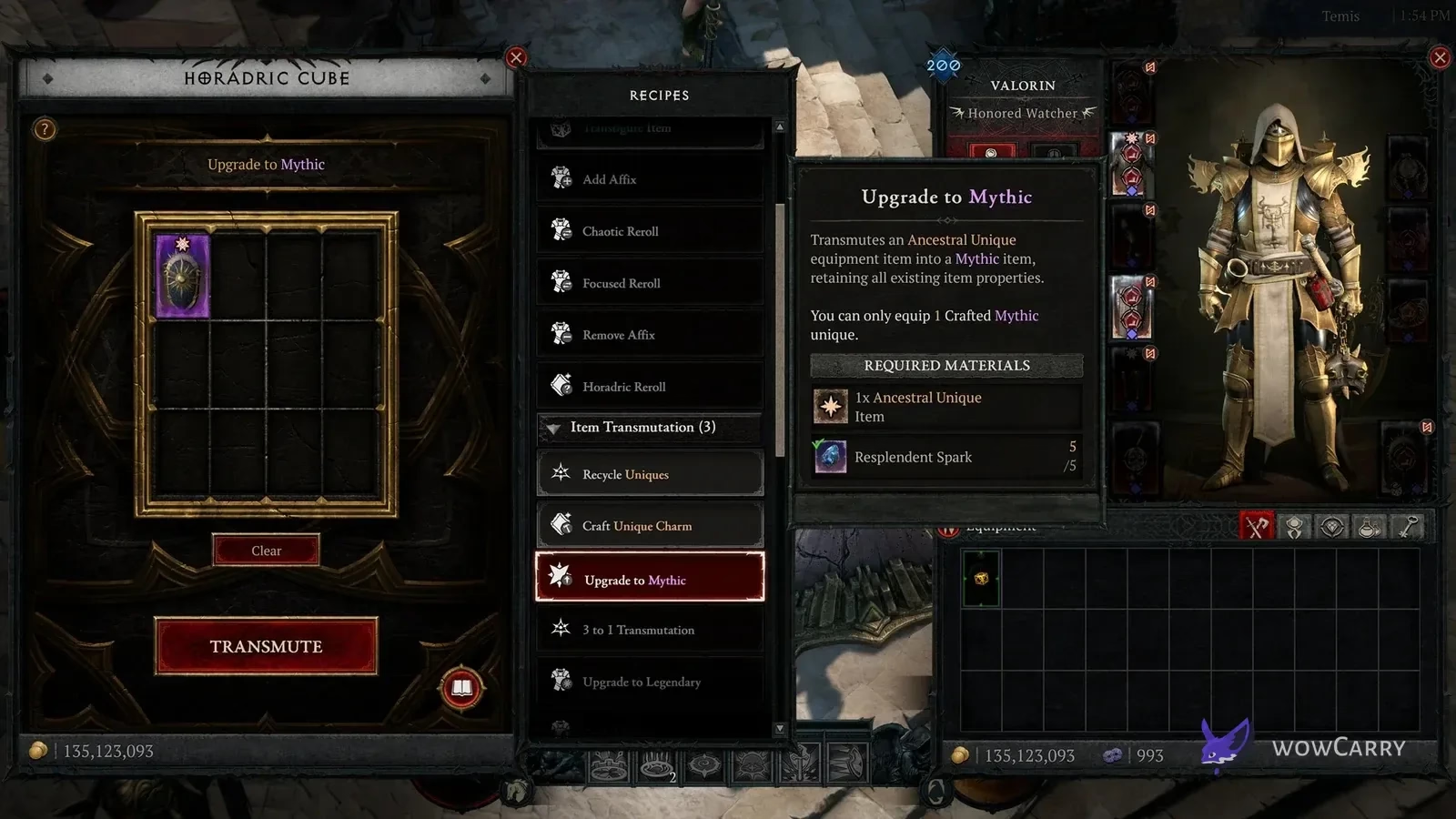
If you own Lord of Hatred and use Horadric Cube crafting, lower-rarity items can also be crafting bases. Avoid a blanket “destroy every non-Legendary” rule when following a recipe that needs one. Equally, keep bases for a defined purpose instead of filling your stash with speculative projects.
The Loot Filter is under Options → Gameplay. Begin conservatively: highlight useful finds before hiding broad categories. Check your rules if expected gear seems to vanish. Filtering does not improve the loot that drops.
Pick an Endgame Activity for a Reason
After your campaign and unlock quests, decide what is holding your character back. Use the activity’s current reward display and entry requirements, then choose a manageable difficulty.
| Your next goal | A useful starting point |
|---|---|
| General supplies and a clear objective | Complete map Whispers and claim a Tree of Whispers cache when the favor requirement is met. |
| Improve Paragon glyphs | Run an appropriate Pit tier and use its glyph upgrades. |
| Repeatable dungeon runs | Read a Nightmare Sigil’s dungeon and modifiers before activating it. |
| Overworld combat and loot | Enter the marked Helltide, collect its currency and spend it at the relevant reward chests. |
Glyph upgrades moved out of Nightmare Dungeons and into the Pit in the 2.0 progression update; the current season’s notes still reference Pit glyph-upgrade rewards. Do not choose Nightmare Dungeons solely because a launch-era guide calls them the glyph-leveling activity.
Where Lord of Hatred Adds More Options
With the expansion, War Plans lets you chain endgame activities together after finishing its campaign. The command table in Temis is the starting point. Choose activities and rewards that suit your next upgrade, rather than assuming every character must follow one universal farming rotation.
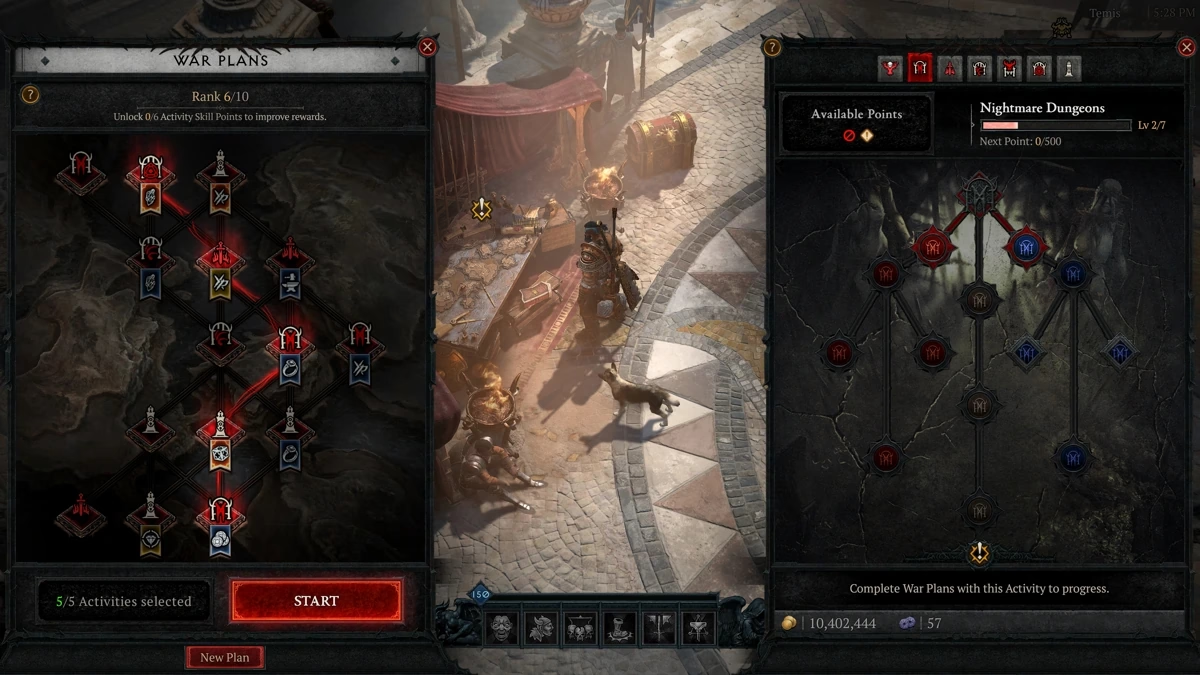
Blizzard’s expansion systems overview also introduces the Talisman’s Seals and Charms and the Horadric Cube. These are separate progression layers. Learn their unlocks and recipe requirements when you reach them; they are not purchases or crafting steps a base-game beginner must complete before enjoying the campaign.
If You Are Starting in Season of Hell’s Legacy
Follow the seasonal questline before building around its Prime Evil powers. The season lets you bear one Splinter at a time, with paths tied to different activities. Choose a path that supports what you actually play, and check Season Rank for objectives and rewards available to your account.
Keep the seasonal layer separate from your core build. A temporary power should not be the reason an old guide claims a skill combination works on Eternal. Likewise, verify expansion requirements on an objective before spending time trying to unlock content you do not own.
When Progress Slows, Diagnose the Specific Problem
- You run out of resources: revisit generation, cost and required triggers before adding more expensive attacks.
- You die while doing enough damage: inspect Toughness, useful defensive affixes and the attacks you could avoid. Reduce difficulty while learning the encounter.
- You survive but enemies take too long: check your main skill’s ranks, weapon, tags and required Aspect or item interactions.
- You do not know what to do next: finish an unlock quest or choose one concrete reward goal. Avoid spending a session bouncing between unrelated grinds.
A dependable build and a clear next goal make the rest of Diablo IV much easier to learn. Increase complexity when it helps solve a problem you have actually encountered.