What the Jeweler Does in Diablo 4
The Jeweler is available at character level 1. Use this vendor to craft gems, add eligible sockets and manage gem resources. Replacing a socketed gem or Rune is free and does not require a trip back to town. Adding a new socket and crafting a new gem are separate services with their own requirements.
The live 2.0 patch notes establish the early access and free-swap changes. You do not need a Dry Steppes questline to unlock the vendor. Choose the service you need and check its displayed requirements before spending materials.
| Your goal | Where to do it | What to check |
|---|---|---|
| Replace a socketed gem or Rune | Socket the replacement directly into your equipment. | Replacement rules below, especially if the item contains Runes. |
| Remove a gem without replacing it | Use the Jeweler's unsocket service. | Keep the item and recover the socketable; unsocketing has no Gold charge. |
| Create a new socket | Use the Jeweler's socket-adding service. | Item eligibility, remaining socket capacity and the displayed material cost. |
| Make a usable gem | Select a gem recipe at the Jeweler. | Gem type, tier, character requirement and every listed ingredient. |
| Change surplus gem resources into another type | Inspect the Jeweler's conversion recipes. | Which gem types the selected recipe consumes. |
| Break down an unwanted crafted gem | Use gem salvage at the Jeweler. | The fragment return, rather than assuming a refund of the entire crafting bill. |
Lord of Hatred also adds the Horadric Cube and higher gem tiers. That expansion crafting station is distinct from the Jeweler; its role is covered below.
Craft Gems When You Have a Socket to Fill
The ordinary crafting loop uses Gem Fragments, which are stored in the Materials tab. Craft the gem you want to equip at the Jeweler. The fragment-based system replaced the original habit of collecting piles of low-quality gems from regular drops; Blizzard documented that transition in the 1.2 update.
That history does not mean whole gems can never drop now. September 2026's 3.2.1 changes include Royal or Grand gems from Gem Caches, depending on difficulty, and increased Royal Gem chances from Elites in Torment X and above. Check your actual gem inventory before crafting a duplicate.
- Identify the gem type and equipment slot your build needs.
- Open that gem's recipe and choose a tier whose character and material requirements you meet.
- Review the complete cost, set the quantity you need and craft.
- Socket the finished gem into the intended item, then inspect the resulting bonus.
Chipped gems can be crafted from level 1, while Gem Fragments begin dropping at level 5 under the 2.0 progression rules. Access to the vendor is therefore not a promise that a new character already owns the ingredients. For a locked recipe, check the listed character and material requirements before farming more resources.
Adding Sockets and Replacing Gems Have Different Costs
To create a socket, select the equipment in the Jeweler's socket service and inspect the result and cost before confirming. A socket is a property of that item; moving its gem to a replacement does not move the socket itself. Spend on gear you expect to keep, especially when your materials are limited.
Under the live socket rules introduced in 2.0.1, Scattered Prisms are required for Ancestral socket additions, rather than every socket on every item. Non-Ancestral gear follows its own displayed recipe. If the item is ineligible or already at its socket limit, additional materials will not make it accept another socket. Use the selected item's service preview rather than an old universal price list.
Replacing an existing socketable is simpler. In a full two-socket item, a new gem displaces the bottom gem and becomes the top gem. Inserting a gem into an item containing Runes removes all those Runes; inserting a Rune into an item containing gems removes all those gems. Plan the complete pair before changing a Runeword item.
Make these changes before entering equipment-locked content. Blizzard specifically fixed swapping and removal inside such activities, including the Pit. Free swapping does not override an activity's equipment restrictions.
Choose the Gem for Its Slot and Damage Type
A gem's weapon effect is different from its armor or jewelry effect. Read the line for the destination slot before crafting. A higher tier of the wrong gem is not a substitute for the stat your build needs.
The 3.0 live notes list the weapon effects as multiplicative damage bonuses with the following categories. This is a weapon reference, not an armor or jewelry stat table.
| Gem | Weapon bonus category |
|---|---|
| Amethyst | Shadow Damage |
| Diamond | All Damage |
| Emerald | Poison Damage |
| Ruby | Fire and Holy Damage |
| Sapphire | Cold Damage |
| Skull | Physical Damage |
| Topaz | Lightning Damage |
Match this choice to the damage your skills actually deal, including any conversion in your build. For example, an old recommendation to use Amethyst for all damage-over-time builds does not describe its current weapon category: Shadow. A Poison damage-over-time setup needs a different comparison.
For armor and jewelry, inspect their corresponding tooltip lines instead. Compare the bonus with your current character stats and build requirements. Once the type is right, consider a higher tier; avoid spending your entire reserve simply because one more recipe is available.
Use Conversion and Salvage Without Emptying the Wrong Reserve
Conversion changes the gem type you can supply; salvage turns a crafted gem back into fragments. They solve different shortages. Before either action, keep aside gems you are using and the resources needed for your other sockets.
The June 30, 2026 update reworked Jeweler conversion recipes around two gem types and changed their ingredient relationships. Its example uses Diamonds when converting toward Amethysts or Sapphires, and Amethysts when converting toward Diamonds. Inspect the current selected recipe; do not assume every type can be exchanged freely at the same rate.
If your build needs both Diamonds and Sapphires, converting away all your Diamond resources can solve one socket while creating a shortage for another. Compare the whole set of gems you plan to equip before committing a large quantity.
Crafted gems can be salvaged at the Jeweler. Check the return before treating that as a way to reverse an expensive craft. The 3.1 notes also fixed high-tier gems returning fewer fragments than intended, so old reports of that bug should not be presented as the current intended salvage rule.
For budgeting, the September 15, 2026 patch reduced the Forgotten Soul component of Royal crafting to 10 and Grand crafting to 50. Those numbers are not the complete recipes: fragments, Gold and any other requirements must still be checked in the menu. A sensible purchase is the right gem for a socket you will use, while leaving enough materials for the next meaningful upgrade.
Where Lord of Hatred and Mythic Crafting Fit
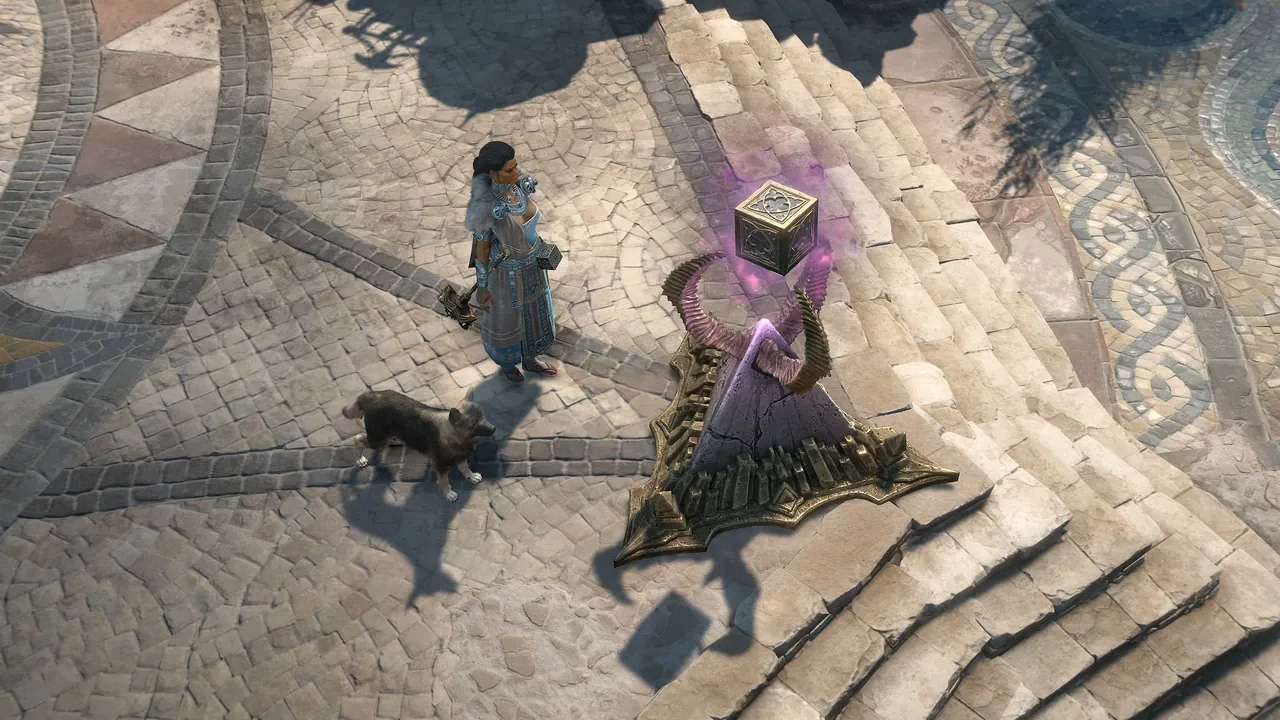
Cover: the Horadric Cube station in Temis, shown in Blizzard's Lord of Hatred overview. Credit: Blizzard Entertainment. This is the expansion's Cube, not a picture of the Jeweler NPC or an ordinary gem-crafting menu.
Lord of Hatred's expansion overview introduces Horadric and Flawless Horadric gem tiers through the Cube's Amalgamation recipe. The Cube is unlocked during that expansion's campaign and is available in Temis. It is not a station that every base-game character gains merely by visiting the Jeweler.
Blizzard's 3.0.2 update, dated May 13, 2026, also fixed Horadric Gem crafting options being unavailable at the Jeweler. If you are pursuing these higher tiers, inspect the recipes available to your character at both stations and compare their requirements. The launch Cube route does not mean every Horadric option is exclusive to that station.
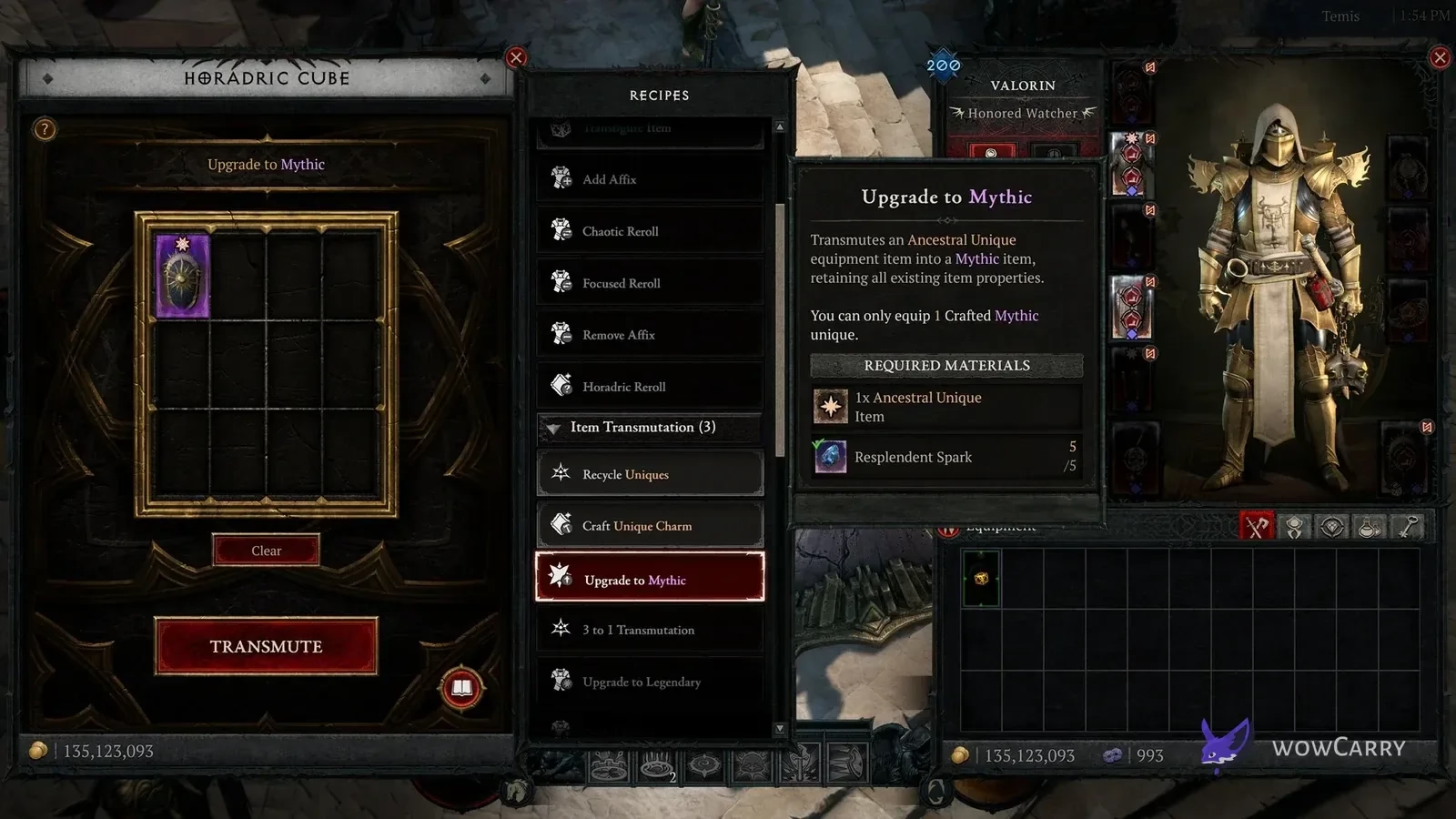
The Jeweler also has a separate Rune Crafting > Mythic Uniques route, documented in the Season of Hell's Legacy overview. That is distinct from ordinary gemstone crafting, the Blacksmith's Mythic Cache and the Cube's direct Mythic upgrade. Inspect the recipe for the intended Mythic rather than spending Runes just because you have a surplus.
For special seasonal socketables and the Cube's discoverable recipes, follow that system's own unlock and ingredient instructions. Ordinary gem crafting starts by selecting the gem recipe in the Jeweler's menu.
A Practical Order for Your Next Gear Upgrade
First inspect the replacement's existing sockets and the gem bonuses your build needs. Reuse or freely swap the gems you already own where possible. If a useful socket is missing, check the Jeweler's eligibility and material preview. Craft only the missing gem types, considering conversion only after accounting for the resources needed by your other slots.
This order keeps three spending decisions separate: buying socket capacity on a particular item, making a gem you can move later, and committing surplus resources to a new type or higher tier. For later system changes, consult Blizzard's live patch notes. Check the selected recipe's complete price and requirements before crafting.