Diablo 4 Season 1 Fast Leveling
Diablo 4 Season 1 leveling guide: Malignant Hearts, Twisting Blades Rogue, Renown priorities, World Tier strategy, and Occultist unlock.
By:
John Langan

Players who want to skip the Season 13 leveling grind can browse Diablo 4 leveling services for the current season.
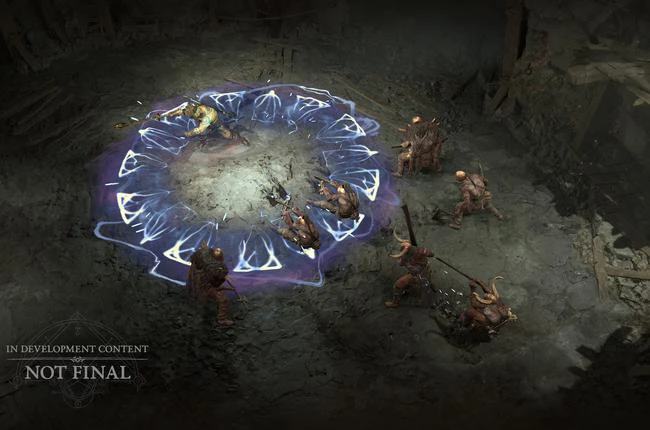
Diablo 4's first season added a distinct progression layer on top of the base-game item loop. Malignant Monsters were corrupted enemies marked by glowing cores that spawned throughout the world and dropped Malignant Hearts on death. These Hearts slotted into Malignant Sockets added to jewelry, giving characters secondary effects that modified how specific builds functioned. The 32 Hearts were split across four types: Vicious (offensive), Brutal (defensive), Devious (utility), and Wrathful (Uber). A well-matched Wrathful Heart could take a mid-tier leveling spec and push it into Nightmare Dungeon viability significantly earlier than gear alone would allow.
Farming Malignant Monsters for Heart upgrades was the core seasonal loop at both leveling and endgame, making Season 1 feel substantively different from the base game's pure item-hunting rhythm.
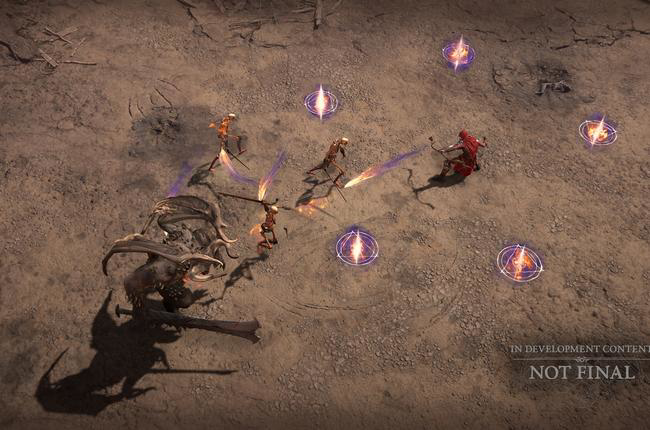
In Season 1 all five classes (Barbarian, Druid, Necromancer, Rogue, and Sorcerer) were leveling-viable, but build choice had a larger impact on speed than class identity. Twisting Blades Rogue held the top speed-leveling spot: its rotation cleared dense packs in two to three casts and transitioned cleanly into Nightmare Dungeons without a full gear reset at 50. Chain Lightning Sorcerer and Pulverize Druid sat just behind it and suited players who preferred those playstyles.
Each class had Class Quests, dedicated quest chains that rewarded exclusive abilities alongside meaningful XP. Completing them in the 20-40 level range rather than deferring them to post-50 accelerated endgame readiness and prevented a common sequence error where players arrived at Capstone Dungeons undergeared.
Season 1 introduced the campaign skip for players who had already completed the main story on any character. New seasonal characters could bypass the full story and drop directly into the open world, removing 8-12 hours of replay time and immediately accessing side-quest and dungeon content.
The first priority after the campaign skip was claiming Renown. Each of the five zones had a five-tier Renown track with these rewards: Skill Points (12 total across all zones), Potion Charges (6 total), Murmuring Obol capacity (+480 total), and Paragon Points (24 total). Unlike most seasonal systems, Renown rewards carried over to future seasonal characters on the same account. Completing full Renown in Season 1 meant no Renown grind on future alts.
In Season 1, Diablo 4 used a World Tier difficulty system rather than the current Difficulty/Torment tiers. World Tier 1 (Adventurer) was the recommended starting point for speed-leveling: stable XP-per-hour, no gear requirement, and no time lost on death penalties. World Tier 2 (Veteran) granted a 20% XP bonus but required stronger gear to maintain the same kill speed. Groups handled it efficiently from early levels, while solo players often found Tier 1 faster through level 35.
World Tiers 3 (Nightmare) and 4 (Torment) required completing a Capstone Dungeon at the end of the campaign and were endgame content rather than leveling tiers. They introduced Nightmare Dungeons, Sacred and Ancestral drops, and endgame mechanics.
Historical note: World Tiers were removed in Season 6 (October 2024) and replaced with the current Normal / Hard / Expert / Penitent + Torment I-XII system. The terms "World Tier 1" and "World Tier 2" no longer apply to the live game.
The most XP-efficient loop in Season 1 combined dungeon farming with side quest completion. Dense linear dungeons provided the best XP per run. Cathedral of Light and Uldur's Cave were community-identified top picks that offered concentrated enemy kills per clear. Teleporting to town and re-entering after a clear reset enemies; players who ran this efficiently could average three to four clears per hour in the 20-45 level range.
Side quests complemented dungeon runs by overlapping objectives geographically, contributing to Renown, and rewarding variant loot. Treating them as separate sessions doubled travel time; integrating them into dungeon routes was the efficient approach.
Movement speed affixes on boots reduced time between packs and objective markers. At scale across a several-hour session, the difference between a no-movement-speed build and one with the affix added up to a full dungeon run's worth of XP.
The Occultist unlocked at level 25, or earlier if the player completed a Codex of Power dungeon first. Imprinting a Codex Aspect onto gear was the single most impactful power investment during leveling. Even a minimum-roll Codex Aspect on a same-level item produced more throughput than chasing a better raw drop at the same character level.
Gems provided secondary stats in all three slot categories. In armor: Ruby gives Strength, Emerald gives Dexterity, Topaz gives Intelligence, Sapphire gives Willpower. In weapons: the same gems add damage types (Fire, Poison, Lightning, Cold) rather than primary stats. In jewelry: gems give elemental resistances. The slot distinction mattered, since socketing damage-type gems into armor hoping for a stat boost was a common early mistake.
Level 50 unlocked the Paragon Board and marked the start of the endgame loop. In Season 1 the post-50 sequence was: defeat the Fallen Temple Capstone boss to unlock World Tier 3, begin farming Sacred items, and activate the Tree of Whispers. The Tree of Whispers was a post-campaign endgame system rewarding Grim Favors from scattered activities across Sanctuary. It was not a leveling tool; engaging it before Tier 3 was generally inefficient.
For current Season 13 progression, compare D4 character boost options to reach Torment difficulty faster.
Season 1 was "Season of the Malignant," running July 20 through October 17, 2023. It was Diablo 4's first post-launch seasonal content update, introducing Malignant Hearts (32 socket-able power-ups dropped from Malignant Monsters) and the seasonal character system.
World Tiers 1-4 were Season 1's difficulty system (Adventurer, Veteran, Nightmare, Torment). They were replaced in Season 6 (October 2024) by the current Normal / Hard / Expert / Penitent / Torment I-XII difficulty tiers. Any Season 1 guide referencing "World Tier 1" or "World Tier 2" describes a system that no longer exists in the live game.
Twisting Blades Rogue was the community consensus fastest Season 1 leveling build. Its high single-target and AoE damage from a combined melee and ranged rotation cleared dungeon packs faster than most competing specs. Chain Lightning Sorcerer and Pulverize Druid were the strongest alternatives for players who preferred those classes.
The Occultist unlocked at level 25, or earlier if the player completed a Codex of Power dungeon before reaching level 25. Imprinting Aspects via the Occultist was the most impactful leveling upgrade available; a Codex Aspect on a level-appropriate item typically outperformed a raw item upgrade at the same character level.
Yes. Renown rewards completed in Season 1 (Skill Points, Potion Charges, Murmuring Obol capacity, and Paragon Points) carried over permanently to future seasonal characters on the same account. Completing full Renown in Season 1 effectively removed the Renown grind from all subsequent alts.
Malignant Hearts were Season 1's exclusive mechanic: 32 special items dropped by Malignant Monsters that socketed into Malignant Sockets on jewelry. They came in four rarity types: Vicious (offensive), Brutal (defensive), Devious (utility), and Wrathful (Uber). The system was seasonal-only and was not carried forward into Season 2 or the current game.
Foundational habits carry over: campaign skip, Renown prioritisation, and Occultist usage remain relevant in current seasons. However, the World Tier system, Malignant Hearts, and several Season 1 class interactions described in older guides no longer exist in the live game. For Season 13 / Lord of Hatred leveling, current patch notes and updated tier lists are more reliable guides than Season 1 strategies.
Last reviewed 2026-06-16 against Season 1 "Season of the Malignant" (July-October 2023) — Maintained by WowCarry's Diablo 4 team.