Catch the Next Public World Boss
Diablo 4's regular world boss rotation includes Ashava the Pestilent, Wandering Death, Avarice the Gold Cursed and Azmodan, Lord of Sin. Find the active event on the map, arrive before its spawn countdown ends and fight alongside the players in the arena. The useful preparation is a working build, a way to escape large attacks and a clear reason for collecting the rewards.
Blizzard established a 3.5-hour interval in the released 1.2.0 notes. That update changed the warning from 30 minutes to one hour and added a notification 15 minutes before the spawn. Use that cadence to plan a session, then use the actual event marker for the location and remaining time; a memorized boss order or an old zone list is a poor substitute for the event currently available.
- Open the map when a world boss is announced and inspect the marked event, its location and countdown.
- Choose a nearby unlocked waypoint and allow time to reach the arena. Finish equipment changes before the fight begins.
- At the encounter, identify the boss and leave yourself a route out of its next attack.
- After the kill, collect the drops and any reward you earned. Check whether the materials serve your next crafting or activity goal before planning another spawn.
The 15-minute pre-spawn notification is not the fight timer. Once combat begins, follow the encounter's remaining-time display. Do not arrive late assuming that a countdown on an external tracker reserves a fresh attempt for you.
Bring a Working Build and Join the Group
World bosses are public group encounters, rather than a private fight limited to the people in your party list. Attend with friends or join the other players already present. You do not need to organize a full raid before travelling to the event.
Blizzard's lead encounter designer describes the fights as multiplayer challenges in the World Boss design article. Large attacks cover substantial parts of the arena, and simply staying far away is not intended to remove the danger. More participants can help; headcount alone does not establish a guaranteed kill or a damage-reduction formula.
- Keep the damage engine intact. Bring the resource generation, skills and item effects your main attack needs. A last-minute resistance swap that breaks the build can create a different problem.
- Prepare defenses for the difficulty you selected. Review Toughness and its damage-type breakdown alongside your equipped gear. Avoid treating a single resistance gem as a replacement for handling the attacks.
- Keep an escape available. Use Evade or your build's movement option to leave danger. Spending every movement charge to close a small gap can leave you stranded during the next large attack.
- Recover in a safe opening. If you die, reassess the attack that caught you before returning. If helping another player, avoid committing to a revive while the same area is being hit.
The defense overhaul documented in the 2.5 season overview introduced Toughness as a summary of average defenses, with a detailed breakdown on hover. It is a useful way to identify a defensive gap; the average alone does not show how well you withstand each damage type.
For a first world boss, choose an event you can reach on a difficulty where your build functions. Ashava offers recognizable forearm blades and poison hazards to learn. You can also start with another available boss: arrive prepared and learn its cues instead of waiting for a supposedly easiest encounter.
Soloing is a separate challenge. The encounters are designed around multiple players, and a solo success depends on the character and encounter. For a first attempt, learn alongside other players. Judge your contribution by staying alive, sustaining the build's attacks and responding to mechanics; the number of nearby players alone cannot tell you whether the attempt will succeed.
Recognize the Boss Before Committing Your Attacks
The four bosses demand different attention. This comparison is a movement reference, not a complete spawn-zone list or an elemental resistance prescription.
| Boss | Useful visual cue | Your immediate task |
|---|---|---|
| Ashava the Pestilent | Large forearm blades, poison on the floor and leaps. | Leave poisoned ground and reassess your position when she moves. |
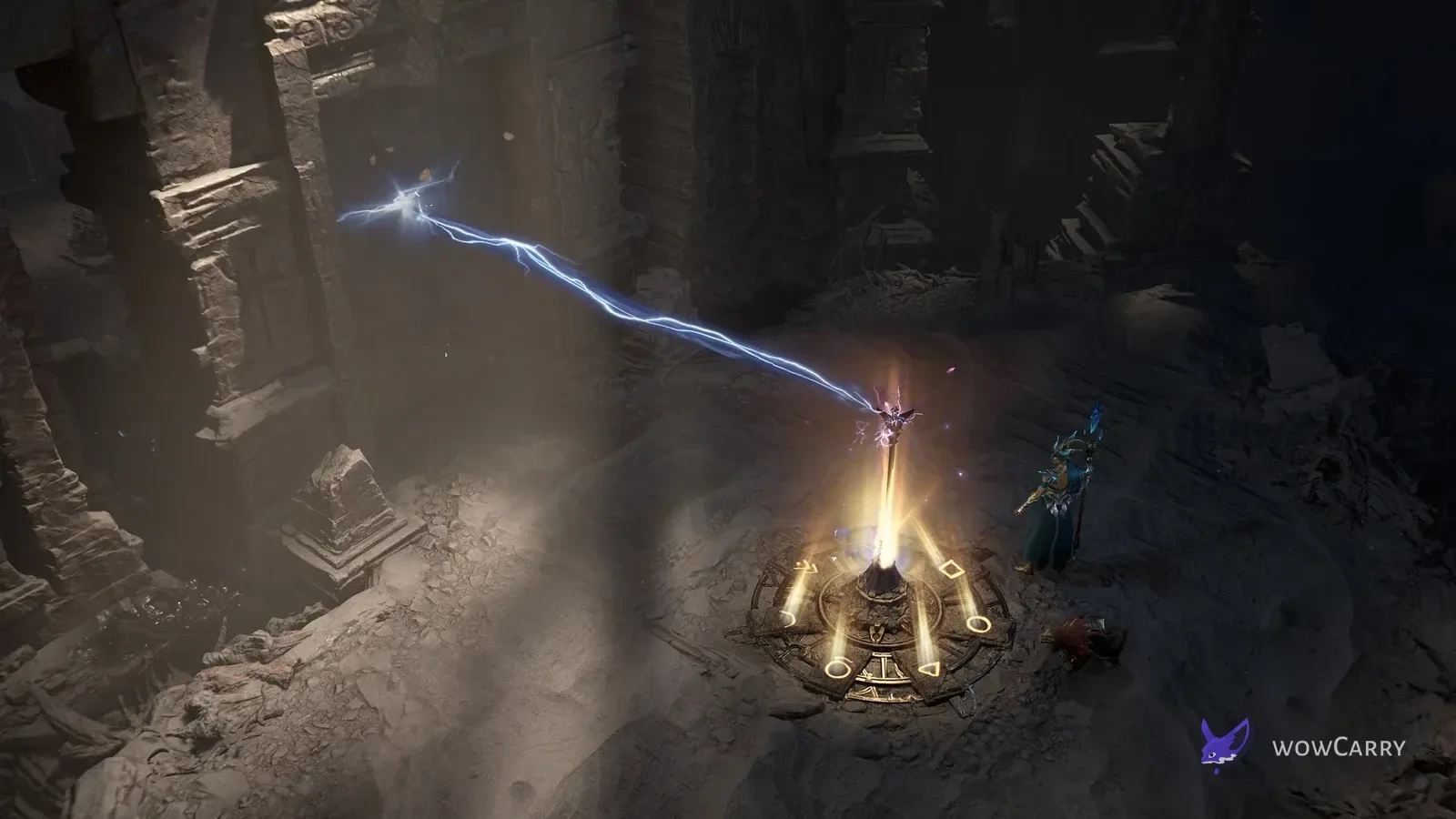
| Wandering Death | The chest beam and the space its visible path threatens. | Keep an opening to move out of the beam's path before resuming attacks. |
| Avarice the Gold Cursed | Portals, hammer shockwaves, ore and molten gold. | Watch the reappearance and ground effects; avoid committing through a hazard for one more hit. |
| Azmodan, Lord of Sin | Magma and earthquake attacks. | Move off dangerous ground while keeping a route to your next attack position. |
Ashava: poison and reach matter together
Blizzard's original Ashava description identifies her forearm blades and poison-covered ground. The encounter designer also explains that poison and leaps prevent players from solving the fight by remaining far away.
Watch both the ground beneath you and Ashava's movement. If she changes position, find clean ground and establish a new approach before restarting a long attack sequence. Poison Resistance can be part of your defenses; it does not make standing in a poison hazard a sound plan.
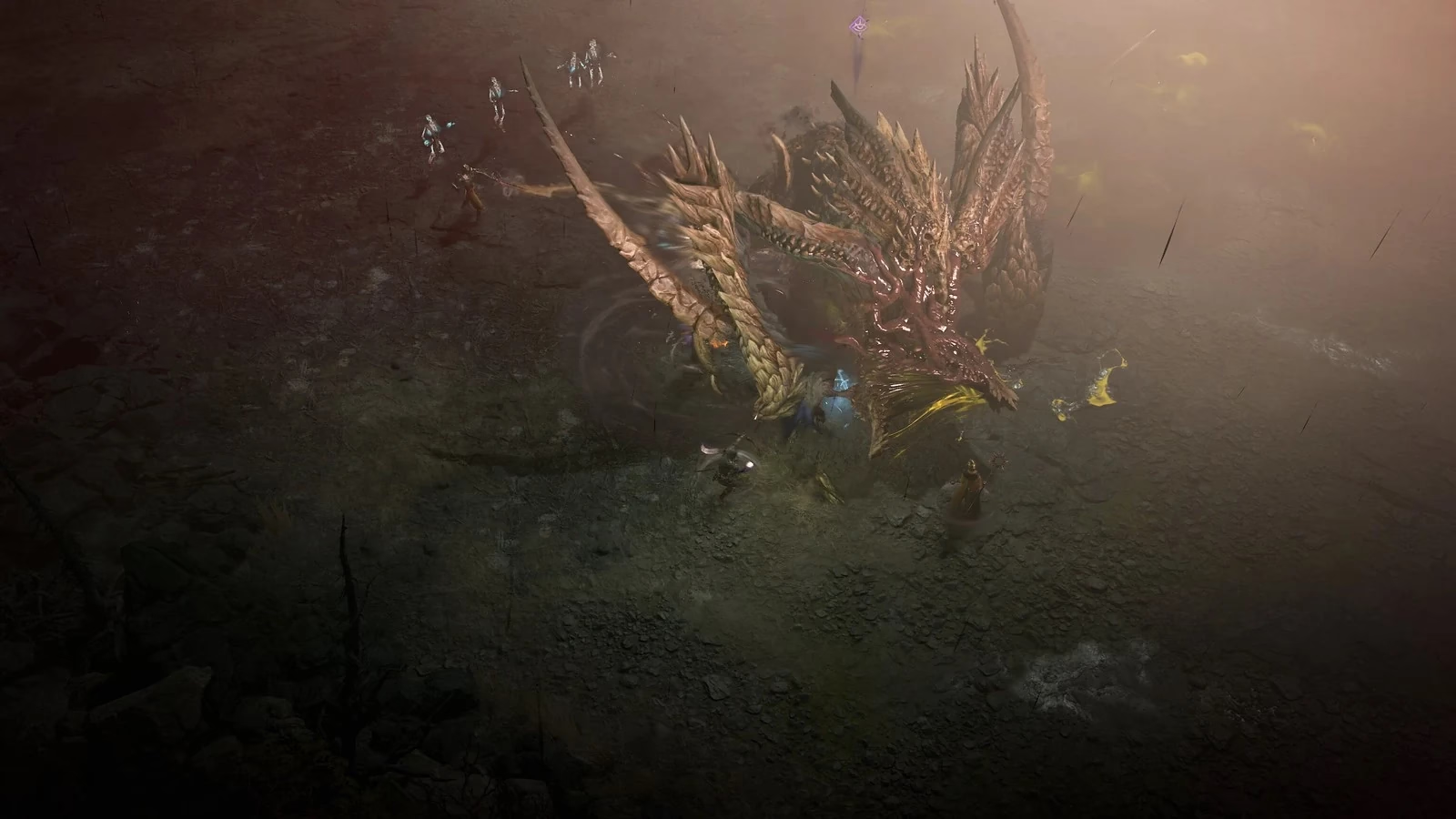
Cover: Ashava with players in an actual Diablo IV game scene published in March 2023 by Blizzard lead encounter designer Jason Bentley on PlayStation Blog. Credit: Blizzard Entertainment.

Wandering Death: leave room to move around the beam
Watch the boss's chest and the visible beam path rather than concentrating only on your character's damage effects. Move into open space when the path threatens your position, then resume your rotation. A short movement that preserves an escape route is more useful than crossing the arena without watching where the attack is going.
Blizzard identifies Wandering Death's Chest Beam in its released Season 8 Boss Power overview. Those collectible player powers are historical seasonal content; their damage numbers and damage labels are not a current resistance chart for the boss.
Avarice: track portals and ground effects
Avarice's portal charge changes where the immediate threat comes from. When he enters a portal, watch for his reappearance instead of continuing a committed attack at the vacated position. Keep clear of visible shockwaves, ore detonations and molten gold, then reposition to attack from an open area.
These cues are documented in encounter VFX artist Andy Lomerson's Diablo IV — Avarice, The Gold Cursed — Encounters Lead VFX Artist portfolio, which names Portal Charge, Hammer Shockwave, Unstable Ore and Molten Gold Barf (accessed October 2026). Use these visual cues to choose your next position and react to the attack that is actually starting.
Azmodan: a permanent boss, separate from old seasonal altars
Azmodan joined the rotation with Season 11: Divine Intervention in December 2025. Blizzard’s overview, linked above, makes him a permanent world boss on both Seasonal and Eternal realms and describes magma and earthquakes. Keep your movement available to leave those hazards; choose your next damage position after the ground is safe.
The same announcement also described seasonal summoning altars near Zarbinzet and Divine Gifts. Those Season 11 systems are distinct from Azmodan's permanent place in the public rotation. They are not instructions to gather those old seasonal materials before joining his regular world boss event.
Use Stagger Without Confusing It with Damage Resilience
Stagger is a control mechanic; resilience concerns the boss's ability to withstand damage. Crowd-control effects contribute toward staggering a boss instead of simply stopping it like an ordinary monster. Watch the stagger gauge and the actual change in the encounter when it fills.
The released 2.6.0 combat changes made buildup approximately twice as fast as before, removed its decay and introduced increased Stagger Resistance after a stagger. This makes a second stagger harder to obtain immediately; it does not establish an inverse player-count formula for incoming damage or damage dealt.
Use a staggered opening to land attacks that are difficult to complete while the boss is moving, provided your position is safe. Resume normal defensive movement as it recovers. Do not delay all useful damage while waiting for a stagger, or assume every boss grants the same flat damage multiplier: Blizzard's encounter designer describes stagger as helpful without making it required to win.
Ordinary damage resilience was increased in the 1.5.0 notes, and the 2.5.0 notes brought Azmodan's resilience in line with other world bosses. Treat these as damage-durability changes, separate from the stagger gauge. Evaluate the boss's health progress and your own survival rather than treating lobby headcount as a percentage-damage calculator.
Separate Repeat-Kill Rewards from the Weekly Bonus
A weekly bonus cache and the rewards from another kill are different reasons to attend. Blizzard explicitly refers to weekly world boss caches in its released notes, including the 1.0.3 removal of their opening-level restriction and Season 11's bonus modifications. A weekly bonus is not a promise of another identical cache every spawn.
Repeat kills can still serve a material goal. The following are documented production reward changes, rather than a promise that a cache contains a particular Unique:
- Scattered Prisms: the 1.4.1 update made World Boss Prism drops guaranteed. Collect them for eligible socket additions. The old World Tier quantity table is not a current Torment payout table, and adding a socket is a separate service from replacing an existing gem.
- Infernal Compasses: the released 2.3.0 loot update made an Infernal Compass a guaranteed world boss drop. This is an activity-entry reward to consider if you intend to run Infernal Hordes.
- Exquisite Blood: the 2.2.0 reward changes increased the amount dropped by world bosses. This route is not exclusive to Azmodan, and the material's Lair use is explained below.
Before reserving several spawn windows, identify the shortage you are solving. If you need Prisms for a useful item or keys for another activity, a repeat kill can help even after a bonus has been claimed. If your only goal is a particular Unique, do not treat the bonus cache as a targeted selection of that item.
For the bonus itself, inspect the event's available reward and any reset information shown for your character before travelling solely to claim it. Once you have claimed that bonus, choose further kills for their ordinary drops or another active objective. Leave room in the plan for your actual reward eligibility rather than assuming every boss appearance grants another cache.
Use World Boss Materials for the Right Lair Reward
Fighting a Lair boss and opening its reward Hoard are separate steps. The released 2.2.0 Lair rework removed material spending to summon those bosses. After a kill, each player spends their own Hoard Keys to open their reward chest.
Exquisite Blood is associated with Lord Zir's Hoard in that system. It is not a universal summoning fee, and world boss kills are one source rather than a requirement to kill Azmodan first. Check the intended Lair's current key and cost before converting a material reserve into a farming plan.
Mephisto is not one of the four bosses in this regular public rotation. Lord of Hatred's campaign and its separate Echo of Mephisto encounter should not be confused with the next map-announced world boss. The 3.0.2 notes identify Echo of Mephisto as a separate Party Finder activity. Follow that encounter's access and reward requirements rather than applying a world boss spawn schedule or assuming Exquisite Blood is its entry item.