New Monster Families Revealed in Season 2 of Diablo 4
Diablo 4 Season 2 vampiric monster guide: Blood Seekers, area denial mechanics, and Blood Harvest zone content from the Season of Blood.
By:
John Langan
Season 2 of Diablo 4 (the Season of Blood) launched October 17, 2023. The information below was accurate to that season. The vampiric enemy families and Blood Harvest content described here were removed from the active seasonal rotation when Season 3 launched in January 2024.
Controlled by Lord Zir, Season 2's main antagonist, the new vampire-led monster families appeared primarily in Blood Harvests and other seasonal content areas. Blood Harvest was an open-world zone event that cycled across Sanctuary's regions, spawning vampiric enemies at elevated density. Players could encounter these families in Blood Harvest events as well as in seasonal questline content tied to the Season 2 narrative.
Lord Zir's forces distinguished themselves from earlier Diablo 4 enemy families by their hybrid combat behaviour: melee pressure combined with persistent zone effects that punished prolonged static positioning. The design shift reflected the Season 2 development team's stated goal of increasing movement demand in enemy encounter design.
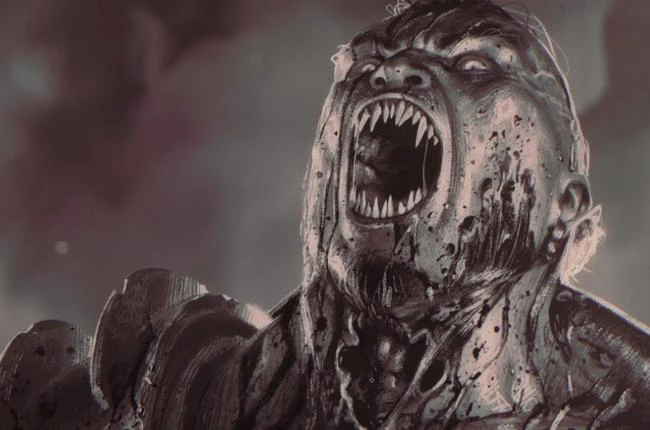
One of the new additions to Season 2's enemy roster was the Blood Seekers. These creatures were designed to resemble players in silhouette: bipedal, armed, moving with humanoid animation, to create initial uncertainty about whether an incoming figure was an ally or an enemy. Up close, their vampiric appearance and behaviour made the distinction clear, but the visual concept was intentional: Blood Seekers were meant to unsettle before engaging.
In combat, Blood Seekers were significantly more powerful than standard Season 2 minions under Lord Zir. They served as the primary frontline force in Blood Harvest encounters, appearing in coordinated groups with other vampiric enemy types.
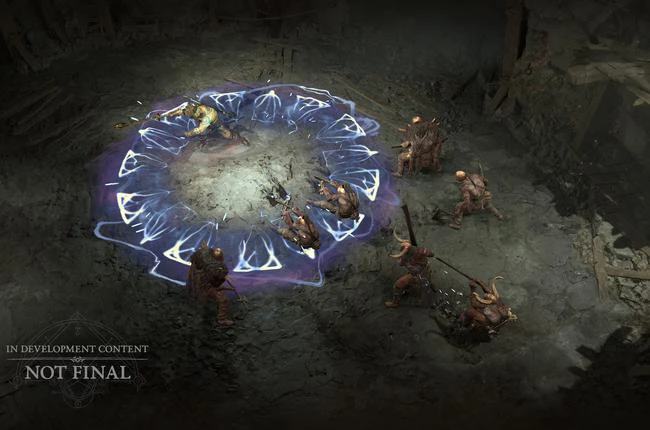
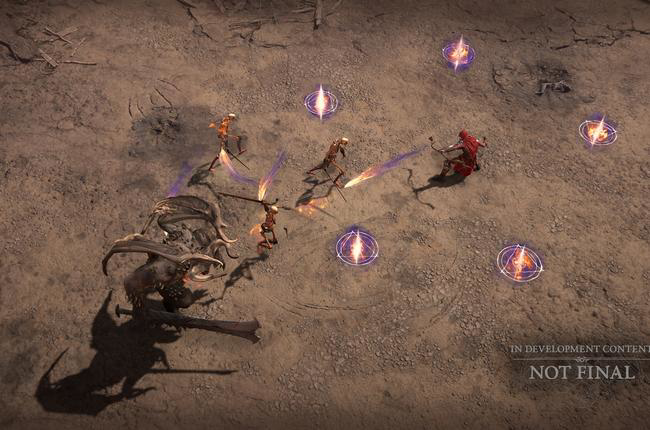
The Diablo 4 development team confirmed that Season 2's new enemies were built around area denial mechanics. Rather than straightforward melee or ranged encounters, Lord Zir's vampiric forces created persistent zones that restricted player movement — pools, fog effects, and positional hazards that forced continuous repositioning. Players who stood still or fell into predictable movement patterns found themselves cut off and overwhelmed.
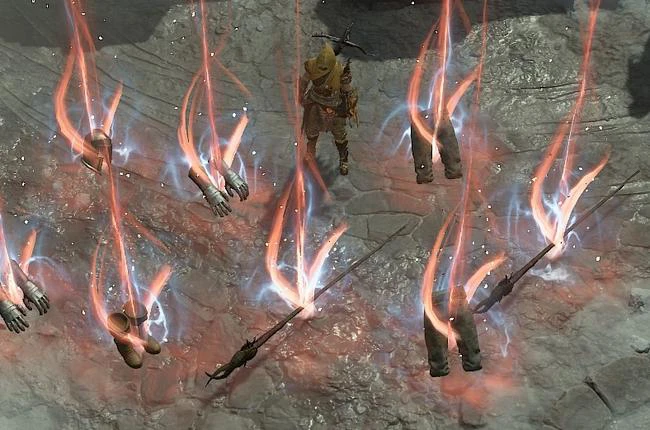
After-death effects added a secondary layer of tactical decision-making. Certain vampiric enemies, when killed, left behind blood formations that functioned as damage-absorbing shields for nearby surviving enemies. This mechanic changed kill priority: players had to identify which enemies would leave shielding pools on death and sequence kills to prevent those pools from protecting higher-value targets. Burst-damage builds that killed clusters simultaneously often bypassed the mechanic entirely, while sustained-damage builds had to adapt their sequencing.
Together, area denial and after-death effects made Blood Harvest encounters more positionally demanding than comparable zones in Season 1. Players who had farmed Season 1 content efficiently found the Season 2 enemy behaviour required deliberate adaptation rather than a simple gear upgrade.
Season 2's vampiric monster families represented the first major expansion of Diablo 4's enemy roster post-launch. The Blood Seekers and their associated vampiric enemy types introduced mechanics including area denial and after-death shielding that influenced how subsequent seasons approached encounter design. The area denial theme continued in modified forms through later seasonal content.
Season 2 ran from October 17, 2023 to January 23, 2024. Lord Zir's seasonal content and the Blood Harvest zone events are no longer part of the active game in Season 13. Players looking for current Diablo 4 endgame boss content can browse Diablo 4 boss carry options for Season 13's expanded Tormented boss roster.
Season 2 of Diablo 4 introduced vampiric monster families under the command of Lord Zir, the Season 2 main antagonist. The primary new enemy type was the Blood Seekers — player-resembling vampiric creatures that served as Lord Zir's frontline forces. These enemies appeared in Blood Harvest zones and other seasonal content areas, featuring area denial mechanics and after-death effects not present in Season 1 enemies.
Blood Seekers were the signature enemy type introduced in Diablo 4's Season 2 (Season of Blood). Designed to visually resemble players at a distance, they were vampiric humanoids serving Lord Zir. In combat they were stronger than standard Season 2 enemies, appeared in coordinated groups, and were the primary threat players faced in Blood Harvest zone events. Their visual design, mimicking player silhouettes, was an intentional misdirection element confirmed by the development team.
Blood Harvest was the primary open-world seasonal activity in Diablo 4 Season 2. It spawned as a rotating zone event across Sanctuary's regions, raising vampiric enemy density in the affected area and triggering escalating waves of Lord Zir's forces. Completing Blood Harvest objectives rewarded seasonal currency and materials used in Season 2's vampire power system. The activity served as the main source of encounter with Season 2's new vampiric monster families.
Season 2's vampiric enemies created persistent zone hazards (blood pools, positional effects, and movement-restricting formations) that remained on the battlefield after they were placed. Unlike standard melee or ranged enemies that could be kited or held at range, these effects forced players to continuously relocate. The Diablo 4 development team described this as an intentional shift toward making movement a primary defensive skill rather than a passive benefit of ranged positioning.
Lord Zir was the main antagonist of Diablo 4 Season 2, the Season of Blood. He was an ancient vampire lord who commanded the vampiric monster families introduced in the season, including the Blood Seekers deployed in Blood Harvest zones. Lord Zir served as the seasonal climax boss, accessible after completing Season 2's questline. His attacks drained player health rapidly but used long telegraph windows, a design intended to reward patient, movement-focused play. Lord Zir was ranked mid-tier for difficulty in early Diablo 4 boss rankings due to his predictable pattern structure.
Diablo 4 Season 2 (the Season of Blood) ran from October 17, 2023 to January 23, 2024. It introduced Lord Zir, the vampiric monster families, Blood Harvest zone events, and the vampire power progression system. Season 3 (Season of the Construct) launched January 23, 2024, ending the Season 2 content rotation. The Blood Harvest zone and Season 2 seasonal enemy variants are no longer accessible in current Diablo 4 seasons.
Last reviewed 2026-06-18 against Diablo 4 Season 2 (Season of Blood, October 2023) — Maintained by WowCarry's Diablo 4 team.