Diablo 1 Direct Draw Error: Battle.net Launch Fix
Run Blizzard's documented Diablo.exe step for the Diablo 1 Direct Draw error, then separate launcher, graphics, Hellfire, and online symptoms.
By:
John Langan
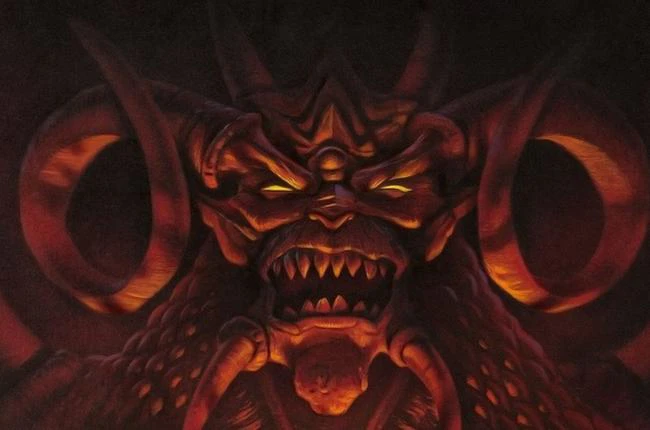
The January 2024 Battle.net release of Diablo brought the original 1997 game back to Blizzard's current storefront. The game is still a legacy Windows program, so a failure at the Battle.net Play button does not always mean that the installed game executable is broken. For one specific case, a Direct Draw Error immediately after installation, Blizzard's documented first step is to run Diablo.exe from the installation folder once.
That step is narrow. It does not prove that every black screen, color problem, crash, Hellfire failure, or multiplayer update loop has the same cause. The useful approach is to identify where startup stops, try the publisher's exact executable step, and move to Windows diagnostics only when the result points beyond the launcher.
Diablo.exe from the Diablo folder once before testing the Play button again.Diablo.exe; creating one is not the technical repair described by Blizzard Support.Diablo.exe itself still fails after Blizzard's direct-launch test.Diablo.exe, not the expansion executable.With those boundaries set, the first test takes only one executable launch and one retest from Battle.net.
Start here only when the dialog is titled Direct Draw Error and appears as Battle.net tries to start the original Diablo directly after installation. Record the complete wording before closing it. If the title, timing, or launch path is different, keep it as a separate symptom instead of assuming article 354358 applies.
Diablo.exe. Do not substitute a similarly named launcher file for this first test.Diablo.exe once and wait for either the game window or the exact next error.The result matters more than repeating the action. Reaching the Diablo menu shows that the game executable can initialize outside the Battle.net launch handoff.
⚠️ Scope check: Blizzard's step addresses the Direct Draw Error produced when Battle.net starts a newly installed Diablo client. It does not state that
Diablo.exerepairs every graphics, network, or Hellfire problem.
After a successful direct launch, close the game and press Play in Battle.net again. If Play now reaches the menu, the documented workaround is complete. A desktop shortcut to Diablo.exe is optional convenience, not a requirement. If the executable works but Play still fails, write that distinction into the support report: “Diablo.exe reaches the menu; Battle.net Play does not.”
If Diablo.exe produces the same Direct Draw Error, stop treating the issue as launcher-only. The next branch checks the published requirements and Windows compatibility state without adding unverified game files.
Use the first repeatable symptom, not a guess about DirectX, to choose the next action.
| Observed result | What it establishes | Next action |
|---|---|---|
Battle.net Play fails, but Diablo.exe opens the menu | The base executable starts; the failure is in the launcher handoff. | Retest Play once, then report the launcher-only result if it persists. |
Both Play and Diablo.exe show the same Direct Draw Error | The issue is no longer isolated to Battle.net. | Check the product requirements, Windows updates, and compatibility diagnostics. |
| The game opens with a black screen, wrong colors, or a corrupted menu | Startup passed, but display output is failing. | Record the display symptom, driver data, scaling, and monitor layout before changing settings. |
| Single-player reaches the menu, but online play loops on an update | The graphics launch path works. | Treat the update loop as a separate Battle.net service or client issue. |
| Diablo works, but Hellfire does not | The base-game result does not cover the expansion executable. | Capture the Hellfire executable path and error as a separate case. |
This separation prevents a successful base-game test from being advertised as a cure for a different expansion, display, or online symptom.
As reviewed on 2026-08-21, the Battle.net product page publishes the following minimums for its Diablo package. These are the storefront's stated requirements, not a promise that every newer hardware and operating-system combination behaves identically.
| Component | Published minimum | Diagnostic use |
|---|---|---|
| Operating system | Windows 7, 8.1, or 10 | Windows 11 is not named in the published list. |
| Processor | 1 GHz or faster | A modern CPU normally clears this threshold. |
| Graphics | DirectX 9 device with WDDM 1.0 or later driver | Record the GPU and driver model rather than installing a CD-era runtime. |
| Memory | 2 GB RAM | Confirm the system is not constrained by another fault. |
| Storage | 1 GB available | Confirm the install completed and Diablo.exe exists. |
The original Diablo manual referenced Windows 95 or NT 4.0 and DirectX 3.0 because that was the 1997 environment. Seeing that old CD instruction in an error box is not evidence that a current Windows installation should be downgraded or supplied with an unknown archived installer.
📌 Common mistake: Do not search a download mirror for “DirectX 3.0” simply because Diablo repeats its original CD-era text. Windows 11 receives supported DirectX components through Windows Update; Microsoft's free Windows 10 support ended on October 14, 2025. Blizzard's first documented action remains running
Diablo.exe.
If the executable itself still fails, run Windows' compatibility workflow for Diablo.exe. Microsoft directs Windows 11 users to Settings, System, Troubleshoot, Other troubleshooters, then Program Compatibility Troubleshooter. Follow the result it proposes and test the same executable again. This is safer than copying a compatibility recipe from another computer whose display stack, Windows build, and install path are different.
Keep one change per test. When several compatibility flags, privilege settings, and graphics options change together, a successful launch no longer identifies which action mattered. It also becomes difficult to restore the starting state.
Use Microsoft's DirectX Diagnostic Tool by searching Windows for dxdiag. The System tab shows the installed DirectX version, and Save All Information creates a text report for support. On the Display tab, record the graphics adapter, driver version, driver date, and driver model.
Install graphics driver updates through Windows Update or the hardware manufacturer's official site. Do not use a driver aggregator. Restart after an installed driver update, then repeat the exact Diablo.exe test before changing anything else.
✏️ Useful evidence: Save the
dxdiagreport before and after a driver change. A support agent can compare the GPU, driver date, DirectX version, and WDDM model without asking you to reconstruct them from memory.
A clean report is more useful than a list of every workaround attempted. It should let another person reproduce the branch you reached and rule out a missing executable, launcher-only issue, or unrelated online problem.
Diablo.exe, or both.winver.dxdiag report and list every connected display.That six-point record also protects against false progress. If the error text changes after a step, preserve both messages rather than collapsing them into “Diablo still does not work.”
When Blizzard's executable step and the Windows compatibility workflow both fail, take the exact results to the Legacy Games Tech Support forum linked from Blizzard Support article 354358. Include only the changes you actually tested. If Diablo.exe is missing from an official Battle.net installation, reinstall the package through Battle.net instead of downloading that executable by itself.
For display corruption, include a screenshot plus the monitor resolution and scaling. For an online update loop, state that the game already reaches its menu; that keeps the network case from being routed back to the Direct Draw article.
The current product includes Hellfire, but the Blizzard support instruction specifically names Diablo.exe. A successful launch of the base game therefore confirms only the base-game path. Test the expansion from its installed executable and record its own error. Do not claim the Direct Draw workaround solved Hellfire unless that executable also reaches its menu.
This distinction also matters in support tickets. “Diablo works; Hellfire fails before the menu” identifies an expansion-specific branch. “Neither executable works and both show the same Direct Draw text” suggests a shared display or compatibility branch that still needs diagnosis.
📌 Test one client at a time: Keep the Diablo and Hellfire executable names beside their results. The package contains both, but one successful menu does not validate the other launch path.
Legacy-game discussions often jump from a first-launch error to replacement renderers and files from personal archives. Those options can change game behavior and make an official installation harder to diagnose. Keep the publisher's files intact until the supported path is exhausted.
| Proposed shortcut | Why to pause | Safer action |
|---|---|---|
| Download an old DirectX installer from a mirror | The dialog repeats 1997 CD text and does not authenticate the download. | Use Blizzard's executable step and Windows Update. |
Copy an arbitrary ddraw.dll into the game folder | The binary replaces part of the rendering path and its origin is unknown. | Preserve the official install and collect the display evidence first. |
| Disable security software or always run as administrator | That expands privileges without establishing the cause. | Use the normal executable and Microsoft's compatibility workflow. |
| Apply several compatibility flags at once | The result cannot identify which change affected the launch. | Make one reversible change and retest the same path. |
The goal is not to rule out every community project. It is to prevent an unverified download or privilege change from becoming the first response to an error Blizzard already documents.
⚠️ File-safety rule: Never replace
Diablo.exeor add a DLL from a forum attachment just to test a theory. Keep a publisher-installed baseline until Blizzard Support has the error text and diagnostic report.
Diablo preserves an error message written for its original CD-era requirements, when the manual shipped DirectX 3.0 instructions. The Battle.net product page now lists a DirectX 9 graphics device with WDDM 1.0. Microsoft says modern DirectX is a Windows component, but free Windows 10 support ended on October 14, 2025; on Windows 11, use Windows Update rather than an unauthenticated 1997 installer.
Run Diablo.exe from the base game's actual installation folder once. A Battle.net install can use a custom drive or directory, so locate the existing publisher-installed file rather than copying a path from another PC. The point is to test the game executable, not a similarly named launcher. If it reaches the menu, close it normally and test the Battle.net Play button again.
No. A desktop shortcut simply points Windows to an executable. It can make Diablo.exe easier to start, but Blizzard's documented action is the one-time direct executable launch followed by another Battle.net test. If the Play button continues to fail while the shortcut works, preserve that launcher-only result for support instead of saying the shortcut repaired the Direct Draw Error or the installed game.
The Battle.net product page reviewed on 2026-08-21 lists Windows 7, 8.1, and 10 as its minimum operating systems; it does not name Windows 11. That omission is not proof that Diablo cannot run on Windows 11, but it prevents a guarantee. Use Microsoft's Program Compatibility Troubleshooter, record the exact Windows build, and report the result when Diablo.exe itself fails.
Not automatically. The product includes Hellfire, but Blizzard Support article 354358 names the base game's Diablo.exe. Test Hellfire's installed executable separately and record whether it reaches its menu. A base-game success plus a Hellfire failure is useful evidence because it narrows the case to the expansion path rather than the entire Battle.net Diablo package.
Do not make an arbitrary wrapper or DLL your first step. Such a file changes the rendering path, and a forum attachment or mirror does not establish its integrity. Preserve the Battle.net installation, try Blizzard's executable step, run Microsoft's compatibility diagnostics, and gather the graphics-driver data. If you later evaluate a community project, treat that as a separate, informed modification rather than part of the official fix.
Record that both Battle.net Play and Diablo.exe fail with the same text. Check the published graphics requirement, run the Windows Program Compatibility Troubleshooter, install official Windows or GPU-driver updates, restart, and retest one path. If it still fails, take the exact error, install path, Windows build, connected displays, and saved dxdiag report to the Legacy Games Tech Support forum linked from article 354358.
With the common questions separated, one final checklist keeps the test history consistent.
Diablo.exe once from its actual folder.dxdiag, Windows build, driver, display, and path evidence for support.The documented path is intentionally short: test Diablo.exe, observe the result, and escalate only the branch that remains. That makes a 1997 error message manageable without turning one launcher workaround into a claim that it repairs every original-Diablo problem.
Last reviewed 2026-08-21 against Blizzard Support article 354358 and the current Battle.net Diablo product listing — Maintained by WowCarry's Diablo team.