M12S Phase 1 Strategy and Mechanics
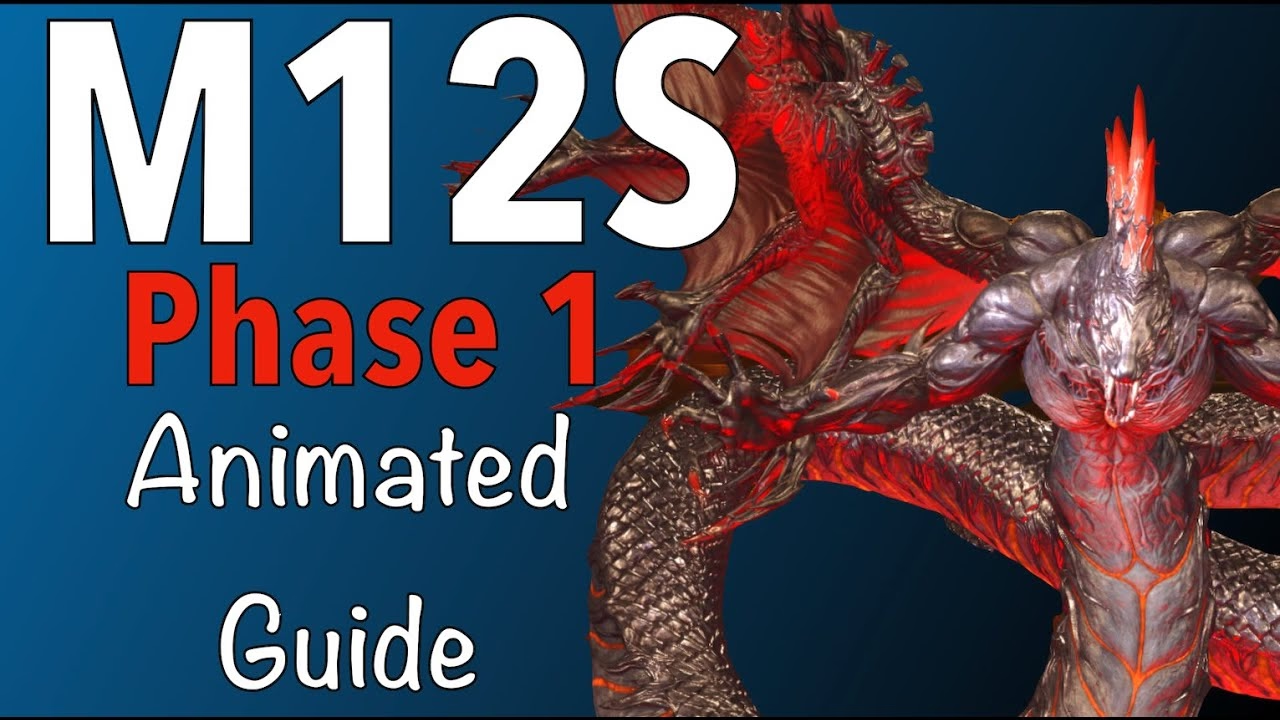
In this guide, we explore strategies for M12S (AAC Heavyweight M4 Savage), specifically focusing on standard tactics often employed in party finder groups. Note that individual party strategies may differ slightly, so adaptability is key.
Key Takeaways
- The Fixer opens Phase 1 with heavy raid-wide damage — front-load healer and tank cooldowns before it resolves.
- Mortal Slayer spawns four purple orbs (tank busters) and four green orbs (shared AoE); main tank takes the first purple, off-tank the second, while healers and DPS absorb green in a conga line.
- Grotesquerie Act 1 pairs players with alpha and beta tethers that break by running opposite directions — starting short keeps timing forgiving.
- Grotesquerie Act 2 tower soak order is 3, 4, 1, 2; Magic Foam players cannot soak towers from their own foam.
- Slaughter Shed places five puddle sets north-wall-first, looping counterclockwise — coordinate alpha debuff assignments before the pull.
Below is a full mechanical breakdown of each Phase 1 section.
Initial Fight Set-Up
The battle begins with a significant ability known as "the Fixer," which deals substantial raid-wide damage. To avoid unnecessary deaths, it's crucial to mitigate this ability heavily. The boss then performs "Mortal Slayer," where eight orbs are summoned—four on each side.
- Green Orbs: These are area-of-effect (AOE) attacks. Each player should manage these, as they do minimal damage.
- Purple Orbs: Significantly more potent, they are tank busters that demand tank mitigation.
Each player must position themselves appropriately to bait and manage these orbs efficiently:
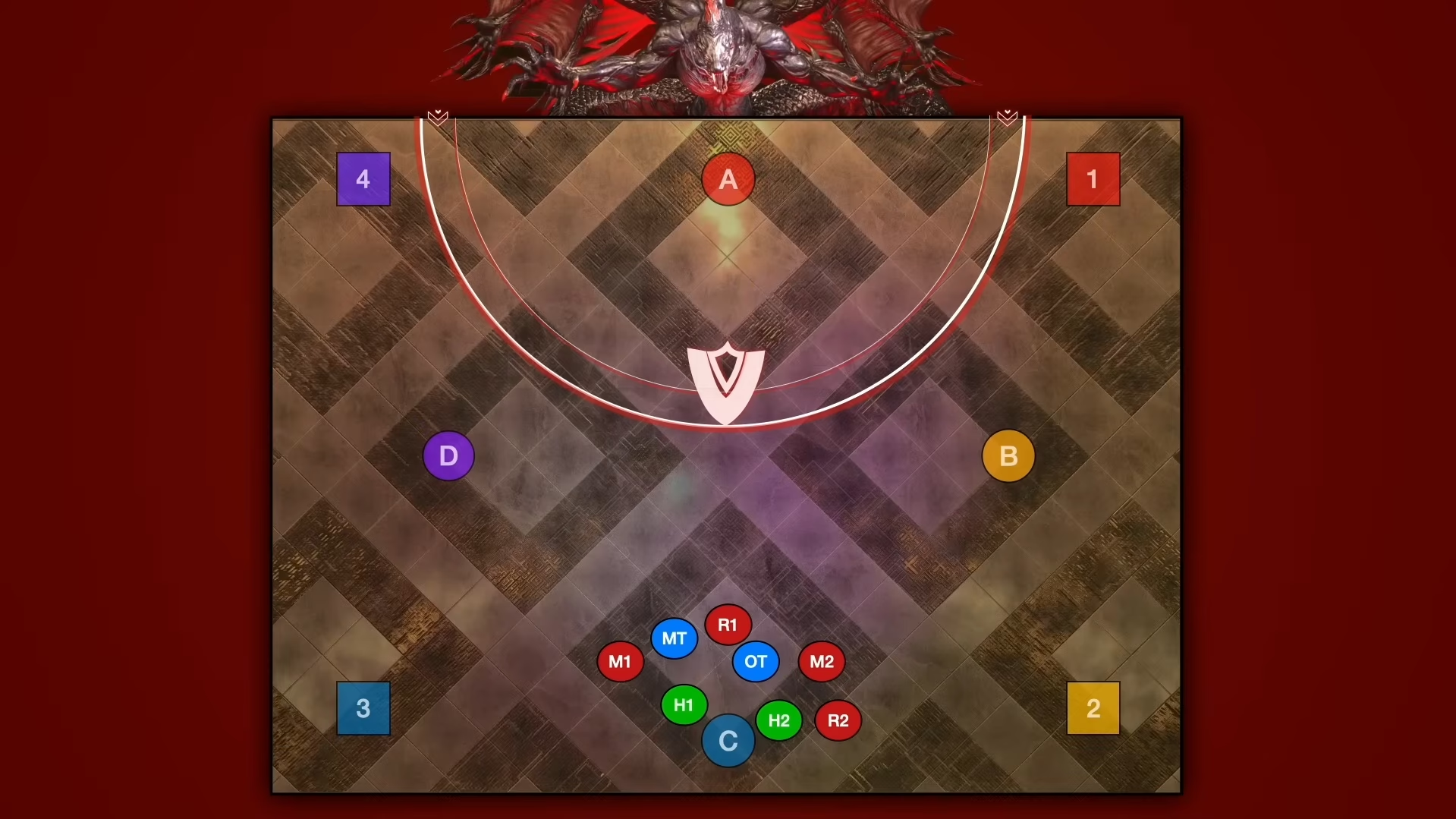
- Tanks are tasked with handling the purple orbs. The main tank takes the initial purple orb, while the off-tank manages the second.
- The remaining six party members — two healers and four DPS — take their designated spots and absorb green orbs in a "conga line" sequence, each taking their own without overlapping hits.
With orb assignments settled, timing and wall positioning become the next element to coordinate.
Movement and Positioning
When the boss casts "Mortal Slayer," players should prepare to preposition:
- First players move to the wall on their side of the boss's hitbox.
- Second players are slightly away from the wall to avoid initial orb explosions.
- Subsequent players wait outside the hitbox, ready to step in as the first set of players move out.
This cycle continues until all orbs have been managed effectively, ensuring no crossing orbs.
Mechanic Management and Debuffs
As the battle progresses, players need to organize around additional mechanics:
- Dragon Arm and Debuffs: A grotesque appendage grows, accompanied by purple debuffs indicating a directional cleave. These debuffs require careful positioning and rotation to avoid impacting teammates.
- Stack and Spread Debuffs: Roles are designated, where one player handles a stack debuff while the rest manage spread ones. This scenario frequently requires players to gather puddles along the north wall.
Players must not only dodge the boss’s cleave mechanics but also manage area puddles and position themselves tactically to mitigate incoming damage.
Tactics for Grotesquerie Act 1
For the more complex "Grotesquerie act 1" phase, players face numerous debuffs such as alpha and beta. These require teamwork as players need to stack together to form tethers that must be broken by running in opposite directions. Starting with short tethers can make this mechanic more manageable.
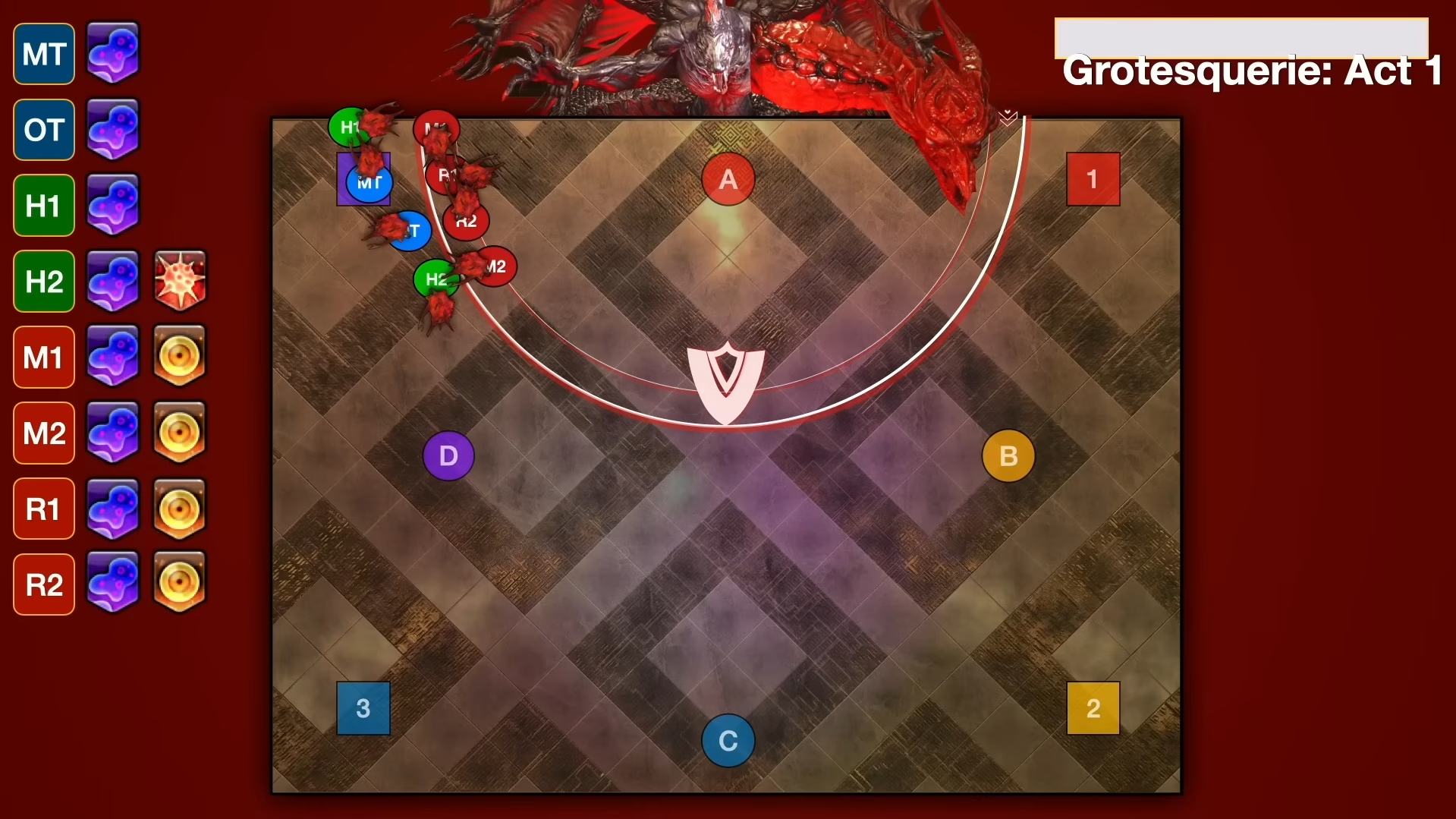
This phase’s mechanics demand coordination and quick decision-making, highlighting the need for practice and team synergy.
By understanding and managing these key mechanics, players can navigate Phase 1 of M12S effectively, ensuring a smooth progression into the next stages of the encounter.
Resolving Grotesquerie Act 2
In the Grotesquerie act 2 phase of the M12S encounter, managing position and timing is crucial. The phase involves towers, tethers, and strategic player positioning. Here is a breakdown of how players should handle these mechanics:
- Magic Foam Players: Alpha and Beta players are given AoE debuffs. They must work collaboratively to handle tower mechanics as both are unable to take towers spawned by their magic foams.
- Tower Mechanics:
- Alpha Players: Responsible for towers spawned from blobs dropped by the boss.
- Beta Players: Handle towers resulting from the tether breaks.
Players need to follow the precise order of soaking towers: 3, 4, 1, 2, keeping the sequence clean:
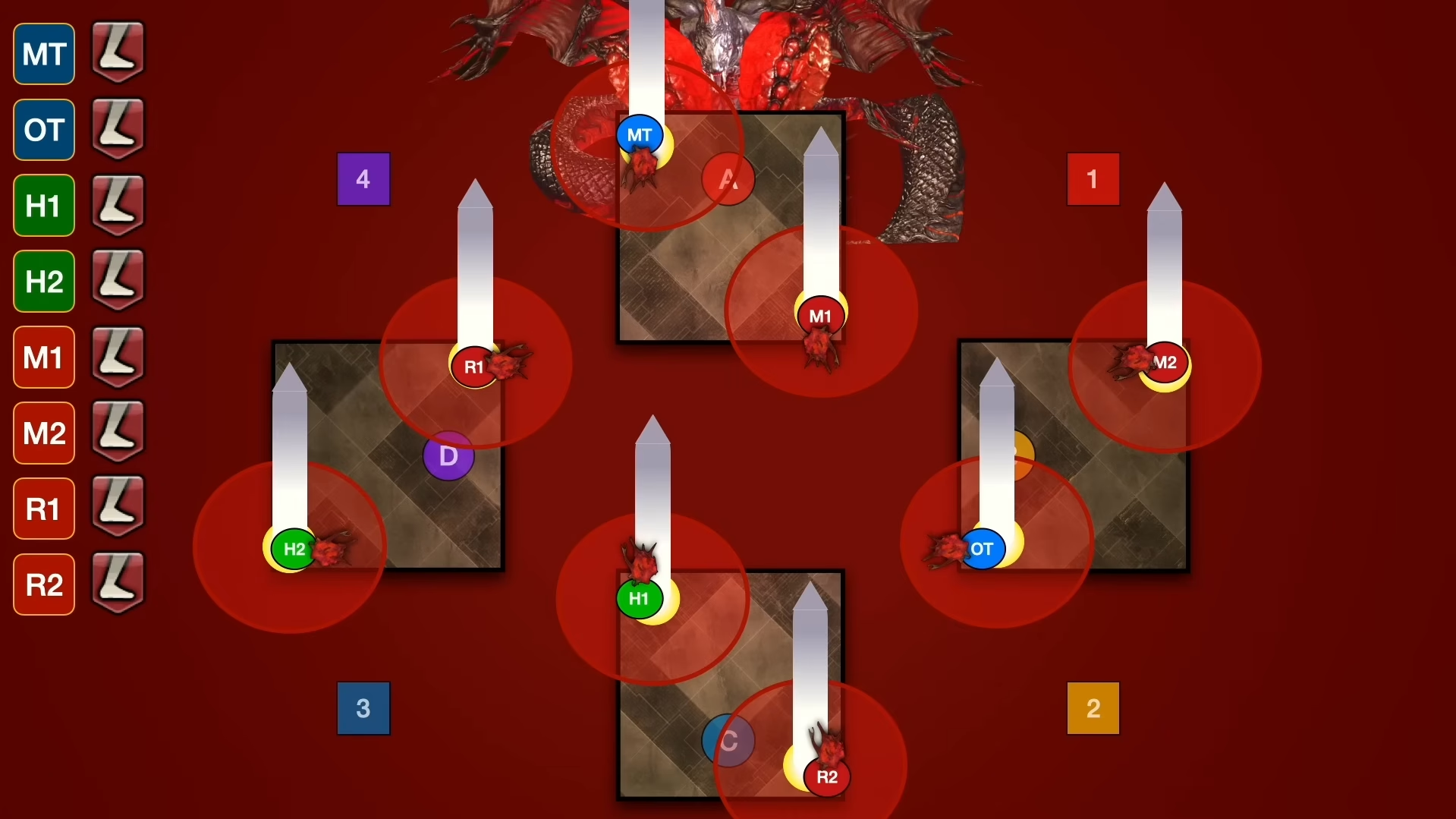
- Step-by-Step Strategy:
- Position Alpha Players: Begin by moving towards their designated blobs. Stand ready to soak towers based on their numbers.
- Tether Breaks: Alpha and Beta players must break tethers by running in opposite directions. Movement should be timed with the boss's spinning attack.
- Sequential Soaking: As the boss spins, players soak towers in the designated sequence. Each group snaps tethers at the right moment, and towers are occupied as they appear.
After the tether and tower sequence resolves, a set of ground AoE markers resets player positioning.
Tactical Adjustments for Safe Zones
Subsequent to the tether and tower mechanics, players encounter a stage transition involving ground AoE markers and further adjustments:
- Ground AoE Identification:
- Identifying safe zones versus danger zones is crucial. Area markers indicate whether the cardinal or intercardinal points are safe, guiding player movement.
- Example: If a ground AoE appears on the four marker, cardinals are safe; otherwise, intercardinals will be the safe zones.
- Player Adjustments:
- Players should initially position themselves at cardinal or intercardinal points as needed. Roles are predefined, with supports moving bottom left and DPS moving top right.
- Adjustment is vital: players must stay far enough apart to prevent AoE spread overlap.
With spread assignments complete, debuffs bind players and trigger the final AoE exchange.
Debuff Management
The sequence concludes with careful management of debuffs, binding positions, and strategic execution:
- Binding and Shooting: Players are bound in place before releasing AoEs that shoot towers toward others. Placement and orientation direct towers at the correct targets.
- Debuff Spread: Once bound, blobs shoot out. Each player aims towards another player’s tower, ensuring the mechanic resolves correctly.
Efficient execution and coordination of these strategies are key to successfully navigating the challenges of Grotesque React 2 and advancing smoothly in the encounter.
Advanced Placement Strategies
In the final stage of this encounter, precise positioning and coordination become crucial to success. Here’s a breakdown of the complex maneuvers required:
- Wall Positioning for Melees: Melee players position near the wall so AoE spreads travel away from tanks.
- Central Stack and Mitigation: Group together in the center to mitigate damage during key abilities such as "The Fixer" and "Grotesque Curtain Call."
- Spread and Puddle Management:
- Alpha, yellow, and purple debuffs necessitate careful placement—alpha chains DPS and support, while yellow and purple indicate spread positioning and cleave targeting respectively.
- Position five puddle sets strategically, beginning along the northern wall and looping counterclockwise to precisely manage the ravenous reach mechanic.
Precise positioning flows into synchronized responses during the transition window.
Tactical Execution and Responses
Managing debuffs and attacks in this phase requires synchronized execution:
- Debuff Chains: As alpha debuffs expire, supports run left and DPS run right, moving to spread positions from north to south. Tethers break here, causing small spread AoEs.
- Cleave Mechanics: Supports are hit by the cleave to control incoming damage, while DPS positions behind it to avoid unnecessary hits.
Cleave resolution feeds directly into Slaughter Shed — the last gauntlet before enrage.
Slaughter Shed and Enrage Sequence
- Spread and Stack Coordination: Northern corners serve as safe spots with specific roles designated for stacking or spreading based on blob placement. Spreads occur in corners without blobs, maintaining tight formations.
- Dragon Head Cleaves: React swiftly to dragon head cleaves by moving to alternate sides of the arena, starting right and swapping left, then repeating the sequence as hands regrow.
- Knockback Mechanics: During knockbacks, position yourself astutely to leverage immunity or ride the knockback without being pushed into danger zones.
| Mechanic Phase | Action Steps |
|---|---|
| Start of Phase | Position melees near the wall |
| AoE Spread | Stack middle to mitigate, then spread to edges |
| Ravenous Reach | Manage five puddles in northern wall |
| Tether Resolution | Spread and dodge after tether breaks |
| Dragon Heads Regrow | Position for right, then left cleave |
| Slaughter Shed | Execute third time, then prepare for enrage |
Achieving this precision weakens the boss before enrage and reflects mastery over this complex raid phase and setting the stage for an eventual transition to phase two, where new challenges await. Throughout, effective damage mitigation and swift reaction to mechanics are vital for survival and progression.
Frequently Asked Questions
What does The Fixer do in M12S Phase 1?
The Fixer is the opening ability in M12S Phase 1, dealing heavy raid-wide damage before orb mechanics begin. Stack every available healer and tank cooldown before it resolves — failing to mitigate is the most common first-pull wipe cause.
How do you handle the purple orbs in Mortal Slayer?
Purple orbs are tank busters. The main tank absorbs the first purple orb; the off-tank takes the second. All other players manage the four green AoE orbs by forming a conga line — no two players share the same orb hit.
What are the alpha and beta debuffs in Grotesquerie Act 1?
Alpha and beta debuffs connect paired players with tethers. Paired players must stack briefly to form the tether, then run in opposite directions to snap it. Starting with a short tether — closer initial position — gives more reaction time and reduces overlap risk.
What is the tower soak order in Grotesquerie Act 2?
The tower sequence is 3, 4, 1, 2. Magic Foam players (alpha or beta debuffs) cannot soak towers their own foam spawned. Alpha players handle blob-dropped towers; beta players cover tether-break towers. Pre-position before the boss starts spinning.
Why can Magic Foam players not soak their own towers?
Magic Foam applies an AoE debuff to alpha and beta players that prevents them from safely resolving the tower they spawned. Attempting it triggers an outgoing AoE that kills nearby allies. Cross-assigned soaking — alpha handles blob towers, beta handles tether towers — is the standard solution.
How do puddles work in the Slaughter Shed phase?
Five puddle sets must be dropped starting along the northern wall, then looped counterclockwise. Alpha debuff chains separate DPS and support roles, dictating where each player places their puddle. Set role assignments before the pull and hold tight formation as the mechanic fires.