The Challenges Facing Ex-Blizzard Developers
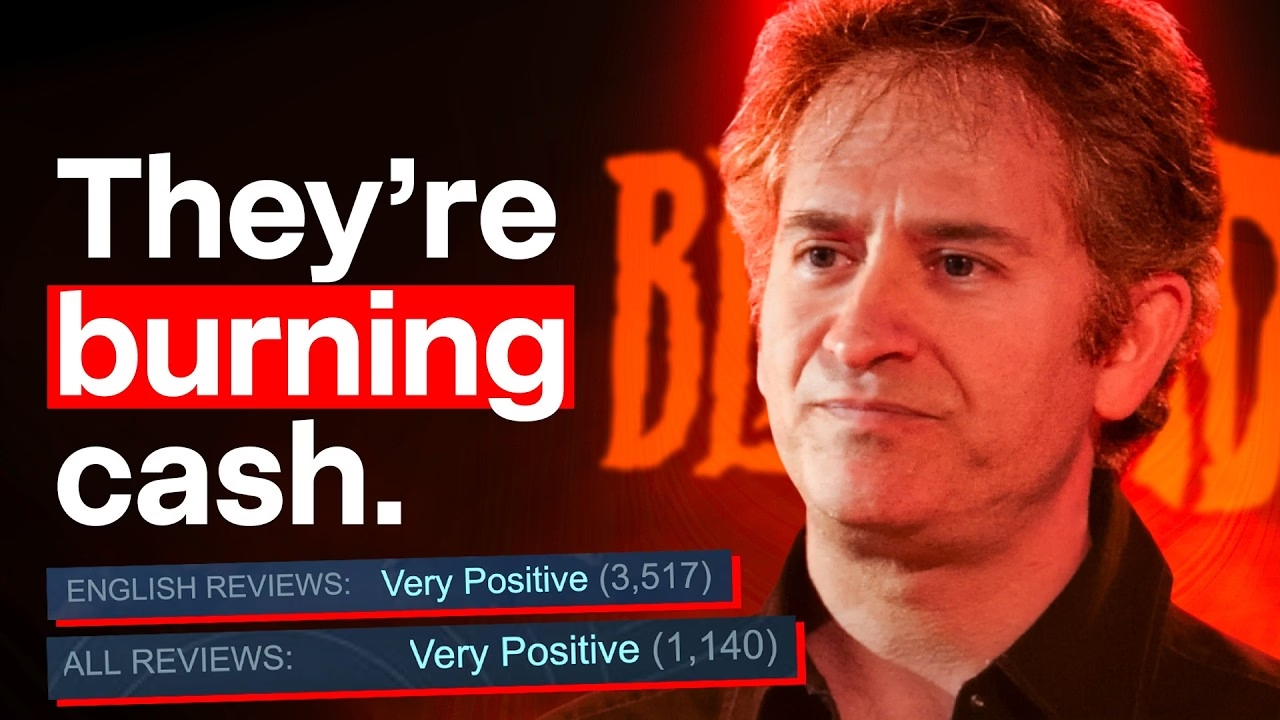
Former Blizzard developers are encountering significant financial challenges in their post-Blizzard ventures. Companies like Dream Haven, founded by Blizzard co-founder Mike Morhaime, aimed to create games free from corporate oversight — but have not avoided economic difficulty. Dream Haven's first game, Sunderfolk, sold 62,000 copies, which was insufficient to cover its development costs, leading to layoffs in their publishing division.
Key Takeaways
- Dream Haven's Sunderfolk sold 62,000 copies — not enough to cover development costs at studio scale.
- Multiple studios founded by Blizzard alumni (Fantastic Pixel Castle, Frost Giant, Uncapped Games) have faced layoffs or cancellations before shipping a hit.
- Veteran credentials no longer guarantee discovery in a market saturated by live-service titles and shrinking games media.
- Funding volatility from overseas investors has left several development teams in a precarious position mid-development.
- Younger players are less influenced by legacy Blizzard credentials than the studios' founders anticipated.
- Discovery has shifted to YouTube and Twitch, but those platforms are also saturated, making standout visibility harder than ever.
The individual stories that follow trace how these broader patterns played out across specific studios and their founders.
Journeys of Former Blizzard Designers
The departure from Blizzard prompted many of its senior developers to establish new studios:
- Greg Street, former Warcraft systems designer, founded Fantastic Pixel Castle to build a fantasy MMO.
- Tim Morton, formerly of StarCraft, launched Frost Giant Studios.
- Chris Kiy, who worked on Warcraft design, went on to create Notorious Studios.
Despite impressive résumés, results have varied widely. Some studios found a foothold — TheoryCraft Games shipped a debut title with a real player base. Others like Imaginary Studios and Light Forge Games faced layoffs before even launching. Uncapped Games cancelled Battle Aces in under a year.
The Unforeseen Market Shift
Dream Haven's financial struggles highlight a structural problem confronting these new ventures. Even with proven talent and promising designs, studios are hitting a market environment that veteran credentials alone cannot overcome. Dream Haven made games in well-established genres with non-exploitative monetisation — and still could not cover operational costs.
Sales Numbers at a Glance
| Game Title | Copies Sold |
|---|---|
| Sunderfolk | 62,000 |
| Wildgate | 130,000 |
Wildgate faced similar obstacles despite offering battle passes and cosmetics. Both figures illustrate the difficulty of achieving sustainability at the studio scale Dream Haven was operating.

The mismatch between studio ambition and commercial ceiling is what makes these numbers damaging — not the raw figures themselves, but the gap between what the games needed to earn and what the market delivered.
Changing Industry Dynamics
These setbacks are symptomatic of a rapidly evolving market where reliance on established credentials is no longer sufficient. While breakout exceptions like Expedition 33 exist, they are exactly that — exceptions. The gaming demographic is shifting, with younger players significantly less impressed by legacy industry surnames than the studios' founders anticipated.
Dwindling coverage from traditional games media compounds the problem. Fewer outlets remain to provide visibility to new projects, and the ones that do reach smaller audiences than at any point in the last decade. Even studios with high-quality finished games struggle to gain traction in a market dominated by well-established live-service titles.
The situation illustrates the precariousness of betting on veteran status to differentiate in today's industry. Recognition has to be earned with each new title — past credits do not transfer the way founders expected.
The Shift in Game Discovery and Funding
Traditional gaming media, once the primary gateway for new-game visibility, has seen its influence dramatically reduced. YouTube and Twitch now drive discovery — but both platforms are heavily saturated. A high-quality game that would have earned a prominent review slot a decade ago may now go unnoticed amid thousands of simultaneous releases. Publishers trimming losses when veteran-founded studios underperform is the direct consequence.
Challenges in Game Funding
Despite initial promises of robust backing, several new ventures have found themselves in a precarious mid-development position. Reports suggest that investor support for Greg Street's MMO project at Fantastic Pixel Castle may be retracting — mirroring a broader pattern of overseas investment withdrawal from the games industry. Strategic shifts in funding can strand development teams without the runway to ship.
- Dream Haven and Frost Giant face financial strains that have already triggered layoffs.
- Similar stories of funding retraction are emerging from studios spun out of other major publishers.
That pattern of funding volatility is now one of the defining risks for any studio trying to operate at this scale without a major publisher behind it.
The Changing Gamer Landscape
Stagnation in new-game adoption is another compounding factor. A large portion of the active player base sticks to established titles — Fortnite, Roblox, and other live-service games that have accrued years of content and community. Breaking through that gravity requires either a genuinely differentiated experience or a significant marketing budget that most indie and double-A studios cannot sustain.
- Indie and Double-A Games: These spaces produce distinctive titles but face severe difficulty gaining mainstream traction against live-service incumbents.
- Budget Recalibration: New studios must set smaller financial targets and longer runways to survive in the current environment.
Both adjustments require founders to accept a fundamentally different scale of operation than they were used to at Blizzard.
Implications for the Future
The broader risk is the potential loss of the generation of experienced developers who historically drove the industry's most ambitious games. The current environment struggles to retain them: even outstanding games are failing to find audiences, which ultimately affects both the developers and the players who might have benefited from their work.
| Concern | Impact |
|---|---|
| Discovery saturation | Strong games become overshadowed by incumbents |
| Funding volatility | Development teams left stranded mid-project |
| Stagnant market | New releases struggle to displace established live-service titles |
| Veteran talent loss | Reduced output quality and creative risk-taking industry-wide |
The gaming industry faces an interconnected crisis where financial stability, discovery, and talent retention are deeply linked. Addressing any one of these without the others produces only partial relief.
Frequently Asked Questions
Why are former Blizzard developers struggling to succeed on their own?
Veteran credentials no longer guarantee discovery or financial success. The market has shifted toward live-service games with established communities, and the media ecosystem that once amplified new releases has contracted significantly.
What happened to Dream Haven's games?
Dream Haven's Sunderfolk sold 62,000 copies — not enough to cover development costs at the studio's scale. Wildgate reached 130,000 copies but faced similar sustainability challenges, leading to layoffs in the publishing division.
Which studios did former Blizzard employees found?
Notable examples include Dream Haven (Mike Morhaime), Fantastic Pixel Castle (Greg Street), Frost Giant Studios (Tim Morton), and Notorious Studios (Chris Kiy). Results across all these ventures have varied significantly.
Is Expedition 33 evidence that the indie market is viable?
Expedition 33 is a genuine breakout success, but it is an exception rather than the norm. For every Expedition 33, dozens of high-quality titles from veteran teams fail to find an audience at sufficient scale.
Why has game discovery become so difficult?
Traditional games media has contracted sharply. YouTube and Twitch now dominate discovery but are heavily saturated. A well-made game that would have secured prominent coverage a decade ago may now go unnoticed amid thousands of simultaneous releases.
What is causing overseas investment to retract from game studios?
Strategic shifts in international investment — particularly from Asian markets — have reduced capital available to independent studios. This has left several development teams exposed mid-project without adequate runway to ship.
What needs to change for veteran-founded indie studios to succeed?
Studios need to recalibrate budget expectations, build smaller teams, and target niche communities with high engagement rather than broad appeal. Discovery through content creators matters more than press coverage, and sustained community building before launch is now a prerequisite rather than a bonus.