Key Takeaways
- Women make up roughly half of all gamers today yet represent only 6% of game protagonists, a gap that has narrowed slowly but persists at major studios.
- LGBTQ and non-binary characters account for fewer than 2% of playable roles across analyzed titles, despite growing player community diversity.
- Budget risk aversion leads major studios to default to proven character archetypes, but this leaves a measurable share of the player base underserved.
- Games like Tell Me Why (Dontnod), If Found... (DREAMFEEL), and A Normal Lost Phone (Accidental Queens) show that inclusive character design is commercially viable in the indie space.
- Deep customization systems (like Cyberpunk 2077's pronoun and gender-presentation options) let players project their identity without requiring a single fixed protagonist.
- Diverse development teams consistently produce more varied, less trope-dependent characters; homogeneous teams default to well-worn archetypes by default.
With those key points established, here is a closer look at each dimension of the problem and what forward-looking studios are doing about it.
The Current State of Gender Stereotypes in Games
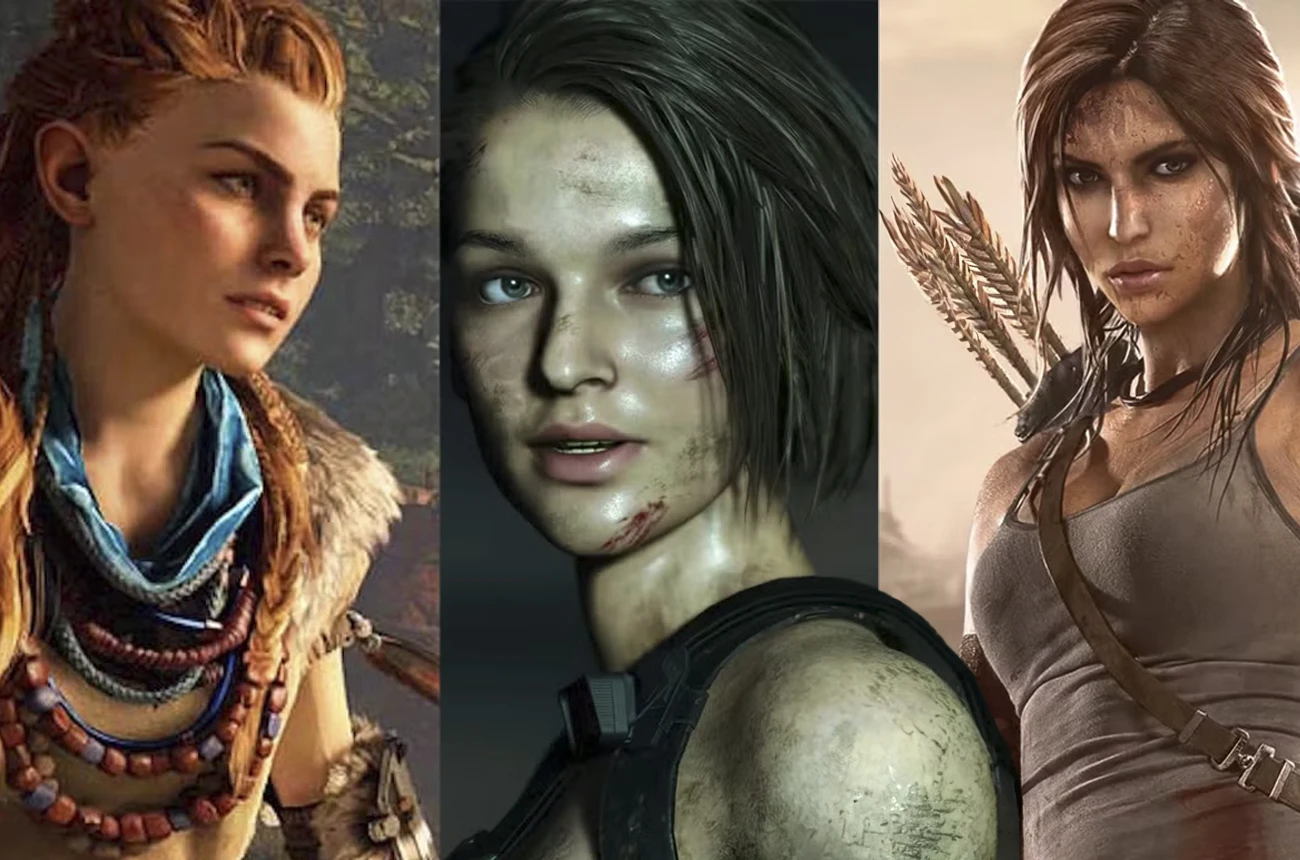
The video game industry has moved well past the era when almost every narrative revolved around rescuing a passive princess. Strong, complex female protagonists. Aloy in Horizon Zero Dawn and SHODAN in System Shock now headline major releases. But the underlying representation data shows the shift is partial.
Recent analysis found that while women now make up almost half of all gamers, only 6% of game protagonists are female. Many of those that do exist are still framed around a presumed male audience, given armor that exposes more skin than it covers, defined more by their appearance than by their agency.
Characters identifying as LGBTQ or non-binary are even scarcer. One study put such characters at under 2% of playable roles analyzed, meaning the majority of players in those demographics rarely see themselves reflected in the games they play.
✏️ Design note: The gap between player demographics and protagonist demographics is not a values argument; it is an addressable design gap that measurably limits market reach. Studios that have closed it have generally not suffered commercially for doing so.
Barriers Hindering Progress in Representation
Risk Aversion Among Major Studios
Triple-A game budgets have climbed into the hundreds of millions of dollars. At that scale, studios are reluctant to deviate from tested formulas. Early-stage focus group testing frequently reinforces the assumption that the target audience is a straight teenage boy, which becomes a self-fulfilling brief for character designers. The historical evidence is that diverse leads in major releases have earned strong commercial results, but the dominant risk calculus still treats inclusive design as a gamble rather than an opportunity.
Lack of Diverse Perspectives in Development Teams
The game industry workforce skews predominantly white, straight, and male. When character artists and writers share a narrow set of life experiences, the designs they produce reflect that narrowness through blind spots rather than intent. Teams without first-hand knowledge of a given identity are more likely to lean on secondhand archetypes than to construct nuanced portrayals. The result is a set of recurring tropes that fail to resonate with a wide share of players.
📌 Common oversight: Treating representation as a single checkbox ("we have a female lead") rather than a design principle. A female character whose entire characterization is "woman" is a stereotype, not progress. The question is not whether an underrepresented identity is present; it is whether the character exists beyond that identity.
Technical and Storytelling Complexity
Building games with highly customizable avatars, the technical route most likely to serve the broadest range of player identities, requires engineering investment that executives often weigh against the perceived upside. Narrative studios face a parallel challenge: writing protagonists with underrepresented identities that feel authentic rather than tokenized demands more from often homogeneous writing teams than repeating established templates. Without both the will and the resources to do the work properly, the path of least resistance is a generic protagonist.
Breaking the Mold: Revolutionary Approaches
Reconceiving Characters from First Principles
Industry voices who have successfully diversified their character rosters advise starting from scratch: build a personality around core traits (agency, wit, vulnerability, rivalry) before attaching a gender or orientation label. The label that emerges from a trait-first process tends to sit more naturally in the final character than one imposed at the top of the design document. Drawing directly from the diversity of real human behavior expands the design space beyond the well-worn defaults.
Building Diverse Creative Teams
The clearest lever studios have is staffing. A writing team that includes people of multiple genders, sexual orientations, racial backgrounds, and physical abilities will surface reference points that a homogeneous team cannot. For underrepresented identities, having someone with lived experience in the room is the difference between a portrayal that resonates and one that rings false. Sensitivity review processes and internal accountability systems help catch problems after the fact, but diverse hiring is the upstream fix.
⚠️ Important distinction: Sensitivity reviews catch problems that exist in a draft. They cannot generate authentic perspective that was never in the room. A review process is a quality check, not a substitute for representation within the creative team itself.
Customization and Player-Driven Identity
Cyberpunk 2077 demonstrated one path forward: expose deep sliders for physical presentation, voice pitch, and pronoun choice, and let players construct the identity they want to inhabit. This approach scales across orientation, gender, and disability representation, without requiring the studio to author every variant explicitly. Choice-driven narrative games can layer relationship complexity on top of that foundation, allowing players who want it to see their own relationship patterns reflected in the story.
Building Identity Into Core Mechanics
The most durable representations are those built into the structural logic of the game rather than appended as cosmetic options. In Sable, the player explores desert vistas and pieces together the protagonist's identity through the journey itself. The non-binary identity emerges from the game's introspection rather than being announced as a feature. Studios designing for accessibility follow the same principle: when the mechanic is inclusive by design, players with visual or motor barriers participate without a special mode or workaround.
Promising Examples of Inclusive Character Design
Mainstream studios have moved slowly, but three indie titles in particular demonstrated what becomes possible when representation is treated as a design goal from the start rather than a post-launch add-on.
Tell Me Why (Dontnod Entertainment)
Released in 2020, Tell Me Why was the first commercial game to feature a trans-male playable protagonist in a major narrative role. Tyler Ronan's character was developed with significant input from writer Mary Kenney, who grounded the storytelling in authentic trans experience. The critical response showed that players respond positively to specificity: Tyler's identity is part of who he is, not the defining gimmick of the game.
If Found... (DREAMFEEL)
If Found... is a visual novel about a young Irish trans woman returning home, built around themes of family, identity, and erasure. The artwork, black-and-white illustrations by Liadh Young, matched its intimate subject matter. The game demonstrated that stories exploring rarely depicted identities can find audiences through aesthetic distinctiveness and emotional honesty.
A Normal Lost Phone (Accidental Queens)
By placing players in the position of exploring the contents of a stranger's phone, A Normal Lost Phone guided them through the intimate story of Sam, a non-binary teenager. The mechanic itself carried the representation: players pieced together an identity through personal messages and photographs rather than being told what to think. Games like this show how unusual formal choices can deliver underrepresented stories with unusual force.
The Future of Representation in Games
The structural barriers (budget risk aversion, workforce homogeneity, and the technical cost of flexible systems) are real, and they change slowly. But consumer demand from a player base that now spans every demographic is building pressure from the outside, while indie studios demonstrate commercially viable paths from within.
When studios commit to characters that reflect the actual breadth of their players, the market they can reach expands. Games that have led on representation, including Horizon Zero Dawn, Cyberpunk 2077, Tell Me Why, and The Last of Us Part II, rank among the most commercially successful and critically acclaimed of their respective release cycles. The data is accumulating that inclusive character design is not a constraint on commercial success; it is increasingly a component of it.
FAQ
What percentage of game protagonists are female?
Based on studies conducted in recent years, approximately 6% of game protagonists are female. This is despite women representing close to half of the overall player base, a disparity that has narrowed over time but remains pronounced in major studio releases.
Why are gender stereotypes still common in AAA game character design?
Three forces sustain them: large-budget risk aversion (proven formulas feel safer at $100M+ stakes), a workforce that skews demographically homogeneous and lacks first-hand experience designing outside narrow archetypes, and the technical overhead of flexible avatar systems. All three are solvable problems, but they compound each other and change slowly.
Which games are the strongest examples of inclusive character design?
In the AAA space, Horizon Zero Dawn, Cyberpunk 2077, and The Last of Us Part II are frequently cited examples. In the indie space, Tell Me Why (Dontnod), If Found... (DREAMFEEL), and A Normal Lost Phone (Accidental Queens) represent some of the most carefully crafted inclusive narratives in the medium.
How does player customization support better representation?
Deep customization systems, like those in Cyberpunk 2077, allow players to set pronoun, voice, and physical presentation independently, decoupling gender expression from any single pre-authored identity. This is effective for players who want agency over their protagonist and reaches a wider range of identities than any fixed character can on its own.
Does a diverse development team actually change the output?
Yes, in documented ways. Teams with members who have first-hand experience of an identity they are depicting produce more specific and less trope-dependent portrayals. The gap between a character written by someone who shares the depicted experience and one written purely from research is typically visible in the specificity of dialogue, believability of motivation, and authenticity of emotional arc.
What is the commercial case for inclusive character design?
Several of the highest-grossing and most critically acclaimed games of the past decade feature leads who break from stereotypical templates. Widening the pool of players who see themselves in a game's protagonist increases the potential market. Studios that have made this shift have generally not suffered commercial penalties for doing so, and the trend toward more inclusive design continues to strengthen as the player demographic broadens.
What is the "Sable approach" to identity in game design?
In Sable, the protagonist's non-binary identity emerges through the game's narrative and exploration mechanics rather than being announced as a feature. The character's sense of self is discovered through play, which normalizes the identity as part of the game's world rather than presenting it as an exception or statement. Developers often cite this organic approach as a model for how representation can sit naturally within a game's design.
Last reviewed 2026-06-17 — Maintained by WowCarry's gaming team.