Trends in Video Game Pricing
This year began with anxiety over rising game prices, driven by companies like Microsoft and Nintendo pushing prices toward the $80 mark. Yet a quieter trend has been unfolding in parallel: the actual cost of games that people are buying is falling. Initially sparked by rumors of a $100 price tag for Grand Theft Auto 6, those worries deepened when Microsoft priced The Outer Worlds 2 at $80—a move it reversed in July 2025 when pre-orders fell short of expectations. The data beneath the headlines tells a different story.
Key Takeaways
- Despite publisher attempts to push $80 price points, the median cost of top-selling Steam games dropped by 20% between February 2023 and October 2025.
- Subscription service engagement continues to rise while direct game purchase spending declines—players are buying fewer games and relying more on libraries.
- Hollow Knight: Silksong launched at roughly $20 in September 2025 and surpassed 4 million copies in its first five days, reaching over 7 million by December.
- Two-thirds of US gamers buy two or fewer games per year, according to Circana's survey of 2,500 players.
- Steam users played an average of only four games in both 2023 and 2024, and just 10% buy a new game each month.
- The 18–24 demographic cut game spending by nearly 25% in 2025, reflecting broad economic pressure on younger players.
The data behind each of these observations is drawn from analyst reports and publisher disclosures covering 2023 through 2025.
Price Trends on Steam
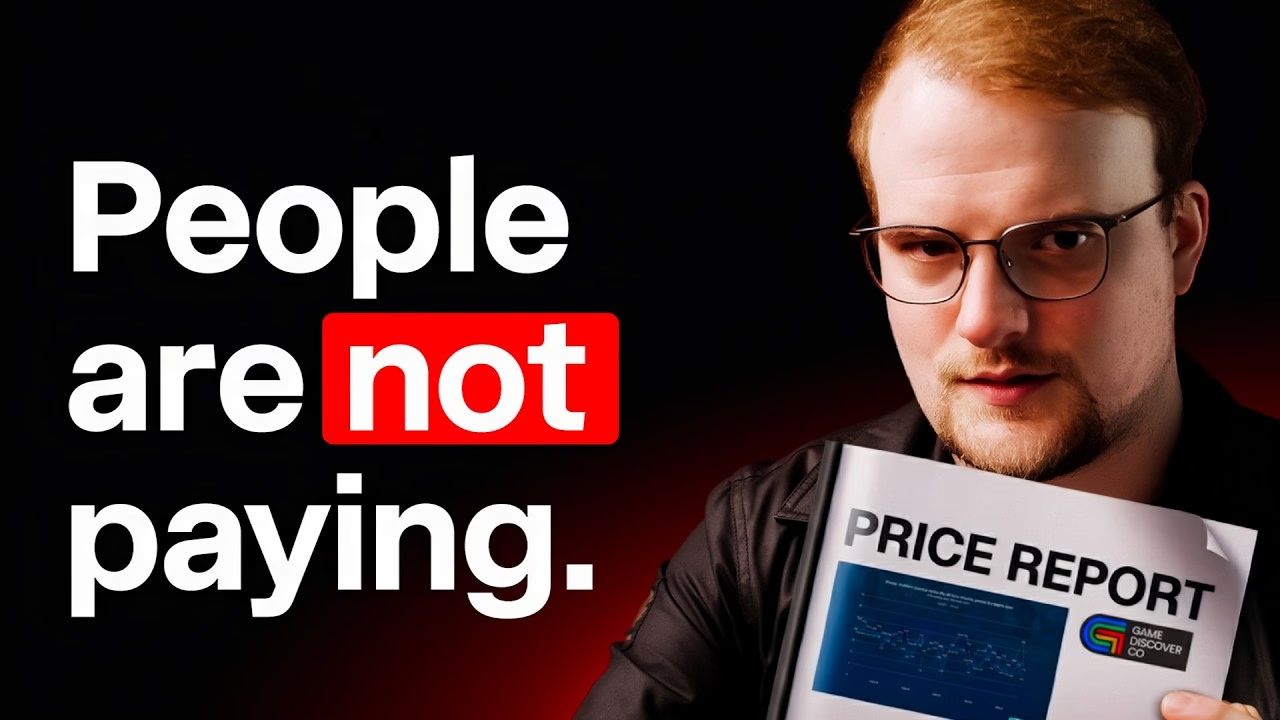
According to analyst Simon Carless of GameDiscoverCo, game prices on Steam have been quietly declining despite the AAA headline wars. His analysis of the top 50 new monthly games on Steam, ranked by sales, found:
- Median prices range from $10 to $20.
- Average prices range from $16 to $29.
- From February 2023 to October 2025, the average cost of bestselling games dropped by 2%, while the median fell by 20%.
The picture that emerges is one where players feel cultural pressure from $80 game announcements but their actual spending reflects a strong preference for mid-range and indie titles. That preference has become increasingly visible in sales charts.
Case Study: Hollow Knight: Silksong
The clearest example of this dynamic arrived in September 2025 when Hollow Knight: Silksong launched at roughly $20 and surpassed 4 million copies in its first five days, confirmed by developer Team Cherry. By December 2025 it had reached over 7 million copies—among the strongest unit-sales figures of any game released that year.
| Game Title | Launch Price | Copies Sold |
|---|---|---|
| Hollow Knight: Silksong | ~$20 | 4M+ first 5 days; 7M+ by Dec 2025 |
| Borderlands 4 | $69.99 | ~3.1M by October 2025 |
Silksong significantly outsold Borderlands 4 in unit terms. At $69.99, however, Borderlands 4 generated more total revenue despite moving fewer copies—underscoring that the two metrics tell different stories about market performance.
Consumer Spending Patterns
A significant portion of gamers do not buy many games regardless of price reductions. Circana's survey of 2,500 US players found:
- One-third of gamers purchase one or fewer games per year.
- 63% buy fewer than two games annually.
- Only 22% purchase a game roughly every three months—the profile of a genuinely engaged enthusiast.
This stratification explains a pattern that puzzles publishers: lower prices do not automatically translate into higher purchase volumes. The majority of players make very selective choices, frequently returning to established series in sports or first-person shooters. Spending in the bottom half of the income distribution is effectively constrained regardless of what publishers charge.
Industry Trends and Changing Dynamics
Steam users engaged with an average of only four games in both 2023 and 2024, and merely 10% of those users buy a new game each month. That selectivity resembles the "whale" dynamic familiar from free-to-play games, where a small percentage of buyers generates the bulk of revenue. It explains publisher reluctance to release new games simultaneously with anticipated blockbusters like Silksong or GTA 6.
The distinction between new and discounted older games matters here. Players frequently choose discounted titles over new releases at full price, which suppresses launch-week demand. The trend is troubling for developers because declining median prices do not guarantee increased volume—the audience's financial constraints are a floor that price cuts alone cannot move.
Economic Pressures and Spending Shifts
Recent figures point to declining game spending alongside rising subscription usage. Among September data, the top 10% of earners contributed to 50% of US retail sales, yet overall gaming expenditure dipped. The 18–24 demographic reduced game spending by nearly 25%, reflecting broader financial constraints on younger players. Subscription growth has cushioned some of that decline, but the shift in purchasing habits appears structural rather than cyclical.
The Changing Indie Scene
Indie developers are adjusting prices downward in response to consumer price sensitivity, aware that the $60 baseline model no longer guarantees volume. That adjustment forces scope changes: smaller teams are building tighter, more focused games rather than sprawling open-world titles priced to match AAA benchmarks.

For developers making these calls right now, a few strategic questions have become central:
- Does the game's price match the audience's demonstrated willingness to pay in its genre?
- Are there unique features that differentiate it from higher-profile competitors releasing nearby on the calendar?
- Can subscription licensing provide a revenue floor that offsets launch-week pricing pressure?
The gap between what publishers announce and what players actually spend keeps widening. For independent studios, that gap is the opportunity: a $20 game reaching 7 million players will outperform a $70 game reaching 3 million in nearly every metric that matters to a small developer.
Frequently Asked Questions
Are game prices actually going down despite $80 releases dominating headlines?
Yes. GameDiscoverCo's analysis of Steam's top-selling games found the median price of bestsellers fell by 20% between February 2023 and October 2025—even as headline $80 titles attracted news coverage.
Did Hollow Knight: Silksong really outsell Borderlands 4?
Silksong outsold Borderlands 4 in unit terms—over 7 million copies by December 2025 against Borderlands 4's approximately 3.1 million by October. However, Borderlands 4 at $69.99 likely generated more total revenue despite fewer copies sold.
How many games does the average player buy per year?
According to Circana's 2025 survey of 2,500 US players, 63% buy two or fewer games per year. Only 22% purchase a game every three months, representing the most engaged segment of the market.
Why did Microsoft reverse the price increase for The Outer Worlds 2?
Microsoft priced The Outer Worlds 2 at $80, then reversed course in July 2025, setting the final price at $70. The company cited market conditions; below-expectations pre-order performance was widely reported as the trigger.
Which age group cut game spending most sharply in 2025?
The 18–24 demographic reduced game spending by nearly 25% in 2025, the steepest decline tracked in Circana's data—reflecting broader economic pressure on younger buyers.
Are subscription services growing while direct game sales decline?
Yes. Analysts consistently report rising subscription service engagement alongside falling direct game purchase spending, suggesting players are shifting from buying individual titles to accessing libraries through services like Game Pass.
What does this pricing trend mean for indie developers?
The data favors studios pricing in the $10–$25 range. Silksong's performance at roughly $20 demonstrates that accessible pricing combined with critical quality can outperform AAA titles in unit sales. Subscription licensing provides an additional revenue floor that reduces launch-week pricing risk.