The Rise and Fall of NetEase in the West
The gaming industry has quietly witnessed a massive upheaval, largely under the radar for many. In 2025, NetEase, a Chinese gaming giant, made waves by dismantling several promising game studios worldwide. What seemed like a winning strategy at first quickly became a crisis as NetEase shuttered studios responsible for bringing potential hit games to life. These were not just any studios, but teams made up of experienced developers who had worked on games beloved by many.
Key Takeaways
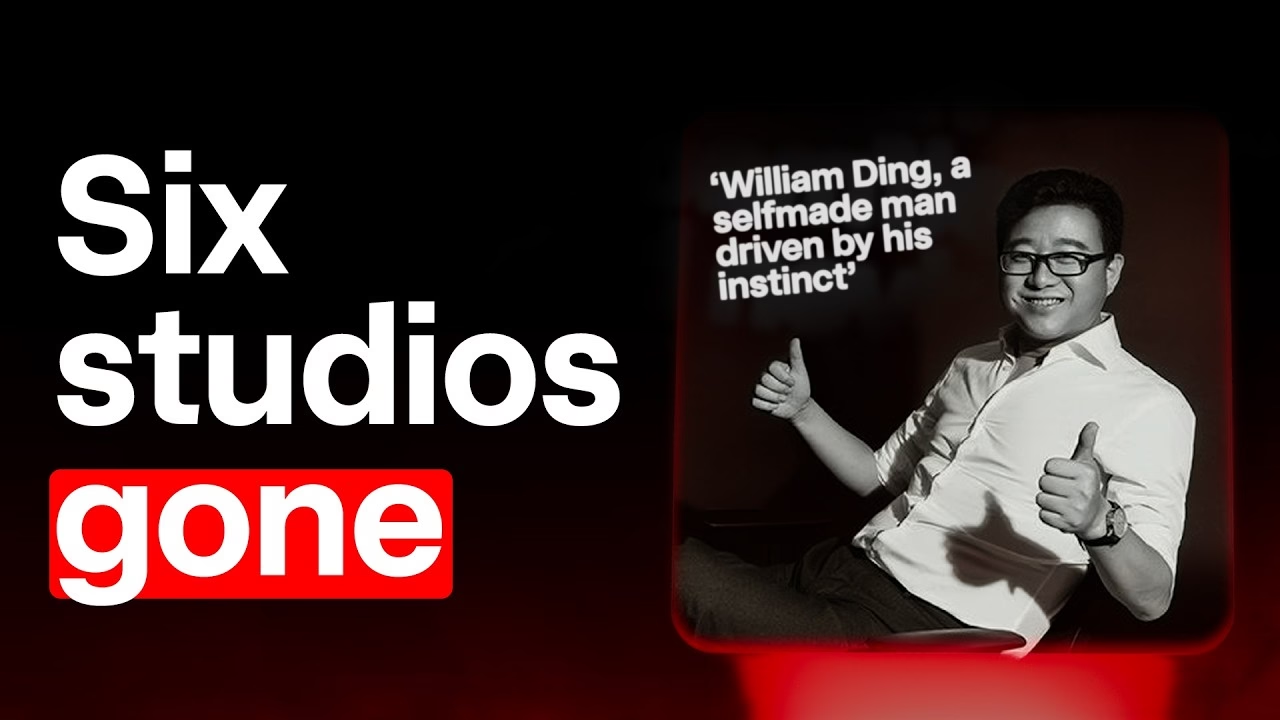
- NetEase closed six Western game studios in 2025, including Project Ghost (Greg Street, ex-Riot), T-minus Entertainment (Rich Vogel, ex-BioWare), and Jar of Sparks (Halo and Destiny veterans).
- Marvel Rivals, a team-based hero shooter with Marvel characters, became a top Steam revenue earner and anchored NetEase's Western commercial run.
- Frag Punk reached 100,000 Steam players in its first week; Destiny Rising earned $12 million rapidly after launch.
- NetEase's strategic pivot directed Western investment funds back to domestic Chinese development to control costs.
- Rebel Wolves and Liquid Swords survived by securing alternative external funding after NetEase stepped back.
- Quantic Dream was fully acquired by NetEase and retained; other studios either closed or continued with independent financing.
With those key facts in view, the full story of how NetEase built up then closed its Western presence unfolds below.
A Year of Success and High Costs
It all began on a high note with Marvel Rivals, a surprising hit that adapted the Overwatch formula with Marvel characters. Its success marked an exceptional year for NetEase, with games like Frag Punk hitting milestones like 100,000 Steam players in its first week and Destiny Rising earning $12 million rapidly. Despite these achievements, NetEase faced criticism for shutting down multiple studios, depriving the gaming world of new titles and ideas from veterans in the industry.
- Marvel Rivals: Took the Overwatch mechanics and succeeded with Marvel characters.
- Frag Punk: Reached 100,000 players on Steam within the first week.
- Destiny Rising: Accumulated $12 million in earnings swiftly.
These early wins masked the cost pressure building as Western studio overhead climbed quarter by quarter.
A Shift in Strategy
NetEase found its non-MMO games particularly successful. Among these was a Ubisoft-style action-adventure game that soared once it reached Western audiences, accumulating a quarter-million concurrent players. Yet, despite this success, moves were made to focus efforts within China, oftentimes at the expense of Western development teams.
- Wind Meat: Known for AI integration but stirred controversy.
- Sword of Justice: Did not meet similar success, yet shared a strategic focus on cosmetics over gameplay microtransactions.
That domestic pivot set the stage for a wave of Western studio closures that followed through the year.
The Bloodbath of Studio Closures
While creating new opportunities for Chinese developments, NetEase drastically cut ties with Western studios. Here's a look at some of the affected teams:
- Project Ghost: Formed by Greg Street, ex-Riot developer.
- T-minus Entertainment: Founded by Rich Vogel, a veteran from BioWare and Bethesda.
- Midnight Riders: Comprised of developers from Watch Dogs.
- Jackalyptic Games: Incomplete Warhammer MMO led to closure.
- Jar of Sparks: Led by veterans from Halo and Destiny franchises.
Additionally, support studios like Canada's Skybox Labs faced significant layoffs, restructuring NetEase's global presence.
Investment Retrospection
NetEase's initial strategy revolved around substantial Western investments, including key purchases like Quantic Dream. This reflected their intent to enable developers to create dream projects free from financial constraints. However, as the global economy shifted, so did the viability of this approach.
| Key Investments | Studio Outcomes |
|---|---|
| Quantic Dream | Acquired outright |
| Rebel Wolves | Minority investment, survives with external support |
| Liquid Swords | Continued operation with alternative funds |
The contrast between fully-acquired and externally-funded studios shows how little NetEase's own strategy shaped long-term outcomes for its partners.
Lessons from the Collapse
The narrative of NetEase's Western expansion shifts to one of careful consolidation. While the company initially pursued an aggressive expansion strategy, it was eventually deemed unsustainable. This strategic backtrack highlights the precarious nature of investment in an industry susceptible to rapid changes and corporate decisions made at a distance from the development floor.
This rise and fall story underscores the volatile nature of global gaming investments, illustrating the influence of individual decision-making at corporate levels. With new chapters waiting to unfold, the focus may well turn to the lessons learned from this tumultuous period in NetEase's history.
Industry Shifts and Developer Challenges
The narrative of industry consolidation by major gaming companies is sharply felt through the recent decisions made by NetEase. Having initially ventured into creating a network of Western-backed studios, NetEase realised they could more cost-effectively utilise their domestic assets. The shift away from Western investments was less about a lack of success and more about strategic reallocation of resources. Yet, the ripple effects on affected developers are tangible.
- Limited Recovery Options: Some developers, such as T-minus Zero Entertainment, managed to reclaim their projects. A small group of veteran developers secured funding to regain control over their brand, though they continue to face financial challenges without comprehensive backing.
- Current Funding Landscape: The available funding for gaming projects is dwindling, with investment pouring instead into mobile games or crypto-related ventures. This redirection leaves traditional gaming projects in a precarious position.
- Impact on Careers: Senior developers are confronted with a tough decision matrix. Options include transitioning to leadership roles, accepting lower pay, or exiting the industry entirely due to the lack of opportunities amid widespread layoffs.
- Project Size Adjustments: The strategy of scaling up projects is no longer viable, reflecting a broader shift in the industry towards smaller, more financially cautious productions.
- Emergence of Free-to-Play Models: There is an increasing trend towards free-to-play games with microtransactions, enabling players to access high-quality titles without upfront costs — particularly appealing in an era of reduced consumer spending power.
These career and funding pressures form the backdrop for the new product strategies NetEase began testing after the closures.
Future Developments and Caution
Several new projects indicate a pivot towards free-to-play models that are gaining traction. Notably, NetEase's recent successes with Marvel Rivals and Where Winds Meet illustrate that blockbuster single-player games can thrive within a free-to-play framework.
While such models promise accessibility, there is an underlying caution regarding the stability and long-term support for upcoming titles. For instance, studios associated with NetEase, like Nagoshi Studio's "Gang of Dragon," face challenges sustaining operations if left unsupported post-launch.
| Game Title | Description | Notable Features |
|---|---|---|
| Marvel Rivals | Competitive multiplayer title | Consistent player base, top Steam revenue earner |
| Where Winds Meet | Free-to-play single-player experience | Viable blockbuster model with accessible pricing |
| Gang of Dragon | Yakuza-inspired project from Nagoshi Studio | Lacks major post-launch support pipeline |
This tumultuous period in gaming history reflects how singular executive decisions can ripple through the industry, impacting both developer careers and the games consumers expect. With the landscape of funding and support shifting, many unrealised projects remain in the wake of NetEase's strategic pivot.
Frequently Asked Questions
Which game studios did NetEase close in 2025?
NetEase closed Project Ghost (founded by ex-Riot developer Greg Street), T-minus Entertainment (Rich Vogel, formerly of BioWare and Bethesda), Midnight Riders (Watch Dogs veterans), Jackalyptic Games (working on a Warhammer MMO), and Jar of Sparks (Halo and Destiny veterans). Support studio Skybox Labs in Canada also saw significant layoffs as part of the restructuring.
Why did NetEase shut down its Western game studios?
NetEase determined that Western studio investments had become financially unsustainable amid a shifting global economy. Despite individual successes with Marvel Rivals and Frag Punk, the overhead of maintaining large Western development teams outpaced returns. The company pivoted toward domestic Chinese development, where costs were more controllable and its existing infrastructure could deliver results faster.
Is Marvel Rivals a NetEase game?
Yes. Marvel Rivals is developed by NetEase in collaboration with Marvel Games. It's a team-based hero shooter featuring Marvel characters that became a top Steam revenue earner following its launch, sustaining a large consistent player base.
What happened to Project Ghost after NetEase's withdrawal?
Project Ghost, the studio founded by Greg Street (formerly of Riot Games' champion design team), was shut down before its project reached completion or public announcement. It did not survive the 2025 consolidation round.
Did Rebel Wolves survive the NetEase studio closures?
Yes. Rebel Wolves received a minority investment from NetEase rather than a full acquisition. When NetEase pulled back from Western projects, Rebel Wolves secured alternative external funding and continued operations independently.
What games did NetEase successfully launch before closing its Western studios?
Marvel Rivals (team-based hero shooter, top Steam earner), Frag Punk (100,000 Steam players in its first week), and Destiny Rising ($12 million earned rapidly at launch) all shipped successfully before the studio closures began. Where Winds Meet also demonstrated that a free-to-play single-player model could succeed in the Western market.
Is NetEase still operating game studios in the West?
NetEase retained Quantic Dream through outright acquisition and maintains a reduced Western presence via minority stakes like Liquid Swords, which continued with alternative funding. The company's focus shifted primarily toward domestic Chinese development after the 2025 consolidations.