The RAM Market in Mid-2026
March 2026 was the first month in over half a year that DDR5 retail prices in Germany fell instead of rising, and the headlines that followed were the closest thing to good news PC builders have read since the AI boom started squeezing memory contracts. The reality underneath those headlines is messier. Prices ticked down because consumer demand cracked, not because supply caught up, and the contract market that actually sets DRAM pricing went the other direction. The crisis is changing shape, not ending.
Key Takeaways
- Retail relief is real but narrow: DDR5 fell 7.2% month-over-month in Germany in March, the first decline after eight months of climbs, but the index still sits roughly 308% above the July 2025 baseline.
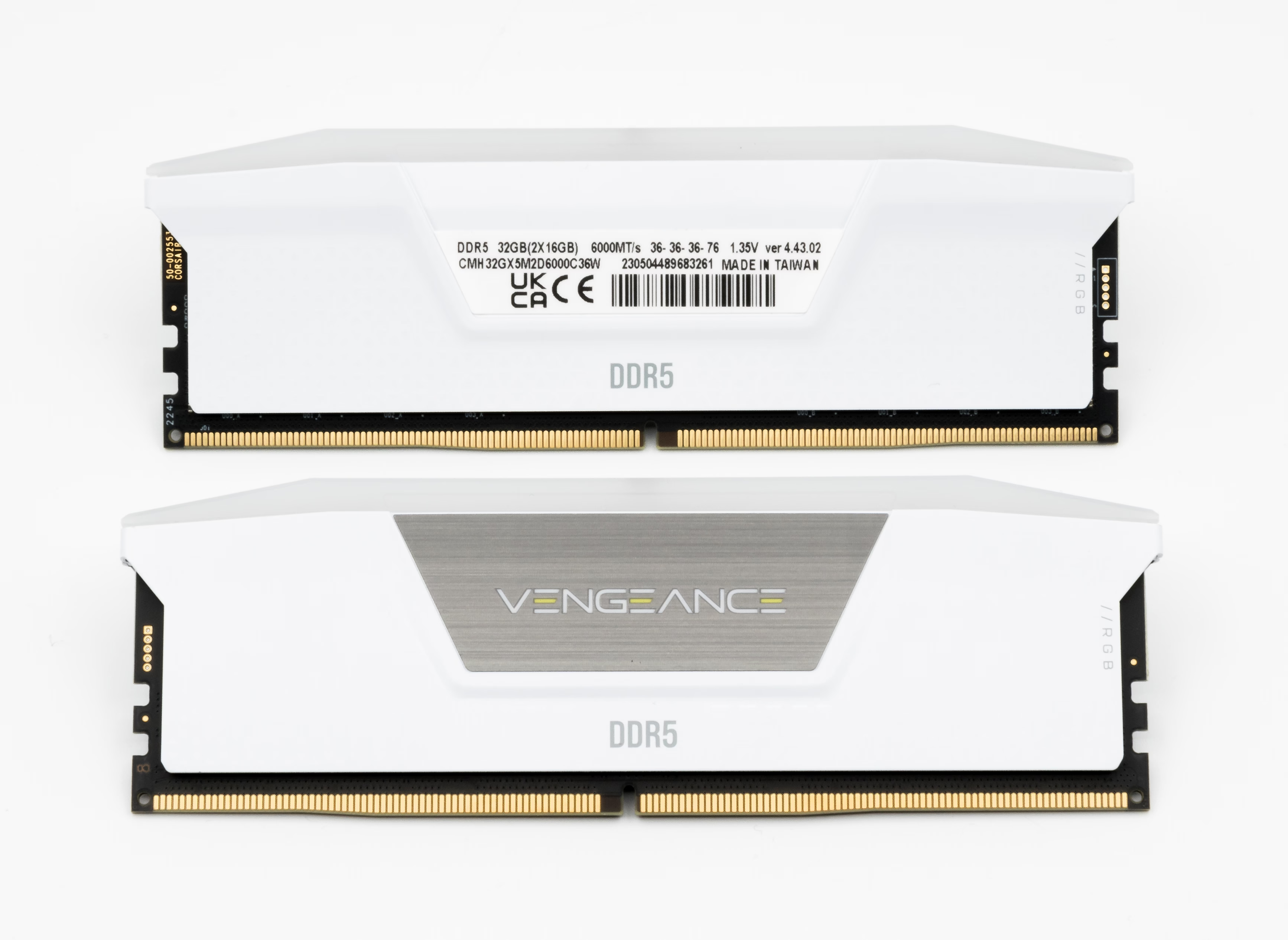
- US prices moved too: a 32GB Corsair Vengeance 6400 MHz kit dropped from about $490 down to around $380, but bulk distribution remains tight.
- Contract market is going the other way: TrendForce projects DRAM contract prices climbing 58-63% quarter-over-quarter in Q2 2026, with NAND up 70-75% over the same window.
- Google's TurboQuant cut KV-cache memory by ~6x: investors briefly panicked and Samsung, SK Hynix and Micron all dipped, but Jevons paradox says efficiency gains drive more total demand, not less.
- Dell's CEO claims AI memory demand will be 625x bigger in 2028 than 2022: spoken at a Bank of America investor event in April; community analysts argue 180x is the more defensible number.
- Stormgate lost its multiplayer servers to AI: server partner Hathora was acquired by Fireworks AI and is pivoting to AI inference; Splitgate 2 and Predecessor are caught in the same exit.
- Helium is the silent bottleneck: drone strikes on Qatar's Ras Laffan in late February took 27-30% of global helium supply offline, and ASML's EUV lithography depends on it.
The rest of this breakdown explains why the consumer headlines and the enterprise reality keep telling such different stories, and what each of them means for someone deciding whether to upgrade now or wait.
Why Consumer Prices Eased in March
Three things moved at once. German DDR5 fell 7.2% month-over-month per VideoCardz' index reading off 3DCenter / TrendForce data. Chinese channel inventory began clearing, with DDR5 spot relief estimated at 25-35% off January and February peaks. And US retailers cut popular SKUs to keep shelf velocity, with the canonical example being the Corsair Vengeance 6400 MHz 32GB kit falling from roughly $490 to roughly $380.
None of those movements reflect underlying supply. They reflect consumers and small system integrators stepping back from a market where prices had tripled in six months. When the consumer market shrinks faster than retailers can move inventory, retailers cut. The same German index still sits about 308% above the July 2025 baseline, which means a March drop of 7% reads more like a small step back from the cliff edge than a return to normal.
The buy-or-wait math for a builder right now is therefore narrower than the headlines suggest. If you needed RAM in March and the price was workable, the window may not get wider before contract pressure pushes retail back up. If you can wait until Q3 and don't need 64GB+ kits today, sitting out the volatility costs nothing.
Why the Contract Market Went the Other Way
TrendForce's Q2 2026 contract price guidance projects DRAM rising 58-63% quarter-over-quarter and NAND rising 70-75%. Those increases come on top of a Q1 that had already seen 90-95% quarter-over-quarter contract increases. The compounding effect is what investors actually price into Samsung, SK Hynix and Micron earnings, which is why the retail relief stories have not translated into memory-supplier stock weakness.
Samsung's Q1 2026 operating profit jumped over 8x year-over-year. The semiconductor division alone reported a 48x increase. CNBC's read of the earnings call attributed the jump to AI memory demand and warned of a 2027 shortage risk for the first time, language Samsung has not used in prior cycles.
Google TurboQuant and the Jevons Counter-Argument
Google Research published TurboQuant on March 25, 2026, demonstrating compression of large-language-model KV-caches down to 3 bits with effectively no accuracy loss. The 4-bit variant reportedly delivers up to 8x throughput on H100 hardware, and the headline 6x memory reduction triggered an investor sell-off in the major memory suppliers within 24 hours.
The sell-off lasted about a week before reversing. The Jevons paradox argument is straightforward: when you make a resource cheaper to use, you don't reduce total consumption, you expand the addressable use cases. Battery efficiency improvements never made phones smaller; they made phones do more. If TurboQuant cuts AI memory per query by 6x, the answer is more queries running at the same data center power envelope, not fewer DRAM contracts.
The 625x Projection and Why Analysts Push Back
Michael Dell told a Bank of America investor audience in early April 2026 that total AI memory demand in 2028 will be 625 times larger than it was in 2022. The math is 25x per-accelerator memory capacity multiplied by 25x scale of accelerator count. Both factors are aggressive on their own; multiplying them assumes neither curve bends.
Notebookcheck's analysis argues 180x is the more realistic figure when you account for the fact that 80GB H100 accelerators are already shipping and per-accelerator capacity gains are decelerating as memory bus widths approach physical limits. Either number is enormous. The reason it matters is that even the skeptical 180x scenario is sufficient to keep memory in structural shortage through 2027.
When AI Eats Gaming Infrastructure
The clearest gaming-side casualty of 2026's resource squeeze is Stormgate. Frost Giant's RTS lost its multiplayer servers in April after server partner Hathora was acquired by Fireworks AI, which is pivoting Hathora's compute orchestration to AI inference. Stormgate added an offline mode for campaign, co-op and bot battles, but online competitive play went dark. Kotaku's coverage noted that Splitgate 2 and Predecessor are caught in the same transition.
This is the pattern industry watchers have warned about for two years: AI workloads pay more for compute than gaming does, and infrastructure providers have shareholders. When a small studio's hosting partner gets a 10x acquisition offer from an AI buyer, the game becomes a footnote on the diligence call.
Helium, Lithography and the Geopolitical Tail
The story under the story is helium. Drone strikes on Qatar's Ras Laffan complex on February 28, 2026 knocked 27-30% of global helium supply offline. Helium cools ASML's EUV lithography machines, which make every leading-edge chip on the planet, including the HBM stacks AI accelerators depend on. South Korea, where Samsung and SK Hynix do most of their leading-edge wafer fabs, imports approximately 65% of its helium from Qatar.
Regional shipping disruptions through the Strait of Hormuz in early March added a logistics layer to a chemistry problem. Even if Qatar's facility restarts at full output tomorrow, the inventory gap takes quarters to close. The "party balloons" framing some commentators reached for misses the load-bearing point: without helium, the wafer fabs slow down, and slower fabs make every shortage worse.
Q1 Print vs Q2 Forecast
| Indicator | Q1 2026 | Q2 2026 Projection | Source |
|---|---|---|---|
| DRAM contract prices | +90-95% QoQ | +58-63% QoQ | TrendForce |
| NAND contract prices | +~50% QoQ | +70-75% QoQ | TrendForce |
| German DDR5 retail (MoM) | +climbs through Feb | -7.2% in March | VideoCardz / 3DCenter |
| Samsung operating profit YoY | +8x (total) / +48x (semis) | Guidance withheld | CNBC earnings call |
| Stocks after TurboQuant | n/a | Samsung, SKH, Micron dipped then recovered | VentureBeat |
The two columns read like different markets because, functionally, they are. Consumer retail responds to demand within days. Enterprise contracts respond to demand 6-9 months later, which is why the AI capacity builds happening today are pricing into Q3 and Q4 2026 memory pipelines.
What This Means for PC Builders Right Now
The honest read for a PC builder in May 2026 is: the worst of the panic-buying spike has passed, the cliff-edge prices of February have softened slightly, and the structural pressure that caused those prices has not eased at all. If you are building a new system and the parts you want are at a price you can stomach, buying now is defensible. Waiting six months may not get you a better number, and may get you a worse one.
If you already have a working system and a 32GB or 64GB kit, the upgrade-to-128GB urge can wait. The enthusiast-tier RAM market has the least slack, and prices on bigger kits are likely to climb fastest as Q2 contract increases ripple through retail in Q3. Short version: buy the price you can stomach today, or sit out the year. Halfway plans get punished both directions.
Frequently Asked Questions
Are RAM prices going down for the rest of 2026?
Probably not. The March drop was a consumer-side correction off panic-buying highs. TrendForce projects Q2 contract prices climbing 58-63% for DRAM, which historically takes one to two quarters to show up in retail. Expect retail to drift back up by Q3.
Should I buy RAM now or wait?
If the price you see is workable for your build, buying now removes uncertainty. Waiting six months is a coin flip with the coin slightly weighted toward worse pricing, not better.
Why did Samsung and Micron stocks drop after Google announced TurboQuant?
Investors briefly read 6x memory compression as 6x lower demand. The Jevons paradox argument reversed the trade within a week: cheaper-per-query AI memory drives more queries, not fewer accelerator deployments.
Is the Stormgate situation a one-off?
No. Splitgate 2 and Predecessor are caught in the same Hathora-to-Fireworks transition. The broader pattern of AI workloads outbidding gaming for hosted infrastructure is likely to surface again across smaller multiplayer studios through 2026.
Why does helium matter for chip prices?
ASML's EUV lithography machines use helium for cooling. Every leading-edge chip on the planet, including HBM memory for AI accelerators, passes through those machines. A helium supply shock slows wafer fabs, which slows every downstream supply chain.
Is the 625x AI memory projection from Dell credible?
The math behind it (25x capacity multiplied by 25x scale) is aggressive on both sides. Analysts have argued 180x is the more defensible scenario. Either way, the structural shortage thesis through 2027 is intact.