Marvel Rivals' Blood Hunt — A Beginner's Map of the Mode
Blood Hunt is the Season 7.5 PvE event in Marvel Rivals, co-op for one to four players, live since April 23, 2026, scheduled to leave the playlist on July 30, 2026. The mode runs you through wave-based combat against Dracula's vampire horde, layered on top of a hero-specific Trait tree, an in-match Arcana upgrade shop, an account-wide Arcane Realm passive tree, and a Forge crafting station. The first time you load in it looks dense; once the four systems click into place it plays cleanly. This guide walks the whole stack.
Key Takeaways
- Mode is a Season 7.5 limited PvE event — solo or up to 4-stack, opens April 23, 2026, sunsets July 30, 2026. Accessed via Playlist → Rivalry → Blood Hunt.
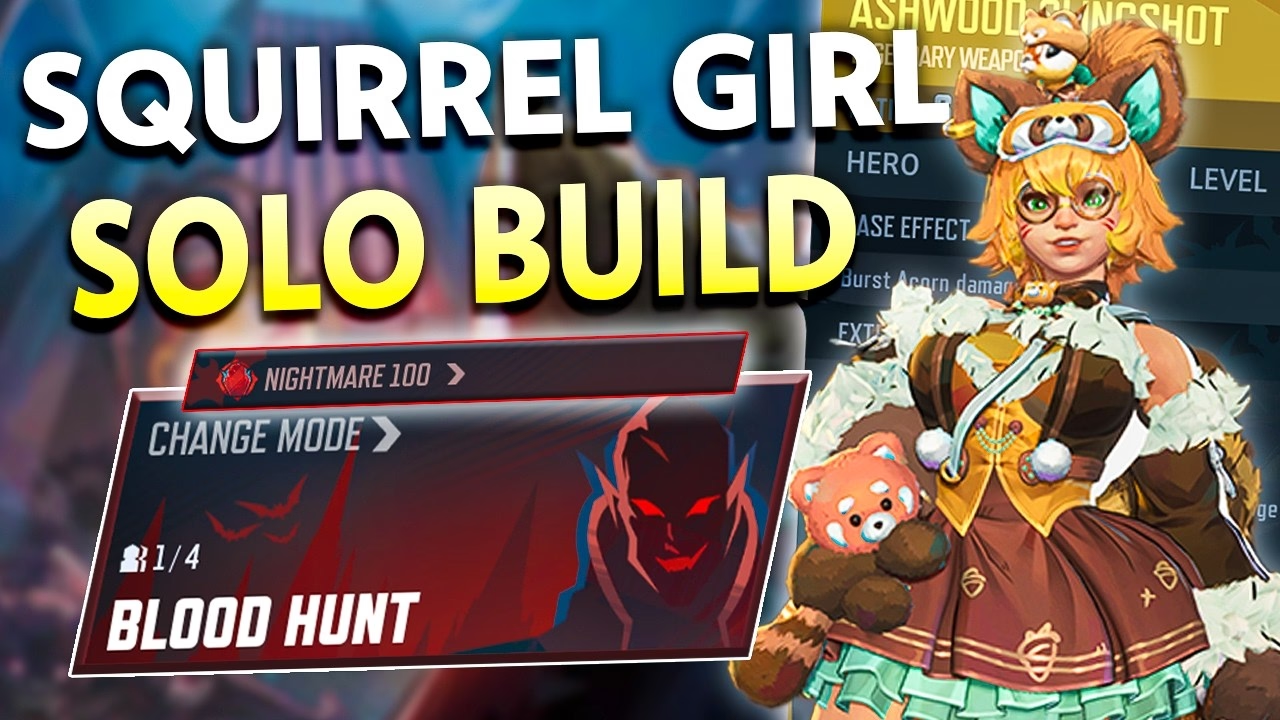
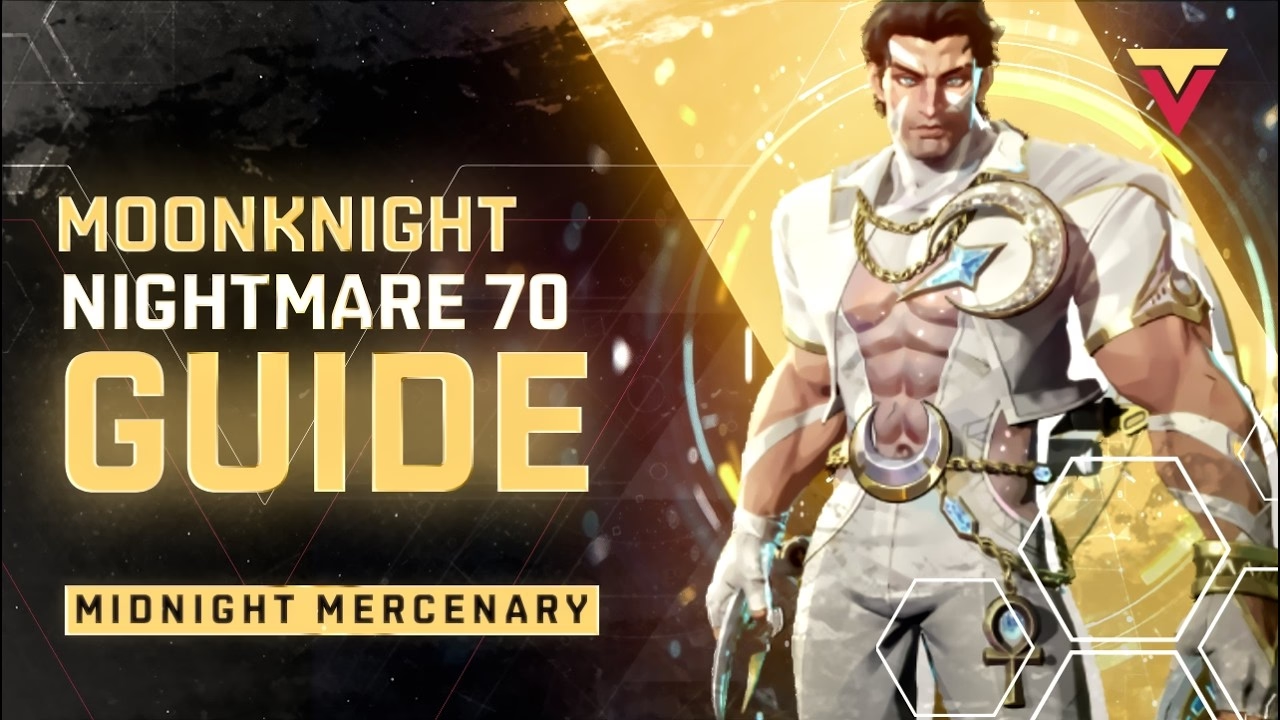
- Six heroes only, with duplicates allowed: Blade, Moon Knight, Jeff the Land Shark, Squirrel Girl, The Punisher, Thor. Each has a Blood-Hunt-specific kit, not their standard PvP one.
- Difficulty ladder: Normal (5 phases, Capwolf boss) → Hard (8 phases, adds Ratatoskr) → Extreme (12 phases, Blood Crystal at Phase 12, Dracula finale + hidden Kingpin encounter) → Nightmare (open-ended; every Nightmare-5 clear unlocks the next 5 levels; titles at 40 and 70).
- Two progression layers — in-match Arcana Points spent at the Arcana Store between phases, plus the account-wide Arcane Realm with permanent Scrolls (Conquest, Immortality, Blessing, Midas).
- The Forge — scrap unwanted gear into Uru Shards, craft new pieces for a specific hero + slot. Epic and Legendary outputs become realistic at hero level 32+.
- Reward shelf — 100 Units milestone, 100 Unstable Molecules milestone, titles ("Fearless Executioner" at Nightmare 40, "Purifying Thunder" at 70), Moods, Emojis, Sprays, Gallery cards, and the Kingpin Dethroned Trophy Accessory crafted from 100 Kingpin Trophy Shards.
- Mobs are vampires, not zombies — Dracula's horde theme drives the entire event. Bosses include hero-variant distortions like Capwolf (werewolf Captain America).
With the high-level map in place, here is how to actually launch into a run.

With that scene set, the article continues.
Getting Started with Blood Hunt
To launch Blood Hunt, open the main menu → Playlist → Rivalry tab → Blood Hunt. You first pick a difficulty; only Normal is open at the start, and clearing each difficulty unlocks the next. In Normal mode, you choose a hero and fight through vampire waves using your hero's Blood-Hunt-specific weapons and abilities, with a rechargeable heal you can deploy when overwhelmed. Each cleared wave grants an Arcana Point that you can spend at the Arcana Store between phases on one of three random upgrade cards.
Phases and Boss Fights
Each difficulty layers phase count and bosses on top of the prior tier. Quick reference:
- Normal difficulty: 5 phases. Boss is Capwolf, the werewolf Captain America variant. Two phases. The first features prey-mark, shield swing, ground slam, and shield throw stuns; second adds prey-damage lifesteal, an interruptible teleport-pin channel, and a one-time near-death regen.
- Hard mode: 8 phases. Capwolf plus Ratatoskr, the Norse-mythology rodent boss layered on after Capwolf's clear.
- Extreme mode: 12 phases. Includes a Blood Crystal phase at Phase 12 and culminates in Dracula. Kingpin spawns as a hidden optional encounter when you complete a specific in-mode challenge. Clearing him drops Kingpin Trophy Shards that feed the Kingpin Dethroned Trophy Accessory crafting recipe.
- Nightmare: An open-ended ladder. Clearing every Nightmare-5 boundary unlocks the next five levels. Hero-specific titles unlock at Nightmare 40 ("Fearless Executioner") and Nightmare 70 ("Purifying Thunder"). Boss rotation expands as you climb. Community runs document play up to Nightmare 120+.
These phases reward strategic playing, particularly during boss fights where visual telegraphs are the difference between a kill and a wipe.
Customization and Enhancement
Blood Hunt's depth sits in its customisation. Heroes level up by completing matches and receive gear drops sorted into four slots: weapon, armor, accessory, and exclusive items. Each gear piece carries:
- Base effects: Consistent across items in the same category, but their values scale with item level and rarity.
- Extended effects: Unlock as rarity climbs (White → Green → Blue → Purple → Gold), offering build-defining bonuses.
The gear shelf rewards picking pieces that match your hero's playstyle rather than chasing raw damage numbers. Rarity influences both base attributes and how many extended effects roll onto the item.
| Gear Category | Example Effects | Rarity Impact |
|---|---|---|
| Weapon | Damage boost for specific attacks | Higher rarity unlocks extra effects |
| Armor | Increases defense stats | Increased base defense values |
| Accessory | Enhances healing abilities | Additional special effects |
| Exclusive | Boosts unique hero abilities | Greater customization options |
With the gear shelf understood, the next system you will touch is the Forge.
The Forge and Enhancement
The Forge is where gear management lives. Smelt unwanted gear into Uru Shards, then spend the shards to craft new pieces for a chosen hero and slot. Key features:
- Smelting gear: Turn unwanted items into Uru Shards. Higher-level and rarer items yield more shards.
- Crafting new gear: Spend shards to forge gear, selecting the slot and hero ahead of the roll. Output quality is RNG-driven. The info icon shows current odds.
- Quality scaling: Epic and Legendary outputs become realistic at hero level 32+, so push hero levels before grinding the Forge for top-end pieces.
Engaging with the Forge unlocks the build refinement that opens up Hard and Extreme tiers. Without forge-crafted gear, you will plateau around mid-Hard.
Arcana — In-Match Cards and the Arcane Realm
The blog body's "Arcana" actually maps to two separate systems that share a name, and conflating them is the most common new-player mistake. Treat them as distinct.
In-match Arcana Points: earned per cleared wave, spent at the Arcana Store between phases. Pick 1 of 3 random upgrade cards. Categories include:
- Offensive Arcana (red): damage, crit, and ult-charge cards. Highlights are Lethal Strike, Close Quarters, Final Prey, Boss Hunter, and Deep Freeze.
- Defensive Arcana: survivability cards including Iron Body and Indomitable.
- Utility Arcana: cooldown and resource cards. These are usually third-priority unless the random pool offers nothing else.
The card pool is shared across all heroes and difficulties.
Arcane Realm: account-wide permanent buff tree, organised into Scrolls. Scroll of Conquest (Normal, total output) and Scroll of Immortality (Normal, health) unlock first. Scroll of Blessing and Scroll of Midas unlock at Nightmare 70. The Arcane Realm is where long-term grind pays off. Every run feeds it.
Traits and Character Optimization
Each hero has a Trait skill tree split into three columns: one general column shared across abilities, and two ability-specific columns. You earn one assignable Trait Point per level, all the way to the level-60 cap. Each upgrade changes how an ability works, not just its damage number.
Some general-tree traits expose free supplementary upgrades that do not cost a Trait Point. These free toggles often reshape an ability's behaviour. The Punisher's turret-mode toggle, for example, swaps his manual turret into an automated sentry, completely changing how you use the slot in a mob phase.
When building, keep one eye on the metrics panel on the left side of the screen. It updates live as you swap gear, Arcana cards, and traits. If a term is unfamiliar like "close-range enemy" or "healthy enemy", hover for the tooltip; the in-game definitions are precise and you should not guess.
Fine-Tuning Your Build
To push higher Nightmare clears and lock the limited-time rewards before July 30, you want a build that is internally consistent rather than maxed on raw stat sums. A few tips:
- Allocate Trait Points around the hero's loop: build for the ability you press the most, not the highest single-target damage number.
- Watch the metrics panel: every gear/Arcana swap updates the displayed numbers. Use the panel as your build calculator.
- Use free upgrade toggles: they cost no Trait Points but rewrite ability behaviour, so they are the highest-EV decisions in the tree.
- Hover for tooltips: the in-game definitions of conditional terms ("close-range", "healthy", "vulnerable") are precise. Guessing burns runs.
- Level the right heroes first: hero-locked Trait Points do not transfer. Pick two heroes that cover both mob and boss phases and grind them to level 32+ before spreading wider.
If you want to skip the early grind and run Extreme with someone who already has the Trait sheets dialled, our Marvel Rivals carry team covers Blood Hunt clears at every difficulty.
Frequently Asked Questions
When does Blood Hunt end?
Blood Hunt is scheduled to leave the playlist on July 30, 2026. After that the mode and its limited-time reward chain, including the Kingpin Dethroned Trophy Accessory, is no longer obtainable through the event playlist.
Which heroes can I play in Blood Hunt?
Six heroes are playable: Blade, Moon Knight, Jeff the Land Shark, Squirrel Girl, The Punisher, and Thor. A team of 4 can run duplicates of the same hero, so you can stack the same kit across the squad.
Is Blood Hunt fighting zombies or vampires?
Vampires. Dracula is the Extreme finale boss, and the mob theme runs all the way through, with vampire foot soldiers, distorted hero variants like Capwolf, and elite vampire commanders at boss phases. Older guide copy that calls them zombies is wrong.
How do I unlock Hard, Extreme, and Nightmare difficulty?
You unlock each difficulty by clearing the prior tier once. Normal → Hard → Extreme → Nightmare. Nightmare itself is an open-ended ladder — every Nightmare-5 clear unlocks the next five levels, with titles unlocking at Nightmare 40 and 70.
What is the difference between Arcana Points and the Arcane Realm?
Arcana Points are an in-match currency you earn per cleared wave and spend at the Arcana Store between phases on random upgrade cards (Offensive, Defensive, or Utility). The Arcane Realm is an account-wide permanent buff tree organised into Scrolls (Conquest, Immortality, Blessing, Midas) that levels up over time across runs. Treat them as two separate systems.
Who is the hidden Kingpin boss?
Kingpin is an optional Extreme-tier boss that spawns when you complete a specific in-mode challenge during your run. Clearing him drops Kingpin Trophy Shards; 100 shards craft the Kingpin Dethroned Trophy Accessory. He does not appear in Normal or Hard difficulty.
When should I start farming the Forge?
Push your main hero to level 32+ first. Below that, the Forge's RNG ceiling caps your outputs at low rarities and you waste Uru Shards. Once your hero is at 32+, Epic and Legendary outputs become realistic and Forge crafts begin to compete with drop-luck gear.
Closing Thoughts
Blood Hunt rewards system literacy more than reflex. Once the Trait tree, gear shelf, Forge loop, in-match Arcana cards, and the Arcane Realm slot into place, the difficulty ladder unfolds in a predictable way: Normal clears teach you the loop, Hard introduces the second boss layer, Extreme tests your build's ceiling, and Nightmare lets you grind cosmetics and titles for as long as the event runs. The July 30 sunset is a real deadline — start before then.