Key Takeaways
- Namor and Hela are the dominant poke duo — their team-up grants Hela passive bonuses, making them the most-banned pairing in high-elo Season 6 lobbies.
- Psylocke is the top overall poke DPS, with the counter-swap adaptability to stay effective against dive and brawl counter-picks alike.
- Daredevil is the highest-impact dive DPS — paired with Venom, Captain America, or Spider-Man, his burst dismantles poke and support-heavy teams in Season 6.
- Deadpool in Vanguard mode (Tankpool) holds over 53% win rate in high elo, creating space and synergizing with dive compositions better than most traditional Vanguards.
- The meta triangle — dive beats poke, poke beats brawl, brawl beats dive — governs every counter-swap decision and determines which composition wins the rock-paper-scissors exchange.
- Wolverine, Magik, and Bucky are the best close-range dive DPS for players who want to quickly close gaps and pressure isolated backline targets.
The full breakdown below covers every composition type and character role in the Season 6: Night at the Museum meta.
Season 6 Meta Overview
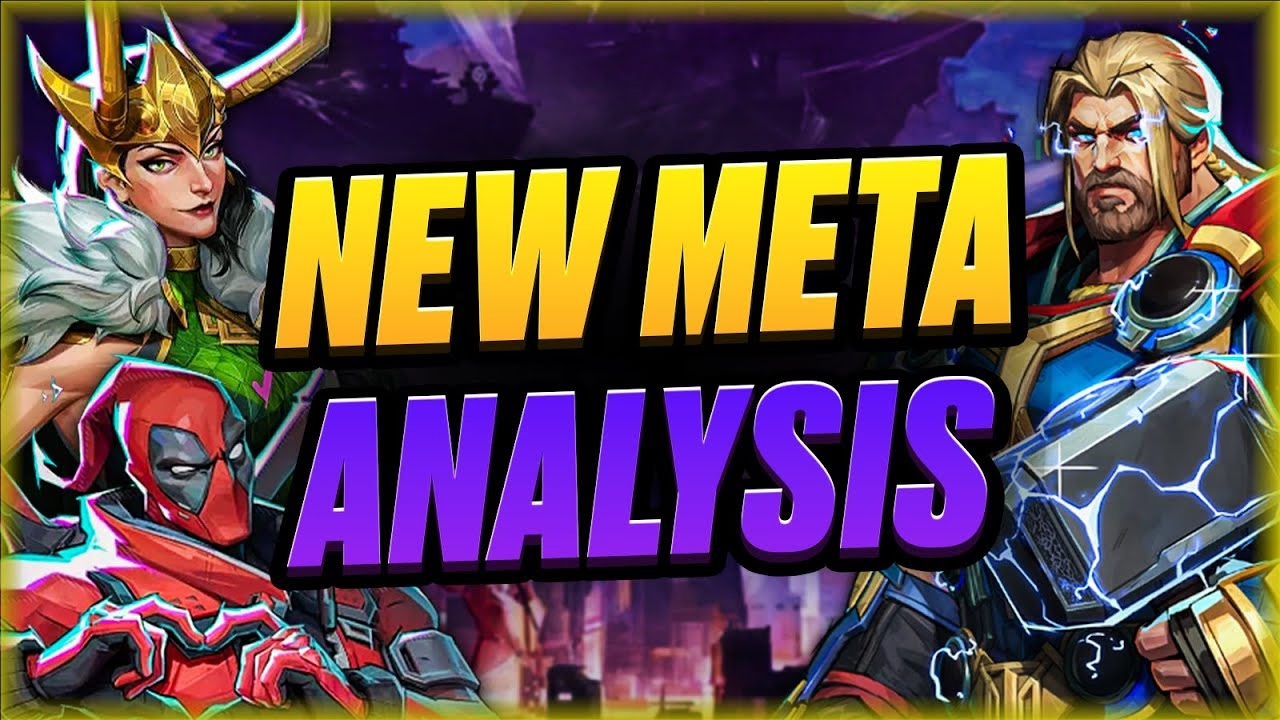
Season 6 in Marvel Rivals reshaped the meta for tanks, DPS, and Strategist characters. This guide covers the compositions and hero choices that defined the Season 6: Night at the Museum meta — what worked, which picks dominated, and why the dive-poke-brawl triangle governed every counter-swap decision.
The Poke Composition
The poke composition remains a well-known strategy, focusing on dealing damage from a distance. This composition leverages range to create picks and gain advantages by applying targeted and spam damage. The core of a poke composition typically includes strategic use of tanks, DPS, and support roles.
Key Tanks
- Emma: A standout in Season 6, Emma excels at building charge rapidly and dealing immense damage on the front line. Her versatility allows her to thrive in hybrid compositions, making her a reliable poke-oriented or frontline tank.
- Doctor Strange: Increased in popularity, Strange provides consistent damage and employs his ultimate strategically by porting across the battlefield. His ability to engage and disengage makes him a flexible choice for various situations.
- Magneto: Long a staple in poke strategies, Magneto is now facing some challenges. He remains effective but can be countered by compositions that emphasize dive or brawl tactics. His reliance on pacing can be a vulnerability.
Key DPS
- Hawkeye: Highly effective when not under pressure or targeted, Hawkeye demands support and excellent mechanics to dominate. Although vulnerable to multi-angle attacks, he remains strong in non-dive scenarios.
- Hela: A formidable DPS with precise aim, Hela pairs well with or without Namor but remains somewhat vulnerable compared to others.
- Psylocke: Emerging as the best overall poke DPS, Psylocke offers unmatched mobility and survivability. She excels in isolated duels and adapts well to counter swaps, keeping her effective against varied enemy tactics.
The analysis continues in the next section.
Strengths and Weaknesses of Poke Composition
- Strengths:
- Excellent ranged damage and pick potential
- Versatile tanks and DPS who adapt to different compositions
- Weaknesses:
- Vulnerable to dive strategies
- Dependent on maintaining distance and controlling fight tempo
With those composition roles mapped, the tank comparison shows where each frontliner fits best in the poke strategy.
Tank Comparison Table
| Tank | Strengths | Vulnerabilities |
|---|---|---|
| Emma | Quick charge and high damage | Limited by hybrid compositions |
| Doctor Strange | Strategic engagement and flexibility | Relies on porting mechanics |
| Magneto | Strong poke presence | Prone to brawls and dives |
As we move deeper into Season 6, understanding these dynamics and adapting strategies accordingly will be key to maintaining an edge in Marvel Rivals. The right combination of poke composition heroes, when utilized effectively, can create powerful synergies and counter opposing strategies with precision.
Strategies in Poke and Dive Compositions
The Season 6 meta operated like a complex game of rock-paper-scissors, with dive, brawl, and poke compositions each having their own strengths and weaknesses:
- Dive Composition: Advantageous against poke due to its ability to attack precisely and surgically.
- Poke Composition: Excels against brawl setups as it can engage from a distance, keeping brawlers at bay.
- Brawl Composition: Outperforms dive strategies with its superior close-range combat tools.
However, not all characters fit neatly into these archetypes. Characters like Psylocke, for example, have a versatile nature, making them effective against multiple types. Psylocke can counter dive with mobility and handle brawl with close-range stunts, making her a valuable pick across different situations.
With poke and dive strategies analyzed, the support picks that sustain these compositions deserve equal attention.
Optimal Support Choices for Poke
Supports in poke compositions are crucial. Favor those capable of contributing from range or influencing fights without relying heavily on their ultimates. Ideal supports offer stability and a strategic advantage, such as:
- Cloak & Dagger: Provide invisibility and allow teams to maintain their ground.
- Loki: Adds to the poke with a powerful ultimate to slow down the engagement.
A longer fight generally favors the poke composition, leveraging opportunities created by heroes like Hawkeye or Jean to get decisive shots in prolonged encounters.
Dive Composition's Ascendancy
Dive compositions saw increased popularity in Season 6, capitalizing on rapid engagements to disrupt and outmaneuver opponents:
- Captain America (Cap) is gaining favor for his ability to apply pressure effectively with adequate follow-up from teammates.
- Venom is a standout, with the ability to remain disruptive in opponent backlines, especially against teams lacking sufficient crowd control.
Moreover, Angela stands out as a Vanguard built for dive compositions, applying frontline pressure on flyers and hit-scan DPS with precision. She excels statistically as a proficient tank who can handle various situations, whether marking divers or countering enemy poke compositions.
The evolving strategies in Marvel Rivals reflect the dynamic interplay between team compositions. Understanding the strengths and adaptability of characters within these setups is pivotal for team success in Season 6.
The Role of Tanks and Hybrid Characters
In the current meta of Marvel Rivals, selecting the right tank for your team is crucial. Angela stands out as an excellent choice due to her ultimate ability and overall game influence. The versatility of characters like Hulk and Thor cannot be overstated. They can seamlessly switch between dive, anti-dive, and brawl compositions, adapting to various play styles and providing significant strategic flexibility.
Essential DPS Picks
DPS characters are pivotal in realizing the strengths of dive compositions. Daredevil remains a dominating force, key to dismantling poke and support-heavy teams. Despite recent nerfs, his ability to burst through defenses when supported by characters like Venom or Captain America (Cap) cements his status as a top pick.
Moreover, characters like Spider-Man offer high impact and carry potential, thanks to their high skill ceilings. When teamed with Daredevil, Cap, or Venom, he can effectively time hits and pressure enemies, enhancing the success of dive tactics.
Versatility in DPS Selection
The meta offers a range of viable DPS options, each contributing uniquely to dive compositions:
- Star-Lord - Excels in diverse positions, including flanking and taking off angles.
- Psylocke - Though her pick rate has decreased, she excels in following up on kills and supporting dives.
- Magik and Iron Fist - These characters thrive in precision-targeting scenarios, essential for DPS roles aiming to strike when needed.
Crucially, the effectiveness of a DPS character is contingent upon their ability to synchronize attacks with teammates. A table of key DPS synergies might look like this:
| DPS Character | Synergizes With | Key Strength |
|---|---|---|
| Daredevil | Cap, Venom, Spider-Man | Burst Damage |
| Spider-Man | Daredevil, Cap, Venom | High Impact |
| Star-Lord | Multi-position adaptability | Flanking |
Supports in dive compositions serve a different purpose than in poke — the right choices enable aggression rather than just sustaining health bars.
Support Flexibility in Dive Compositions
In dive compositions, using self-sufficient supports is essential. Jeff and Rocket stand out, providing healing and damage from versatile positions. These characters can sustain the team during backline engagements, minimizing the need for constant support from frontline divers.
- Jeff - Offers cleave damage and healing support.
- Rocket - Delivers long-distance healing and assists with constant engagement health.
These supports allow dive teams to execute plans with minimal disruption, ensuring that characters like Daredevil can continue their assault without needing to retreat for support.
Rise of Brawl Compositions
Brawl compositions gained traction in Season 6, with characters like Groot leading the charge. Groot’s ability to control close-range encounters and obstruct opponents makes him invaluable. These compositions excel at trading damage in close-proximity engagements, often outperforming long-range foes when within their attack sphere.
Recognizing character synergies and understanding the strengths of various roles can significantly enhance team performance in Season 6 of Marvel Rivals. The dynamic shift toward flexible strategies, particularly in dive and brawl compositions, highlights the importance of adaptability in the game's evolving meta.
Character Synergies and Effective Strategies
Understanding the synergies between characters is crucial for crafting successful strategies and compositions in Season 6 of Marvel Rivals. Whether it's close-range brawling or strategic poking, knowing which characters excel in specific scenarios can greatly influence outcomes.
Brawlers and Close Quarters CombatantsWhile Groot has already been highlighted, other formidable brawlers include:
- Thing: An exceptional brawler weak against extensive poke damage but formidable in close engagements.
- Thor and Emma: Both effective in close combat, with a hybrid capacity to engage both in brawling and ranged scenarios.
- Bucky: Exceptional in close-range fights with powerful melee attacks and decent poking ability, though he may struggle against true poke specialists.
These characters thrive in scenarios where engagements are brought into tight quarters, overpowering opponents through sheer close-range efficiency.
Damage Dealers and Their RolesFor DPS roles, exploring who fits well into brawl compositions involves:
- Assessing who can close gaps quickly.
- Evaluating who can apply pressure on isolated opponents.
- Ensuring versatility to engage various enemy types.
Characters like Bucky, Wolverine, Iron Fist, and Magik are ideal because they can quickly close the distance and launch effective assaults on isolated foes. They maintain flexibility by contributing to both close-range skirmishes and providing valuable damage output from a distance when necessary. Support Roles and Their Impact Support characters are pivotal, especially when building compositions designed to trade damage and gather ultimate points quickly. Effective supports include:
- Triple Healer Compositions: Combos like Mantis, Loki, and another powerful healer such as Cloak & Dagger deliver strong frontline survivability.
- Ultimate Charge Build-Up: Supports trading damage efficiently allow quick ultimate generation, turning them into powerful assets during crucial battles.
Beyond the dominant compositions, strategic overlays can amplify whatever team structure you run.
Strategies Beyond Meta Highlights
It's important to understand that success isn’t just about picking the highest-ranked characters. Winning strategies depend on how well characters fit into an overarching game plan. Running a high-ranked hero in an ill-suited composition leads to underperformance, regardless of that hero's individual ceiling.
Protect the President CompositionIn this strategy, compositions typically consist of a strong support backbone:
- Structure: Triple support and two tanks focusing on protecting a high-value character, often the primary source of damage.
- Examples: Star-Lord with heavy resources becomes nearly unkillable, leveraging strong ultimates like Rocket and Punisher combinations.
Bunker designs, characterized by their resilient defensive tactics, can be effectively countered through adaptive strategies such as triple DPS that can break through defenses. It's also useful to remember that hybrid compositions, common in ranked play, may not require all components to be active in an engagement. Players can make tactical decisions to utilize backlines effectively without complete team commitment to diving or advancing.
By mastering these synergies and understanding the strength of flexible strategies, players can remain competitive and adaptive amidst a dynamically evolving meta environment.
Leveraging Composition Cores for Success
In team compositions, understanding and utilizing core synergies is crucial. When the front line distracts the enemy, it opens up opportunities for other members to exert pressure elsewhere. This concept revolves around creating pressure points: if supports are engaged elsewhere, that's a cue to apply pressure in another area.
For compositions to work effectively, it's essential to have pairs of characters performing coordinated actions. Here are some successful composition pairings:
- Venom and Daredevil - Creating an aggressive attack duo.
- Mag and Hawkeye - Forming a powerful poke core.
These combinations allow for strong tactical plays without requiring a full team dive. A cohesive strategy with multiple members acting towards a common goal is more effective than everyone pursuing individual objectives. This type of strategy often prevents the team from falling apart under pressure.
Win rates and pick rates tell the clearest story about where the meta has settled through Season 6.
Analysis of Win Rates and Pick Rates
A clear view of win rates and pick rates offers insight into the changing dynamics of the current meta. Here's a breakdown of the current state of several characters:
- Peni Parker: Her win rate and pick rate have declined, partly due to her previous partnership with Rocket. Rocket himself has experienced a dramatic fall in pick rate due to nerfs and the rise of Gambit in the meta.
- Support and DPS Pools: Both show a modest 42% win rate at high levels. Despite previous perceptions, these pools suffer from better alternatives and recent nerfs. The support pool finds limited effectiveness outside of specific dive compositions.
- Rogue: Despite a decrease in pick rate, Rogue remains viable, particularly when paired with Gambit. However, competition with stronger tanks like Hulk and Thor diminishes her appeal.
Notable Losers
- Luna Snow: Suffering from low pick and win rates, Luna struggles against mobility-heavy opponents. The strengths of other supports such as Cloak and Gambit overshadow her utility in the current meta.
Among the season's notable shifts, several characters have declined sharply from their pre-season projections.
Recognizing the Season's Winners
While some characters struggle, others thrive despite adjustments:
- Deadpool: With over a 53% win rate in high elo, Deadpool excels by balancing offensive and defensive plays. His ability to create space and synergize in dive compositions makes him a standout.
- Daredevil and Hulk: Both characters maintain dominance. Daredevil enhances dive compositions, while Hulk, able to handle various threats, finds more success in current matchups.
Marked Improvements:
- Cloak: Rising significantly in both pick and win rates, Cloak offers versatile options with double blinding and shielding capabilities. Mastering these skills can significantly impact team dynamics.
This landscape reflects a flexible meta where certain compositions and character choices excel based on synergy and adaptability, outshining those that rely on outdated strategies. Understanding the strengths and weaknesses of current character pools is essential for players aiming to stay ahead in competitive play.
Key Winners and Strategies
In the dynamic environment of Season 6, understanding the successful strategies and character picks is crucial. Some characters have emerged as key winners, showing significant upticks in both pick rates and win rates. These characters benefit from their flexibility and compatibility within the current meta. This analysis highlights the most effective compositions and tactics for competitive success.
Optimizing Compositions
To excel in this evolving meta, focus on building flexible, synergy-driven teams. Here are some tips to optimize your compositions:
- Prioritize Synergy: Choose characters that enhance each other's abilities, such as pairing blinding and shielding champions.
- Adaptability: Select characters known for versatility to counter a range of threats.
- Meta Awareness: Regularly update your strategies to reflect current trends and counter popular picks.
- Practice Execution: Even the best composition won't succeed without skilled execution in matches.
By understanding these elements, players can craft teams that adapt to shifts and stay competitive.
With the full character picture established, applying these insights to team-building comes down to a few practical priorities.
Big Winners and Losers
- Cloak: Gains prominence due to its dual utility of blinding and shielding, reshaping team dynamics.
- Hulk: Remains a constant threat, able to manage diverse matchups effectively.
A snapshot of the current meta illustrates how these shifts interact across composition types.
Understanding the Current Meta
For those aiming to master the Season 6 battlegrounds, awareness and adaptation are key. Here is a brief overview of notable shifts:
| Aspect | Description |
|---|---|
| Winning Compositions | Teams built on strong synergy outperform those relying on outdated strategies. |
| Character Adaptability | Flexibly adapting character roles and tactics drives sustained success. |
With these insights, players are better equipped to navigate the competitive landscape, leveraging new strategies to gain an edge. Focusing on versatile builds and understanding the strengths of trending characters will be critical to maintaining performance and readiness for future updates.
These questions come up most often when building compositions for Season 6: Night at the Museum.
FAQ
What are the best team compositions in Marvel Rivals Season 6?
Poke and dive dominate. Poke runs Emma Frost and Magneto at Vanguard, Hawkeye and Psylocke at Duelist, and Cloak & Dagger or Loki at Strategist for sustained ranged pressure. Dive runs Captain America or Venom as the initiating Vanguard, Daredevil and Magik or Wolverine as Duelists, and self-sufficient Strategists like Jeff or Rocket to sustain the backline assault.
Who are the best poke DPS in Season 6?
Psylocke leads for mobility and counter-swap adaptability. Hawkeye delivers the highest burst when protected from multi-angle pressure. Hela is the third tier-one poke DPS but is also the most-banned Duelist in high-elo — she and Namor form the dominant team-up pairing that opponents target first.
Is Deadpool viable in Season 6?
Yes. Deadpool in Vanguard mode (Tankpool) maintains over 53% win rate in high-elo play. His ability to balance offensive and defensive actions while creating space for dive teammates makes him the standout Vanguard pick throughout Season 6.
What is the strongest dive composition in Season 6?
Daredevil with Captain America or Venom and a self-sufficient Strategist like Jeff or Rocket forms the core. Spider-Man or Wolverine as a second dive Duelist maximizes backline disruption. Magik is the highest-ceiling dive Duelist for players with strong mechanics — she was S-tier throughout Season 6.
How does the poke vs dive vs brawl meta triangle work?
Dive counters poke by closing gaps before poke teams establish range. Poke counters brawl by controlling distance and picking off brawlers before they engage. Brawl counters dive by out-trading in close-range fights with superior melee burst. Characters like Psylocke blur these lines — her mobility lets her operate in poke strategies while countering dive simultaneously.
Who are the best Strategists in Season 6?
Gambit rose to S-tier as Rocket declined from nerfs. Cloak & Dagger provide ground control and invisibility for poke teams. Jeff and Rocket remain strong for dive compositions, sustaining backline engagements with minimal disruption. Triple-Strategist setups — Mantis, Loki, and Cloak & Dagger — offer strong frontline survivability for brawl compositions.
Which Vanguards are best in Season 6?
Angela, Hulk, and Thor are the most versatile — all three switch cleanly between dive, anti-dive, and brawl compositions. Deadpool in Vanguard mode is the season's breakout Vanguard. Emma Frost leads for poke-heavy teams, while Groot dominates close-range brawl encounters with his area control toolkit.
Last reviewed 2026-06-17 against Marvel Rivals Season 6: Night at the Museum — Maintained by WowCarry's Marvel Rivals team.