Marvel Rivals from Season 7 to Season 8: What an Eternity Coach Reads Off the Draft
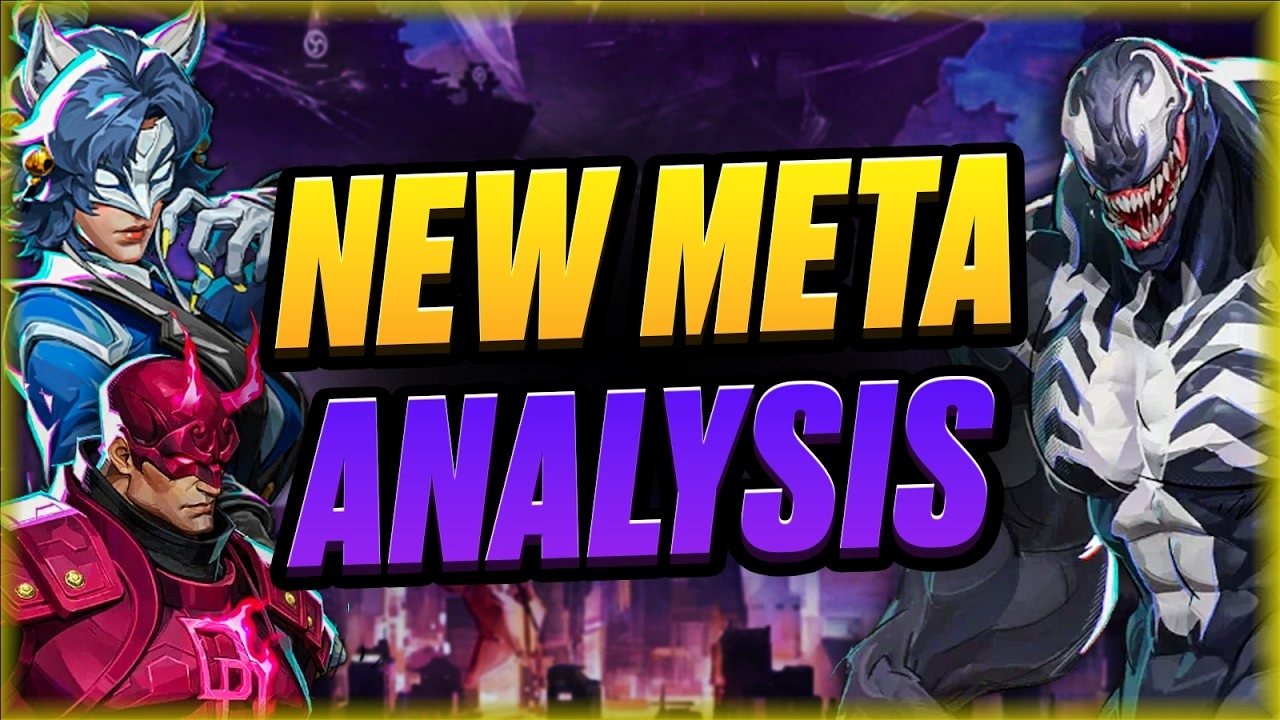
The Marvel Rivals meta has moved through three patches since this analysis first ran in mid-April. Season 7 "The Hunt Is On" set the original baseline; Season 7.5 on April 17 added Black Cat, the Chain-CC Protection mechanic, and a sweeping balance pass; Season 8.0 "Sins of Alchemax" launched yesterday (May 15) with Devil Dinosaur, Phoenix passing Hela in the Duelist meta, and Peni Parker climbing to top Vanguard at a 59.7% all-rank win rate. The strategic spine an Eternity-rank coach uses to read a draft has survived all three turnovers: tank anchor, support pair, adaptive Duelist pivot. The hero names attached to the spine have moved.
Key Takeaways
- The dive comp foundation (Venom anchor, dive Duelist, peel-heavy support pair) survived Season 7.5 and Season 8, but Chain-CC Protection (5.5s of CC or 6 CC effects in 7s purges + 30% Tenacity for 3s) softened the dive's burst-window without killing it.
- Peni Parker is the live S-tier Vanguard at 59.7% win rate across all ranks; Phoenix (Jean Grey) has overtaken Hela in the Duelist meta; Rocket Raccoon is back in low S-tier Strategist after the S8 buffs.
- The Season 8 hero is Devil Dinosaur, with the new Primal Punishment team-up letting Punisher physically ride on his back; expect this pairing in low ranks before high-elo settles on counter-drafts.
- Gambit + Magneto (Ace of Aces) and Gambit + Rogue (Hearts As One) are the canonical Gambit team-ups (a "Gambit + Loki" pairing exists only as a comp choice, not a team-up). Invisible Woman + Doctor Strange is the Psionic Mayhem team-up (added Season 6.5).
- Black Cat (Felicia Hardy, added Season 7.5 as hero #49) is the highest-impact draftable Duelist outside the Phoenix slot; her Fortune resource and Gilded Deal artifact shop reshape comp drafting more than any single S7 hero did.
- The Eternity-rank reading habit that matters most is the second-pick pivot: when the first ban hits your main, you do not lock the second-best version of the same archetype, you switch archetypes entirely (dive to poke, brawl to dive) to off-tempo the enemy's draft.
With those beats in place, the rest of the analysis walks the live meta archetype by archetype.
What an Eternity-Rank Coach Reads Off a Draft
The Eternity rank sits above Grandmaster on Marvel Rivals' nine-rank competitive ladder. Players at that altitude are reading the draft for three things at once: which archetype the enemy is committing to, which support pair will out-sustain through the team-fight, and which hero on your roster has the cleanest counter-pick window if they reveal early. The "Eternity coach" framing in tier-list content refers to coaching services that pair you with players at this rank (1v9, Turboboost, Gosu Academy all offer Eternity-tier coaching); it is not a single named author.
The habit that splits Eternity drafting from Diamond drafting is the second-pick pivot. When the enemy bans your main (or first-picks your archetype) the Diamond instinct is to lock the next-best version of the same role. The Eternity instinct is to switch archetypes outright and force the enemy comp to adjust without enough draft space left to do it cleanly. The teach below maps the archetypes that are live in Season 8, the heroes that anchor each one, and the pivot routes between them.
The Dive Pattern: Venom Anchor + Duelist Hammer
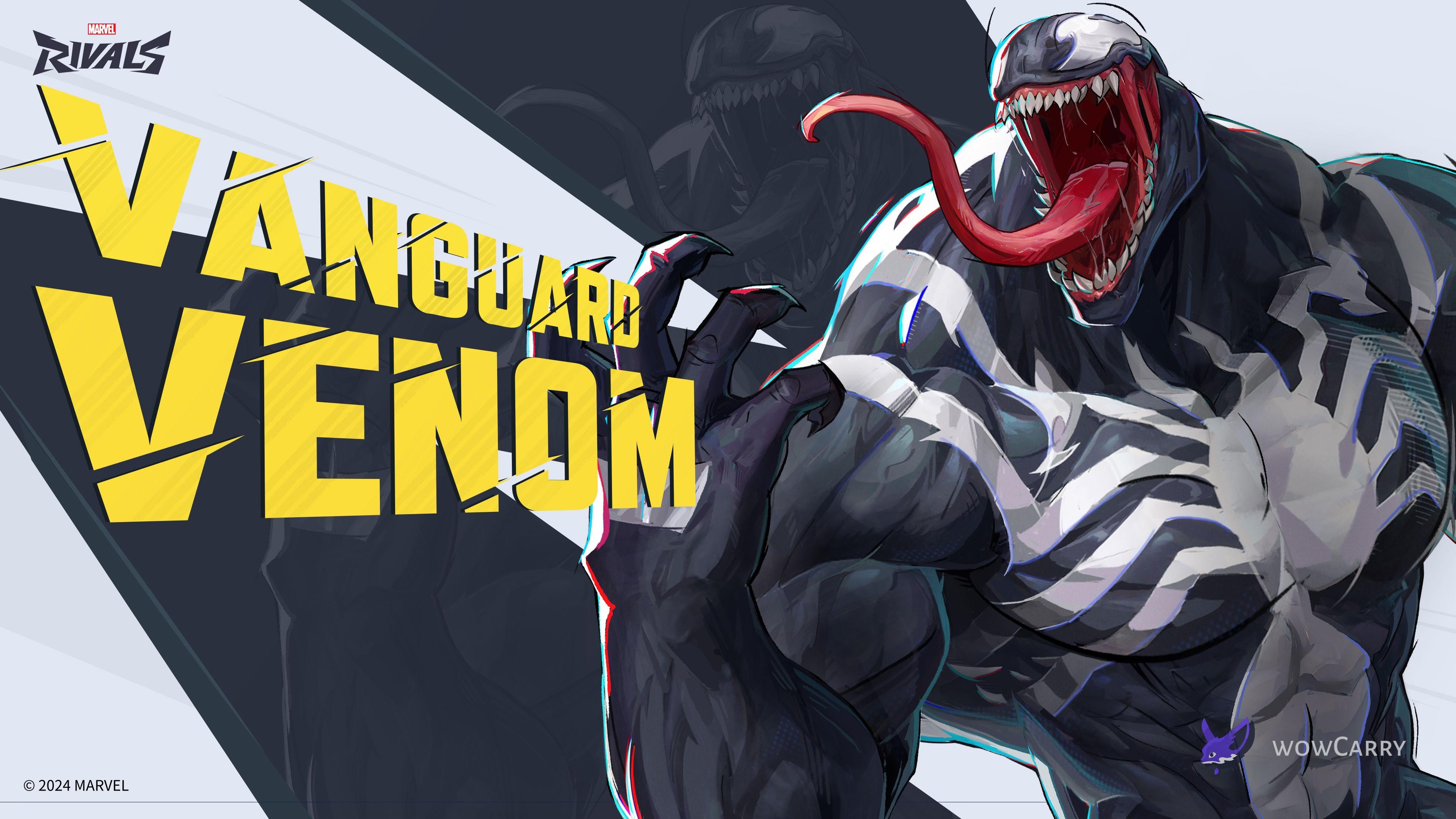
Dive returned to the meta in late Season 7 when the universal 20% ult-charge nerf on the March 20 hotfix reduced sustain compositions' team-fight cadence enough that fast aggression became the dominant pattern again. The core dive shape is Venom as the Vanguard anchor, a dive Duelist as the burst, and a peel-heavy support pair as the close-out.
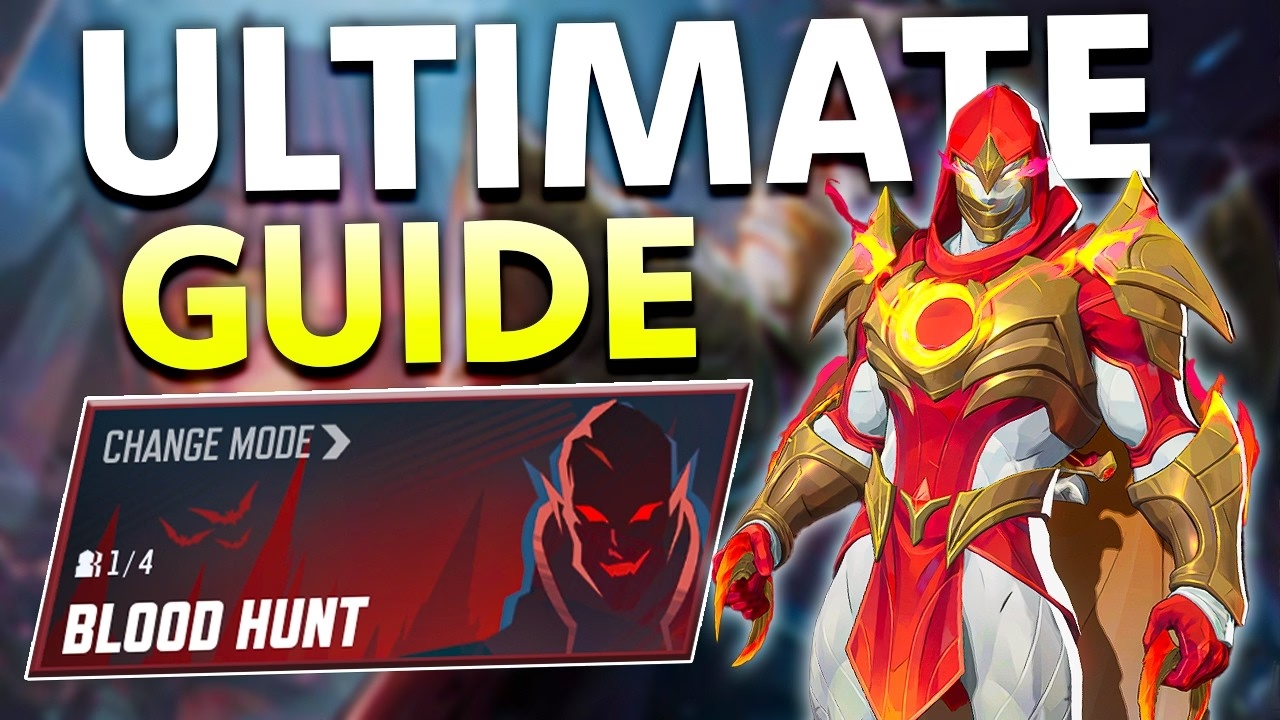
The dive Duelists that hold up in Season 8 are Magik (Stepping Discs portals, 6-second invuln teleport, Limbo's Might passive converts 30% damage taken into a 150 HP bonus shield), Iron Fist (close-range bruiser dive), and Daredevil (added Season 4.5, mid-tier in S8 but still flex-pickable). The blog body's original "Tankpool" reference is Deadpool in his Vanguard form; the role-swap is real, but post-S7.5 nerfs (Ban Hammer bonus HP 80 to 60, Dual Desert Eagles attack speed 60% to 40%) pushed Vanguard Deadpool from A-tier to B-tier. Pick him on smaller maps where the role-swap utility offsets the lower raw stats.
The Chain-CC Protection mechanic added in Season 7.5 is the one structural change that affects dive directly. A target accumulating 5.5 seconds of CC or 6 CC effects within a 7-second window purges all CC and gets 30% Tenacity for 3 seconds. Dive comps that stacked sequential CC (Magik portal-knockup + Hulk grab + Iron Fist combo) lose roughly one second of burst window per engagement. The fix is not to drop dive; it is to stagger the CC chain so the protection fires after your kill rather than before it.
Strategists That Anchor Every Comp
The Strategist meta across Season 7 to Season 8 has been the most stable archetype. Gambit is the top Strategist in both windows; the Season 8 healing and movement nerfs did not touch his ultimate damage boost. Gambit's canonical team-ups are Ace of Aces (Gambit anchor with Magneto) and Hearts As One (Gambit anchor with Rogue). The body's earlier "Gambit-Loki team-up" framing was a comp positioning, not a real team-up; Gambit and Loki frequently double-stack in support compositions, but the team-up mechanic does not bind them.
Mantis is the second mainstay; her sleep peel for dive Duelists and her ult are unchanged across both patches. Loki remains the clone-immortality enabler that lets Venom dive without committing the support to follow. White Fox (added Season 7.0 as hero #48) is the S7-debuted mid-range Strategist with Fox Marbles healing orbs and the Kumiho Unleashed nine-tailed-fox ultimate (900 HP transform); she sits in the new Lucky Loan team-up (Black Cat anchor with White Fox and Captain America secondaries).
Rocket Raccoon climbed back to low S-tier with the S8 buffs after a quiet stretch through mid-S7. Invisible Woman (Susan Storm) is the Psionic Mayhem anchor with Doctor Strange as the secondary; the team-up grants nearby allies bonus health and modifies Maelstrom of Madness with a psionic pull. Cloak & Dagger (a single dual-stance hero, not two) was nerfed in Season 7.5 (Eternal Bond duration 13 to 11 seconds) but still draftable.
Reading the Vanguard Meta in Season 8
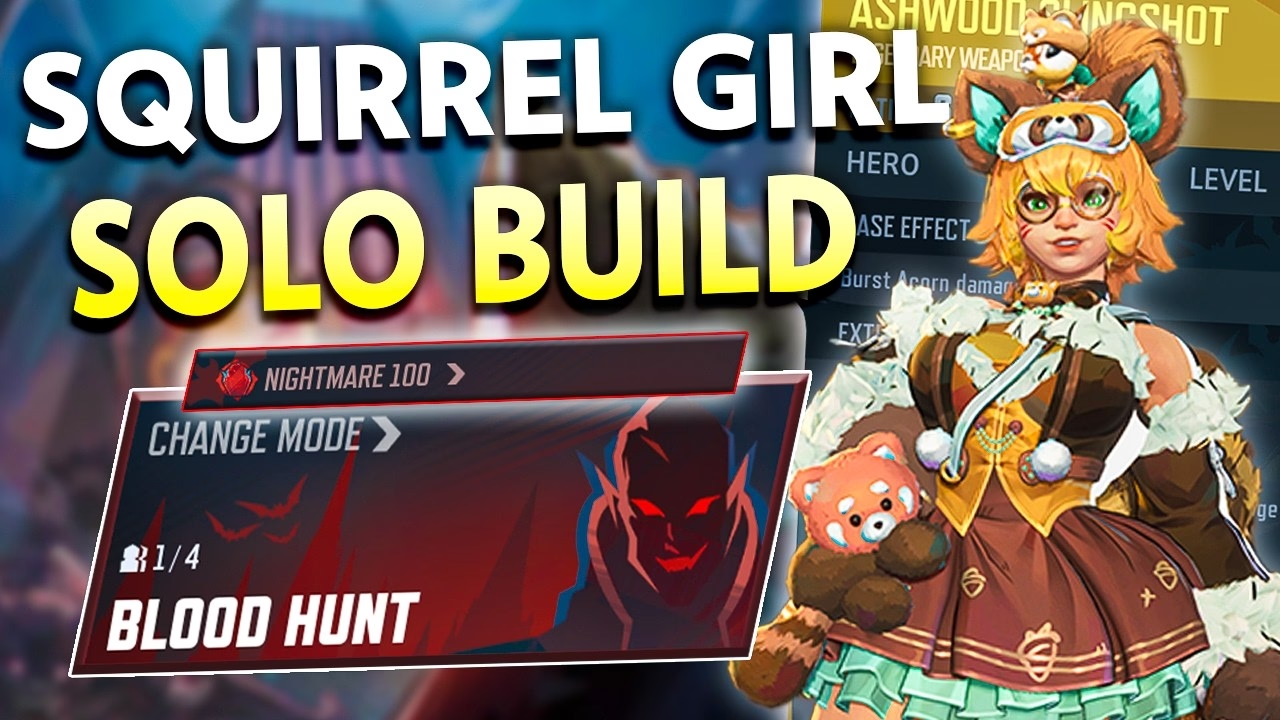
The Vanguard meta is where Season 8's biggest movement landed. Peni Parker jumped from C-tier to S-tier across the S7.5 and S8 patches (max Cyber-Webs 3 to 4, HP cap 150 to 200, projectile speed 120 to 150 m/s). At 59.7% win rate across all ranks she is the most reliable solo Vanguard pick in the game. Magneto remains the S-tier shield tank meta staple. Captain America (animation cancels removed in the March 20 S7 hotfix with compensatory damage buff) sits in the Lucky Loan team-up and works as the dive Vanguard alternative when Venom is banned.
Hulk, Groot, and The Thing continue to anchor brawl compositions. Groot's wall control is the strongest objective-hold in the game; Thing's Fantastic Four team-up secondary keeps him drafted alongside the other three FF members; Hulk's ult-charge rate is the highest in the Vanguard pool (bubble-popping mechanic feeds it faster than support healing does).
The Season 8 addition is Devil Dinosaur, hero #50. His kit (bite, bleed, grab, laser, shockwave stomp) is built around the new Primal Punishment team-up with Punisher: Punisher physically rides on Devil Dinosaur's back, gaining damage reduction and shared damage at the cost of being limited to normal attacks and grenades while mounted. The mechanic looks gimmicky on paper; in early Season 8 ranked it has been over-picked at low ranks and under-counter-drafted at high ranks. Expect the picks to settle once Diamond-and-above learns to target the dismount cooldown.
Reading Duelist Picks in Season 8
The Duelist meta is the hero pool most reshaped by Season 7.5 and Season 8. Phoenix (Jean Grey) has passed Hela in the mid-range chain-reaction slot. Hela is now only first-picked when Phoenix is banned. Namor (Namor McKenzie, the Sub-Mariner) is the Duelist projectile-summon pick that anchors the Deep Wrath team-up secondary to Hela (Ghost Monstros spawn from kills + AoE damage ability for Namor).
Black Cat (Felicia Hardy) is the Season 7.5 hero #49 and the highest-impact Duelist draftable outside the Phoenix slot. Her Fortune resource generation and Gilded Deal artifact shop kit make her a fundamentally different drafting question than the prior Duelist roster; she has settled in tier above Spider-Man due to portal mobility and team utility. Psylocke (Betsy Braddock) is the stealth/dive flanker that sits one tier below the dive-Duelist mainstays in S8.
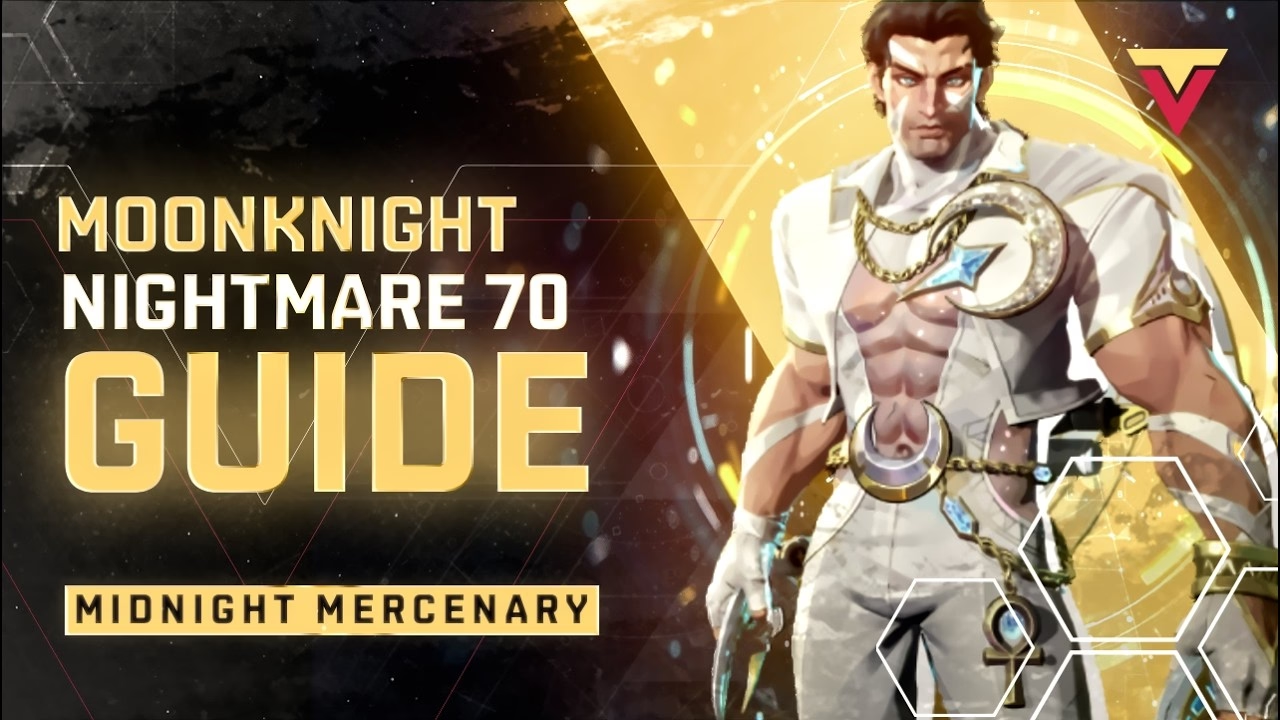
Elsa Bloodstone (added Season 6) was the dominant shotgun Duelist in mid-Season 7 before her S7.5 nerfs (Helix cooldown 8 to 10 seconds, Monster-Piercer per-pellet 1.2% to 0.8%) and now sits in mid-tier. Winter Soldier (Bucky Barnes; canonical in-game label is Winter Soldier) was hit by the Bionic Hook nerf (12 to 15 seconds) in S7.5 but the Trooper's Fist and Roterstern buffs kept him A-tier. Human Torch (Johnny Storm), Star-Lord, Wolverine, Moon Knight, Angela, and Storm (Ororo Munroe) round out the Duelist pool with situational picks.
Adapting to Bans and Counter-Picks
Eternity-rank players treat bans as a draft tool, not a problem. At Diamond and below, a ban that hits your main triggers a "lock the second-best of the same archetype" reflex. At Eternity that reflex flips: if the enemy bans Venom, you swap to a brawl or poke composition that does not need the dive anchor at all, instead of locking Magneto and trying to make the dive shape work without its core piece.
Concrete pivots that have worked through Season 7 to Season 8:
- Dive banned, switch to brawl with Groot anchor + Magik or Iron Fist as the flex Duelist + Gambit and Mantis as the support pair.
- Phoenix banned, drop the chain-reaction DPS slot entirely and pivot to poke with Hela or Star-Lord instead of forcing Hawkeye into a Phoenix-shaped role.
- Peni Parker banned, the dive-Vanguard slot opens; this is the strongest Venom dive draft window currently in the game.
- Gambit banned, switch to a White Fox + Mantis + Loki Strategist core; the loss of Gambit's ult amplification is real but the dual-support setup compensates on sustain.
The reading rule that ties these together is that a banned hero is more useful as information than as a target. If they ban Venom, they are afraid of dive; pick the comp that exploits that fear instead of trying to dive without your anchor.
What Changed Between Season 7 and Season 8
Season 7.5 (April 17, 2026) added Black Cat, the Chain-CC Protection mechanic, and the Lucky Loan team-up; nerfed Vanguard Deadpool, Elsa Bloodstone, Winter Soldier, and Cloak & Dagger; buffed Emma Frost, Peni Parker, Human Torch, Adam Warlock, Jeff the Land Shark, Luna Snow, and Ultron. Per the official Season 7.5 update post, the patch was the largest balance pass since launch.
Season 8.0 (May 15, 2026) per the official launch patch notes added Devil Dinosaur as hero #50, the Primal Punishment team-up, and the Nueva York / Alchemax HQ map arc. Sixteen heroes were adjusted (10 buffed, 4 nerfed, 2 reworked). The Alchemax Headquarters Doom Match map drops May 28 as the mid-Season 8 content beat. Cyclops is confirmed for Season 8.5 (~June 12, 2026).
If the Season 7 meta shifts have you re-evaluating your main and the climb feels heavier than the analysis above suggests it should, push your Marvel Rivals rank with a partnered teammate at your bracket. For broader account-level needs across the Season 8 cycle, see our Marvel Rivals services.
Frequently Asked Questions
Is the Season 7 meta still current in Season 8?
The strategic spine is intact: dive comps still anchor on Venom, support pairs still revolve around Gambit and Mantis, the second-pick pivot rule still wins drafts. The specific tier placements have moved. Peni Parker is now top Vanguard at 59.7% win rate, Phoenix has overtaken Hela in Duelist, Rocket Raccoon is back in low S-tier Strategist, Black Cat reshaped Duelist drafting, and Devil Dinosaur is the new Vanguard pick to watch.
What is "Eternity rank" in Marvel Rivals?
Eternity sits at the top of Marvel Rivals' nine-rank ladder, above Grandmaster and below One Above All. "Eternity coach" content refers to coaching services that pair you with a player at this rank (1v9, Turboboost, and Gosu Academy all offer Eternity-tier coaching). It is not a single named coach or YouTube creator.
Is the "Gambit-Loki team-up" a real team-up?
No. Gambit's canonical S8-active team-ups are Ace of Aces (Gambit anchor with Magneto) and Hearts As One (Gambit anchor with Rogue). Gambit and Loki frequently double-stack in support compositions, but they do not share a team-up mechanic.
Should I learn Devil Dinosaur as my Season 8 pick?
Devil Dinosaur is high-impact in low ranks because the Primal Punishment team-up with Punisher is over-picked and under-counter-drafted. At Diamond and above the picks will settle as teams learn to target the dismount cooldown. Learn him if you want a mobility-focused brawl Vanguard; lock Peni Parker if you want the highest-floor solo Vanguard pick.
Did Chain-CC Protection kill dive comps?
No, but it softened them. The 5.5-second or 6-effect CC threshold purges with 30% Tenacity for 3 seconds. Dive teams that stacked sequential CC (Magik portal-knockup plus Hulk grab plus Iron Fist combo) lose roughly one second of burst window per engagement. The fix is staggering the CC chain so the protection fires after the kill rather than before it, not abandoning dive.
Who is "Tankpool" and why isn't it in the patch notes?
"Tankpool" is community shorthand (and a voice-to-text artifact in some tier-list videos) for Deadpool in his Vanguard form. Deadpool is a dual-role hero with a Vanguard and a Duelist form; the Vanguard form was nerfed in Season 7.5 (Ban Hammer bonus HP 80 to 60, Dual Desert Eagles attack speed 60% to 40%) and now sits in B-tier in Season 8.
When does Season 8.5 land and who is the next hero?
Season 8.5 launches around June 12, 2026 with Cyclops as the next hero. The mid-Season 8 Alchemax Headquarters Doom Match map drops on May 28. Watch the official update channel for the S8.5 patch preview roughly two weeks before launch.