Boneshatter Juggernaut: Understand the Loop Before Scaling It
Boneshatter trades rising melee damage for repeated physical self-hits. Juggernaut can mitigate those hits and recover afterward, but recovery and surviving the next hit are separate requirements.
This is a mechanics guide with a historical build reference. The linked level 95 Boneshatter Juggernaut PoB is labeled 3.23, and its exported passive trees confirm that version. Use its dated presets to study the older setup; rebuild against your chosen patch before investing in a later-league character.
How Standard Boneshatter Builds Trauma
The standard skill’s game-data description grants one Trauma the first time an attack hits an enemy. Gaining Trauma causes a physical hit to the user, whose size scales with the Trauma count and the gem’s listed self-damage value. It is not a percentage of the damage dealt to the monster.
Trauma has a base six-second duration. Sustained attack rate and duration determine how many stacks overlap; regeneration does not set or freeze the stack count. Faster attacks can increase both damage output and the pressure on your defenses.
Stunning an enemy also produces the skill’s area pulse. This interaction helps explain why a standard Boneshatter character can clear packs differently from how it handles a single target. Keep Boneshatter of Complex Trauma separate: that variant loses its stacks on reaching ten and requires its own sustain model.
Untiring Rewards Prevention, Then Provides Recovery
Untiring’s game-data description combines 40% increased Life Regeneration rate with regeneration based on 1.5% of physical damage prevented from hits during the previous ten seconds, regenerated per second. The reference is damage prevented, not life lost.
This gives you two questions to answer before increasing attack speed: can the character survive one self-hit at the expected high stack count, and can it recover through repeated hits while enemies are also attacking? A large recovery figure answers only the second question.
Inexorable is a regular passive notable, with a chance to gain an Endurance Charge when you are hit. It is not a Juggernaut ascendancy node or a charge-on-melee-hit effect. Check your actual charge-generation path and maximum charges; being at maximum charges does not automatically grant the physical mitigation cap.
| What goes wrong | What to inspect first |
|---|---|
| Life drops sharply on a single Trauma gain | The incoming self-hit at that stack count, mitigation and unreserved life. Recovery afterward cannot rescue a lethal hit. |
| Life falls steadily during repeated attacks | Recovery versus self-damage over time, flask uptime, attack speed and stack duration. |
| A weapon upgrade suddenly makes sustain worse | Attack speed can create Trauma faster. Recheck sustain with the new weapon before scaling further. |
| The imported model looks much tougher than the character | Remove custom resistance modifiers, then verify gear, charges, buffs, flask uptime and the selected enemy. |
When checking a character in low-risk content, change one source of attack speed or recovery at a time. Watch the high-stack portion of sustained attacking, as well as what happens when temporary buffs or flasks expire. Stop attacking to interrupt further Trauma gains if the life trend becomes unsafe.
What the Original 3.23 PoB Contains
The original import preserves several progression stages, rather than one universal set of equipped items:
| Part of the original export | What is actually stored |
|---|---|
| Version and progression | Level 95 Juggernaut; all seven passive-tree specifications use 3.23 data, with campaign and start-of-maps presets. |
| Main six-link | Boneshatter, Brutality, Fortify, Melee Physical Damage, Close Combat and Impale. |
| Representative items | Rare Despot Axe and armour pieces, Tanu Ahi gloves, The Magnate belt, cluster jewels and other endgame jewels. A separate start-of-maps item set also exists. |
| Configuration | Pinnacle enemy, maximum Pride effect, charges, Fortification, Adrenaline, Onslaught and custom resistance modifiers are enabled. |
The custom modifiers add 30% fire, 20% cold, 90% lightning and 120% chaos resistance. Remove them when evaluating whether your own items cap resistances. Enable combat conditions only when the character can produce them in the encounter you are modeling.
The stored campaign skill sets move from Ground Slam to Sunder, followed by a preset titled Act 5 – Boneshatter Swap. That is an export label, not proof that any character becomes safe at that act or after one Labyrinth. Check its weapon, links, mitigation and recovery together before switching.
The six-link uses Impale Support. Fortify occupies a separate support slot with a defensive purpose. Compare an offensive replacement against the defense it removes, and check that every linked support actually applies to the chosen skill.
Later Changes That Break a Straight Import
GGG’s 3.25 Settlers of Kalguur notes removed Ancestral Protector, Ancestral Warchief and Panopticon. The old export contains both totems and a Panopticon anoint, so those parts require replacement. The same update changed Boneshatter’s mana cost and effectiveness, reworked banners, and changed Unbreakable’s secondary armour application from elemental hits to chaos hits.
Bandit rewards changed too: from 3.25, killing all three grants one passive point; Through Sacred Ground provides another point through its own quest reward. Check quest completion when comparing point totals with a 3.23 tree.
The 3.28 Mirage notes introduced Exceptional supports and ended acquisition of most Awakened supports, with stated exceptions. Use the actual gem name and effect available in the selected ruleset. Adding an “Exceptional” prefix to an old support name is not a verified upgrade path.
Gear Decisions That Follow From the Mechanics
Choose the weapon for physical damage and a sustainable attack rate. Then balance life, resistances, armour, recovery, mana sustain and any required attributes across the remaining items. The export’s named bases and uniques are examples from that model, not proof that every slot must use them.
For a build allocating Precise Technique, Accuracy Rating must exceed maximum life to activate its attack-damage condition, and the character cannot critically strike. Recheck accuracy after raising maximum life; critical-strike multiplier does not serve that setup.
Before pricing an upgrade, compare its effect with temporary buffs disabled, then with buffs your character can sustain. Keep boss movement and dangerous attacks in the plan: stun immunity does not make an incoming slam harmless, and regeneration is not permission to stand in a lethal mechanic.
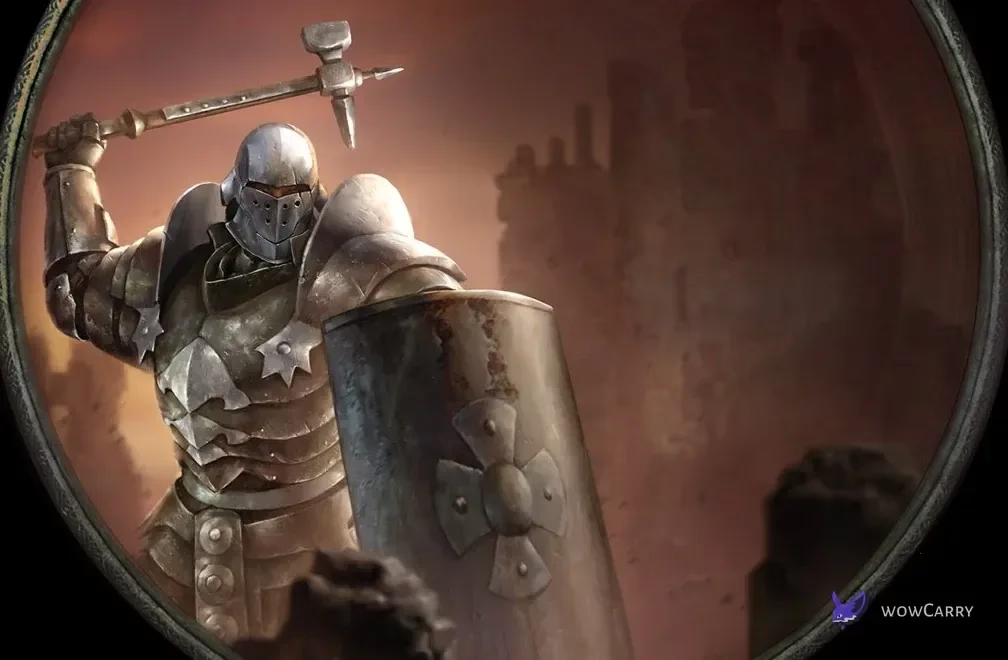
Cover: Grinding Gear Games’ Juggernaut class artwork, also published by artist Eedenartwork.