Key Takeaways
Return of the Ancients is already live, so the useful questions are what shipped on May 29, what changed for existing accounts, and which parts of the original announcement remain relevant.
- Path of Exile 2 update 0.5.0 launched on May 29, 2026 with the Runes of Aldur challenge league, two Ascendancies, and a rebuilt endgame.
- May 29 was the first date Grinding Gear Games published for the update, so the launch should not be described as a reschedule from an earlier official date.
- Runes of Aldur uses Remnants and Runic Recipes to craft an item before the player defeats the resulting enemy waves.
- Runic Ward is a defence added through Verisium Runeforging, not a dropped resource or an Alloy.
- The Atlas overhaul reset existing Atlas progress, added fixed objectives and 30 map areas, and moved Atlas passive points into the new Fortress progression.
- Spirit Walker belongs to the Huntress, while Martial Artist belongs to the Monk.
The 0.5.0 launch matters because it changed several foundations at once: the league economy, armour crafting, Atlas progression, pinnacle access, and the available Ascendancy roster. For readers, those systems need to be separated instead of compressed into one list of supposed league drops.
May 29 Was the Announced Launch Date
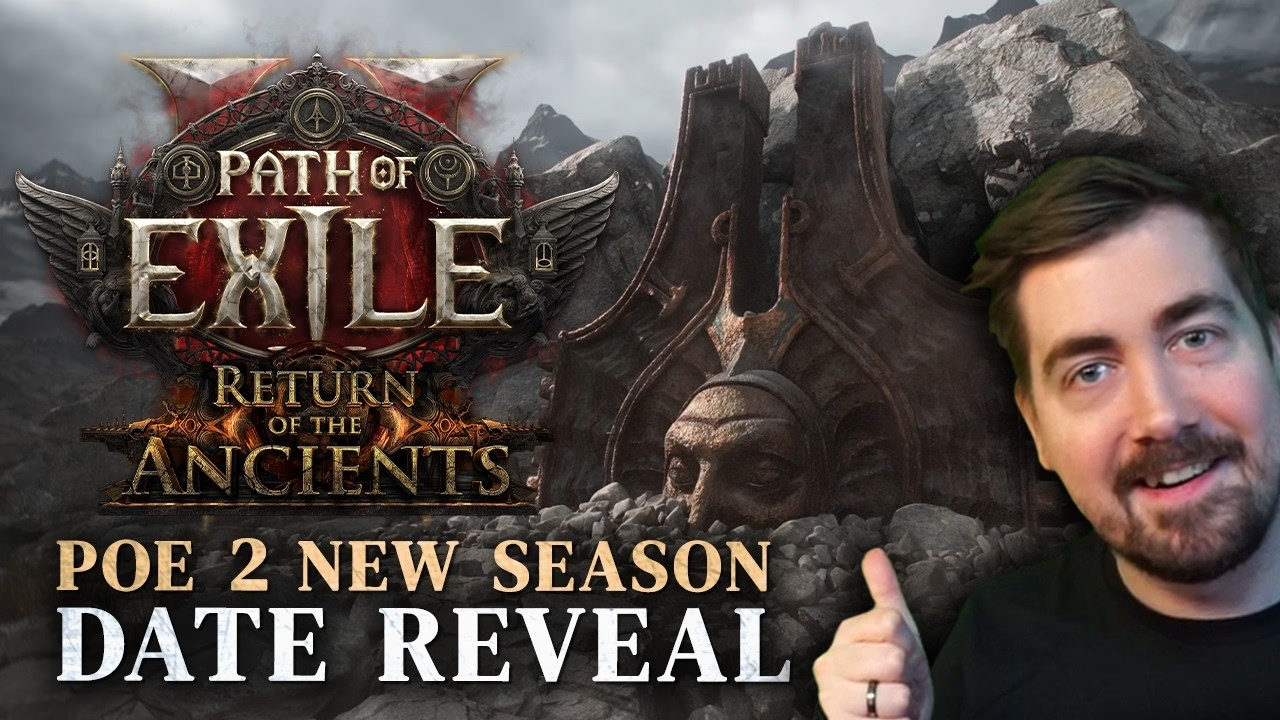
Grinding Gear Games first outlined its 0.5.0 timeline on February 18, saying that the full plan would be revealed toward the end of April. That post did not promise a release day. On April 22, the studio announced the May 7 reveal and stated that Return of the Ancients would arrive on May 29 at 1:00 PM PDT.
📌 Timeline check: May 29 was later than some players expected from the previous update cadence, but no earlier official date was published and then moved. It is accurate to call May 29 the announced launch date, not a replacement date.
The official launch FAQ confirmed the same time for the standalone PC client, Steam, Epic Games Store, Xbox Series, and PlayStation 5. It also confirmed that the content update was not a separately paid expansion for players who already had Path of Exile 2 access.
That chronology removes two pieces of speculation from the old framing. GGG did not attribute the date to another action RPG, and it did not describe a previously scheduled launch being postponed. The verifiable record is simpler: an early roadmap, an April date announcement, a May reveal, and the May 29 launch.
How the Runes of Aldur League Works
The challenge league starts with a fresh economy. Existing characters remain available in Standard Early Access, but a player must create a new character under the Runes of Aldur banner to enter the league economy and use its exclusive encounters.
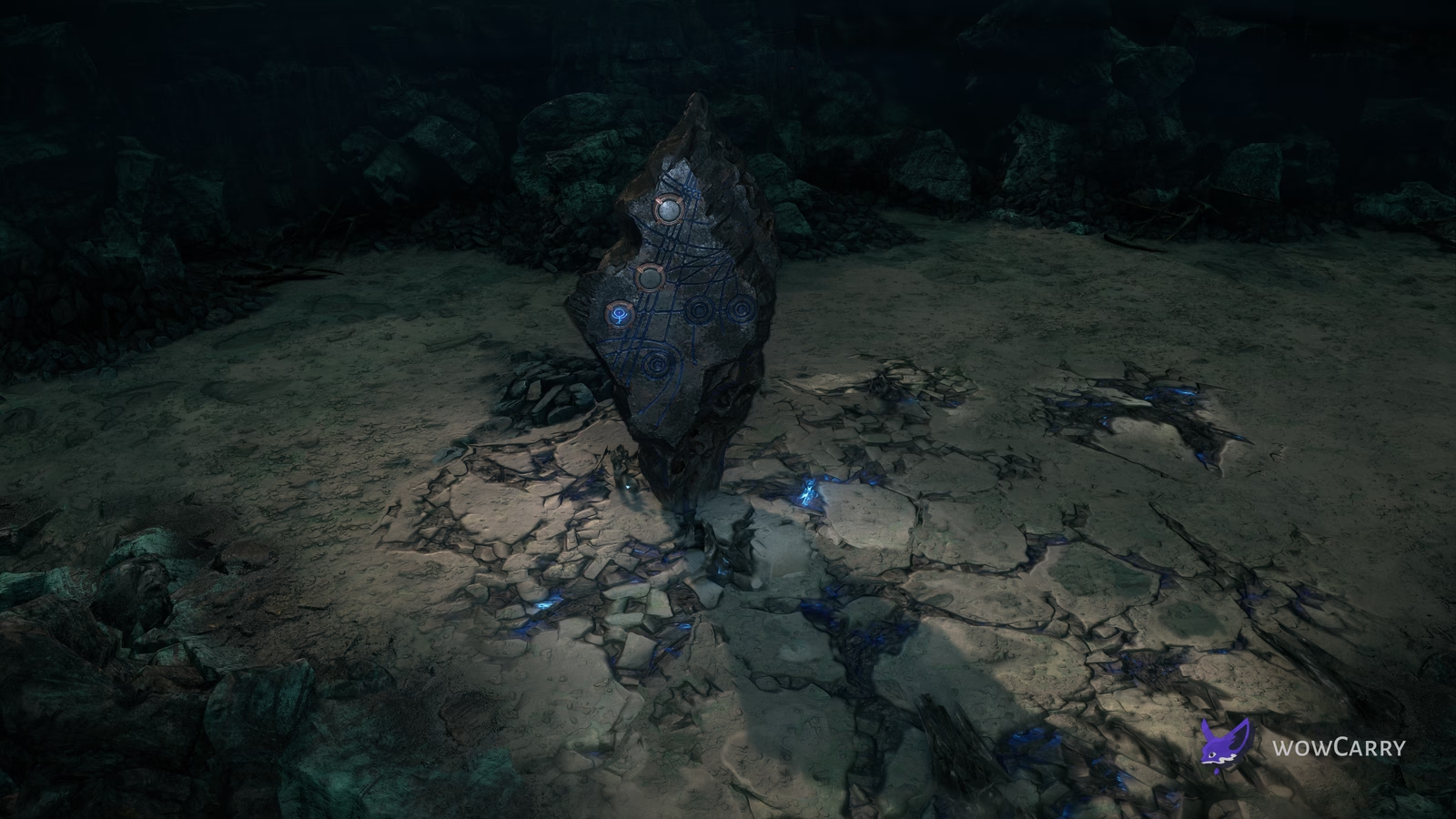
Each league area contains a Remnant with between two and ten recipe slots. The player chooses an item, places Runeshapes into the available slots, and then fights the generated waves to claim the craft. Adding more Runeshapes raises the encounter load and allows more involved recipes.
| System | Verified 0.5.0 function | Important boundary |
|---|---|---|
| Remnants | Host Runic Recipes and generate enemy waves before the crafted item is awarded. | They are encounters and crafting stations, not ordinary loot containers. |
| Verisium | Drops from monsters raised by Remnants and powers the new runeforging system. | It is the currency in this chain. |
| Runic Ward | Absorbs damage after the character reaches one Life and regenerates independently. | It is a defence value applied to armour, not a dropped currency. |
| Alloys | Replace an existing modifier with a specified crafted modifier after their Act 2 unlock. | The system contains 13 Alloy currency items. |
| Challenge rewards | Award Knight of Aldur armour pieces at two, four, six, and eight completed challenges. | The cosmetic rewards belong to this league. |
The campaign unlocks arrive through four quests from Farrow. Act 1 opens Verisium Runeforging, Act 2 introduces Alloys, Act 3 unlocks the unique-item version of runeforging, and Act 4 opens Ancient Runes. That order matters because none of those features is a single resource bundle from the first Remnant.
🛡️ Defence check: armour below level 55 can gain Runic Ward without losing its base defences, while higher-level armour trades part of its Armour, Evasion, or Energy Shield for the new layer. A fixed amount cannot be assumed without inspecting the item.
What the Atlas Overhaul Changed
The Atlas did not simply gain another hub. Update 0.5.0 reset existing Atlas progress and replaced the previous passive-point route with the Origins of Divinity storyline. Existing waystones and tablets remained usable, but players had to follow the new progression to earn Atlas points.
After the first tower is completed, the Fortress rises on the Atlas. Maps inside it grant passive points, and completing the Fortress map set provides enough points to allocate the expanded tree of more than 300 nodes. Fixed points of interest make major objectives visible, while league mechanics receive guided questlines that lead toward their pinnacle encounters.
| Endgame change | What it means for a returning character |
|---|---|
| Atlas reset | Old map items still work, but the new storyline must be completed for passive points. |
| Fixed objectives | Major league and boss routes have visible locations instead of relying only on random discovery. |
| Quest bosses | Pinnacle bosses have deterministic quest versions alongside harder repeatable versions. |
| New map pool | Thirty endgame map areas were added to the post-campaign route. |
| Atlas Masters | Three swappable endgame specialisations are earned through their associated mission chains. |
🗺️ Returning-player check: finding an old character in Standard does not mean its Atlas is ready where it left off. Expect a passive refund, an Atlas reset, and a new objective chain before planning repeatable pinnacle farming.
The Two Ascendancies Added in 0.5.0
Spirit Walker and Martial Artist were added to existing classes rather than introduced as new base classes. The class relationship is important when planning a character: Ascendancy access still begins from the Huntress or Monk, respectively.
Spirit Walker for the Huntress
Spirit Walker calls on Stag, Owl, and Bear spirits for different abilities. Its official description also includes binding powerful beasts in spirit and calling a spectral companion. Those themes support several directions, but they do not make every Huntress build interchangeable; passive choices, skills, and gear still determine the actual setup.
Martial Artist for the Monk
Martial Artist focuses on illusions, runes placed into the body, illusory bells, and fighting with the character's hands. It belongs to the Monk and is distinct from a generic tattoo-combo system. The patch notes define the class fantasy without promising a universal rotation or one mandatory keystone.
Update 0.5.0 also added community build-guide file support. A downloaded build file can show passive choices, Ascendancy passives, skill gems, and suggested supports inside the client, but GGG did not ship a set of official builds. Players still need to judge whether a guide matches the current patch and league.
What Happened to Existing Characters and Fate of the Vaal
There was no account wipe. Characters and items from the previous Early Access league migrated to Standard or Hardcore Early Access, while Runes of Aldur opened as a separate fresh economy. Purchased stash tabs remained available, although items from an older league appeared in remove-only tabs in Standard rather than inside the new league stash.
Fate of the Vaal moved into the core game with update 0.5.0. The Temple of Atziri and its campaign and Atlas systems remained available, but league characters did not carry their economy directly into Runes of Aldur. Migration to Standard and a fresh challenge-league start are separate account events.
The practical order for a returning player is therefore straightforward:
- Choose Standard only if continuing an existing character matters more than joining the fresh league economy.
- Review the passive refund and rebuild the character before entering difficult content.
- Restart the Atlas storyline because old Atlas progress was reset.
- Create a Runes of Aldur character if the Remnant encounters and league challenges are the goal.
This is also why the old advice to fill a short prelaunch gap with Path of Exile 1 no longer serves the reader. The launch window has passed, Path of Exile 1 has moved beyond Mirage, and the lasting information is the account boundary between Standard, the challenge league, and core Fate of the Vaal content.
FAQ
These answers keep the launch record separate from later balance tuning and avoid treating old countdown advice as current.
Was Path of Exile 2 update 0.5.0 delayed?
GGG did not publish an earlier release date and then replace it with May 29. The February roadmap promised a later announcement, and the April 22 post introduced May 29 as the launch date. Community cadence expectations may have differed, but the publisher record does not support calling this an official reschedule.
When did Return of the Ancients launch?
Return of the Ancients launched on May 29, 2026 at 1:00 PM PDT on the standalone PC client, Steam, Epic Games Store, Xbox Series, and PlayStation 5. It was a downloadable content update for existing Path of Exile 2 players rather than a separately purchased expansion.
How do Runes of Aldur Remnants work?
A Remnant lets the player select an item and arrange Runeshapes into its available recipe slots. The chosen recipe generates one or more enemy waves, and the craft is claimed after the encounter is cleared. Remnants range from two to ten slots, with larger layouts allowing rarer outcomes.
Is Runic Ward a currency or a defence?
Runic Ward is a defence applied to armour through Verisium Runeforging. It begins absorbing damage after the character reaches one Life and regenerates independently. Verisium is the currency used by the system; Alloys are separate currency items that replace an existing modifier with a crafted one.
Were existing characters and stash tabs wiped?
No account wipe occurred. Existing characters remained playable in Standard or Hardcore Early Access, and purchased stash tabs carried over. Runes of Aldur still required a new character and began with an empty league stash, while migrated items stayed in remove-only tabs in Standard.
What changed for existing Atlas progress?
The update reset the Atlas, its passive tree, and prior progression because the endgame structure was rebuilt. Existing waystones and tablets remained usable, but Atlas passive points now come from the Origins of Divinity storyline and Fortress maps. Returning players must follow that route to rebuild the tree.
Which classes received the new Ascendancies?
The Huntress received Spirit Walker, whose identity centers on Stag, Owl, Bear, bound-beast, and spectral-companion themes. The Monk received Martial Artist, which uses illusions, body runes, illusory bells, and unarmed combat. Both are Ascendancy options for existing base classes, not separate character classes.
Did Fate of the Vaal disappear after the launch?
No. Fate of the Vaal moved into the core game with Return of the Ancients, including the Temple of Atziri systems. Characters from the previous league migrated to Standard, while Runes of Aldur opened as a fresh economy, so core availability did not transfer old items into the new league.
Players comparing this historical launch boundary with the present catalog can browse current PoE 2 options without treating May's prelaunch schedule as current advice.
Last reviewed 2026-08-21 against Content Update 0.5.0 Return of the Ancients — Maintained by WowCarry's Path of Exile 2 team.