Why Midnight's Finale Lands Flat for So Many Players
Patch 12.0.5 closed the Midnight Season 1 raid arc, the Sunwell-to-Darkwell beat resolved, and the player consensus reading back is a familiar one: the story moved too fast. The discontent showing up in the Blizzard EU forum's "Story Pacing Failures of Midnight" thread is not new. Shadowlands felt this. Battle for Azeroth felt this. The reasons keep being the same, and naming them precisely matters before any "fix the pacing" advice lands.
Key Takeaways
- The pace problem is structural, not script-level: Worldsoul Saga marketing scope outruns what a three-raid season can resolve, and the result reads as a checklist instead of a story.
- Hyperreality drives the disappointment: data-mining, dev interviews and pre-release hype set expectations the actual playable content cannot meet.
- Baudrillard's "non-event" describes what happens when pivotal moments arrive too fast to register: the Sunwell falls, the Sunwell becomes the Darkwell, the Darkwell becomes the Dawnwell, all inside one season.
- Mists of Pandaria is the working blueprint: one through-line (the faction conflict) sustained across an entire expansion, with payoffs that landed because they were earned over time.
- The blood elves' best material is the road not taken: a saccharine reunification beat instead of the morally complicated reckoning Kael'thas's history actually demands.
- Alleria's fate at the end of the Voidspire is the cliffhanger that should be carrying the next expansion; instead the marketing is already pivoting.
- "Lights Vanguard obliteration" misnames a real event: the Lightblinded Vanguard is a Voidspire boss council. The broader Vanguard of the Light losses are separate. Mixing them is how the in-game stakes feel diffuse.
Each thread compounds the next, in roughly the order a player encounters them across a season.
The Hyperreality Problem in Modern WoW
Jean Baudrillard's hyperreality describes a media-saturated condition in which the representation outruns the thing being represented. For modern World of Warcraft, the representation is the dev livestreams, the Wowhead data mines, the cinematic trailer drops, the Reddit lore syntheses, and the official BlizzCon keynotes that frame the Worldsoul Saga as a three-expansion epic. The thing being represented is the actual playable MSQ that has to deliver on all of it inside one expansion's content budget.
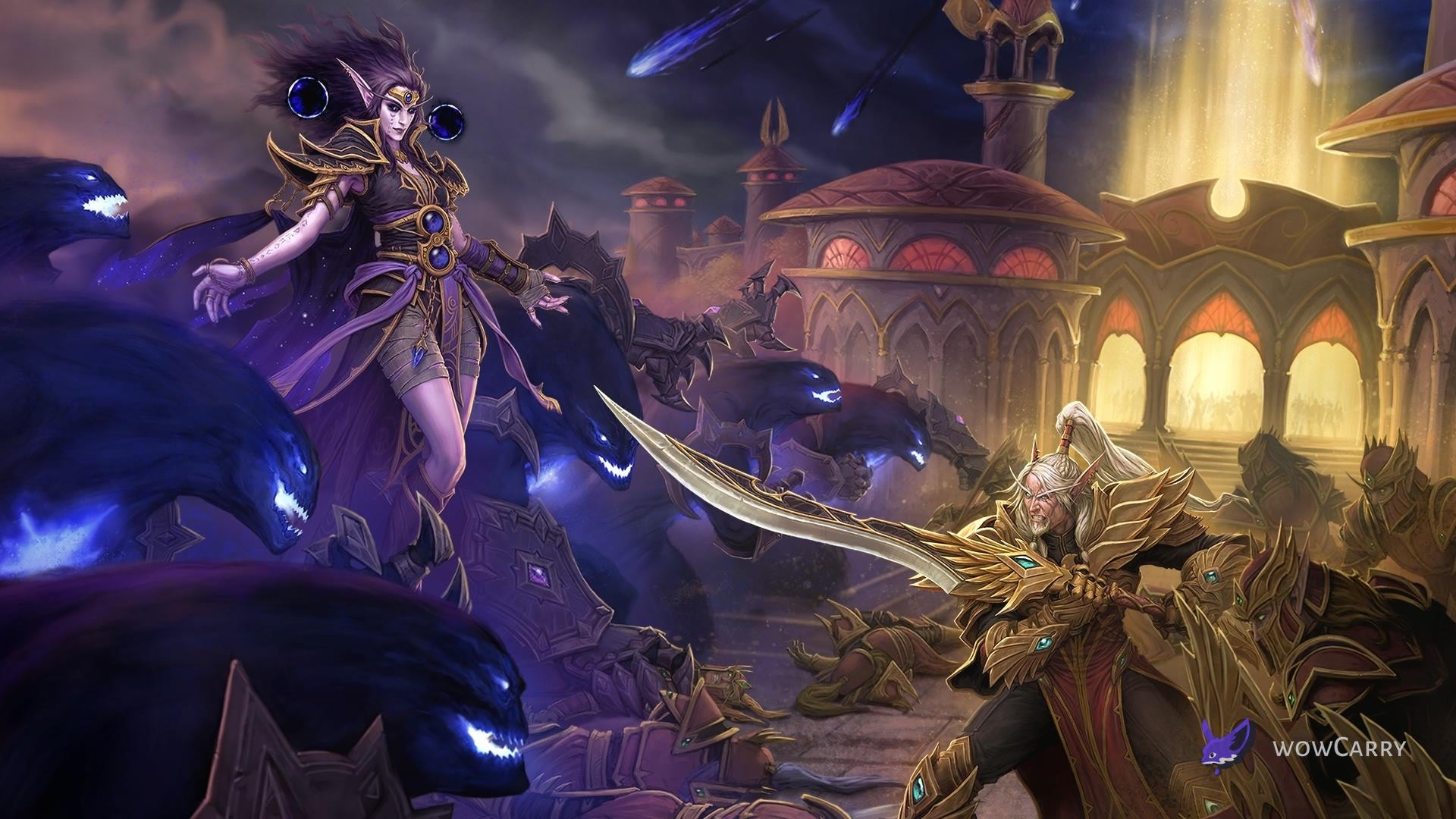
Xal'atath, the Harbinger of the Void, was set up across the prior Worldsoul Saga chapter as the saga's central antagonist. The Midnight reveal art placed her against Lor'themar at the gates of Silvermoon with the Sunwell ablaze, which read as the season-finale image the marketing was selling. The in-game arrival of that fight was the Voidspire raid, in which Xal'atath fires a reformed L'ura through the Sunwell, corrupting it into the Darkwell. By 12.0.5 the resolution arc has already restored the Dawnwell. Three discrete saga-tier story beats, one season, no time to sit with any of them.
Baudrillard's Non-Event, Applied to Midnight
The non-event is what Baudrillard names in The Spirit of Terrorism: an occurrence that on paper should reshape the world but in practice passes too quickly to register. Pivotal moments in Midnight keep landing as non-events because the cadence is built around an eight-week patch wheel rather than a story-paced wheel.
The Sunwell attack in the launch MSQ should be a generational lore moment for the blood elf playerbase. It resolves before most players have finished the leveling quests around it. The Lightblinded Vanguard boss council in the Voidspire delivers a major Vanguard of the Light power-loss beat. Most players experience it as a 6-minute Heroic kill on a Wednesday and never see the cinematic resolution unless they look it up. The Dawnwell restoration that closes the season concludes a corruption arc that opened the same season. None of these are bad moments individually. Stacked at this density, none of them get to land.
What Mists of Pandaria Got Right
Mists of Pandaria is the recurring contrast point in the discourse for a reason. It sustained one central tension, the Horde-Alliance escalation, across an entire expansion. Theramore opened the conflict. The Vale's desolation deepened it. Siege of Orgrimmar paid it off. Every patch in between connected back to the through-line rather than spawning fresh saga-tier subplots.
The difference is not that Pandaria writers were better. The difference is that one expansion told one story instead of trying to advance a three-expansion saga arc inside its own runtime. When the Worldsoul Saga frame demands that Midnight resolve Xal'atath, restore the Sunwell, set up Alleria's fate, and tee up The Last Titan all inside a single year, no individual beat can breathe.
The Blood Elves' Missed Edge
The blood elves enter Midnight with a richer back catalog than any other Horde race. Kael'thas Sunstrider's fall, the Sunwell's destruction and restoration, the schism that produced the void elves, the uneasy peace with Silvermoon's leadership. Midnight's narrative chooses a reunification arc that papers over the rough edges. Rommath's permanent void elf embassy in Silvermoon is the most visible beat of that arc, and it is presented as quietly virtuous rather than as the politically combustible compromise it actually is.
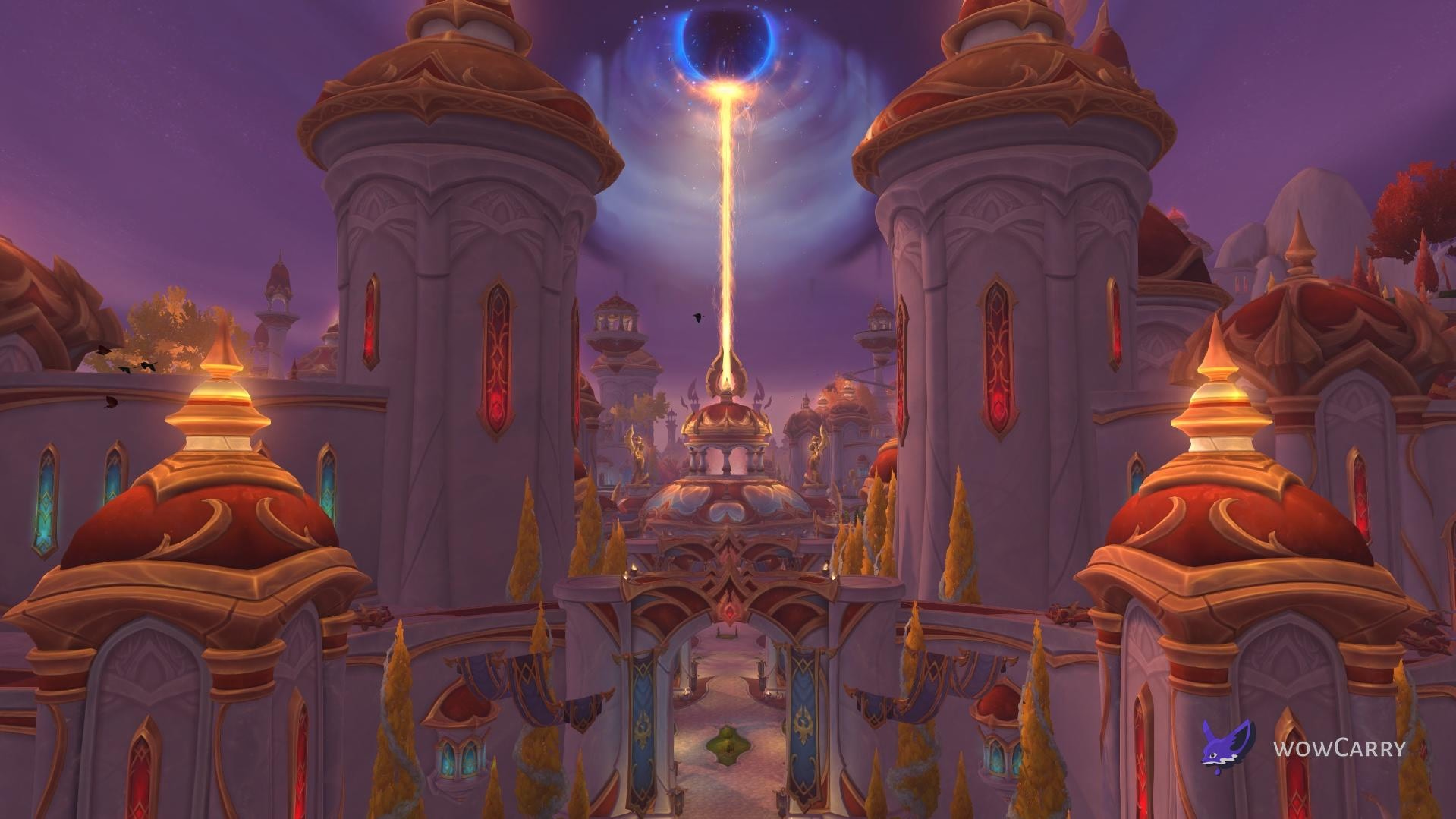
The bolder choice was right there. Destroying the corrupted Darkwell at the cost of the Sunwell would have aligned with the radical history of a people who once drained captive demons under Kael'thas to keep their arcane addiction fed. Rebuilding on that wound, the way Kael'thas's faction once tried to, would have made the reunification stand on something the player earned. Instead the writing reaches for the saccharine power-of-friendship beat and leaves longtime lore readers wondering where the sharper version went.
Stakes That Refuse to Land
Effective stakes need consequences players can feel inside their characters. Midnight's stakes keep being told rather than shown. The Vanguard of the Light suffers real losses across the Voidspire MSQ, but the player rarely sees the cost beyond a single questline. The faction tension over the Darkwell could shape a season's PvP fronts; instead it surfaces in dialogue and is dropped.
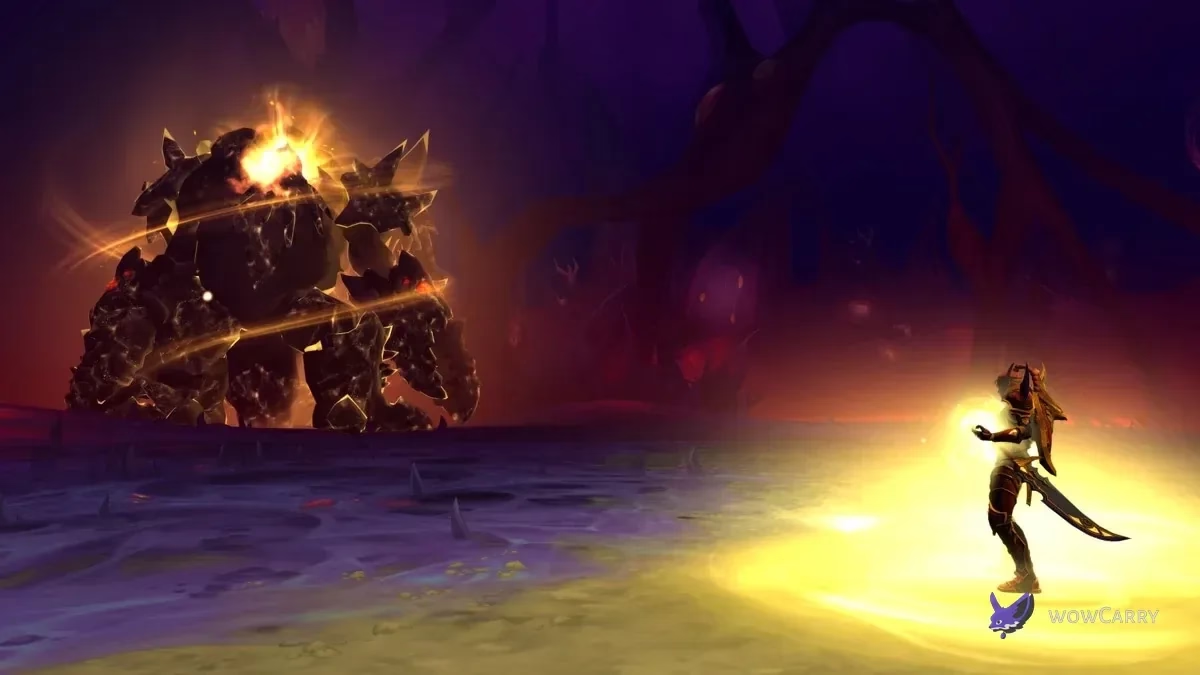
The Voidspire encounter against L'ura, on the Midnight Falls platform of the March on Quel'Danas raid, is the rare beat that lands. The encounter design carries the narrative weight that the surrounding MSQ does not. Players who still want the kill while the meta debate plays out can run the March on Quel'Danas finale carry catalog to clear Belo'ren and L'ura inside a single lockout. The fight earns its place in the season; the chapter framing around it does not.
Character Knowledge vs Player Knowledge
One of the quieter contributors to the rushed-feel is the gap between what players know and what in-game characters acknowledge. Longtime players carry a working model of ley lines, the Worldsoul, the Pantheon, and the Burning Throne aftermath. Midnight's NPCs frequently treat these as new information, which creates a small-but-constant friction. Characters who should have been changed by Argus, Ny'alotha or the Maw arrive in Quel'Thalas reading from a briefing slide.
The fix is not "make the characters smarter." The fix is letting them act on what they already know. Alleria has held L'ura's essence since Legion's tail. Lor'themar has watched the Sunwell die and recover before. Building scenes around those memories instead of around exposition keeps the in-game cast on the same page as the audience.
Where the Storytelling Could Go
Midnight is still half a season away from rolling into the next expansion. The 12.0.7 patch lands in mid-June, 12.1 follows late summer, and the Last Titan marketing cycle does not own the conversation until BlizzCon. The next eight weeks are the realistic window for a course correction inside the current arc.
The corrections that would help most are not script-level. Slow the patch cadence by 25%, even at the cost of fewer raid tiers per season. Anchor each remaining patch to a single character beat (Alleria, Lor'themar, Turalyon) rather than a new system. Stop pre-spoiling Worldsoul Saga capstones at marketing events. None of these require new writers. They require the institutional decision to let stories breathe in a game that has spent the past five expansions optimizing against breathing room.
Readers who want the broader Midnight experience can survey the Midnight Season 1 boost catalog to see how the season is delivering, then read the next round of patch notes for what comes after. Whether the story execution catches up to the lore ambition is the open question.
Frequently Asked Questions
Is Midnight's story actually rushed or is it just forum complaints?
The pacing criticism appears across long-running forum threads, paid editorial coverage at Windows Central, Massively OP and ScreenRant, and the broader player-base discourse. The thesis travels too widely across independent venues to be dismissed as forum churn.
Who is Xal'atath?
Xal'atath is the Harbinger of the Void and the main antagonist of WoW Midnight, set up across the prior Worldsoul Saga chapter and central to the Voidspire raid finale. The Worldsoul Saga frames her as a multi-expansion antagonist; how that bears out across The Last Titan is open.
What happens to Alleria Windrunner at the end of the Voidspire?
Alleria carries L'ura's essence and is caught with Turalyon when the Voidspire collapses. Her fate is left unresolved at the end of 12.0.5, which is the cliffhanger Midnight's marketing has not yet built around.
Why is Mists of Pandaria treated as the storytelling high-water mark?
MoP sustained one central conflict across an expansion's runtime. Each patch advanced the same through-line rather than introducing fresh saga-tier subplots. The result was a finale (Siege of Orgrimmar) that landed because every prior patch had earned its weight.
What is the Worldsoul Saga?
The Worldsoul Saga is Blizzard's official three-expansion arc covering the prior expansion, Midnight, and The Last Titan. It frames the universe-level conflict over Azeroth's Worldsoul as a single epic, with each expansion carrying one chapter of the through-line.
Is the Sunwell-to-Darkwell-to-Dawnwell arc actually complete?
The 12.0.5 resolution restores the Sunwell as the Dawnwell after the void corruption arc. The arc closes within the Midnight expansion's content runtime, which is part of the pacing complaint: the lore object whose corruption opens the season is restored before the season closes.
What can Blizzard realistically change before The Last Titan?
Patch cadence, marketing-spoiler discipline, and per-patch character-beat focus are the institutional levers available without a writers' room overhaul. The eight-to-twelve weeks before The Last Titan owns the conversation are the realistic window for course correction inside the current Midnight arc.