
Demonology Warlock Mythic+ Guide — Midnight Season 1
Demonology Warlock is A-tier in Midnight Season 1 Mythic+. Soul Harvester, Dominion of Argus, passive damage profile, and the spread-cleave gap explained.
By:
John Langan
Here is the full breakdown behind each of those points.
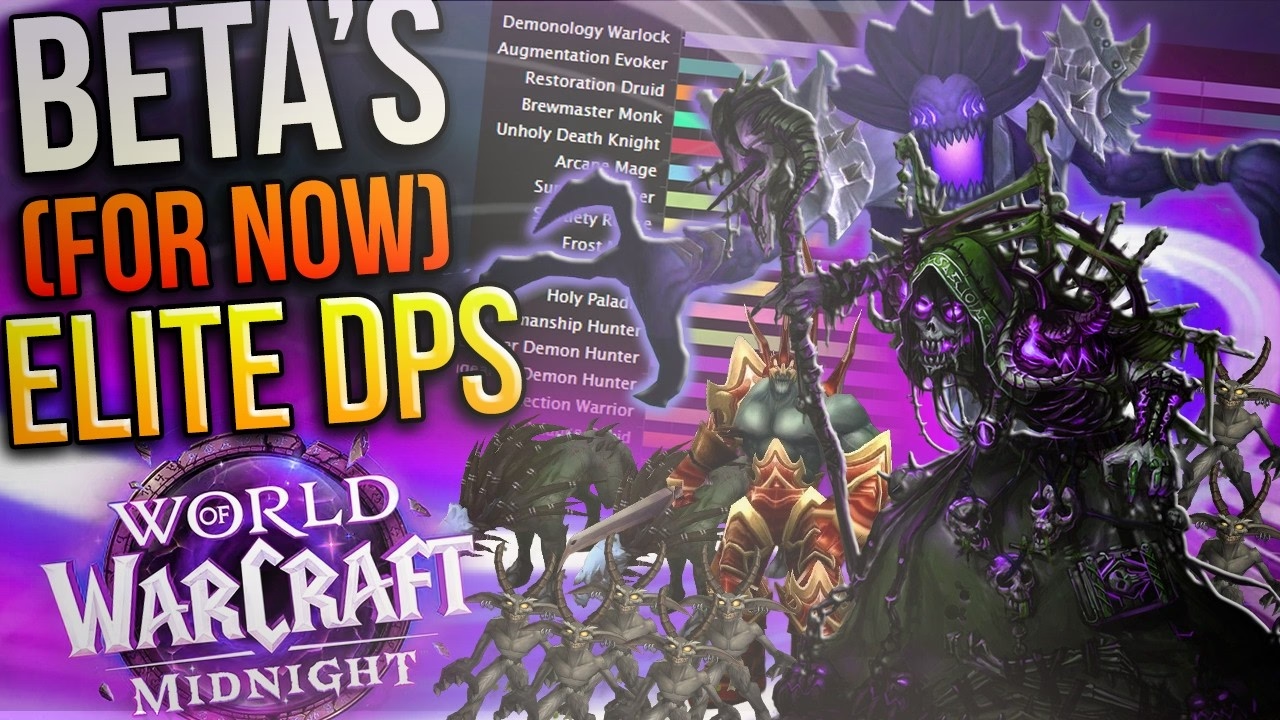
With Midnight's launch on March 2, 2026, and the spec landscape stable through Patch 12.0.5 "Lingering Shadows," Demonology Warlock has settled into a defined position in the Mythic+ meta. The beta phase showed the spec near the top of DPS rankings; the live environment has refined that picture. Demo Warlock is a genuine A-tier choice and can be invited to any key level without friction — the spread-cleave gap and some mobility constraints during Tyrant windows are manageable, not spec-breaking.
The reasons Demo Warlock holds its A-tier position despite tuning adjustments come down to structural advantages: a passive damage engine that performs consistently even in imperfect pull conditions, a Demonic Tyrant cooldown that aligns naturally with dungeon pull cadence, and a defensive kit that reduces the cost of mistakes in mixed-skill groups.
The Demonology Warlock's damage model is different from most DPS specs. Approximately 55% of total output comes from passive sources: Wild Imp attacks, Dreadstalker strikes, Doomguard cleave, and the Demonic Tyrant's amplification window. Direct button presses drive the passive engine rather than dealing damage themselves. For context, most ranged DPS specs in Midnight generate 5–35% of their damage passively; Demo sits well above that range.
This architecture makes Demo resilient to tuning cuts. When Blizzard reduces a single ability's output, the passive network absorbs and spreads the impact rather than creating a single large damage hole. A Demo Warlock spending a global on mechanics (a dispel, a kick, repositioning) loses less than a spec where every button press is a high-value damage event. That resilience is a meaningful practical advantage across a full dungeon run.
Each ability in Demo Warlock's rotation has a different actual function from what its tooltip suggests:
📌 Implosion timing note: the six-demon cap means banking more than six Wild Imps before Implosing wastes generation time. Use Implosion when the Wild Imp count reaches five or six — waiting for a larger stack is one of the most common rotational mistakes returning Demo players make in Midnight.
The consistent theme across all five abilities is that player button presses generate or amplify passive effects. Optimizing Demo Warlock means optimizing resource throughput, not damage-per-button efficiency.
Dominion of Argus opens a portal to Argus for 15 seconds, summoning the Antoran Jailer. The Jailer deals area damage through Soul Barrage (a pet ability — players do not press it directly) and each Hand of Gul'dan cast during the 15-second window refunds one Soul Shard.
The refund creates a compounding effect: more Soul Shards allow more Hand of Gul'dan casts, which generate more Wild Imps, which inflate the Demonic Tyrant's amplification window for the next cycle. Dominion of Argus should be opened immediately when available in any pull where the Antoran Jailer can hit multiple targets.
📌 Tyrant checklist simplified: the Demonic Tyrant in Midnight extends only Dreadstalkers and Wild Imps — not the full demon roster. Pre-Tyrant setup is shorter and less error-prone than in Dragonflight. This change is one of the reasons Demo is more accessible now than in previous expansions.
Midnight Demonology Warlock has two hero talent trees, and the Mythic+ choice matters for how the spec performs across varying pull sizes. For a full talent breakdown and current builds, Wowhead's Demonology Warlock Mythic+ guide covers the tree interactions in detail.
For pug play or any group without reliable pre-planned pull sizing around a 1-minute cooldown, Soul Harvester is more forgiving and delivers more consistent throughput across a full dungeon run.
Demo Warlock's AoE is genuinely strong on stacked targets. Implosion, Doom Bolt Volley (the Doomguard's innate cleave attack), Wild Imp swarm damage, and Dominion of Argus create sustained multi-target pressure through corridor pulls and clustered packs. The flat damage profile across the pack, spread evenly rather than spiked at single targets, is effective in timed content where every target's health matters equally.
⚠️ Spread cleave warning: when targets must be kept at range or packs cannot be stacked, Implosion caps at six demons and Doom Bolt Volley cleave efficiency drops. Several Midnight dungeon encounters that require spreading or rapid priority swapping expose this limitation. Coordinate with your tank to group packs before opening Implosion or Dominion of Argus — even a two-second pre-stack window recovers a portion of the AoE efficiency that forced spread removes.
Single-target throughput is A-tier competitive but not dominant. Boss-only segments see Demo Warlock performing well while trailing S-tier specs like Unholy Death Knight on pure priority damage.
Players looking to push past the spread-cleave limitation in coordinated groups can find Midnight Mythic+ runs at WowCarry's dungeon service, where group compositions are built around the current Season 1 meta. For broader seasonal goals, browse Midnight Season 1 boost options covering all difficulty levels.
Unlike many DPS specs that have traded defensives away in Midnight's class reworks, Demonology Warlock retained its full survivability toolkit:
The combined toolkit means Demo Warlock absorbs more ambient dungeon damage than any other ranged DPS spec. Tanks see fewer deaths on chaotic pulls, which improves group throughput beyond what the spec's raw DPS number reflects, particularly in pug environments where individual survivability directly affects clear speed.
Players returning to Demo Warlock after a break will find the spec far simpler than it was in Dragonflight. The pet micromanagement that defined it in earlier expansions has been restructured across three changes:
The result is a spec where casting Hand of Gul'dan and Demonbolt as the primary resource loop drives a powerful demon engine in the background. Players who avoided Demo because of pet management complexity may find the Midnight version accessible without sacrificing M+ viability.
Last reviewed 2026-05-25 against WoW Midnight Patch 12.0.5 "Lingering Shadows". Maintained by WowCarry's WoW team.
Yes. Demonology Warlock is A-tier in Midnight Season 1 Mythic+. It performs well in stacked-AoE pull conditions at any key level, brings a defensive toolkit that reduces deaths in pug environments, and has no structural failure points that block content completion. It is not S-tier — Unholy Death Knight and a few other specs sit above it on raw throughput — but the gap does not affect inviteability or clear rates at most key levels.
Soul Harvester is the current Mythic+ recommendation for most players. Its Succulent Souls mechanic generates consistent output across variable pull sizes and does not depend on coordinated Tyrant timing with the tank. Diabolist produces higher peak damage in well-coordinated pull setups but underperforms in uncoordinated groups where demon summons land on scattered or dying targets.
Dominion of Argus is a Demonology Warlock talent that opens a portal to Argus for 15 seconds, summoning the Antoran Jailer. The Jailer deals AoE damage through Soul Barrage and each Hand of Gul'dan cast during the window refunds one Soul Shard. The refund enables more resource-intensive casts inside the window, amplifying Wild Imp generation and the following Demonic Tyrant cycle. It is the most impactful single talent in the current Midnight Demo build.
Approximately 55% of Demonology Warlock's total Mythic+ damage comes from passive sources: Wild Imp attacks, Doomguard cleave via Doom Bolt Volley, Dreadstalker strikes, and the Demonic Tyrant's amplification of all active demons. Player-pressed abilities like Demonbolt and Hand of Gul'dan generate resources and trigger those passive sources rather than dealing direct damage. This architecture makes the spec resilient to individual ability tuning cuts.
Gorefiend's Avarice is a Warlock class talent that makes Drain Life channel 50–100% faster depending on investment. It turns Drain Life from a slow situational heal into a fast in-combat recovery that Demo Warlock can weave into rotation gaps without meaningful DPS cost. It is one of the main reasons Demo's defensive profile stands out from other ranged DPS specs and is recommended for Mythic+ at any key level.
Spread cleave is the primary weakness. Implosion caps at six demons, Doom Bolt Volley efficiency drops on non-stacked targets, and forced movement during Tyrant windows costs uptime that other ranged specs maintain freely. Several Midnight dungeon encounters that require spreading or rapid priority swaps expose Demo's flat damage profile as a real limitation. Single-target output on pure boss-only segments is A-tier competitive but trails S-tier specs like Unholy Death Knight.
The main change is simplification of the pet management loop. Dreadstalker-Tyrant alignment is no longer enforced; Implosion is a cooldown resource generator rather than a burst timing decision; and the Tyrant extends only Dreadstalkers and Wild Imps rather than the full demon roster. The spec plays as a traditional caster whose button presses fuel a passive demon engine, rather than a pet management spec that happened to cast spells. Players who found legacy Demo too complex may find the Midnight version accessible.