Key Takeaways
- The Midnight pre-patch ran before the March 2, 2026 launch featuring 18 world rares, a tic-tac-toe mini-game, and an insignia economy for gear and cosmetics.
- Initial costs translated to roughly 6.5 hours per gear piece and ~80 hours for a full cosmetic set at the original 10-minute rare-spawn rate.
- Blizzard hotfixed spawn timers to 5 minutes, halved gear prices to 20 insignias, and increased drop rates — changes that arrived after community backlash, not before launch.
- Known bugs included broken portal mechanics, phasing failures on world quests, and missing ranged weapon loot for hunters.
- Compared to Legion's Invasions and Dragonflight's Primal Storms, the Midnight pre-patch drew widespread criticism for passive "waiting simulator" gameplay with minimal player decisions.
Here is how those numbers played out in practice when the event went live.
Pre-Patch Event Chaos
The latest pre-patch for World of Warcraft has left many players frustrated and questioning Blizzard's approach. This event has been compared to "firefighter arson," a term used when someone creates chaos only to later resolve it for praise. While this isn't Blizzard's intention, the repetitive nature of their response pattern has left players skeptical.
Simplistic Design and Player Frustration
The event itself is notably straightforward:
- Six quests with only four actual objectives
- World quests
- A tic-tac-toe mini-game
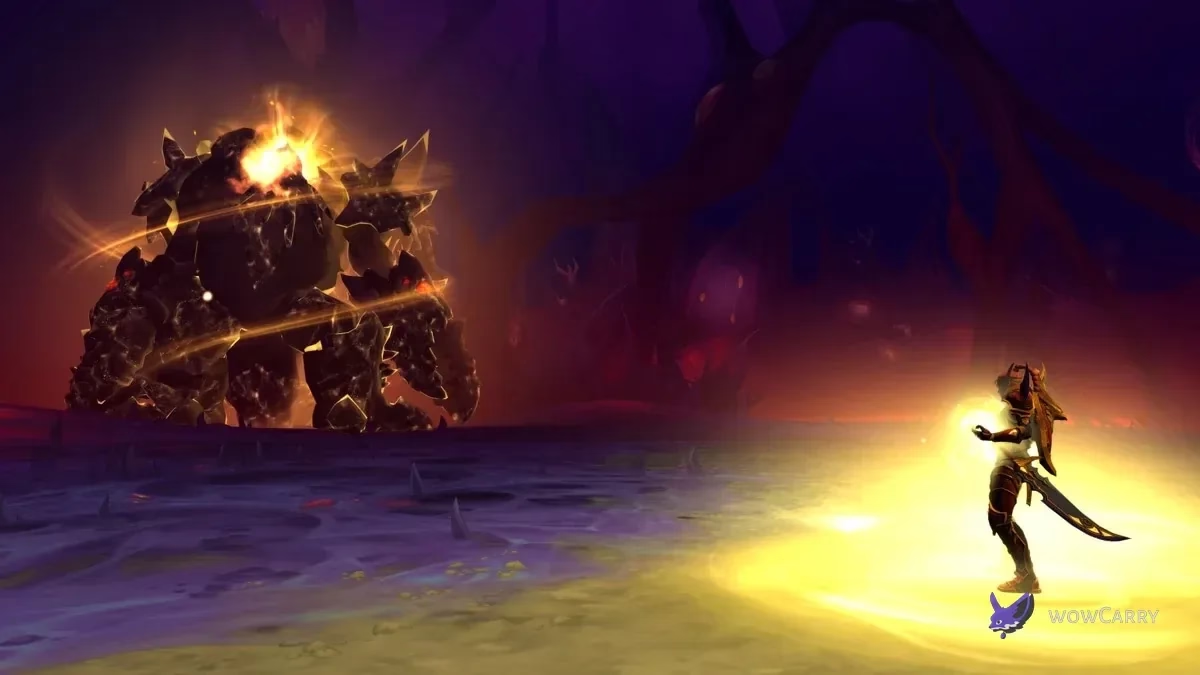
- Eighteen rares to kill
Rares spawn regularly, and players gather to defeat them for rewards. Each defeated rare gives an insignia, which can be traded for gear or cosmetics — mount recolors and transmogs. The reward system initially demanded a steep time investment: one piece of gear cost 40 insignias (over 6.5 hours of play), while a full cosmetic set required 475 insignias, roughly 80 hours of farming.
Event Adjustments and Issues
Blizzard has since made several adjustments to address player grievances:
- Insignia drops were increased.
- Rare spawn times reduced to every 5 minutes.
- Gear price at vendors halved.
Despite these improvements, numerous bugs and issues persisted:
- Incorrect portal mechanics allowing players to teleport others.
- World quests failing under certain conditions.
- Missing ranged weapon loot for hunters.
These quick patches further fueled perceptions of Blizzard's reactive rather than proactive design approach.
Consequences and Community Perception
Many players feel disillusioned with the recurring pattern of launching unfinished content:
- Data Gathering: Blizzard seems reliant on post-launch data and feedback, often using the community as unpaid testers.
- Unimaginative Execution: The pre-patch appears rushed, with assets and events lacking the polish expected from Blizzard.
- Lackluster Rewards: The event rewards are uninspired, offering little incentive for engagement.
The pattern of launching thin content then patching it mid-event has become familiar enough that players anticipate it before an expansion goes live.
Comparison of Pre-Patch Events
Past pre-patch events are a useful benchmark for what engaged players:
| Event Name | Reception |
|---|---|
| Legion's Invasions | Well-received and engaging |
| Dragonflight's Primal Storms | Positive feedback |
| Midnight Pre-Patch | Viewed as a chore |
Where Legion gave players a sense of urgency and active combat across multiple zones, the Midnight pre-patch amounted to a waiting simulator — stand near a spawn point, collect an insignia, repeat.
Issues with the Current Pre-Patch Experience
The primary issue with the current pre-patch is its failure to engage players in a meaningful way. Unlike previous events, this one lacks interactive gameplay, reducing it to a waiting simulator where players simply stand around waiting for rares to spawn. There is no opportunity for players to actively participate or make decisions that impact their progress or rewards.
Sid Meier once said that a good game is a series of interesting decisions. While this phrase can be misused, it aptly describes the shortcomings of this pre-patch. Events from past expansions — like Dragonflight — allowed players to engage in mob farming and optimizing damage, which involved strategic choices and active participation.
Quality of Delivery and Player Respect
Blizzard often emphasizes that they create content for the players, focusing on quality and engagement. However, releasing a low-quality event contradicts this narrative. If Blizzard continues to market such lackluster experiences as major events, it risks eroding trust and damaging its credibility. Players who buy into the marketing message expect an experience that aligns with what they're promised.
Despite these issues, there are areas in the upcoming Midnight expansion that show promise and generate excitement. Introducing great features doesn't compensate for the poor execution of a pre-patch event. Blizzard must prioritize the quality of their offerings to maintain player trust and the long-term health of the game.
Looking Ahead
Moving forward, Blizzard needs to reconsider its approach in delivering content. A few steps that would meaningfully improve future pre-patch events:
- Focus on Quality Over Quantity: Instead of delivering numerous features, channel resources into fewer but well-crafted elements.
- Engagement-Driven Content: Design events that require active decisions — mob routing, resource prioritisation, group coordination — rather than passive gathering loops.
- Timely Fixes: Prioritize fixing bugs, especially those that impede the core gameplay experience.
- Consistent New Player Experience: Make the leveling and new-player onboarding consistent and cohesive from day one, not after a week of hotfixes.
- Transparent Communication: Maintain clear communication with players about updates and changes to manage expectations.
Blizzard has demonstrated the capacity for high-quality content — which is precisely why the gap between that potential and a rushed pre-patch is so visible. Closing that gap starts before launch day, not after.
FAQ
How many rares were in the WoW Midnight pre-patch event?
The Midnight pre-patch featured 18 world rares. Each rare dropped an insignia on defeat, and those insignias could be exchanged for gear or cosmetics at event vendors.
How many insignias did a full cosmetic set cost in the Midnight pre-patch?
A full cosmetic set (mount recolors and transmogs) initially required 475 insignias — roughly 80 hours of farming at original rare-spawn rates. After Blizzard's hotfixes, spawn times dropped from 10 to 5 minutes and vendor prices were halved, reducing the grind significantly.
What bugs affected the Midnight pre-patch event?
Reported issues included broken portal mechanics that allowed players to teleport unintended targets, world quests failing to progress under certain conditions, and hunters missing ranged weapon drops from the rare loot table. Most were addressed via hotfix within the first week.
How did Blizzard improve the Midnight pre-patch after launch?
Key changes included increasing insignia drop rates from rare kills, reducing rare respawn timers from 10 minutes down to 5 minutes, and halving the gear cost at event vendors from 40 insignias to 20 per piece.
How does the Midnight pre-patch compare to Legion's Invasions pre-patch?
Legion's pre-patch Invasions gave players multiple objectives per zone — combat, item collection, boss encounters — that required active movement and decision-making. The Midnight pre-patch offered a narrower loop: stand near a rare, defeat it, collect an insignia. Player sentiment reflects that difference clearly.
When did WoW Midnight officially launch after the pre-patch?
World of Warcraft: Midnight launched on March 2, 2026. The pre-patch event ran in the weeks before launch, with early access for Epic Edition pre-purchasers beginning February 26, 2026.