Key Takeaways
- Midnight Enchanting splits into two crafting philosophies: Cooldown Crafters run multiple characters each day to maximise Concentration, while Master Crafters go deep on a single character to unlock every recipe tree.
- The four specialization trees are Elevating Equipment, Disenchanting Delegate, Spellbound Shatterer, and Transitories, Tonics, and Tools. Most enchanters invest in Disenchanting Delegate first for material self-sufficiency.
- Disenchanting yields Eversinging Dust, Radiant Shards, and Dawn Crystals. Pairing an enchanter with a tailor simplifies reagent farming but requires a secondary character slot.
- Helm and shoulder enchants are new in Midnight; cloak and bracer enchants have been removed. Gear enchant categories are tied to three faction trees inside Elevating Equipment: Thalassian, Amani, and Haranir.
- Concentration regenerates at 240 points per day (capped at 1,000 per character per profession). Cooldown Crafters multiply this effectively by rotating across multiple characters daily.
- Crafting currency comes from outdoor activities: Artisan's Moxie and Voidlight Marl gate the most valuable specialization recipes.
Here is the full breakdown behind each of those points.
Enchanting in Midnight: Strategy and Specialization Overview
Midnight raises the ceiling on Enchanting as a profession. With consumables and reagents now limited to two quality ranks, the gap between a casual enchanter and a committed specialist is wider than in previous expansions. The two dominant crafting philosophies — Cooldown Crafting and Master Crafting — define how a player approaches everything from material sourcing to auction house strategy.
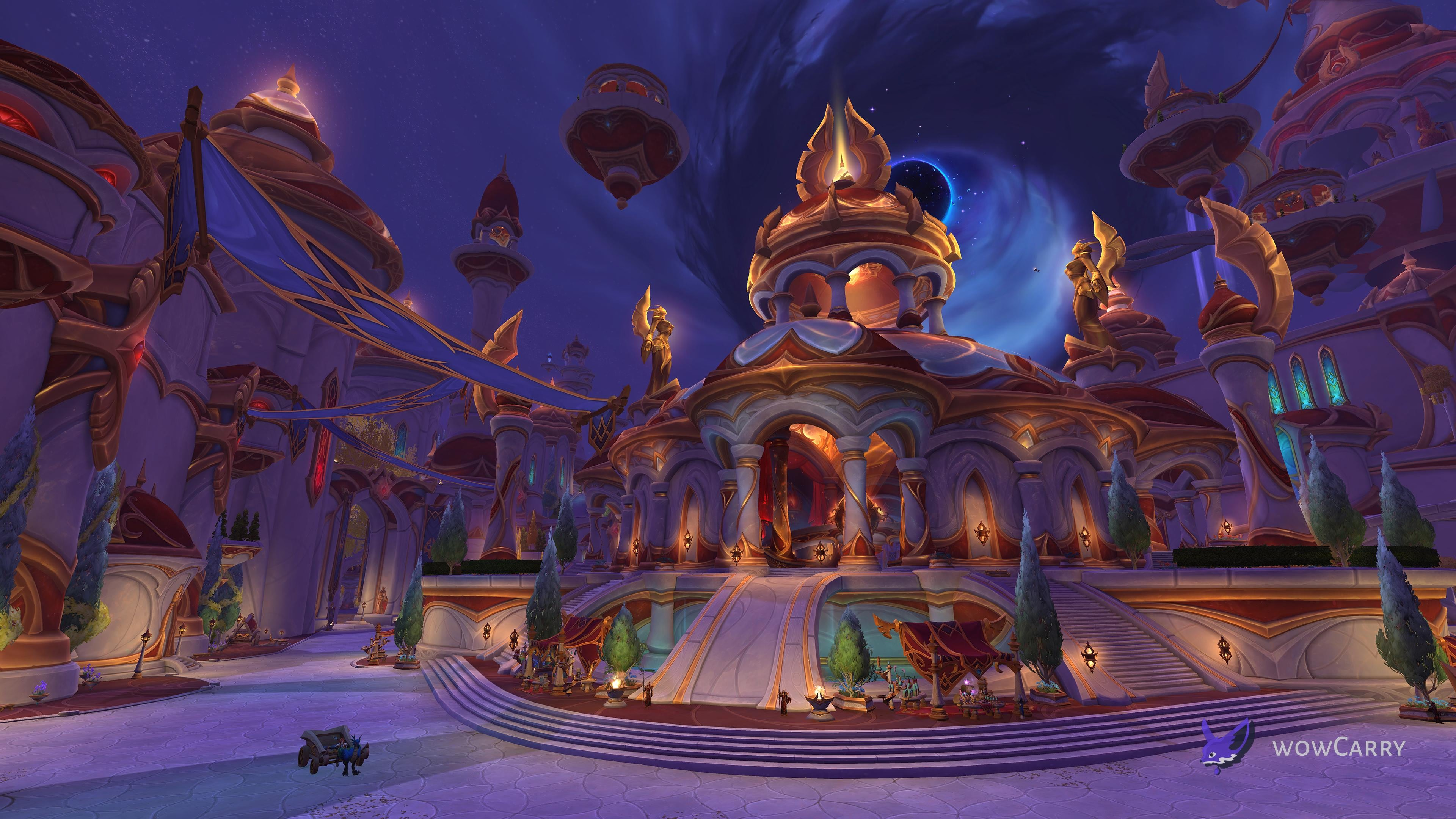
Understanding which approach fits your play pattern before committing specialization points saves weeks of regret. Here is what each path actually involves.
Cooldown Crafting vs Master Crafting
The two philosophies differ fundamentally in how they use Concentration, Midnight's crafting resource that controls quality output:
- Cooldown Crafters:
- Maintain multiple enchanter characters, each contributing their daily Concentration allowance (240 points per day, cap 1,000)
- Depend less on high-quality input materials because pooled Concentration from multiple characters compensates for material grade
- Use the auction house as a primary outlet: craft daily, list daily, repeat
- Lower time investment per character but require managing a roster of alts
- Master Crafters:
- Invest deeply in a single character, completing weekly crafting activities to unlock recipe tiers progressively
- Aim for unrestricted crafting capability, with every recipe available on demand
- Prioritise high-quality input materials for consistently premium output
- Higher per-session time investment but no alt management required
Neither approach is strictly superior. Cooldown Crafting wins on material efficiency and Concentration volume; Master Crafting wins on specialization depth and the ability to craft rare commission requests without a rotation setup.
Materials, Leveling, and Faction Unlocks
Enchanting materials in Midnight come primarily from disenchanting, which is why the Disenchanting Delegate specialization tree is the recommended first investment for most enchanters. Key outputs from disenchanting are:
- Eversinging Dust — the base reagent used across most recipes
- Radiant Shards — mid-tier reagent for higher-quality enchants
- Dawn Crystals — rare outputs used in high-end gear enchants
Pairing Enchanting with Tailoring streamlines material acquisition: tailors can craft gear for immediate disenchanting, creating a closed reagent loop. The limitation is that this loop requires a second character slot dedicated to Tailoring, which adds overhead for players with limited alt time.
The gear enchant recipe trees are locked behind three faction trees inside the Elevating Equipment specialization: Thalassian, Amani, and Haranir. Each faction tree covers the same set of gear slots (Weapon, Ring, Chest, Helm, Shoulder, Boot, Profession Tool). Unlocking all three requires significant renown investment, so most enchanters choose one faction to specialise in first and expand later.
Notable gear slot changes in Midnight compared to Dragonflight: helmet and shoulder enchants are new additions; cloak and bracer enchants have been removed from the game entirely. The full item database for Enchanting reagents and recipes in Midnight is maintained on Wowhead's Enchanting guide.
The Four Enchanting Specializations
Midnight Enchanting has four specialization trees. Each serves a distinct role in the overall crafting workflow:
- Elevating Equipment:
- The primary gear enchant tree, subdivided into three faction paths: Thalassian, Amani, and Haranir
- Unlocking each sub-specialization requires filling out the first and second tier traits before progressing to Master Crafter nodes
- The deepest and most time-intensive tree — most enchanters spread unlocks across multiple sessions
- Disenchanting Delegate:
- Improves quality and quantity of disenchanting outputs
- Preserves Radiant Shard quality during the shattering process (prevents downgrade)
- Recommended as the first investment for any enchanter who plans to self-source materials
- Spellbound Shatterer:
- Optimises secondary stat weights on crafted enchants
- Reduces Concentration costs for specific recipe categories
- Enhances multicraft efficiency, producing more outputs per crafting session
- Transitories, Tonics, and Tools:
- Covers miscellaneous crafting: glamour items, decor objects, epic wands, and crafting tools
- Includes recipes from Jennara Sunglow at the Thalassian University in Silvermoon — glamour-based recipes that use elemental materials for a distinct leveling path
- The least financially competitive tree in early Season 1 but a market gap in later patches when decor demand rises
Players choosing a single-character Enchanting setup should decide between Elevating Equipment (for gear enchant commissions) and Disenchanting Delegate (for material self-sufficiency) as their first major specialization node before branching out.
Practical Crafting Tips and Multi-Character Strategy
Efficient Midnight Enchanting comes down to Concentration management. Each character's Concentration regenerates at 240 points per day, capped at 1,000 per profession per character. For Cooldown Crafters, the daily rotation is straightforward: log into each enchanting character, spend their available Concentration on high-priority recipes, and list outputs on the auction house before logging out.
A designated disenchanting character is valuable even in a Cooldown Crafting setup. This character focuses on acquiring gear drops and converting them into reagents, freeing the primary enchanting characters to focus on crafted output rather than material farming. Players ready to skip the leveling treadmill entirely can take a shortcut with a profession boost that delivers maxed Enchanting with Midnight recipes already available.
Tool-smithing can be profitable in the early weeks of a new season on high-population realms, before the market saturates. Oils are worth a side specialization investment for enchanters who want a consistent low-effort revenue stream alongside their main enchant commissions.
Crafting Currencies: Artisan's Moxie and Voidlight Marl
Two outdoor-activity currencies gate access to the most valuable Enchanting recipes in Midnight:
- Artisan's Moxie — earned from crafting weekly activities and outdoor profession quests. Required for advanced Elevating Equipment recipes.
- Voidlight Marl — a special-purpose material tied to void-themed outdoor zones. Required for the highest-tier enchants in the Spellbound Shatterer and Thalassian faction trees.
Building a rotation system around these currencies is important for sustained Enchanting income. Log into each character, complete available crafting activities, use their Concentration on commission fills or auction-house restocks, then list and move on to the next. As more specialization nodes unlock over time, recipe access broadens and the per-session value of each character increases.
Decor and Glamour Enchanting
Beyond practical gear augments, Midnight Enchanting includes a creative niche: decor and glamour crafting. These include animated tools, illuminated books with dynamic lighting effects, and cosmetic displays designed for player housing or guild halls. They use low-quality Eversinging Dust that would otherwise have no premium outlet — turning surplus material into a secondary income stream rather than a waste product.
Decor enchanters occupy a small but reliable market segment. In the opening weeks of a new tier, most players focus on gear performance; decor demand rises later when players shift attention to housing and cosmetic customisation. Enchanters who specialise in this niche early build a reputation that pays off when the market matures.
Frequently Asked Questions
What are the best specializations for Enchanting in WoW Midnight?
For most enchanters, Disenchanting Delegate first for material self-sufficiency, then Elevating Equipment for gear enchant commissions. Which Elevating Equipment faction tree to unlock first — Thalassian, Amani, or Haranir — depends on which gear slots have the highest demand on your realm's auction house in the current patch.
What is Cooldown Crafting in Midnight Enchanting?
Cooldown Crafting is the strategy of running multiple enchanting characters and combining their daily Concentration allowances. Each character regenerates 240 Concentration per day (cap 1,000). Running three characters gives you effectively triple the daily Concentration capacity, which translates to higher output volume and quality without needing premium input materials on every craft.
What enchanting materials do I need in Midnight?
The core disenchanting outputs are Eversinging Dust, Radiant Shards, and Dawn Crystals. Advanced recipes also require Artisan's Moxie and Voidlight Marl, which come from outdoor crafting activities rather than disenchanting. Building a steady supply of both is the primary material management challenge in Midnight Enchanting.
Which gear slot enchants are new in Midnight?
Helmet and shoulder enchants are new additions in Midnight. Cloak and bracer enchants have been removed. The Elevating Equipment specialization covers all current enchantable slots: Weapon, Ring, Chest, Helm, Shoulder, Boot, and Profession Tool — distributed across the Thalassian, Amani, and Haranir faction trees.
Who is Jennara Sunglow and where do I find her?
Jennara Sunglow is a vendor at the Thalassian University in Silvermoon who sells glamour-based Enchanting recipes. These recipes use elemental materials rather than standard disenchanting reagents and serve as an alternative leveling path — useful for enchanters who are short on Eversinging Dust early in the expansion or who want to diversify their recipe portfolio.
Is Enchanting profitable in Midnight Season 1?
Yes, particularly for enchanters who invest early in the Elevating Equipment and Disenchanting Delegate trees. Gear enchant commissions are high-value in the first weeks of each tier as players gear up for Mythic raiding and high Mythic+ keys. Margins compress as more enchanters unlock the same recipes, so the advantage is front-loaded — the earlier you cap, the higher your per-commission rate.
Should I pair Enchanting with Tailoring in Midnight?
It is a strong pairing if you have a second character slot available for Tailoring. Tailors can craft gear for immediate disenchanting, reducing your dependence on the auction house for Eversinging Dust. Without a Tailoring alt, you will need to buy reagents directly — which is viable but increases your cost basis per enchant and can squeeze margins in competitive auction house environments.