Overview
A demon-backed caster who manages damage effects, a pet and utility. Forever separates damaging Banes from utility Curses, so the two jobs can coexist on a target.
- Role
- Ranged DPS
- Primary stats
- Intellect · spell damage
- Combat range
- Ranged · demon
- Resource
- Mana · Soul Shards
Use a Bane Alongside Your Utility Curse
Agony and Doom are Banes in WoW Forever, separating those damage effects from utility Curses. You can maintain a damaging Bane while providing the Curse your group needs, instead of treating the two jobs as the same spell category.
The limit is one Bane per Warlock on a particular target. Applying your Doom to a target already carrying your Agony does not give that enemy both of your Banes. A second Warlock has their own per-caster limit; coordinate utility without assuming one Warlock’s damage effect is the whole group’s allowance.
Curse of the Elements now benefits all magic damage, and Curse of Shadows was removed. Effects that interact with Curses also interact with Banes. When reading a talent, distinguish the damage effect itself, the Bane restriction and the separate utility you are supplying.
Destruction’s 21-point Bane of Havoc adds another placement decision: it lasts five minutes and copies 15% of the damage you deal to other targets onto the Havoc target. You can have only one Havoc target, and Havoc still obeys the one-Bane-per-target rule.
Two-target example: place Havoc on the enemy that should receive copied damage, then attack the other enemy. You can use Agony on that other enemy because it is a different target. Putting your Agony onto the Havoc target competes for its Bane slot instead.
Demonic Sacrifice and Master Demonologist Give Different Bonuses
The same demon can mean a different benefit depending on whether you sacrifice it or keep it active with Master Demonologist. Use the correct column when planning a configuration:
Two talent systems, two different sets of demon effects
| Demon | Demonic Sacrifice effect | Master Demonologist with that active demon |
|---|---|---|
| Imp | Increases Shadow damage. | Increases Fire damage. |
| Voidwalker | Restores mana. | Reduces Physical damage taken. |
| Succubus or Incubus | Increases Fire damage. | Increases Shadow damage. |
| Felhunter | Restores health. | Reduces Magic damage taken. |
Demonic Sacrifice is the 11-point talent and its effect lasts two hours. Demonic Pact, the 31-point talent requiring Soul Link, lets that effect persist when you summon a different demon. Summoning the sacrificed demon again still cancels its sacrifice effect.
Shadow-focused configuration example: sacrifice an Imp for its Shadow bonus, then, with Demonic Pact and Master Demonologist, summon a Succubus or Incubus for that active demon’s Shadow bonus. Resummoning the Imp cancels the sacrifice effect. This illustrates the interaction; it does not establish the best pet for every encounter.
Keep the active demon’s job in the decision. A different bonus combination may answer incoming Physical or Magic damage, resource pressure or a needed pet ability. A configuration’s passive bonus alone is not a complete comparison of what its demon contributes.
Keep the Demon Fighting While Managing Its Resources
Pets now scale from their summoner’s stats. Demonology adds several connections between your own actions and the demon’s resources: Fel Vitality improves pet health and mana and your maximum mana, while Demonic Energies lets your spell damage heal the pet and lets Life Tap restore pet mana alongside yours.
Life Tap scales with Spirit. It still converts your health into mana, so check your health and incoming damage before using the resource loop. Demonic Embrace no longer reduces Spirit, which matters when comparing its current behavior with the older talent.
Demonic Brand makes Searing Pain brand an enemy for bonus damage from the pet’s next two attacks. Its added pet damage generates high threat only when that damage is Shadow; the Fire version does not gain that same high-threat behavior. Do not assume every demon becomes an equivalent tank because it can trigger Brand.
Fel Domination is the 16-point milestone and requires Master Summoner; Soul Link is the 21-point milestone. The October 8 notes also make your current demon stunned while you summon a new one. A mid-fight swap therefore has a period when the existing demon cannot keep acting: choose the moment with that interruption in mind.
Drain Soul for Shards Without Planning an Impossible Channel
Drain Soul now has a progressive chance per tick to grant a Soul Shard. The chance rises after unsuccessful ticks until it is guaranteed. This creates shard opportunities during the channel rather than requiring you to describe every shard as a killing-blow-only reward.
The announcement does not give a fixed guaranteed tick number. Do not begin a dangerous pull with a plan that depends on receiving a shard on the first tick. Check your current shard supply before a summon or another shard-dependent action.
Beginning another spell correctly interrupts Drain Soul after the October 1 fix. When you need to switch to another cast, you are giving up the remaining channel rather than continuing both simultaneously. The related talent is now named Soul Harvest; the same update fixed its mana-regeneration benefit.
Affliction: Build Around Your Own Effects
Soul Siphon improves Drain Life, Drain Soul and Wrack for your other Affliction spells on the target, up to its stated cap. More effects on the enemy can improve the drain, but spending time applying every possible effect to an enemy that will immediately die is not automatically worthwhile.
Wrack is the 31-point talent. It deals Shadow damage each second and increases damage taken from your other Shadow damage-over-time effects by 10% for six seconds. That links its use to your own effects on the same target. Nightfall can also trigger from Drain Soul and Wrack, expanding the opportunities for its instant Shadow Bolt.
The October 16 notes replace Malediction with Grim Reach, increasing Affliction spell range by 10/20%. Shadow Mastery now increases Shadow spell damage by 2/4/6/8/10%. Do not allocate points expecting the original deep dive’s periodic-damage Malediction to remain in that slot.
Destruction: Check Immolate and Your Cross-School Window
Incinerate is the 31-point talent and requires Bane of Havoc. Its 2.5-second cast deals 25% additional damage when the target has Immolate. Check that condition on the enemy you are actually attacking; an Immolate on the Havoc target is not the same target state.
Shadow and Flame connects the two damage schools: Conflagrate increases your Shadow damage for 20 seconds, and Shadowburn increases your Fire damage for 20 seconds. The talent can also prevent Conflagrate from consuming Immolate and refund a Soul Shard from Shadowburn, depending on talent rank. Check your invested rank instead of treating every chance-based benefit as guaranteed.
Improved Shadow Bolt now benefits only your own Shadow damage and has no consumable charges. Destructive Reach was revised to increase Destruction spell range by 10/20%; use Grim Reach for the separately described Affliction range benefit.
Firestone and Spellstone now apply weapon imbues that can coexist with temporary enchants such as Wizard Oil. Firestone supports Fire damage and critical-strike chance; Spellstone supports Shadow damage and spell haste. Choose for the spells you are using rather than expecting the old held-item arrangement.
For creation choices, see our race/class reference. Talents begin at level 10, changes require a trainer, and Dual Specialization opens at level 40. Our leveling guide covers the wider route; this page focuses on mechanics rather than an untested optimal build.
Updated November 1: checked against Blizzard’s Warlock deep dive and subsequent development notes, including the preceding October 1 and October 8 fixes.
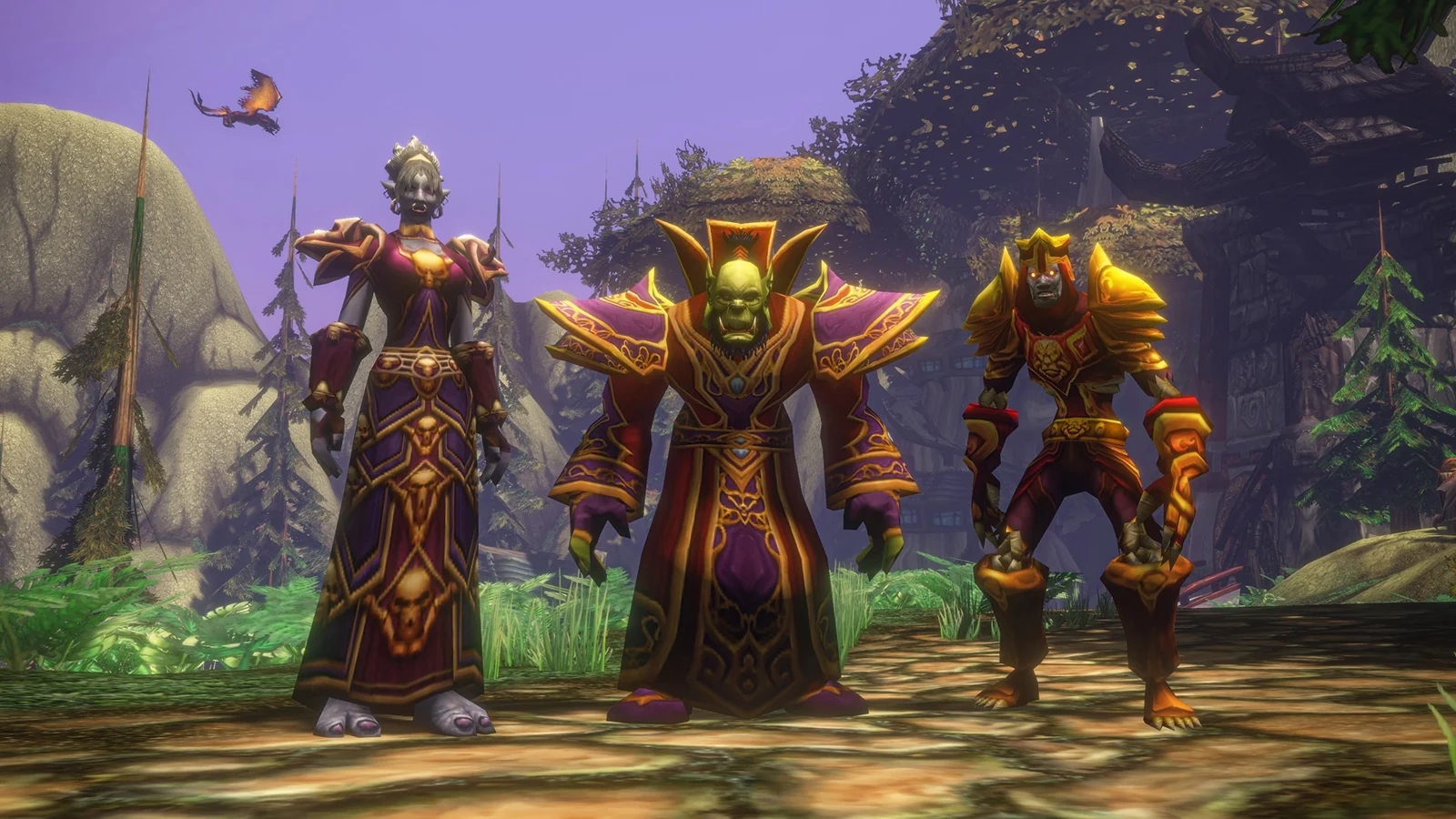
Cover: Blizzard’s preview of Undead Paladin, Orc Mage and Troll Warlock race/class combinations. Official preview. © Blizzard Entertainment.