Choosing Professions for Your First WoW Forever Character
Choose professions around a useful product, a reliable material supply, or a clear group responsibility. Herbalism with Alchemy is a natural starting candidate for a consumable crafter; Mining can support metal-based crafts; Skinning can support Leatherworking. Two gathering professions are another option when you prefer selling materials to funding a crafting route.
Those are practical pairings, not a launch profit ranking. Forever adds recipes, dungeon Blueprints, Camping objects, and new Legacy incentives. The best pair for you depends on what you want to make and what your group already supplies, rather than a copied Classic shopping list.
Key Takeaways
- More than 600 new recipes are announced across professions and level ranges.
- Advanced Blueprint recipes can come from dungeon bosses; an old trainer-only route may miss useful crafts.
- The first Camping objects become available at profession skill 20 through trainers or introductory NPCs.
- Crafting primary professions have Legacy milestones at 150, 225, and 300.
- Gathering professions do not qualify for those crafting milestones.
- Buy materials in stages after checking current recipes and your next training requirement.
Confirmed changes follow Blizzard’s profession and Camping overview and the Legacy challenge rules. Pairing and budget recommendations are editorial advice.
Match Your Pair to a Goal
| Goal | Pair to consider | Question before committing |
|---|---|---|
| Supply your own consumables | Herbalism + Alchemy | Will you gather during normal play, or mostly buy herbs? |
| Make metal equipment | Mining + Blacksmithing | Which current recipes actually improve your character or serve a buyer? |
| Build Engineering items | Mining + Engineering | Are the devices and requirements useful for the activities you play? |
| Craft leather goods | Skinning + Leatherworking | Can your regular routes supply useful hides and leather? |
| Work with cloth and enchantments | Tailoring + Enchanting | Can your drops and budget support both without starving other expenses? |
| Fund training without a craft plan | Two gathering choices | Do gathering detours improve your total session value? |
Tailoring with Enchanting is a candidate for coordinating cloth crafts and equipment materials, rather than a promise that every craft disenchant is profitable. Always check the actual item, binding restrictions, available action, and expected value in the current client.
If your group already has several Alchemists but no one wants to handle another useful craft, filling that gap can be more valuable than following the same profession recommendation independently. Agree on who gathers, who learns recipes, and how materials will be exchanged.
Gathering or Crafting on a Fresh Character?
Gathering has a clear advantage when you have little starting capital: it can turn materials you encounter into options. You can sell them, save them for a known recipe, or contribute them to a group crafter. Its hidden cost is time. A distant node that interrupts several quest objectives may not improve the overall session.
Crafting has a different advantage: it can produce something your character or group needs at a useful moment. Its hidden costs include training, recipes, intermediate materials, bag space, and the currency tied up in unsold stock. Judge a craft by the finished item’s purpose before treating skill points as the only benefit.
Two crafting professions usually demand a stronger supply plan than a gathering/crafting pair. That can be reasonable with an established group or a deliberate material budget. It is less attractive when every trainer visit competes with essential class training and supplies.
A Material Budget That Survives Recipe Changes
Plan the next useful stretch rather than the entire 1–300 journey at once. Open the current recipe list, identify the next skill or product goal, and record which materials you already own. Include vendor components and training costs before buying the remainder.
| Budget line | What to record | Why it matters |
|---|---|---|
| Current skill and next goal | Actual skill, planned recipe, and next useful craft | Prevents buying beyond a gate you cannot yet pass |
| Materials in storage | Usable quantities already owned | Avoids paying for the same supplies twice |
| Purchased materials | Quantity, unit price, and total price | Exposes expensive bottlenecks |
| Training and recipes | Next rank or recipe cost and requirements | Keeps a material purchase from stranding the plan |
| Output destination | Use, sell, save, or disenchant if valid | Distinguishes a useful craft from unsold inventory |
A yellow or green recipe does not justify assuming one skill point per craft. Record actual results and keep a buffer when skill gains are uncertain. Do not buy an “exact materials” pack without checking the current recipe route, your starting skill, training requirements, and how failed skill gains are handled.
Camping Makes Professions Useful to Other Players
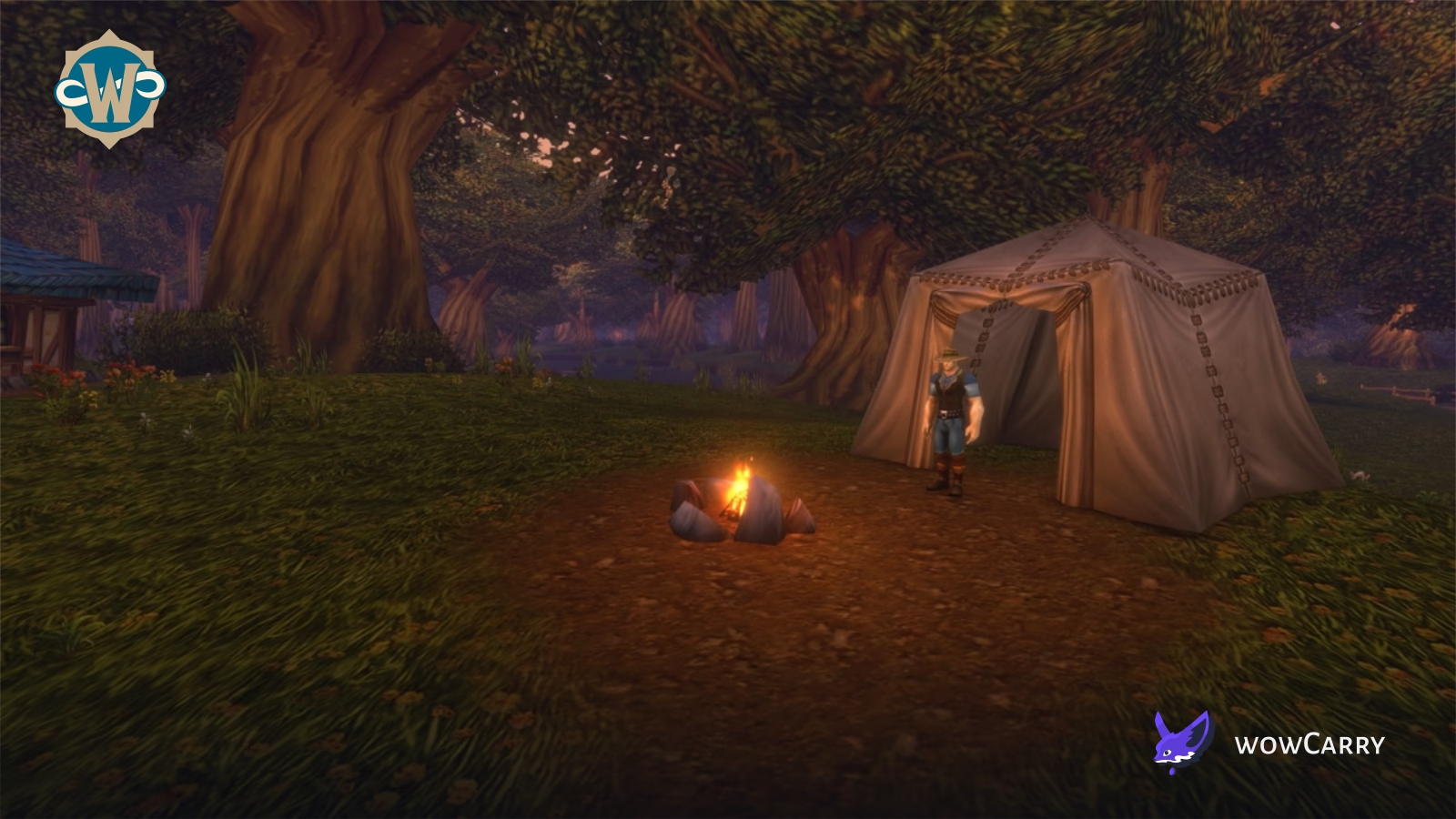
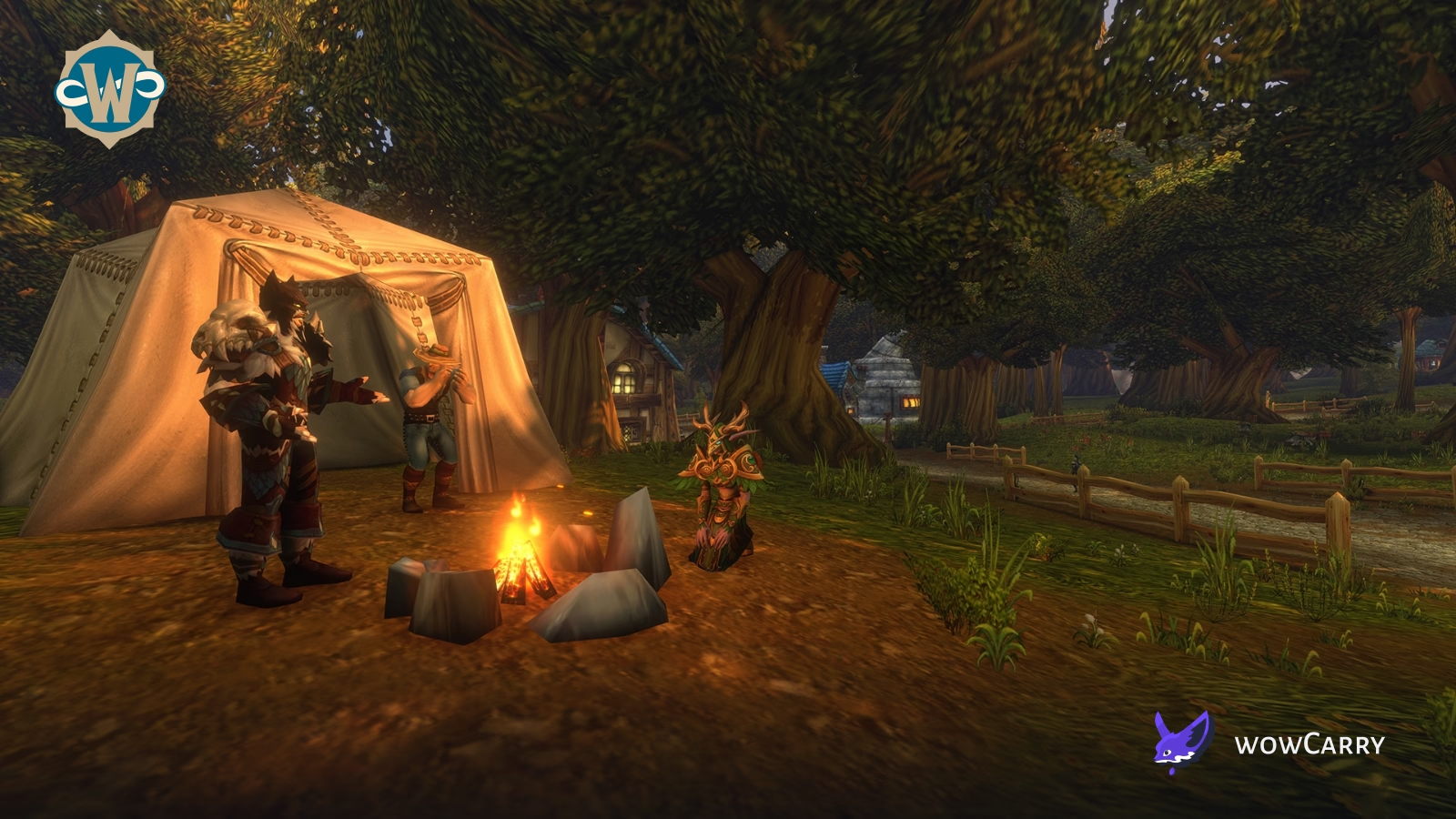
A profession can contribute more than a finished item. Blizzard’s examples include a Blacksmith’s Sharpening Wheel, a Tailor’s Faction Banner, an Herbalist’s Incense Candle, an Alchemist’s Alchemy Lab, and a Leatherworker’s Tanning Rack. Cooks can develop campfires with greater object capacity.
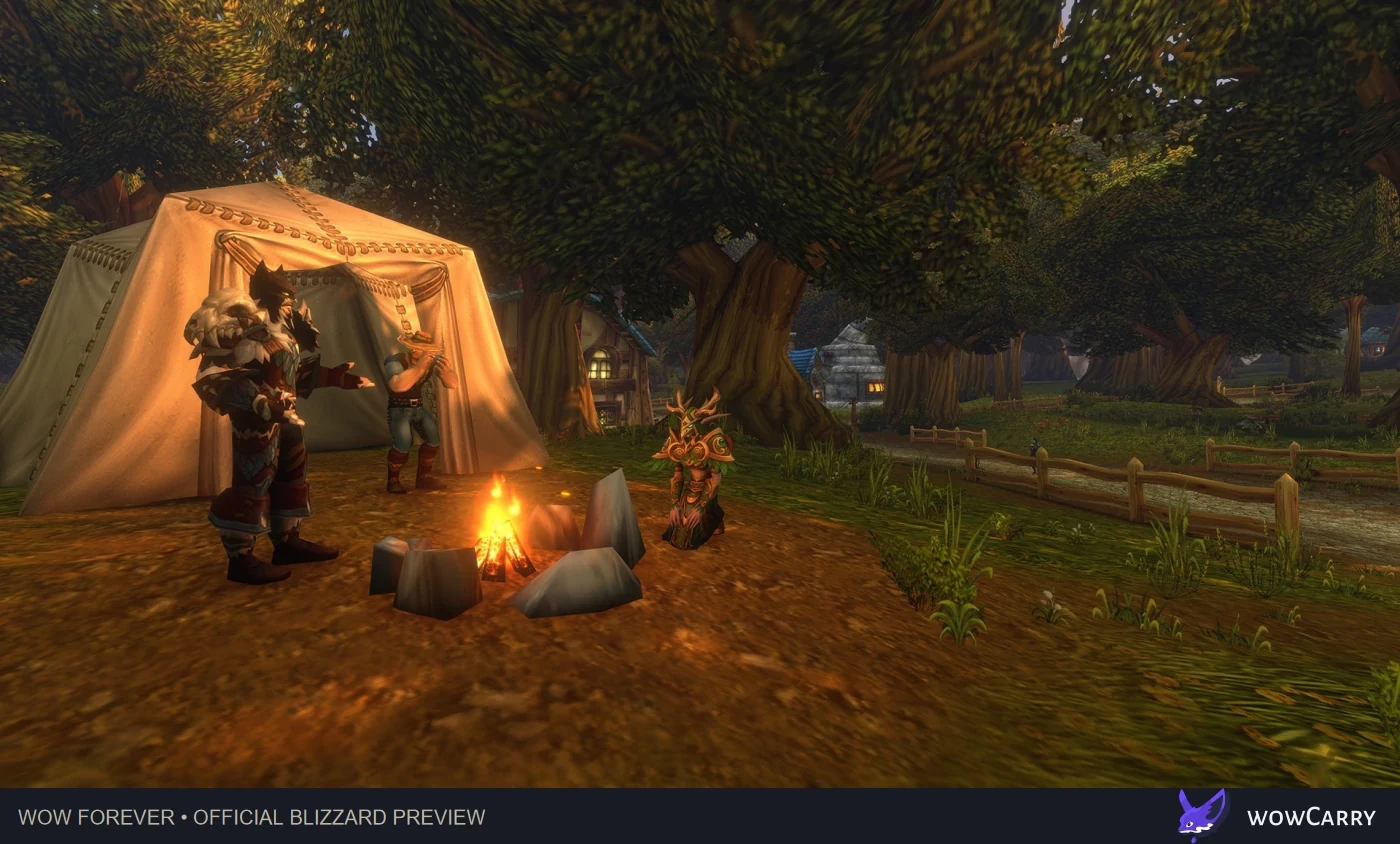
Coordinate contributions before placing them. Some Camping buffs overlap with class buffs, and a profession’s different objects do not automatically mean several independent stacking bonuses. Carrying a rare recipe is most useful when the group also knows when and where to use it.
Blueprint drops add another planning layer. Check the recipe’s profession and skill requirements before arranging a dungeon trip for it. A desirable recipe can be a future objective without being something your character can craft immediately after looting it.
Legacy Milestones and Alt Planning
The crafting milestones at 150, 225, and 300 reward continued development of non-gathering primary professions. They do not establish the character-level requirement for every training rank. Verify that requirement in the current client before buying the materials needed for a later stage.
Legacy points are shared, while each character has its own allocation and a launch spending cap. That makes it sensible to assign different long-term jobs to alts, but it does not make an expensive profession swap free. Record which character owns a useful recipe before reorganizing professions.
Before You Buy Materials or Arrange Help
Use this check when the next craft looks costly. It keeps the decision tied to a real result.
- I have checked the current recipe and can meet its requirements.
- I know my actual starting skill and the useful target I am buying toward.
- I have counted existing materials, training costs, and uncertain skill gains.
- I know where the crafted output will go.
- If using a service, I have confirmed its current route, scope, and post-launch availability.
For material-sourcing help, inspect the current kit contents and ask whether the route fits your character. Prelaunch listings do not prove immediate in-game delivery or that old recipe quantities remain correct.
Check the Legacy spending rules before treating profession milestones as an account progression plan. For a first character, Balance crafting with your leveling so supplies and training remain affordable.
FAQ
What are the best professions in WoW Forever?
The best pair depends on your goal, material access, budget, and group. There is no verified launch-profit winner in this guide.
Do gathering professions earn crafting Legacy points?
No. The announced tradeskill milestones apply to non-gathering primary professions at 150, 225, and 300.
Can I use Classic 1–300 material totals?
Do not assume they remain exact. Check current recipes, training requirements, and skill-up behavior before buying a full route.
When do Camping profession objects start?
The first objects are announced at profession skill 20 through profession trainers or introductory NPCs.
Are all new recipes sold by trainers?
No. Blizzard identifies advanced Blueprint recipes from dungeon bosses, so source and requirement checks matter.
Maintained by WowCarry's editorial desk. AI-assisted source research; no gameplay testing is claimed. Last reviewed 2026-10-18. Sources: official systems deep dive and Legacy guide. Pairing advice is provisional; exact 1–300 recipes and material quantities are not claimed.