Key Takeaways
- Augmentation Evoker launched on July 11, 2023 with Patch 10.1.5 "Fractures in Time" — the first specialization added mid-expansion in WoW's nearly two-decade history.
- Ebon Might increased the primary stat of the four nearest allies by a percentage of the Augmentation Evoker's own stats for 10 seconds; every major cast while it was active extended its duration.
- Breath of Eons applied Temporal Wounds to enemies, accumulating a portion of all ally damage and detonating it as a critical strike at the end of the window.
- In-game damage meters badly misrepresented the spec's value; Warcraft Logs introduced supplemental buff-attribution tracking on launch day to capture the ally-damage contribution that addons could not see.
- Augmentation Evoker was exclusive to Dracthyr Evokers — the only spec in WoW's history locked to a single race.
- Top Mythic+ groups in Dragonflight Season 2 recruited Aug Evokers to amplify their highest-DPS allies; keys with an Aug present ran measurably smoother at high push brackets.
- WoW Midnight (launched March 2, 2026) redesigned Ebon Might to affect all allies within 100 yards, removing the "four nearest" cap that defined the Dragonflight version.
Here is how the spec worked, why it changed group play in Dragonflight, and what set it apart from every other DPS specialization in WoW's history.
WoW's First Support-DPS Specialization
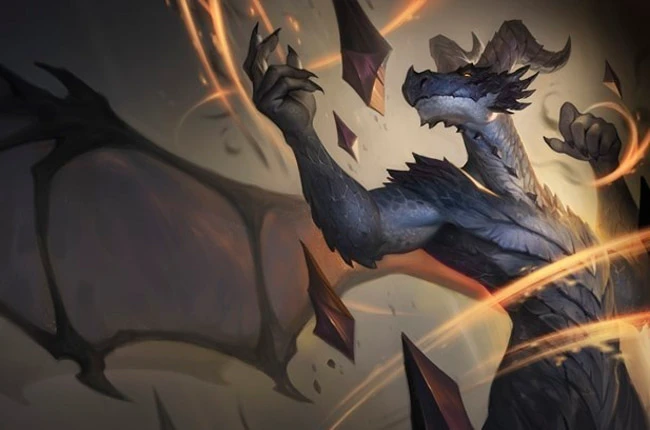
When Dragonflight Patch 10.1.5 "Fractures in Time" launched on July 11, 2023, it did something WoW had never done in nearly two decades: it added a brand-new specialization to an existing class mid-expansion. The Augmentation Evoker was not just a third spec for the Dracthyr Evoker — it was the first dedicated support-DPS role the game had ever shipped. Every healer and off-healer up to that point gave up raw damage to provide utility. Augmentation asked players to give up meter numbers while contributing more total group output than almost any other spec in a five-player or raid setting.

Senior game designer Graham Berger described the spec in pre-patch interviews as something the team had planned during Dragonflight's development but delayed because "a support-style DPS role had never been done before." The central design question was whether raid and dungeon groups would accept a DPS spec that appeared to deal low damage on in-game meters but dramatically amplified the output of allies. Over the first weeks of Aberrus Season 2, the answer was yes.
📌 Common mistake: Checking an Aug Evoker's output on Details! or Recount told almost nothing about their actual contribution. The additional damage generated by Ebon Might's primary stat buff landed on the warrior's, mage's, and hunter's meters — not on the Aug's. Always check Warcraft Logs' supplemental attribution tracking before evaluating the spec's performance in a group setting.
The spec was locked to the Dracthyr Evoker class, itself introduced in Dragonflight as WoW's first new race-and-class bundle in years. Any player who wanted to try Augmentation without a max-level Dracthyr had to level one first. Players who wanted to skip the levelling phase could level a Dracthyr to max and start running keys or raids immediately.
Black Dragonflight Power, Bronze Dragonflight Time
Aug drew from two dragonflights and the split showed in how the rotation felt. The Black Dragonflight half was direct: Eruption, Upheaval, Blistering Scales — volcanic, earthen, grounded. The Bronze half was surgical: Prescience on the right target at the right moment, Breath of Eons timed to land inside a live Ebon Might window, the detonation hitting at peak buff uptime. Neither half was optional. Neglecting either school left damage on the table or buffs unmaintained.

Augmentation rotations alternated between both schools throughout a fight: keeping Ebon Might running through Black Dragonflight casts, while placing Bronze Dragonflight buffs on the group's highest-output allies. Players who understood which school to prioritise in a given pull kept near-permanent Ebon Might uptime and landed Breath of Eons cleanly every two minutes.
Core Abilities of the Augmentation Evoker
Ebon Might was the spec's anchor and its defining mechanical quirk: it increased the primary stat of the four nearest allies by a percentage of the Augmentation Evoker's own stats — not a flat number. As the Aug geared up, the buff on allies grew proportionally. Better gear for the Aug meant better stats for everyone around them. Every major ability cast while Ebon Might was active extended its 10-second duration, and a well-practiced player kept it running almost continuously through a sustained fight. The 30-second cooldown was the framework; the rotation was built around never letting the buff fall off.
Eruption replaced Disintegrate but was not really a damage spell — it was the engine that kept Ebon Might running. Every Eruption cast (2.5 seconds, 3 Essence) extended the buff window and dealt Volcanic AoE damage to the target and nearby enemies as secondary output. The workhorse of the rotation: not flashy, but responsible for buff maintenance through an entire encounter.
Upheaval's most useful trick in Mythic+ was not the Volcanic AoE damage — it was the brief airborne CC on a trash pull. Launching a pack interrupted casts and bought the healer a moment of breathing room. Like Eruption, it extended Ebon Might on cast on a 40-second cooldown, so it doubled as buff maintenance and a disruption tool in the same GCD slot.
Breath of Eons was the two-minute signature cooldown: fly across a targeted path, apply Temporal Wounds to every enemy hit, then watch the 10-second accumulation window as buffed allies unload into targets that will all detonate simultaneously. On a group with a well-buffed warrior or mage, the detonation produced one of the highest burst numbers on a boss encounter of any spec in Dragonflight. Teams building around that cooldown in organised content can browse WoW raid carry options and experience the spec's full combo in a raid-ready lineup.
✏️ Tip: Breath of Eons also extended Ebon Might's duration when cast. The optimal timing was to fire Breath of Eons into an existing Ebon Might window — the detonation landed while allies were already buffed by the primary stat increase. Missing this sync lost a measurable portion of the burst output every two minutes.
Blistering Scales had an obvious home: the tank on any melee-heavy pull. It scaled off the Aug's own armor and turned every incoming melee hit against the buffed ally into an explosive scale detonation dealing Volcanic AoE damage to nearby enemies — so the tank absorbed hits the same way they always did, but each hit contributed passive AoE throughput. A free damage source from a defensive button.
Prescience granted a single ally a 3% critical strike chance for 18 seconds. The targeting decision was the primary moment-to-moment skill expression of the spec. Prescience on the group's highest-DPS attacker delivered the most incremental group damage; casting it on a tank or healer wasted the buff window entirely. The short recharge was intentional — it kept the Aug constantly making active target choices rather than setting it and forgetting it.
The Damage Meter Problem
The most persistent point of confusion during Augmentation's Dragonflight run was the damage meter attribution gap. In-game addons such as Details! and Recount measured only what the Augmentation Evoker personally dealt — their Eruption casts, Upheaval hits, Breath of Eons detonations. They did not measure the additional damage generated by allies benefiting from Ebon Might and Prescience. That extra output showed on the warrior's or mage's meter number, not on the Aug's.
The result was that a well-played Augmentation Evoker could appear mid-pack on the damage chart while being the single largest contributor to the group's total throughput. Warcraft Logs addressed this on launch day with supplemental buff-attribution tracking that combined direct Aug damage with the incremental damage their buffs added to each ally's output. On that metric, Augmentation Evoker ranked among the top specs in Dragonflight Season 2 Mythic+ at sustained high-key output.
⚠️ Warning: Never evaluate an Augmentation Evoker's performance from the in-game meter alone. A parse that appears low on Details! in a group context may represent excellent play once Warcraft Logs' buff-attribution tracking is factored in. At +15 and above — where total group throughput is the difference between a timed key and a depleted one — the attribution view matters far more than the addon number.
Augmentation Evoker in Dragonflight Mythic+
Mythic+ was where Augmentation's contribution stopped being theoretical and became visible. In a five-player dungeon group, Ebon Might's "4 nearest allies" cap covered every non-Aug member — the entire party. Breath of Eons in a dungeon corridor applied Temporal Wounds to every trash enemy in the path, and the 10-second accumulation window let high-DPS allies unload into targets that would all detonate simultaneously at the end of the duration.
During Dragonflight Season 2, high-end Mythic+ groups specifically recruited Augmentation Evokers to boost their warrior's or mage's performance. The strategy worked: the buffed allies showed higher individual numbers on Warcraft Logs, and the group's total throughput improved compared to running a conventional DPS spec in the same slot. Players ready to put the spec's buff kit into a timed environment can explore Aug Evoker key runs with an organised carry group to see how the cooldown synergy performs at high brackets.
Unlock Questline and Getting Started
Augmentation Evoker was not available from character creation. Players unlocked it in Patch 10.1.5 via a questline beginning with "Our Destiny", which introduced Adamanthia, a black dragon tied to the spec's earthen-power identity. Completing the chain granted access to Augmentation on the spec selection panel. Dracthyr players who had been levelling as Devastation could switch to Augmentation at any point after finishing the unlock quest.
Players who had no Dracthyr faced a steeper barrier. Evoker is the only class in the game exclusive to one race, making Augmentation the one specialisation a player could not access on any existing character. Latecomers needed to create and level a fresh Dracthyr from scratch; Blizzard introduced character-boost options in later Dragonflight patches specifically to lower that barrier.
Frequently Asked Questions
When did the Augmentation Evoker launch?
Augmentation Evoker launched on July 11, 2023 with Patch 10.1.5 "Fractures in Time." It was the first specialization added to an existing class mid-expansion in WoW's history. The same patch introduced the Dawn of the Infinite megadungeon and the Fractures in Time content cycle for Dragonflight.
Why did the Augmentation Evoker appear to deal low damage on meters?
In-game damage meters tracked only what the Augmentation Evoker dealt directly. The additional damage generated by Ebon Might's primary stat buff on allies was attributed to those allies on the meter, not to the Aug. Warcraft Logs built supplemental attribution tracking (launched July 11, 2023) combining direct damage with the buffed-ally contribution. On that metric, Augmentation ranked among the top Dragonflight Season 2 specs in sustained Mythic+ content.
What was Ebon Might and how did it work in Dragonflight?
Ebon Might increased the primary stat of the four nearest allies by a percentage of the Augmentation Evoker's own primary stat for 10 seconds, on a 30-second cooldown. Every Eruption, Upheaval, or Breath of Eons cast while Ebon Might was active extended its duration, allowing skilled players to maintain the buff almost indefinitely. In WoW Midnight (launched March 2, 2026), Ebon Might was redesigned to affect all allies within 100 yards — the "4 nearest" cap was specific to the Dragonflight era.
What did Breath of Eons do in Dragonflight?
Breath of Eons had the Augmentation Evoker fly across a targeted path on a two-minute cooldown, applying Temporal Wounds to every enemy hit. Over the next 10 seconds, those wounds accumulated a portion of damage dealt by buffed allies, then critically struck the target for the total at the end of the window. On a group with well-buffed high-DPS classes, the detonation produced some of the highest burst numbers on boss encounters in Dragonflight Mythic+ and raid play.
Was Augmentation Evoker viable for solo content in Dragonflight?
Yes. Augmentation had stronger solo survivability than most DPS specs in Dragonflight. Developers described the solo feel as "slightly like a tank" — good self-sustain through armor-scaling passives and access to Obsidian Scales, the baseline Evoker damage-reduction cooldown. World quests, open-world content, and solo dungeon exploration were all viable without the extreme fragility of a pure glass-cannon build.
What races can play Augmentation Evoker?
Only Dracthyr can play Augmentation Evoker. The Evoker class was designed exclusively for the Dracthyr race, making Augmentation the only specialisation in WoW restricted to a single race. Players without a Dracthyr must create and level one before accessing the spec.
Is Augmentation Evoker still available in WoW Midnight?
Yes. The spec remained playable in WoW Midnight (launched March 2, 2026) but received a significant redesign. Ebon Might was changed from targeting the four nearest allies to affecting all allies within 100 yards. Other mechanics were rebalanced for Midnight content. The Dragonflight mechanics described in this article reflect the spec's original Patch 10.1.5 state.
What was Prescience and how did you choose who to target?
Prescience granted a single ally a 3% critical strike chance for 18 seconds. Correct target selection was the primary moment-to-moment skill expression of the spec: casting it on the group's highest-DPS attacker delivered the most incremental group damage. Casting it on a tank or healer wasted the buff window. Experienced Aug players tracked which allies were performing best mid-pull and shifted Prescience priority accordingly.
Last reviewed 2026-06-18 against Patch 10.1.5 "Fractures in Time" — Maintained by WowCarry's WoW team.