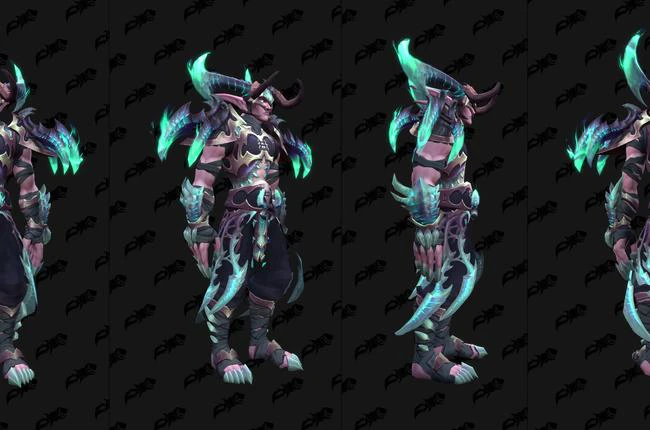
Havoc Got Resets; Vengeance Got a Fragment-to-Cooldown Link
Havoc’s early War Within Season 1 set increased core attack damage and added Blade Dance resets. Vengeance’s increased Soul Cleave damage, offered extra Soul Fragments and strengthened the next Fel Devastation through fragment consumption.
This is a historical guide to the June 2024 beta. The numerical table follows Blizzard’s June 5 announcement, preserved by Blue Tracker. Wowhead’s June 11 review supplied the contemporary feedback from Shadarek for Havoc and Itamae for Vengeance.
Husk of the Hypogeal Nemesis was the Season 1 Demon Hunter set. Its early announced effects should be kept separate from later tuned tooltips.
The Four Originally Announced Effects
| Specialization and pieces | June 5, 2024 beta announcement |
|---|---|
| Havoc: two pieces | Blade Dance damage increased by 20%. |
| Havoc: four pieces | Chaos Strike damage increased by 20%, with a 25% chance to reset Blade Dance’s cooldown. |
| Vengeance: two pieces | Soul Cleave damage increased by 15%, with a 35% chance to shatter one Lesser Soul Fragment from a target hit. |
| Vengeance: four pieces | Each Soul Fragment consumed added 2% damage and healing to the next Fel Devastation, up to 30%. |
Havoc: A Reset Changed Availability, Not a Guaranteed Schedule
The four-piece joined a direct Chaos Strike damage bonus to a chance-based Blade Dance reset. Those are two distinct benefits: one changes an attack’s damage, while the other can make another attack available earlier.
Shadarek expected the resets to create more opportunities for Blade Dance and Death Sweep without fundamentally replacing Havoc’s rotation. He also noted that random resets could make the experience uneven.
A listed proc chance does not promise a reset every fixed number of casts. For a combat review, look at when resets occurred and whether the new opportunity was useful, rather than reading the chance as a timer. Ability availability, available resources and the encounter’s target state are separate parts of that decision.
Priority damage and broad AoE were different measures of value
Shadarek described stronger single-target value and useful priority damage, with less broad AoE value in the context of First Blood. That is a comparison of where the set helped most. It should not be rewritten as an announcement that equipping the set reduced AoE damage.
For a dungeon pull, damage to the dangerous target and total damage across the pack can both matter. The most useful comparison states which of those outcomes is being assessed.
Vengeance: Follow the Fragment Through to the Next Cast
The two-piece added an opportunity to create a fragment through Soul Cleave. The four-piece then rewarded consuming fragments by strengthening the next Fel Devastation. Generating a fragment and consuming one are separate events.
Itamae reported that the early Soul Cleave fragment roll happened once per cast, rather than separately for every target hit. Under that observed implementation, a cast hitting a large pack should not be interpreted as an independent roll for each enemy.
The four-piece’s wording also limits the destination of the bonus: it strengthens the next named ability. It is not a permanent increase to every source of the tank’s damage and healing.
A healing bonus was not a complete defensive assessment
Itamae regarded the set primarily as an offensive gain and questioned how much survivability it added. That judgment belongs to the early beta review.
For a tank, distinguish total healing from protection during the dangerous part of a pull. The size of an empowered heal alone does not establish whether it arrives when needed, prevents a lethal hit or changes the plan for a defensive cooldown.
Keep the Version Attached to the Comparison
The table records Blizzard’s original announcement. The credited review records what the two writers thought about that early implementation. Neither makes a later patch’s gearing or talent decision automatic.
When comparing versions, check the specific two-piece and four-piece wording before comparing performance claims. A changed damage amount, proc condition or resource interaction can change the question being answered, even when the set’s name stays the same.