Key Takeaways
- Blizzard's unannounced survival game, codenamed Odyssey, was cancelled on January 25, 2024, after approximately six years of development.
- The project's collapse traced back to a critical engine mismatch: Unreal Engine could not support the target of 100 simultaneous players, and a mid-development switch to Blizzard's proprietary Synapse engine disrupted the entire team's workflow.
- The cancellation coincided with Microsoft's gaming-division restructuring, which cut 1,900 jobs — roughly 8% of the Xbox gaming workforce.
- The Odyssey team of over 100 was predominantly laid off; only a portion were reassigned to other Blizzard projects.
- Blizzard President Mike Ybarra announced his departure from the company on the same day as the cancellation.
- Odyssey would have been Blizzard's first wholly new intellectual property since Overwatch launched in 2016.
- Following the cancellation, Blizzard posted approximately a dozen new job listings for a separate, still-unnamed project, focused on art and engineering roles.
What follows is the full account of Odyssey's six-year development, the technical problems that doomed it, and where Blizzard stands today.
Odyssey: Six Years in the Making
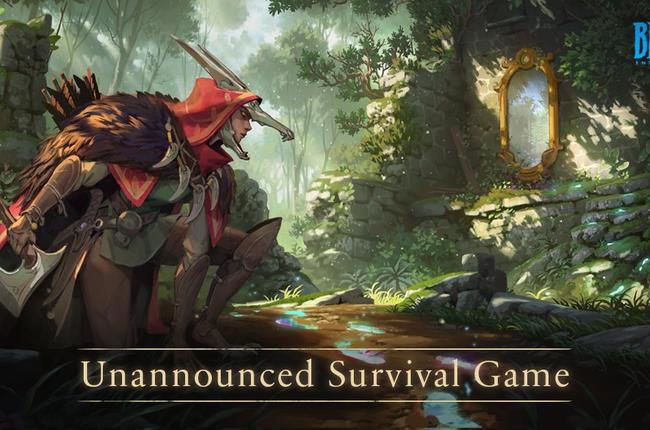
In January 2022, Blizzard acknowledged a survival game in development without naming it or showing gameplay. The reveal was minimal: a new universe, heroes "we have yet to meet," and an open invitation for developers to apply. Two years later, the project was gone.

Director Craig Amai, who had worked at Blizzard since the World of Warcraft era, had been assembling the team since 2017. The pitch was ambitious — a survival experience for up to 100 simultaneous players, a genre then dominated by games like Minecraft, Rust, and Valheim. Blizzard's stated goal was to bring their signature polish to the space and establish a new category alongside their existing franchises.
Had Odyssey shipped, it would have been the first wholly new Blizzard intellectual property since Overwatch in 2016 — a significant franchise bet at a company that had not launched a new game from scratch in nearly a decade.
Why the Engine Sank the Ship
The core technical problem, as reported by Bloomberg's Jason Schreier, was Unreal Engine. The technology powering Odyssey's early prototypes could not scale to the 100-player target. The team needed lower-level control over the engine than Unreal's architecture provided.
Blizzard's solution was to switch to an internal proprietary engine called Synapse. The transition created a compounding problem: artists and designers kept building prototype content in Unreal, knowing that work would be discarded once Synapse was ready. Progress accumulated in an engine the team was already abandoning. By early 2024, Odyssey was still estimated to need several more years of development before it could ship; an internal target of 2026 was described as "overly optimistic."
The engine problem was the proximate cause of cancellation, but turbulence within Blizzard's parent company contributed. Years of instability following the 2021 Activision Blizzard sexual harassment lawsuit affected team composition and morale across multiple projects, and Odyssey absorbed some of that broader disruption.
The Human Cost: Layoffs and Leadership Change
Microsoft announced the Odyssey cancellation on January 25, 2024, as part of a company-wide gaming restructuring. The layoffs that day affected 1,900 employees across Xbox, ZeniMax, and Activision Blizzard — around 8% of Microsoft's total gaming workforce.

For the Odyssey team of over 100, the outcome was predominantly terminations. Blizzard spokesperson Andrew Reynolds issued the official statement: "Starting something completely new is among the hardest things to do in gaming, and we're immensely grateful to all of the talented people who supported the project." Reynolds added that the company needed to "focus on projects that hold the most promise for future growth."
Xbox gaming executive Matt Booty separately noted that some team members would move to "one of several promising new projects Blizzard has in the early stages." However, multiple developers confirmed publicly that the majority of the team received terminations rather than reassignments. Craig Amai, who had directed the project since its founding, was also let go.
On the same morning, Blizzard President Mike Ybarra — who had spent more than two decades at Microsoft before leading Blizzard — announced his own departure. "It's time for me to become Blizzard's biggest fan from the outside," he wrote. The simultaneous exit of both the project director and the studio president on the same day underscored the scale of the reset.
What Comes Next for Blizzard?
Within weeks of the Odyssey announcement, Blizzard's careers page listed around a dozen open roles for an unnamed follow-up project. The listings covered art (Senior Art Director, concept artists, VFX, animation, and lead artists for buildings, points of interest, and props) and engineering (lead netcode engineer, senior software engineers across gameplay systems, server, graphics, and AI). No genre, setting, or release window was disclosed.
Blizzard's existing live games (World of Warcraft, Diablo IV, Hearthstone, and Overwatch 2) continued uninterrupted. The Odyssey cancellation was a corporate and financial event, not a disruption to running services. Whether the Synapse engine technology built for Odyssey survives in any form in Blizzard's next project has not been publicly confirmed.
Frequently Asked Questions
What was Blizzard's cancelled survival game called?
Blizzard never gave the game a public name. Its internal codename, reported by Bloomberg, was Odyssey.
Why was Blizzard's survival game cancelled?
The primary reason was an engine problem. Unreal Engine could not support the game's target of 100 simultaneous players, so the team switched to an internal engine called Synapse. The transition caused severe workflow disruption — prototypes built in Unreal had to be discarded — and the project fell years behind schedule with no clear path to release.
How long was Odyssey in development?
Approximately six years. Director Craig Amai began assembling the team in 2017; the cancellation was announced in January 2024.
How many people worked on the survival game?
Over 100 people at the time of cancellation, with some secondary estimates citing closer to 200. Most were laid off as part of Microsoft's January 2024 gaming-division restructuring; some were reassigned to other Blizzard projects.
Did Microsoft's layoffs cause the cancellation?
The timing was simultaneous, but the two were separate decisions announced on the same day. Reports indicate the cancellation was driven by the project's technical state — it was still years from a shippable build — rather than cost-cutting alone. The layoffs swept the team once the cancellation decision had already been made.
What happened to Blizzard after the cancellation?
Blizzard opened job listings for a new unnamed project within weeks of the announcement. Its existing live games continued normally. Mike Ybarra, who departed the same day as the cancellation, was not immediately replaced, and Blizzard's leadership structure reorganized under Microsoft Gaming.
Was Odyssey connected to World of Warcraft or any existing Blizzard IP?
No. Blizzard explicitly described it as a new intellectual property — "a new universe" with "heroes we have yet to meet." It had no connection to Warcraft, Diablo, StarCraft, Overwatch, or any other existing Blizzard franchise.
Is Blizzard working on another new game?
Post-cancellation job listings suggest at least one new unannounced project is in early development. No genre, setting, or timeline has been made public as of the date of this article.