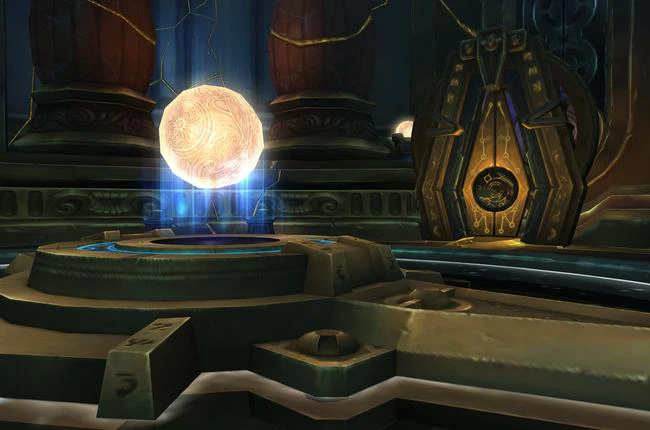
Key Takeaways
- Titan Disc Fragments were the Khaz Algar currency behind the weekly "Archives: Seeking History" quest during The War Within Season 1, at 100 fragments per turn-in.
- The weekly was picked up from High Speaker Brinthe in Dornogal (roughly 46.2, 49.2), after the one-time intro quest "Archives: The First Disc."
- Completing the weekly handed out a Pinnacle Cache, which had a chance to drop a Fractured Spark of Omens, and two of those assembled into a Spark of Omens crafting reagent.
- The fastest fragment sources were Delves (31–36 each), dungeon bosses (15 each on Normal, Heroic, and Follower difficulty), rare and elite mobs (10 each), and the rotating weekly world boss.
- Mythic+ dungeons did not drop fragments, so the efficient route mixed a couple of Delves with a dungeon clear rather than pushing keys.
- This was a Season 1 (Patch 11.0.2) routine. The Spark of Omens line was later superseded by Spark of Starlight in Patch 11.1, so treat the currency below as historical.
With that context set, here is how the fragment grind actually broke down week to week.
The Archives Weekly and Why Fragments Mattered
Back in The War Within's opening season, the crafting economy ran on the Spark of Omens, and the most reliable path to one led through the Archives storyline in Dornogal. High Speaker Brinthe handed out a repeatable weekly called Archives: Seeking History, unlocked once you finished the one-time intro quest Archives: The First Disc. Both asked for the same thing: 100 Titan Disc Fragments, gathered from across Khaz Algar.
Turning the weekly in awarded a Pinnacle Cache, a Veteran-track gear cache that also carried a chance at a Fractured Spark of Omens. Since two Fractured Sparks combined into a full Spark of Omens, keeping that weekly on farm was how most crafters kept their embellishment slots fed. The fragments themselves were the gate, so knowing where they dropped fastest was the whole game.
The Fastest Fragment Sources
Fragments dropped from nearly every combat activity in Khaz Algar, but the payout per minute varied a lot. These were the rates players relied on:
| Source | Fragments | Notes |
|---|---|---|
| Delve (any tier) | 31–36 | Best rate per run; short clears, tiers 1–8 all paid the same |
| Dungeon boss | 15 | Normal, Heroic, and Follower Dungeons; Mythic+ paid nothing |
| Rare / elite mob | 10 | Also granted Khaz Algar faction reputation |
| Weekly world boss | Large one-time chunk | Only once per week, per the rotating boss |
| Treasures / dig sites | 1 | Trivial on their own, but free while questing |
The efficient loop for most players was two or three Delves plus a single dungeon clear. That alone cleared the 100-fragment weekly in well under an hour, with rares and treasures topping off the count along the way.
Delves Carried the Grind
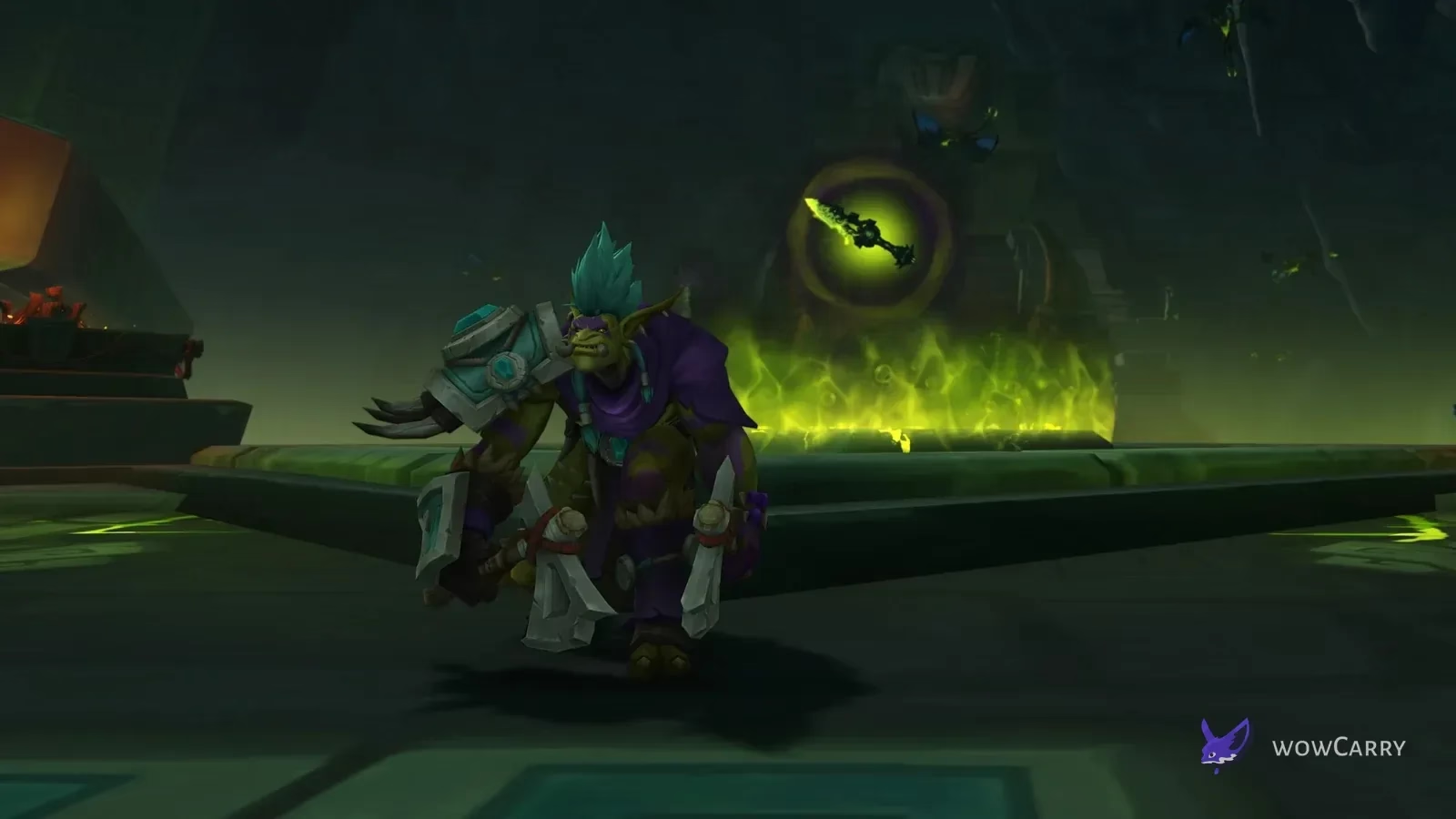
Delves were the standout. A single run paid 31 to 36 fragments regardless of tier, and because low-tier Delves cleared in a few minutes, they offered the best fragments-per-minute in the game. There was no reason to push a higher tier purely for fragments, since the count did not scale, so players farming the currency stuck to whatever tier they could clear quickest. That made Delves the backbone of any fragment run, with dungeon bosses filling the gaps.
If you would rather skip the repetition entirely, you can book a Delve carry run and let a team clear the weekly rotation for you.
The Rotating World Boss
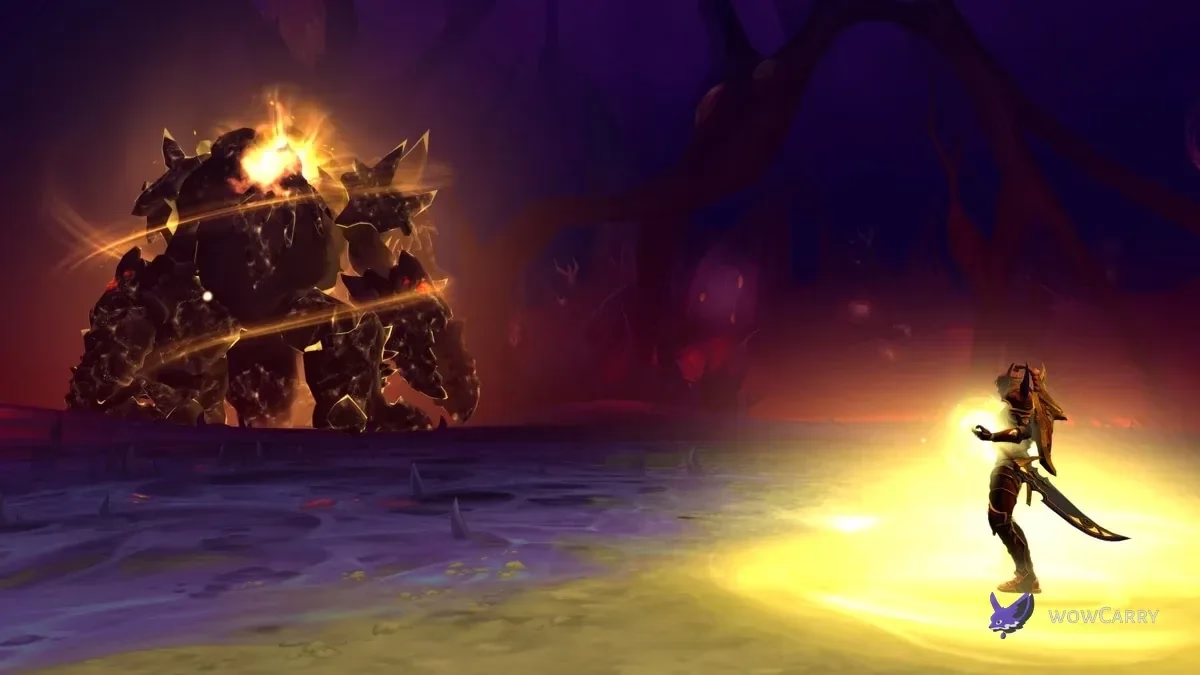
Each week, one of Khaz Algar's four world bosses was active, and defeating it dropped a healthy stack of fragments on top of its loot. The rotation cycled through Kordac the Dormant Protector on the Isle of Dorn, the Aggregation of Horrors in the Ringing Deeps, Shurrai, Atrocity of the Undersea in Hallowfall, and Orta, the Broken Mountain in Azj-Kahet at the Old Sacrificial Pit. Because a world boss could only be looted once per week, it was a one-and-done stop rather than a repeatable farm, worth grabbing whenever it was up but never the main source.
Turning Fragments Into a Spark of Omens
Fragments were never an end in themselves. They fed the weekly, the weekly fed the Pinnacle Cache, and the cache fed the Fractured Spark of Omens. Assembling two Fractured Sparks (plus a Valorstone cost in the pre-11.1 version) produced a Spark of Omens, the reagent every Season 1 embellishment and high-end craft depended on. That chain is why a currency as humble as a Titan Disc Fragment was worth a dedicated weekly route; it was the slow, steady tap that kept a crafter supplied without waiting on raid drops.
FAQ
What were Titan Disc Fragments used for?
They were the turn-in currency for the weekly Archives: Seeking History quest in Dornogal. Completing that weekly awarded a Pinnacle Cache with a chance at a Fractured Spark of Omens, the building block of the Season 1 Spark of Omens crafting reagent.
Where did you pick up the Archives weekly?
From High Speaker Brinthe in Dornogal, at roughly 46.2, 49.2. You first had to complete the one-time intro quest Archives: The First Disc to unlock the repeatable weekly.
What was the fastest way to farm the fragments?
Delves paid the most per minute at 31–36 fragments each, at any tier. Two or three Delves plus one dungeon clear (15 per boss) cleared the 100-fragment weekly in under an hour. Mythic+ dungeons did not drop fragments.
Did Mythic+ dungeons drop Titan Disc Fragments?
No. Only Normal, Heroic, and Follower Dungeon bosses awarded fragments, at 15 each. Mythic+ paid nothing toward the currency, so there was no reason to push keys for it.
Which world bosses dropped fragments?
All four Season 1 world bosses did: Kordac, the Aggregation of Horrors, Shurrai, and Orta, the Broken Mountain, on a weekly rotation. Only one was active per week, and each could be looted once.
Are Titan Disc Fragments still relevant?
Not for current crafting. They belonged to The War Within Season 1, and the Spark of Omens they fed was replaced by Spark of Starlight in Patch 11.1 and later variants. The routine here is a historical snapshot of that season.
Last reviewed 2026-07-01 against Patch 11.0.2 The War Within Season 1. Maintained by WowCarry's WoW team.