Key Takeaways
- Survival was World of Warcraft's melee Hunter spec, reworked from ranged back in Legion and built around Kill Command, Mongoose Bite, and Wildfire Bomb.
- Dragonflight gave it three real build archetypes: Spearhead for single target, Coordinated Assault for AoE, and Fury of the Eagle for bursty AoE.
- The talent tree was flexible but heavy on passive bonuses, so it rarely felt as exciting to build into as other specs.
- Survival's weakest link was utility: it brought few raid buffs and limited situational defensives, which made it a hard sell for optimal compositions.
- Cooldown awkwardness on Coordinated Assault and Spearhead, plus a low-impact Mastery: Spirit Bond, topped the spec's wishlist.
- The War Within answered with the Pack Leader and Sentinel hero trees, with Sentinel finally adding a real defensive, though the cooldown rework itself did not land until Midnight.
Each of those verdicts grows out of the same picture: a fun, thematic melee kit that played well but never quite earned its slot in the toughest group content.
Survival Hunter in Dragonflight
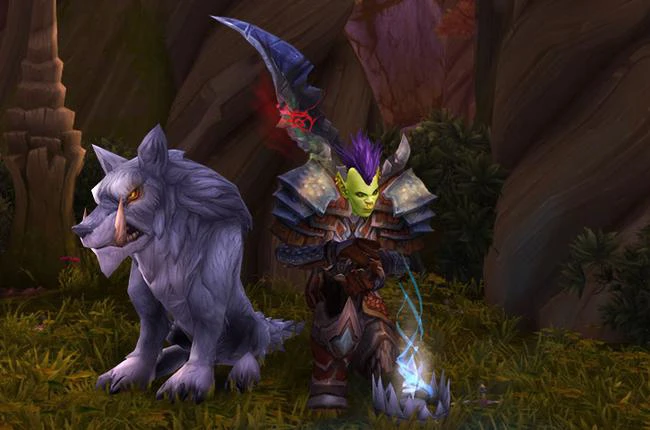
As Dragonflight wound down and The War Within waited ahead, it was a good moment for Survival Hunters to look back at the expansion. Survival offered a unique melee take on the Hunter class, inspired by the iconic Rexxar, and it had carried that melee identity since its rework in Legion. Its core abilities, Kill Command, Mongoose Bite, and Wildfire Bomb, gave it a fun, thematic loop.
In Dragonflight, Survival built around three distinct playstyles: Spearhead for single target, Coordinated Assault for AoE, and Fury of the Eagle for bursty AoE. Each one anchored a viable build, though tuning gaps and clunky cooldown usage held the overall experience back from where it could have been.
The Talent Tree and Tier Sets
The Dragonflight talent tree gave Survival flexibility, with viable builds for both AoE and single target. The catch was that a large share of the tree was passive bonuses, which made it feel less engaging than other classes' trees. More impactful, active talents would have done a lot for the spec's customization.
Tier sets were a brighter spot. Survival had impactful, fun sets throughout Dragonflight that added depth and opened up new build options, with Wildfire Bomb modifiers and similar bonuses landing well with the community. The hope going into The War Within was for more sets that built on the spec's core loop the same way.
Utility and Viability
Beyond raw damage, Survival struggled to bring unique utility to high-end raids and Mythic+. It lacked the raid buffs and situational defensives that other melee specs offered, which made it hard to lock in a spot in optimal compositions. That utility gap, more than its damage, was the spec's biggest competitive problem in group content. Players who would rather skip the comp lottery could always browse our WoW raid carries and clear the tier with a team.
The Cooldown Problem
Survival's cooldowns, Coordinated Assault and Spearhead, ran into trouble on both effectiveness and feel. Their empowerment buffs could be underwhelming, and the cooldowns themselves were awkward to optimize around. Making them more impactful and more intuitive was one of the clearest asks heading into the next expansion.
📌 The most common Survival mistake in Dragonflight was misaligning Coordinated Assault and Spearhead with the pull. Because each cooldown empowered a different part of the kit, firing them off-rhythm meant wasting the empowerment window entirely, which is exactly why the spec felt finicky to pilot at a high level.
The War Within Wishlist
Most of Survival's wishlist came down to quality-of-life. A revisit of the Coordinated Assault cooldown to fix its awkwardness, along with bug cleanup on Wildfire Bomb, sat near the top. Some players wanted more variation in the rotation through stronger proc-based talents, while others were happy with the consistent loop and simply wanted new options layered on top, including a more prominent return for Serpent Sting and more support for Mongoose Fury, the defining engine of melee Survival.
Mastery was the other recurring ask. Mastery: Spirit Bond had long been a weak, undesirable stat that did not affect key abilities and carried a low numeric value. Closing the gap between it and the spec's better stats would have made gearing far less lopsided. The community was also watching the incoming Hero Talent system closely, hoping the new trees would add the thematic, active gameplay the talent tree itself lacked.
[Editor's note, 2026: The War Within has since come and gone. Survival's two hero talent trees turned out to be Pack Leader and Sentinel, not the "Pack Leader, Dark Ranger, and Sentinel" trio speculated by the community at the time. Dark Ranger went to Beast Mastery and Marksmanship, and Survival never had access to it. Sentinel, built on Lunar Storm and Sentinel's Mark, became the AoE and Mythic+ pick and finally gave Survival a real defensive in Don't Look Back, partly answering the raid-utility wish, while Pack Leader leaned single-target. Coordinated Assault and Spearhead carried into The War Within mostly intact; the cooldown awkwardness flagged here was not truly resolved until the Midnight rework folded both into the new Takedown ability and reworked Fury of the Eagle. Serpent Sting returned to the toolkit, but Mastery: Spirit Bond stayed a low-priority stat for most of the expansion.]
Frequently Asked Questions
Was Survival Hunter good in Dragonflight?
Survival was a fun, viable melee spec in Dragonflight with three real build archetypes, but it rarely topped meters and struggled to justify a slot in optimal groups. Its damage was fine; the problem was a thin utility kit, missing raid buffs, and limited situational defensives compared with other melee specs.
When did Survival Hunter become a melee spec?
Survival was reworked from a ranged spec into a melee spec in Legion (patch 7.0, 2016), when it gained a melee spear identity and a pet. Battle for Azeroth later tuned the already-melee spec but did not perform the rework itself. The melee identity it carried through Dragonflight traces back to Legion.
What were Survival Hunter's main builds in Dragonflight?
Survival ran three build archetypes anchored on its cooldowns: a Spearhead build for single target, a Coordinated Assault build for AoE, and a Fury of the Eagle build for bursty AoE that leaned on tier-set power. They were talent builds rather than separate specs, and which one you ran depended on the content and the season's tuning.
Why was Mastery: Spirit Bond a weak stat?
Mastery: Spirit Bond increased damage dealt and reduced damage taken for you and your pet, but it did not scale Survival's key abilities and carried a low numeric value. That left it consistently behind the spec's other secondary stats, so players treated it as a stat to avoid rather than chase for most of Dragonflight.
What Hero Talents did Survival Hunter get in The War Within?
Survival gained the Pack Leader and Sentinel hero trees. Pack Leader, shared with Beast Mastery, leaned single-target, while Sentinel, shared with Marksmanship, focused on AoE and Mythic+ and added a real defensive in Don't Look Back. Survival never had access to Dark Ranger, which went to Beast Mastery and Marksmanship.
Did The War Within fix Survival Hunter's cooldown problems?
Not at first. Coordinated Assault and Spearhead carried into The War Within largely intact, so the awkward cooldown alignment persisted. The real fix came later in Midnight, when the spec was reworked to fold both cooldowns into a new Takedown ability and redesign Fury of the Eagle, smoothing out the rotation the wishlist had complained about.
About the Author
This editorial is part of a WowCarry series in which our guide writers reviewed their specs across Dragonflight and shared a wishlist for The War Within, written from the perspective of a dedicated Survival Hunter main.
Last reviewed 2026-06-30 against Patch 10.2.7 Dark Heart — Maintained by WowCarry's WoW team.