What the Original Grove Guardians Did
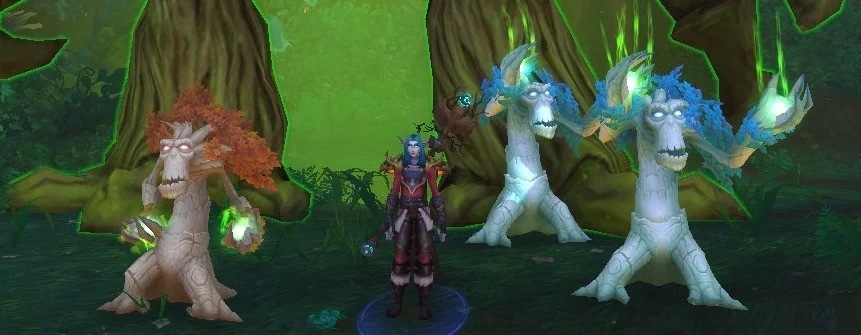
In Dragonflight 10.1.7, Grove Guardians supplied three charges of a targeted Treant summon. Each Treant lasted 15 seconds, immediately cast Swiftmend on your selected target, then periodically cast Nourish on that ally or another nearby ally.
These are the original September 2023 rules. Later iterations of Grove Guardians should be checked in their own patch context; this is not a current-retail talent build.
Blizzard’s released Fury Incarnate notes made Grove Guardians an alternative that replaced Nourish. With Wild Synthesis selected, a Treant also cast Wild Growth on summon, healing nearby allies within 40 yards over seven seconds.
Charges, Duration and Global Cooldown Were Different Limits
The September 6 live-patch guide update specified a 20-second charge recharge. That is distinct from the Treant’s 15-second active duration and the three-charge storage limit.
Grove Guardians was off the global cooldown, so it could accompany your normal healing casts. Repeated summons still had a short 0.25-second interval of their own. Off-GCD did not mean an unlimited number of Treants or a free replacement for choosing an appropriate healing target.
Keeping the pool full indefinitely lost opportunities to recharge and use the talent. Equally, spending every charge into a fully healthy group could waste healing before a dangerous event. Match the next use to damage that needs healing and the charges you will want available afterward.
Use the Initial Target, Then Let the Treant Work
- One ally needs immediate help: choose that ally for the opening Swiftmend. Continue your own healing while the Treant remains active.
- Damage continues across the group: stagger summons so their healing covers more of the dangerous period.
- A known burst needs several charges: multiple Treants could be active together. Keep the burst window in mind instead of spending them all automatically whenever the pool fills.
The opening target selection gave the player direct control over part of the effect. The later Nourish casts were the Treant’s work; this was not a pet-control system for manually selecting every subsequent heal.
A Treant’s Spell Was Not Your Own Cast
Voulk’s pre-release analysis highlighted an important distinction between spell names and spell ownership. It reported these interactions while testing the upcoming talent:
| Interaction examined | Reported behavior |
|---|---|
| Your HoTs on the recipient | Could improve Treant healing through Mastery. |
| Treant Wild Growth on an ally | Did not add another Harmony stack for your own heals. |
| Improved Wild Growth | Its extra target did not automatically carry over to the Treant’s version. |
The released guide update also confirmed the general benefit from your existing Mastery stacks. This supports using Treants alongside useful HoT coverage; it does not mean every talent affecting your Swiftmend, Nourish or Wild Growth automatically modifies a Treant’s similarly named spell.
How the Healing Rebalance Fits
The final patch notes reduced Restoration healing by 6% outside PvP. Blizzard described the intention as keeping overall throughput roughly neutral while making the new talent meaningful. That was a design goal, rather than a guarantee of identical results for every build or player.
Embrace of the Dream became a one-point talent with healing reduced by 20%. Deep Focus and Forest’s Flow were removed. Those changes mattered when comparing a previous talent layout with the released tree.
Grove Guardians complemented the Druid’s existing healing decisions. Maintain useful HoTs, cover actual damage with the summons, and plan charge availability for the next demanding window. The talent’s value came from healing delivered when it was needed, rather than simply producing the maximum number of trees.