Key Takeaways
- Fatebound is a Rogue hero talent tree shared by Outlaw and Assassination, built around a coin that flips Heads or Tails every time a finisher spends 5 or more combo points.
- The keystone Hand of Fate makes Heads a stacking damage buff that holds until you flip Tails, which lands as a burst of Cosmic damage. Both escalate the longer you streak one face.
- For Outlaw the coin flips off Dispatch and Between the Eyes. Killing Spree does not spend combo points, so it never triggers a flip.
- Mean Streak makes Dispatch coins 33% more likely to repeat the last face, and Edge Case turns the coin after Adrenaline Rush onto its edge to count as both faces at once.
- The capstone Fateful Ending rewards a seven-flip same-face streak with the Lucky Coin, a flat 7% Agility buff that holds until you leave combat.
- Utility is an exclusive choice: Death's Arrival doubles up Grappling Hook, while Chosen's Revelry (leech) competes with Tempted Fate (a damage absorb).
Blizzard first shared the Rogue hero talent trees during The War Within alpha, and WowCarry's Rogue writers logged early impressions of Fatebound, the gambling-buccaneer tree for Outlaw. The War Within has since shipped and given way to Midnight, so this review reads as a record of how Fatebound came together rather than a current build guide. The node names and numbers below are corrected to the values that went live in Patch 11.0. Players returning to the spec can see our Mythic+ dungeon carries to gear a fresh Rogue fast.
How the Fatebound Coin Works
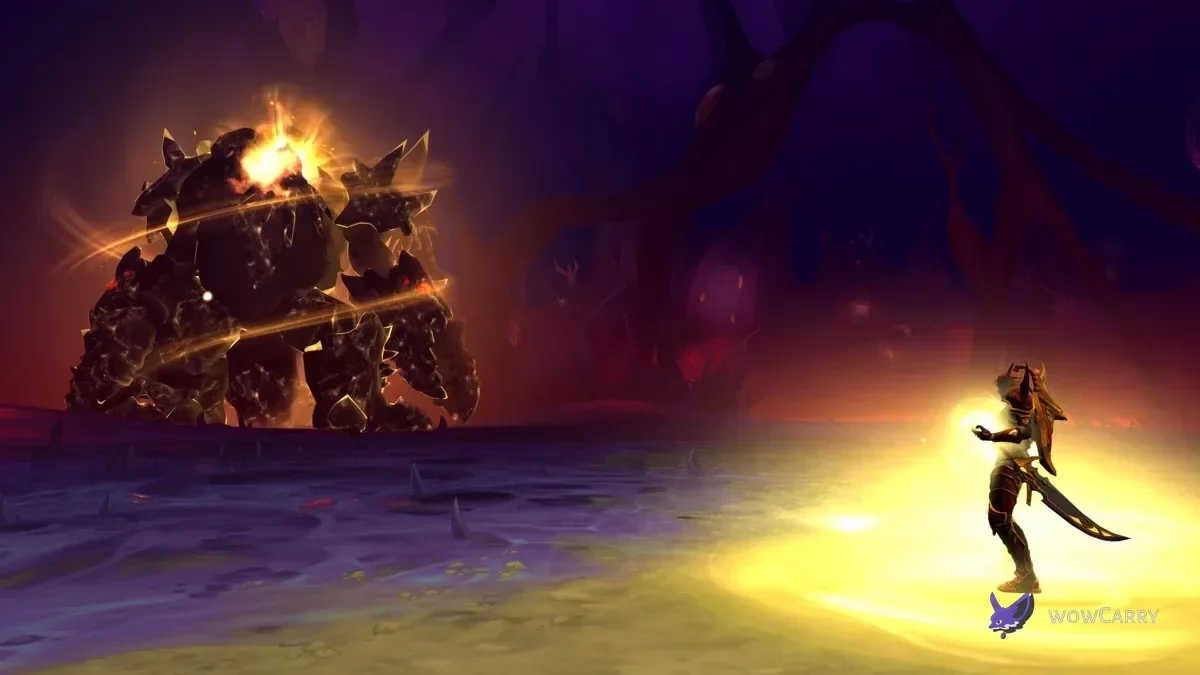
The whole tree hangs off Hand of Fate. Every time an Outlaw spends 5 or more combo points on a finisher, you flip a Fatebound Coin. Heads grants a stacking damage buff that lasts until you flip Tails; Tails instead deals a chunk of Cosmic damage to your target. Neither face is a "bad" result. The design goal is to keep landing the same face, because each consecutive Heads adds 2% more damage and each consecutive Tails adds another 10% to the burst.
For Outlaw the finishers that spend combo points are Dispatch and Between the Eyes. That matters because the original alpha write-up listed Killing Spree as a trigger. Killing Spree is a cooldown ability that does not consume combo points, so it can never flip the coin. Knowing which buttons actually feed the coin is the difference between drifting between faces and stringing a streak together.
✏️ Treat Heads and Tails as two halves of the same engine, not a win-or-lose gamble. The points only come from streaking one face long enough for the per-stack scaling to add up, so chasing a quick Tails burst by breaking a Heads streak usually costs more than it gains.
Building and Bending the Streak
Several talents exist purely to tilt the coin in your favor. Mean Streak gives coins flipped by Dispatch a 33% better chance to match your last result, which is the single biggest lever toward a long streak. Edge Case lets Adrenaline Rush land the next coin on its edge, counting as both Heads and Tails simultaneously. Destiny Defined adds a 5% chance for Sinister Strike to strike again and grant Opportunity while also nudging coins 5% toward matching, and Double Jeopardy flips two guaranteed-matching coins on your first finisher out of Stealth.
Deal Fate rounds out the combo-point economy. The accurate live effect is that Sinister Strike generates one additional combo point when it grants Opportunity, which feeds more finishers and therefore more coin flips. The alpha-era "increases from 2 to 3 points" description was a misread; the talent is about Opportunity procs, not a flat point bump.
The Capstone: Fateful Ending
Fateful Ending is the payoff at the bottom of the tree, and it is more concrete than the alpha preview suggested. When the Fatebound Coin lands the same face for the seventh time in a row, you keep the Lucky Coin, which grants a flat 7% Agility until you leave combat for 10 seconds. That is a defining, sticky reward rather than the underwhelming capstone the early review worried about, and it is exactly why the whole tree is built around streaking one face for as long as possible.
📌 The common mistake is letting a six-flip streak die one flip short of Fateful Ending by spending a finisher out of habit. Once a streak is deep, the Agility payoff is worth playing around your coin odds instead of dumping combo points on cooldown.
Defense and Mobility Choices
Fatebound's utility row is built on exclusive choice nodes, so the tree forces real decisions rather than handing you everything. Death's Arrival enhances Grappling Hook, letting you fire it a second time within 3 seconds with no cooldown at the cost of 5 extra seconds on the full cooldown; it competes with Inexorable March. On the survivability side, Chosen's Revelry adds leech that scales with consecutive coin flips, while Tempted Fate is a passive damage absorb that triggers off your flips. The two are mutually exclusive, so you pick self-healing or a flat absorb, not both.
The earlier draft described Tempted Fate as converting critical strike chance into a shield. That was never the live mechanic. Tempted Fate simply absorbs a portion of incoming damage on your coin flips, and choosing it means giving up Chosen's Revelry's leech.
Where Fatebound Landed
The alpha review's headline concern was that the theme outshone the payoff and the capstone felt thin. By the time the tree shipped in Patch 11.0, that read had aged out: Fateful Ending's 7% Agility gave the streak a clear goal, and Fatebound became the go-to hero tree for both Outlaw and Assassination. In Midnight it was retuned rather than renamed, with coin generation made more consistent so reaching the seven-flip streak no longer leaned on situational cooldowns. The thematic strength the early review praised held up; the mechanical worry did not.
Frequently Asked Questions
What does Hand of Fate do for the Outlaw Rogue?
Hand of Fate flips a Fatebound Coin every time you spend 5 or more combo points on a finisher. Heads grants a stacking damage buff that lasts until you flip Tails, and Tails deals a burst of Cosmic damage. Each consecutive same-face flip makes that face stronger, so the aim is to streak one result.
Which abilities trigger the Fatebound Coin for Outlaw?
Any finisher that spends 5 or more combo points, which for Outlaw means Dispatch and Between the Eyes. Killing Spree is a cooldown ability that does not consume combo points, so despite some early guides listing it, it cannot flip the coin.
What is the Fatebound capstone and what does it give?
The capstone is Fateful Ending. Landing the same coin face seven times in a row lets you keep the Lucky Coin, which grants a flat 7% Agility until you leave combat for 10 seconds. It is the reward the entire tree is designed to reach.
Is Fatebound for Outlaw or Assassination Rogue?
Both. Fatebound is the hero tree shared by Outlaw and Assassination, with Trickster as Outlaw's other option and Deathstalker as Assassination's. The node effects swap abilities by spec, so Mean Streak keys off Dispatch for Outlaw and Envenom for Assassination.
What does Deal Fate actually do?
For Outlaw, Deal Fate makes Sinister Strike generate one additional combo point when it grants Opportunity. The older "increases from 2 to 3 points" wording was an alpha-era misreading; the real talent rewards Opportunity procs with extra combo points and therefore more coin flips.
Was Fatebound changed in WoW Midnight?
It was retuned, not renamed. Hand of Fate is still the keystone and Fateful Ending is still the capstone, but coin generation was made more consistent so the seven-flip streak no longer depends on situational cooldowns. Fatebound stayed the top hero tree for both Outlaw and Assassination.
Last reviewed 2026-06-29 against Patch 11.0 The War Within. Maintained by WowCarry's WoW team.