Reviewing the Aldrachi Reaver Hero Talents for Vengeance Demon Hunter
When Blizzard previewed the hero talent trees coming with The War Within in 2024, the first Demon Hunter tree players got to study before beta was Aldrachi Reaver, the physical-combat option shared by Havoc and Vengeance. Itamae, a Vengeance theorycrafter and moderator from the Fel Hammer Demon Hunter discord, wrote this deep dive at reveal, working through the tree node by node and flagging the open questions that only testing could answer. The War Within is now the previous expansion, with Midnight live, and the tree shipped and remains in the game with later tuning, so this stands as a detailed snapshot of how Aldrachi Reaver first read for tanks, with notes on how its biggest unknowns resolved.
Key Takeaways
- Aldrachi Reaver is one of Demon Hunter's two War Within hero trees, shared by Havoc and Vengeance, and it is the physical-combat, glaive-focused option.
- The tree runs on the Art of the Glaive loop: consume 20 Soul Fragments to turn Throw Glaive into Reaver's Glaive, which enhances your next Fracture or Shear and your next Soul Cleave.
- Enhanced generators apply Reaver's Mark, a damage-taken debuff, and the enhanced Soul Cleave delivers additional glaive slashes.
- Itamae's reveal-era verdict was that the tree leaned toward Havoc and pressured Vengeance into specific class-tree picks like The Hunt, Felblade, and Vengeful Retreat.
- The capstone, Thrill of the Fight, looked underwhelming at reveal but shipped as a repeating buff that feeds the next Reaver's Glaive.
- The biggest open question, whether enhanced Soul Cleave adds extra slashes, resolved yes at launch.
What follows is the original reveal-era breakdown, node by node, with the unknowns called out where they later resolved.
Hero Talents and the Aldrachi Reaver Tree
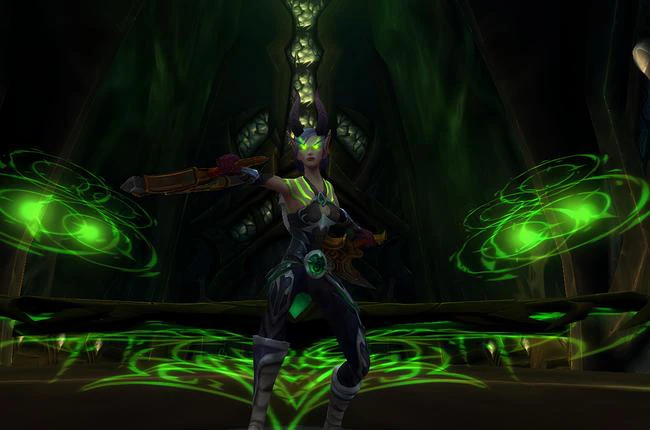
Hero talents were the new system for The War Within, a third tree separate from class and specialization. Unlike the regular talent trees, you acquire every node in your chosen hero tree, with the only decisions coming from which tree you take and a handful of choice nodes. The first Demon Hunter tree revealed was Aldrachi Reaver, which I had predicted to be the physical-combat tree based on the name, and that is exactly what it turned out to be: improvements to mobility through Vengeful Retreat and Felblade, to primary physical abilities like Throw Glaive, Shear, Fracture, and Soul Cleave, plus melee damage and souls. I will primarily discuss Fracture rather than Shear since most of our preferred builds ran it, but everything applies to both, with special mentions where warranted.
Hero Talent Breakdown
Art of the Glaive (Keystone)
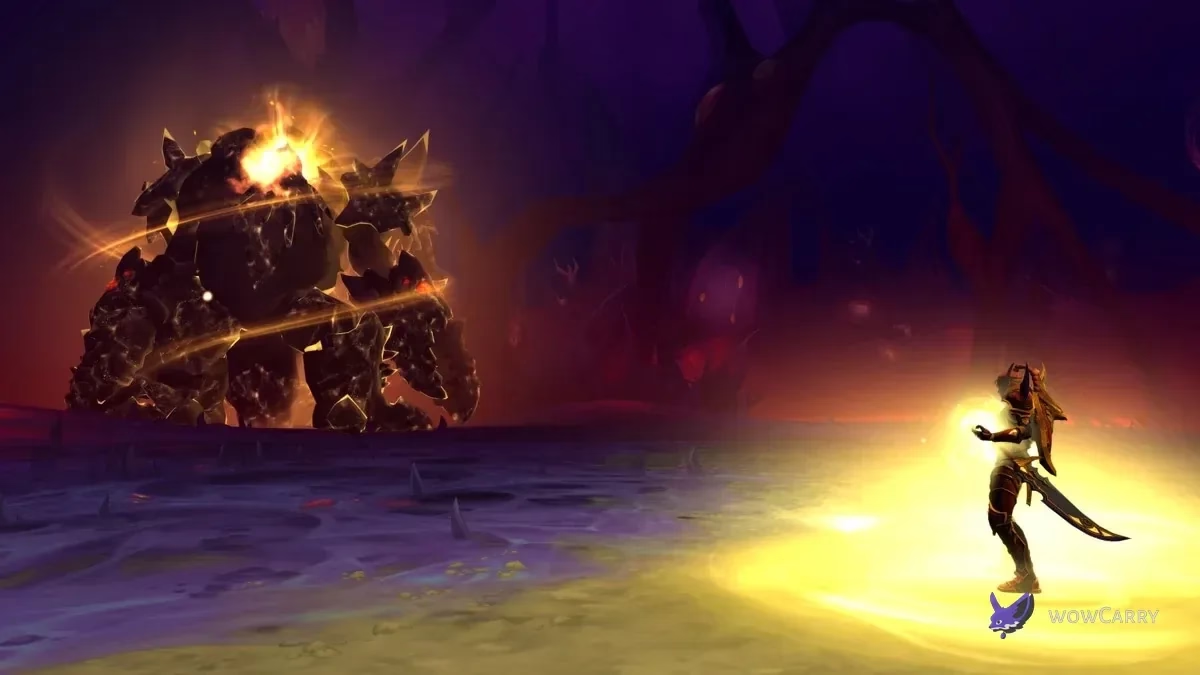
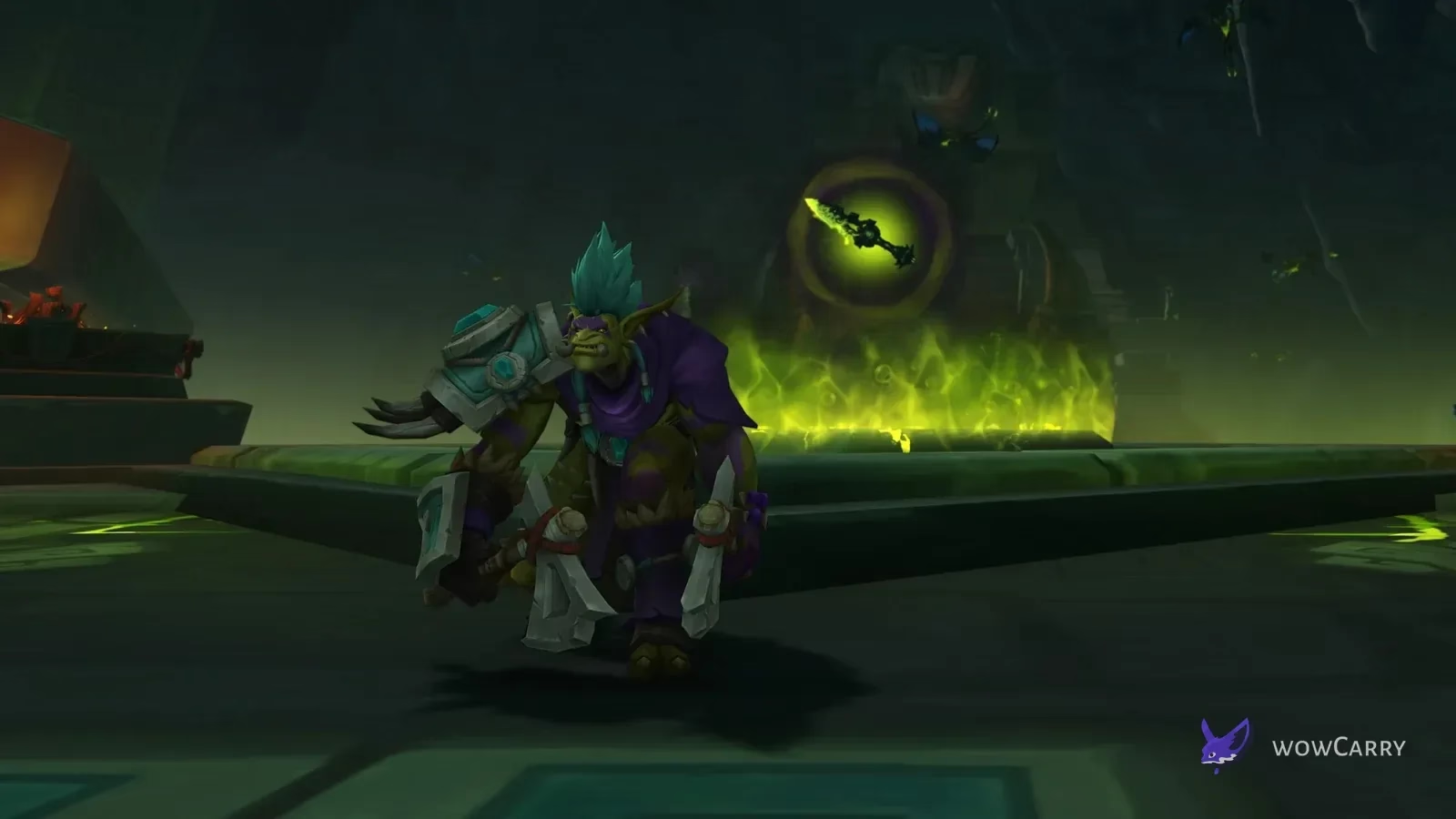
The primary driver of this hero tree is essentially a consistent proc. Once we have consumed 20 Souls, Throw Glaive becomes a new ability called Reaver's Glaive, which damages three targets and enhances our next Shear, Fracture, and Soul Cleave, making our generators apply a 15% damage-taken debuff and our spender deal extra damage. Based on the 20-soul consumption rate and Soul generation at reveal, we were likely to get this buff roughly every 30 seconds in single target and around every 15 seconds in AoE without the bonus souls from the live tier's 4-piece. With the debuff lasting only 5 seconds after application, we would have short windows of bonus damage triggered by using Throw Glaive, but at the cost of adding it into our rotation, where we were already GCD capped, particularly in AoE.
Some of the tooltip was unclear and I was making an assumption: it states that our next ability is enhanced, and based on the wording of other talents, I believe we get exactly one enhanced version of each ability. Other things that were unclear and affected evaluation:
- Do we get an extra bounce from Bouncing Glaives for a total of four targets? Probably the least impactful, but it could make a small difference.
- How do the extra slashes on Soul Cleave work? Does it cast the ability multiple times and apply Frailty each time, does it interact with our Soul Cleave talents, or does it simply do bonus damage with no other interactions, and are the extra slashes capped?
📌 Common mistake: Do not sit on the Reaver's Glaive proc. Because Vengeance generates Souls so consistently, every Soul consumed while the proc is active is wasted, so spend it as soon as it comes up rather than holding it for a perfect setup.
Keen Engagement and Preemptive Strike
Keen Engagement generates 20 Fury whenever you spend the Reaver's Glaive proc. Not much value here, but probably the better option in single target, since we are primarily focused on Fury generation and expenditure. Preemptive Strike instead converts Throw Glaive into a true area ability, dealing damage near the primary target. Because it specifically mentions Throw Glaive and not Reaver's Glaive, I have to wonder whether that is a typo or intentional, and whether it only does this damage during the proc or affects the baseline ability. It is not a powerful increase either way, but it could have minor benefits in AoE situations such as Mythic+.
Evasive Action and Unhindered Assault
Evasive Action is an extra mobility talent that lets us double cast Vengeful Retreat within a short period. It could be useful for covering long distances, but it is fairly unlikely we would want it: we already have significant mobility, and with the restriction being a 3-second window, I cannot think of a time I would rather double flip away than use Infernal Strike. Unhindered Assault, a guaranteed reset on Felblade after using Vengeful Retreat, is more likely to be picked, since it lets us charge straight back into a fight and provides extra Fury. It is still not super impactful, but marginally more useful than the other option.
Incisive Blade
A simple passive talent that increases Soul Cleave damage while it is enhanced by Reaver's Glaive. Not super impactful on its own, but if the extra slashes from the enhancement are also affected, it might be stronger than it seems.
Aldrachi Tactics
This makes the second enhanced ability generate an extra Soul Fragment if it is Fracture, so three Souls outside Metamorphosis or four in it, and lets Soul Cleave generate one along with consuming them. It is probably as simple as the tooltip reads, effectively gaining one Soul per proc, which is rather lackluster. If so, it is far more powerful for Havoc than Vengeance, since it gets Havoc a third of the way to the next proc rather than a twentieth. The slim alternative is that the enhanced Soul Cleave causes extra casts of the base spell that each generate a Soul, which would be much stronger, but I doubt that is the case.
Army Unto Oneself and Incorruptible Spirit
Army Unto Oneself is a simple passive buff to Felblade, reducing physical damage taken by 10% for 5 seconds after each cast. Given our reset frequency this would have extremely high uptime and is a nice small defensive bonus in single target, but in AoE it is near useless because we hardly press the button due to GCD conflicts. Incorruptible Spirit grants a 15% heal over time from consuming Souls, and its value depends heavily on implementation:
- What is the duration of the heal over time?
- Does it overwrite, extend, or stack, and if it stacks, is it rolling, individual, or additive?
- Is the 15% based on total healing, effective healing, or the base heal?
In the worst case it could refresh on every consumption and do almost nothing; in the best case it could be a significant heal from counting total healing and constantly stacking. My bet was somewhere in the middle: individual stacks based on total healing, effectively a 15% increase to the healing value of souls spread over time.
Wounded Quarry
This gives us a chance, after using Fracture during the 5-second debuff, to proc extra attacks that can shatter a bonus soul. Given that it states melee attacks, I am inclined to believe it means only auto-attacks and not melee abilities. With the debuff lasting only 5 seconds, we are not likely to gain very much, and I would treat it as a passive bonus rather than something to play around. Ideally, to reduce randomness, we would have a stacking hidden buff that guarantees a set number of procs per debuff, but then we would want a tracker for it.
✏️ Technique tip: Treat Wounded Quarry as a passive, not a button to build around. If it ever did proc off melee abilities rather than just auto-attacks, the only adjustment would be to favor those abilities inside the Reaver's Mark window.
Intent Pursuit
This talent likely provides little value given how rarely we proc the empowered abilities. We could expect somewhere between 8 and 12 seconds of cooldown reduction per use of The Hunt in single target and 16 to 20 in AoE. It will cause us to desync abilities, so depending on whether we need to line casts up with vulnerability phases, it could have a medium effect or close to none.
Escalation
There is uncertainty in how this works. The damage portion could be a flat 10% increase to each ability when used, or a stacking buff where the first ability gains 10% and the second 20%. The second portion brings up more questions: it states the effect of the second enhancement is increased by 100%. For Fracture that is straightforward, likely doubling the debuff value from 15% to 30%. For Soul Cleave, it is unclear whether it causes six slashes instead of three or simply three slashes dealing double damage. If it is six slashes that each interact with our Soul Cleave talents and apply Frailty, this tree could be quite strong and push us to sync our hardest-hitting abilities with Reaver's Glaive.
Warblade's Hunger
Since this tree somewhat disincentivizes using Spirit Bomb, this balances it out by increasing damage on our generators. With limited information, how much bonus damage is granted is the question. It could mean almost nothing, a small consistent bonus on our whole kit, or a build-defining effect. For anyone who remembers the final season of Battle for Azeroth, where we could heal nearly infinitely with Shear spam, this has potential to be similar: if tuned high enough, the bonus damage could create a feedback loop where we press almost nothing but Shear, healing forever while doing consistent damage.
Thrill of the Fight (Capstone)
Despite being the capstone, this had effectively no interaction with the rest of our hero talents at reveal, reading as a one-time damage and healing buff to a single ability plus a minor attack-speed buff. It seemed lackluster for a capstone and offered nothing that tied back into the toolkit, unlike most of the other capstones we had seen.
Talent and Kit Interactions
There were clear potential synergies between talents, both inside the hero tree and with our base tree. Given the focus on physical abilities, I expected all the bonus-damage talents (Throw Glaive, Shear, Fracture, and Soul Cleave) to deal physical damage, so they would not be affected by talents such as Burning Blood or Fiery Demise. Vulnerability is whitelisted, so unless these were added, they would not be affected either. Depending on the tuning of the damage procs and extra Soul generation, there was a possibility that Shear spam became optimal in extremely high incoming-damage situations, conflicting with our Frailty-focused playstyle.
The soul generation in this tree felt out of place given the focus. None of the talents affected Spirit Bomb, yet random Soul generation was thrown in. Because Souls do not contribute to our damage without Spirit Bomb, the extra souls would mostly add defensiveness through extra healing, plus damage reduction through Painbringer and Demon Spikes uptime through Feed the Demon. If Art of the Glaive counted as Soul consumption, we could double-dip on Soul Monger as well.
The biggest question was whether Incisive Blade provided actual extra casts of Soul Cleave, and if so, whether Aldrachi Tactics doubled the damage or the number of hits. If both were true, there was potential to gain up to 14 stacks of Frailty in single target from one cast, giving 140% leech, 56% damage reduction, and bonus damage. That would be a large enough multiplier that we would want to sync every major burst ability with a proc, lining it up with Soul Furnace and Fiery Demise. Players pushing keys on a tank can compare our Mythic+ dungeon carries to see where Vengeance lands.
A Tree Built for Physical Combat
The Aldrachi Reaver tree was clearly focused on a Demon Hunter's mastery of physical combat: everything geared toward empowering physical abilities and melee attacks through Soul consumption. There were damage and healing multipliers that likely stacked with our current bonuses, but depending on how they worked, they could shift the value of many commonly and uncommonly selected talents. With the bonuses to Soul Cleave, for instance, we might be pushed away from Spirit Bomb, since it would do less damage and be hard to fit in rotationally with the extra globals spent on Throw Glaive and the enhanced abilities. Meanwhile, Soul Carver could gain value if Frailty stacked from the enhancement.
Due to the effect of some hero talents, we were forced into taking certain class and spec talents for a non-zero gain. Most of us already played Felblade as a single-target Fury generator, but it is rarely used in multitarget. Art of the Glaive sat on its own node, and roughly half of our builds did not play The Hunt at all, so the tree pressured players to pick up The Hunt rather than the other class-tree capstones. Many players also opted out of Vengeful Retreat since we rarely needed the extra mobility. If there were interactions between our Soul Cleave talents and the hero talents, a multitude of talents would simply be locked in.
The rigidity of Art of the Glaive raised concerns too. Because it procs every 20 souls and we generate souls consistently, we were incentivized to spend the proc immediately, since any soul consumed while it was active was wasted. Our soul generation comes in bursts, so we were likely to lose anywhere from one to five souls per proc, and trying to line it up with other abilities would also cause a loss. Throw Glaive itself is a spell Vengeance hardly used, effectively only to pull packs together or when forced away from melee:
- To pull enemies when grouping multiple packs together.
- When forced away from all possible melee targets.
Without it, Vengeance was already GCD locked in all situations, so adding Throw Glaive rotationally pushed out our existing spells for one that merely empowers parts of our main rotation. Depending on the enhancement implementation, it could also force us to insert three specific globals every time, breaking our standard priority. And since we already generate souls based on haste, with the debuff being so short, this tree could affect stat priority and push us to stack haste even further into diminishing returns.
Final Thoughts
They did a fine job emphasizing what they wanted from this tree, but due to the design of Vengeance, it fell short of being truly exciting. To be honest, I was a bit dismayed, since it once again felt like Vengeance was an afterthought: the tree was clearly inspired by the live Havoc tier set and seemed more focused on how Havoc would interact with it, with the Vengeance equivalents simply swapped in. Havoc already used Throw Glaive rotationally, and the talents that generate a bonus soul gave Havoc extremely high uptime on the proc since it only took 3 souls rather than 20. Havoc also used Vengeful Retreat rotationally and always played Felblade and The Hunt, so it got full value where Vengeance would see fewer procs and weaker effects.
⚠️ Tank warning: Reaver's Mark is one more debuff to manage. While it is only 15% bonus damage, or 30% with Escalation, if you cannot stick to the marked target for the debuff's duration you lose much of the effect, and target swaps to pick up adds will frequently cost you the window.
From a tank perspective, having setup globals is not great unless they pay off enough to justify the time. Getting initial threat is the priority, and here we play two or three low-value globals before the setup is complete; that bonus only exists for one primary ability from Reaver's Glaive and then two to four more abilities buffed by Reaver's Mark depending on haste. This tree introduced too many conflicts in decision-making and leaned into debuff-based gameplay, a long-standing community concern. There was real potential for powerful interactions, but even with them I would not have called it a win for Vengeance. I hoped we would see major revisions, and that the other tree, Fel-Scarred, would be designed with a better understanding of the spec.
How Aldrachi Reaver Shipped
Several of the open questions in this preview resolved when The War Within launched. The biggest one, whether enhanced Soul Cleave adds extra slashes, came out yes: the enhanced spender delivers additional glaive slashes to nearby targets rather than full re-casts of Soul Cleave, so the instinct that it would not simply re-cast the base spell held up. Incisive Blade landed stronger than the alpha tooltip implied, buffing the enhanced spender by 30% rather than the 10% read here. Wounded Quarry matched the auto-attack description at first and was then reworked into a passive that converts some of your physical damage on the marked target into Chaos and keeps a chance to shatter a soul, so the proc-rate anxiety became moot. And Thrill of the Fight stopped being a dead capstone: it shipped as a repeating buff that empowers your next Reaver's Glaive and grants Haste, tying directly back into the Art of the Glaive loop the way the review wished it would. The specific debuff numbers were also tuned down from the reveal-era 15% and 30%, so treat those values as alpha figures.
Frequently Asked Questions
What is the Aldrachi Reaver hero talent tree?
Aldrachi Reaver is one of Demon Hunter's two War Within hero trees, shared by Havoc and Vengeance. It is the physical-combat, glaive-focused tree, built around turning Throw Glaive into Reaver's Glaive to enhance your generators and Soul Cleave.
How does the Art of the Glaive loop work?
You consume 20 Soul Fragments to convert Throw Glaive into Reaver's Glaive. Casting Reaver's Glaive enhances your next Fracture or Shear and your next Soul Cleave, with the enhanced generators applying Reaver's Mark, a damage-taken debuff on the target.
Is Aldrachi Reaver better for Havoc or Vengeance?
At reveal the tree read as Havoc-leaning. Havoc already used Throw Glaive and Vengeful Retreat in its rotation and reached the proc far faster, while Vengeance saw fewer procs, more global-cooldown conflict, and weaker payoffs for a tank focused on threat.
Does the enhanced Soul Cleave add extra slashes?
Yes. This was the review's biggest open question, and at launch the enhanced Soul Cleave delivered additional glaive slashes to nearby targets rather than full extra casts of the spell, confirming the author's hunch that it would not simply re-cast Soul Cleave.
What is the Aldrachi Reaver capstone?
The capstone is Thrill of the Fight. It looked like a flat one-time buff at reveal, but it shipped as a repeating buff that empowers your next Reaver's Glaive and grants Haste, feeding back into the Art of the Glaive loop.
What is the other Demon Hunter hero tree?
The other Demon Hunter tree is Fel-Scarred, the Metamorphosis-focused option. Aldrachi Reaver is the physical-combat tree; both are shared between Havoc and Vengeance.
Is this Aldrachi Reaver review still accurate?
It is a 2024 reveal-era deep dive written before beta. The tree shipped and was tuned afterward, with several debuff values reduced and Wounded Quarry reworked, so check live sources such as Wowhead for present-day Vengeance numbers.
Last reviewed 2026-06-29 against Patch 11.0 The War Within — Maintained by WowCarry's WoW team.