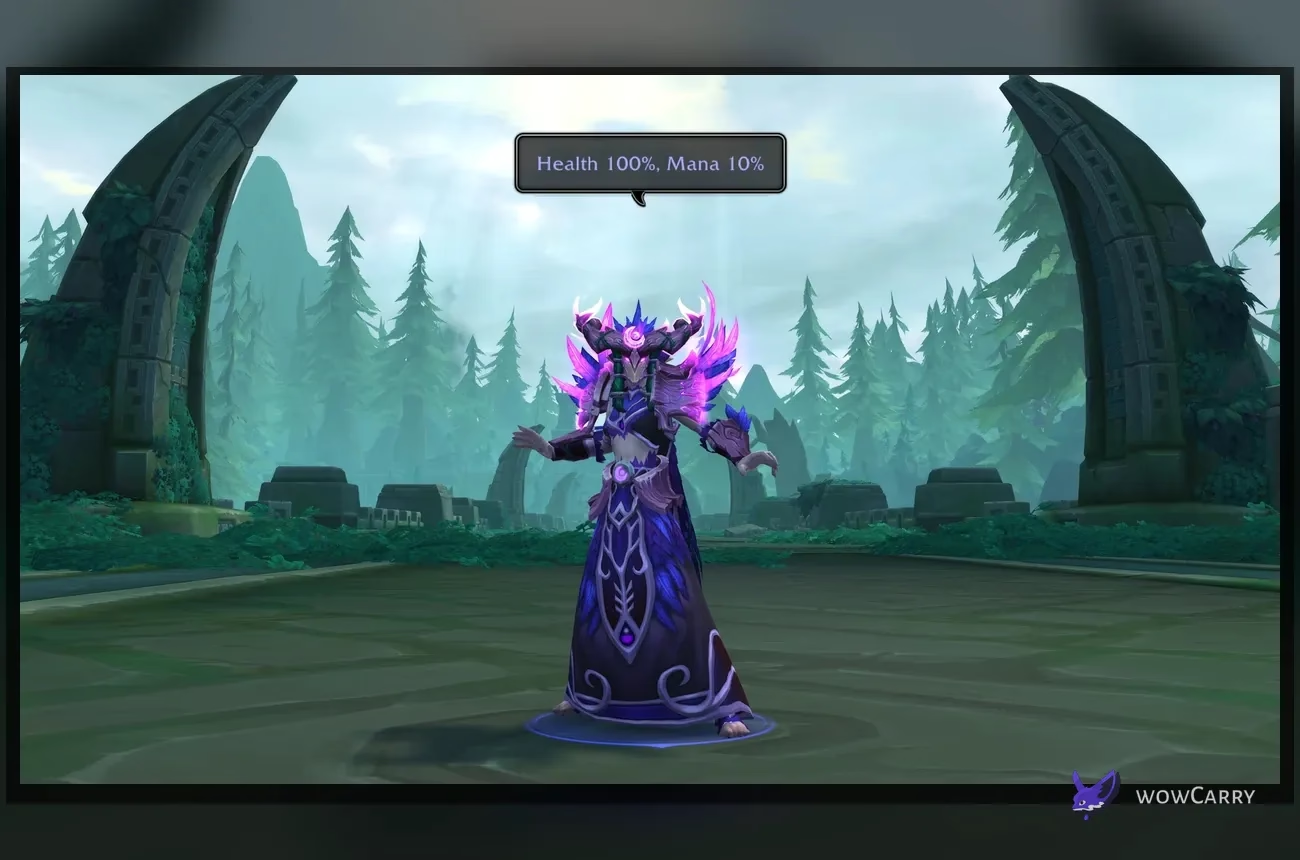
Flameshaper Evoker Hero Talents: An Early Review
A retro review of the Flameshaper Evoker Hero Talents and the Engulf and Consume Flame engine, from the 2024 War Within preview.
By:
John Langan
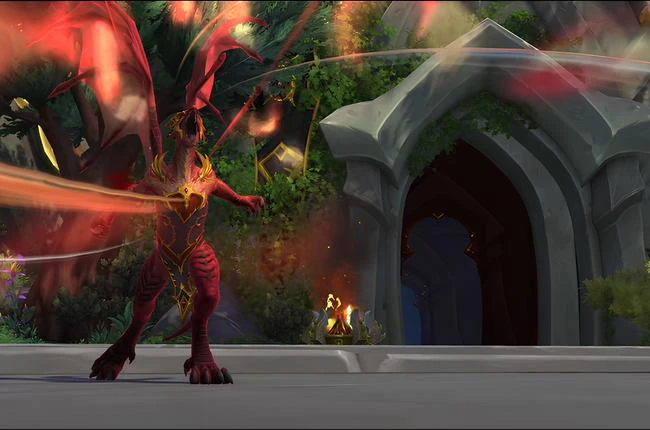
In March 2024, Blizzard previewed a batch of twelve Hero Talent trees for The War Within, and Flameshaper was the standout for Evokers who wanted their breath magic to hit harder. WowCarry's Devastation Evoker writer, Preheat, reviewed the tree in this early-preview piece, framing it as an explosive answer to Devastation's damage questions.
Hero Talents are a third talent layer separate from class and specialization, and Flameshaper is shared by Devastation and Preservation Evokers. The values below are the 2024 alpha tooltips, preserved as a historical snapshot. The capstone in particular, Consume Flame, was reworked after launch, so treat the early numbers as a record of the reveal rather than current tuning. With Midnight now live, this is a look back at how one of Devastation's most popular trees first took shape.
With the verdict in place, here is how the tree was built.
Flameshapers specialized in Red Dragonflight magic tied to life energy, flame, and breath. The fantasy was to engulf an enemy or ally in dragonflame so that Fire Breath or Dream Breath detonated for heavy damage or healing. Where Scalecommander leaned on Mass Disintegrate and Bombardments, Flameshaper introduced Engulf, a new button that used Fire Breath as fuel for explosions.
Engulf was the keystone. It ran on a 20-second cooldown with two charges in the talented build, and its effectiveness scaled with the number of periodic effects, the damage-over-time debuffs, on the target. A handful of nodes fed it:
Stacked together, those debuffs were what turned a single Engulf from a modest hit into a serious one, which is why the rotation rewarded setup before the press.
Three nodes carried the tree. The first, Engulf, was the engine described above: a strong single-target hit that grew with every periodic effect riding the target.
Consume Flame was the capstone. It caused Engulf to use the remaining duration of Fire Breath as fuel for a wide explosion, dealing damage equal to 300% of the Fire Breath consumed. Because Fire Breath dealt a set total regardless of empowerment level, with both upfront and over-time components, the common advice was to empower it to rank 1 to keep the over-time portion intact, refreshing it before it expired through the Pandemic window. The Consume Flame explosion landed like a Tip the Scales Fire Breath cast, and Traveling Flame let Fire Breath spread or refresh during Engulf so uptime stayed high.
✏️ The trick to Consume Flame was protecting Fire Breath uptime. The bigger the slice of Fire Breath left on the target, the bigger the detonation, so empowering to rank 1 and refreshing on time mattered more than raw cast speed.
Burning Adrenaline rounded out the core. Each Engulf granted a buff that made the next spell cast 30% faster, stacking up to two charges, though stacking both at once was rare. It let players rush an Eternity Surge, Fire Breath, Disintegrate, or Living Flame for extra throughput inside a window.
Beyond the core, Flameshaper offered nodes that shaped the playstyle. Enkindle behaved much like the Fire Mage Mastery: Ignite, layering a damage-over-time effect from Essence abilities, and the Fan the Flames choice node let Engulf amplify and extend it.
Conduit of Flame raised critical strike chance against targets above 50% health, which paired with the Devastation Mastery: Giantkiller and pushed players to frontload damage. Titanic Precision increased the chance for Living Flame and Azure Strike to trigger Essence Burst, feeding more resources into the loop, though its exact behavior was still unclear at preview. The tree also offered choice rows between damage, utility, and defensive nodes, leaving room to adapt to different fights.
As an alpha preview, the numbers above were always going to move, and Consume Flame is the clearest example. The launch design that consumed a fixed slice of Fire Breath for 300% was later reworked so that other spenders, rather than a clean Fire Breath slice, fed the detonation. The names stayed, but the math shifted, so anyone reading this as a current guide should verify the live tooltips.
Preheat's bottom line held up well, though. Flameshaper gave Devastation a burst-focused identity that stood as a real alternative to Scalecommander, and it stayed one of the spec's most-played trees through The War Within. The threat and utility concerns the review raised were Devastation-wide issues, not Flameshaper's fault, and Blizzard kept iterating on them afterward.
Devastation Evoker remained a common raid pick in later content, and players can explore our current raid boosts for this tier.
Flameshaper is a Hero Talent tree shared by Devastation and Preservation Evokers, introduced with The War Within. It centers on Engulf, a new ability that uses Fire Breath as fuel for explosive damage or healing.
Blizzard previewed a batch of twelve Hero Talent trees, including Flameshaper, in March 2024 ahead of The War Within, which launched in August 2024. This review reflects that early-preview build.
Engulf engulfs the target in dragonflame for damage or healing, and its effectiveness scales with the number of periodic effects on the target. At reveal it ran on a 20-second cooldown with two charges in the talented build.
At launch, Consume Flame made Engulf consume the remaining duration of Fire Breath and detonate for 300% of the amount consumed, hitting nearby targets. Blizzard later reworked the capstone, so the live version differs from this early design.
Preheat argued Flameshaper was easier to understand and offered strong burst, making it an appealing pick for Devastation, while Scalecommander leaned on Mass Disintegrate. The best choice depends on content and current tuning, so the answer shifted patch to patch.
Flameshaper is available to Devastation and Preservation Evokers. The other Evoker trees are Scalecommander and Chronowarden, which cover the Augmentation pairings.
No. It is a 2024 early-preview snapshot. The War Within is now the previous expansion, and several Flameshaper nodes, including Consume Flame, were retuned. Check live sources for present-day numbers.
Last reviewed 2026-06-29 against Patch 11.0 The War Within — Maintained by WowCarry's WoW team.