Key Takeaways
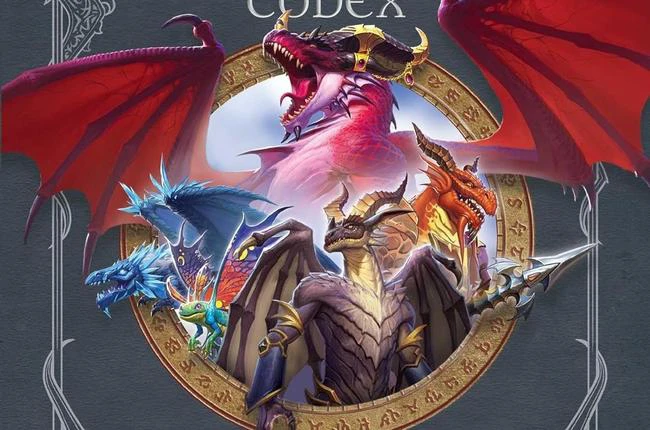
- The Dragonflight Codex is a real Insight Editions lore book, written by Sandra Rosner and Doug Walsh in the voice of Archmage Khadgar.
- The book frames its contents as Khadgar's perspective, so it openly admits some entries may later be proven wrong.
- Galakrond grew monstrous after drinking from a corrupted wellspring on the Dragon Isles, with a hint of Yogg-Saron's taint behind it.
- Chromatus, the five-headed chromatic dragon, cannot be destroyed and sits sealed in an arcane prison.
- The Codex catalogs lesser dragonkin too, from the faerie dragons of the Emerald Dream to the Veilwings of Ardenweald.
Here are the lore highlights worth knowing from Khadgar's field guide to the dragons of Azeroth.
The Dragonflight Codex: Lore from Khadgar's Perspective
Like many in-universe books in World of Warcraft, The Dragonflight Codex is presented as the work of Archmage Khadgar. In the real world, authors Sandra Rosner and Doug Walsh wrote it in character as Khadgar, compiling dragon lore with contributions attributed to Kalecgos, Merithra, Chromie, and adventurers. Crucially, the book is framed as Khadgar's perspective rather than irrefutable fact, and it openly acknowledges that later discoveries may overturn some of its claims. That framing is what makes it a fun read for lore hunters: it is a scholar's working notes, not a sealed verdict.
Primal Dragons and Elemental Connections
In the Codex, the term "primal dragon" describes proto-dragons who were never touched by the Titans. The distinction highlights their ties to the elemental planes and their origins as creatures derived from elemental forces. The book explores the physiology of elemental dragons, using the Stone dragons of Deepholm and the Storm dragons of Skywall as examples, and even hints that the Elemental Plane may have shaped the development of other dragons. It adds a layer of mystery to where dragonkind actually comes from.
The Enigmatic Galakrond
The story of Galakrond, the largest proto-dragon in history, stays shrouded in mystery. The Dragonflight Codex sheds new light on his evolution and the forces that warped him. Khadgar attributes Galakrond's uncontrolled growth to drinking from a tainted wellspring on the Dragon Isles, and ties his necrotic affliction to cannibalizing other proto-dragons, whose remains rose again as undead.
💡 Lore tip: the Codex never names Yogg-Saron outright as Galakrond's corruptor. It only hints that the Old God tainted the wellspring on the Dragon Isles, which is why later texts had room to expand the connection.
That gap matters, because Khadgar admits he may not have the whole picture. Read alongside other accounts, the hint points to a deeper hand behind Galakrond's fall than the Codex is willing to state outright.
The Imprisoned Chromatus
Chromatus, the fearsome five-headed dragon wielding the powers of all five dragonflights, is one of the book's standout entries. Khadgar confirms that Chromatus cannot be destroyed and remains confined within an arcane prison maintained by the flights. That detail keeps the door open for a dramatic return in some future expansion, which is exactly the kind of loose thread the Codex loves to leave dangling.
Unresolved Mysteries and Legends
The Lingering Void Threat in Twilight Highlands
Even after the defeat of the Twilight's Hammer cult and the Old Gods, the Codex reveals that the Void still festers in the Twilight Highlands. A twisting void tower and the constant vigil of the red dragons serve as reminders that the taint lingers, mutating the land and threatening its inhabitants. It is a quiet hook for storylines the game has yet to fully resolve.
An Unusual Friendship: Malygos and a Human Scholar
The Codex recounts a legend about Malygos, the Aspect of Magic, and a human scholar who met him in the Nexus. The bond between mortal and dragon led to the construction of a footbridge across the Westrift, a small but striking feat of cooperation. The tale is briefly referenced in the novel The Last Guardian, and it leaves you wanting to know more about how dragons and mortals once connected.
The Unsolved Plot against Chromie
In The Deaths of Chromie scenario, players race to save Chromie from an assassination plot. She survives, but the Codex notes that the identity of the plotters remains a mystery. Khadgar speculates that the Infinite dragonflight, the time-twisting faction that views Chromie as a threat, are the prime suspects, though the book stops short of naming them as confirmed culprits.
Insights into Dragonlore and the World
The Journey of Dragon Maturity
How dragons age has long been a point of confusion. The Codex states that dragons age rapidly in their early years, taking at least a decade to reach full maturity, after which their aging slows dramatically and grants them long lifespans. That timeline helps explain a figure like Wrathion, who hatched during the Cataclysm yet already carries himself as a mature dragon.
Cloud Serpents and Faerie Dragons
Cloud Serpents, long associated with Pandaren culture, carry elemental power much like other dragons. The Codex recounts the legend of Alani the Stormborn, born when lightning struck a lake in the Vale of Eternal Blossoms and ignited the water. The Vale's link to potent energies, echoed at sites like Sholazar Basin and Un'Goro Crater, deepens the lore around these creatures.
📌 Common mix-up: cloud serpents and faerie dragons are often called dragons in passing, but the Codex treats both as separate dragonkin lineages rather than members of the five great flights led by Aspects like Alexstrasza.
Faerie Dragons, while not counted as "true" dragons, hold a unique place in Azeroth's lore. The Codex ties their presence to the Emerald Dream, where they exist as fully as they do in the physical world. It even suggests faerie dragons helped guide the dark-troll ancestors of the night elves to the Well of Eternity. Their gatherings in the Whispering Forest of Tirisfal Glades, dancing around mushroom rings, add a touch of wonder to Azeroth's landscapes.
Veilwings of Ardenweald
The Shadowlands has its own dragonkin in the Veilwings of Ardenweald, the realm's only native dragon-like creatures. Closer to feathered dragonkin than to true dragons, their origins stay uncertain: it is unknown whether they were shaped by the First Ones or evolved from spirits that passed into the Shadowlands. That open question leaves plenty of room for future revelations.
Curious Asides and In-Universe Books
The Codex is dotted with Khadgar's margin notes, which point to many other in-universe texts. Here are some of the more notable mentions and where they show up in the game.
| Book | In-Game References |
|---|---|
| Khadgar's Essays on Dimensional Convergence | A quest item in Mazen's Behest |
| Of Trapes and Lockes | Mentioned in The Last Guardian |
| Delving Deeper by Arcanist Perclanea | Formerly rewarded Artifact Power in Legion |
| Notable Antiquities of Ancient Azeroth | A quest item in Karazhan |
| Powerful Magical Foci and Those Who Wielded Them | Novelty item in Legion |
| Legends of the Gurubashi, Volume 3 | Available in-game (junk item) |
| Nostro's Compendium of Dragon Slaying | Formerly a quest item (Classic), now a readable junk item |
| Dr. Terrible's "Building a Better Flesh Giant" | A quest item related to The Sum is Greater than the Parts |
| Forbidden Rites and other Rituals Necromantic | Destroyed by heroes during The Four Tomes quest |
| Draconic Compendium, Volume IV | A quest item from the Work Study: Bestiaries of Azsuna quest |
These callbacks knit the lore together, showing how much of Azeroth's history is waiting to be pieced together by curious players.
Frequently Asked Questions
Who wrote The Dragonflight Codex?
The real-world authors are Sandra Rosner and Doug Walsh, writing in character as Archmage Khadgar. Insight Editions published the illustrated guide in December 2023, and it presents its dragon lore as Khadgar's compiled perspective.
Is the lore in the Codex considered hard canon?
The book frames itself as Khadgar's account rather than absolute fact, and it openly admits future discoveries may correct it. That makes it a strong lore reference, but a few entries, like the Infinite dragonflight being behind the plot against Chromie, read as the author's informed speculation.
What does the Codex say about Galakrond?
It credits Galakrond's monstrous evolution to a corrupted wellspring on the Dragon Isles and his undead-raising affliction to cannibalism. Other texts hint that Yogg-Saron tainted that wellspring, suggesting an Old God's hand in the proto-dragon's fall.
Could Chromatus return in a future expansion?
The Codex confirms Chromatus is indestructible and locked in an arcane prison rather than dead. That leaves the five-headed dragon available as a dramatic threat whenever the story needs one, which is why lore fans keep an eye on him.
Are faerie dragons actually dragons?
No. The Codex classes faerie dragons as a separate lineage tied to the Emerald Dream rather than true dragons. The same goes for the Veilwings of Ardenweald, which sit closer to feathered dragonkin than to the great flights.
What is the Westrift footbridge legend?
It is a Codex tale about Malygos befriending a human scholar in the Nexus, a bond that led to a footbridge being built across the Westrift. The story is briefly referenced in the novel The Last Guardian and stands out as a rare moment of dragon-mortal friendship.
The Dragonflight Codex rewards readers who enjoy the texture of Warcraft lore: the loose threads, the scholar's caveats, and the small legends that hint at bigger stories. If reading about dragons leaves you wanting to fight a few instead, you can explore our WoW raid boosts. Last reviewed 2026-06-27 against Patch 10.1.0 Embers of Neltharion. Maintained by WowCarry's WoW team.