Key Takeaways
- Augmentation Evoker arrived in Dragonflight Patch 10.1.5 "Fractures in Time" as World of Warcraft's first dedicated support damage spec, built around Ebon Might.
- In Dragonflight, the spec's pain points were buff micromanagement, Mastery-dominant gearing, the 25-yard range on Prescience and Blistering Scales, and a clunky Motes of Possibility capstone.
- The War Within answered most of the community wishlist: Ebon Might went raid-wide, cutting the manual targeting that made Augmentation feel like a spreadsheet.
- Prescience gained smart-targeting through the new Sense Power toggle, prioritizing allies whose cooldowns are active.
- Spatial Paradox moved from the spec tree to the class tree, and Motes of Possibility was reworked in Patch 11.0.0 into a random-buff mote.
- The range complaint was only softened by the optional Arcane Reach talent (plus 5 yards), and the secondary-stat rework players asked for never arrived.
With Dragonflight behind us, the Augmentation Evoker makes for one of the more interesting case studies in recent World of Warcraft design. It was the game's first support-oriented damage dealer in a long time, and it spent its debut expansion swinging between must-bring and over-tuned. Now that The War Within has come and gone, the wishlist players wrote at the end of Dragonflight is fully gradeable. Here is where the spec struggled in Dragonflight, what the community wanted, and how much of it Blizzard actually delivered.
A Support Spec Built on Buffs
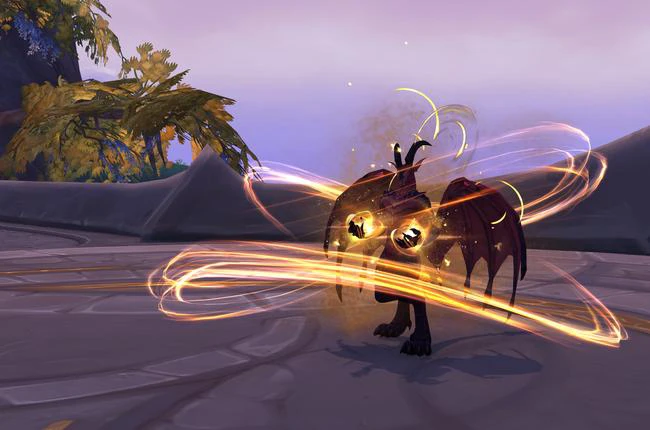
Augmentation joined Devastation and Preservation as the third Evoker specialization in Patch 10.1.5, landing inside Dragonflight Season 2 alongside the Aberrus raid. Its identity was unusual: rather than topping the damage meter itself, an Augmentation Evoker raised everyone else's numbers through Ebon Might, which lent the Evoker's own primary stat to nearby allies, and through a kit of targeted buffs and party auras. Breath of Eons capped the package with a delayed burst that paid out based on the damage allies dealt while it was active.
That made the spec a fixture of raid and Mythic+ compositions almost immediately. Throughout Season 3 it kept getting tuned as Blizzard tried to balance a support that was so valuable groups felt obligated to bring one. The popularity was real, and so was the friction underneath it.
The Spreadsheet Problem
The loudest complaint in Dragonflight was that high-end Augmentation play felt like managing a spreadsheet. Prescience and the rest of the targeted toolkit rewarded careful pre-planning: who gets buffed, in what order, and exactly when, so that the biggest cooldowns lined up with the Evoker's windows. Done well it was potent. Done all night, every pull, it was exhausting, and it pushed a lot of players away from a spec they otherwise enjoyed.
The community's proposed fix was to lock buff targets before combat and restrict swapping mid-fight, trading some ceiling for a calmer, more readable rotation. The underlying ask was simple: keep the support fantasy, lose the micromanagement tax.
Gearing, Range, and the Capstone
Three smaller frustrations rounded out the Dragonflight wishlist. First, gearing felt narrow: Mastery dominated Augmentation's secondary stats while Versatility did little for buff throughput, which made a lot of item upgrades feel flat. Second, Prescience and Blistering Scales both reached only 25 yards, which is short for a spread raid and led to plenty of buffs whiffing on out-of-range allies. Third, the capstone, Motes of Possibility, dropped cooldown-reduction motes that allies had to physically walk through. In practice they were fiddly, easy to miss, and rarely worth building around.
None of these were spec-killers on their own. Together they capped how good Augmentation could feel to actually pilot, even when it was strong on paper.
How The War Within Answered the Wishlist
The War Within turned out to be a fairly direct response to that list. The biggest change addressed the spreadsheet problem head-on: Ebon Might was reworked to buff the entire raid instead of only the nearest allies, so the spec's core buff no longer needed constant manual targeting. The one buff you still place by hand is Prescience, and even that got smarter. A new Sense Power toggle surfaces which allies have cooldowns up, and Prescience now leans toward those high-value targets instead of whoever happens to be closest.
Spatial Paradox moved off the spec tree and into the Evoker class tree, sharing a node with Time Spiral, which loosened the spec-dependency the editorial worried about. Motes of Possibility was redesigned in Patch 11.0.0, swapping cooldown-reduction motes for ones that grant a random buff from the Evoker's arsenal, though guides still rate it lukewarm because of how often it actually procs.
Two asks landed softer. Instead of bumping Prescience and Blistering Scales to 40 yards, Blizzard added the optional Arcane Reach talent for plus 5 yards of beneficial range, a patch rather than a baseline fix. And the secondary-stat overhaul never came; Mastery stayed central, and tighter gear budgets in raid only sharpened the squeeze. On balance, though, the bulk of the wishlist landed, and Augmentation came out of The War Within feeling far less like data entry than it did at the end of Dragonflight.
If you want to put a tuned Augmentation Evoker to work, you can Compare our Mythic+ dungeon carries for keys or See our raid boost packages to clear current-tier bosses with a coordinated group.
Frequently Asked Questions
When was Augmentation Evoker added to World of Warcraft?
Augmentation arrived in Dragonflight Patch 10.1.5 "Fractures in Time," inside Season 2. It was the third Evoker specialization after Devastation and Preservation, and the game's first dedicated support damage spec in a long time.
What made Augmentation Evoker controversial in Dragonflight?
It was so strong as a buff-bot that groups felt obligated to bring one, while the players piloting it dealt with heavy micromanagement. Targeted buffs like Prescience demanded constant planning, which made high-end play feel like managing a spreadsheet.
What was the biggest change to Augmentation in The War Within?
Ebon Might was reworked to buff the whole raid rather than only the nearest allies. That removed most of the manual targeting that defined Dragonflight Augmentation and was the single most-requested fix on the community wishlist.
What is Sense Power and how does it help Prescience?
Sense Power is a togglable indicator added in The War Within that highlights allies with cooldowns active. Prescience now prioritizes those flagged targets, so the one manually placed buff lands on the players who benefit most.
Did Blizzard fix the 25-yard range on Augmentation buffs?
Not fully. Rather than raising Prescience and Blistering Scales to 40 yards, The War Within added the optional Arcane Reach talent for plus 5 yards of beneficial-spell range. The range pain was reduced through a talent choice, not a baseline change.
Was Motes of Possibility ever made useful?
It was reworked in Patch 11.0.0 to grant a random buff from the Evoker's kit instead of cooldown reduction, with a proc-chance bump later. Guides still treat it as underwhelming, mostly because it does not proc often enough to plan around.
Is Augmentation still a buff-target micromanagement spec?
Far less than it was. With Ebon Might raid-wide and Prescience smart-targeting through Sense Power, The War Within version asks for much less per-pull buff juggling than the Dragonflight one did, while keeping the support identity intact.
Last reviewed 2026-06-24 against Patch 11.0.2 The War Within. Maintained by WowCarry's WoW team.