World of Warcraft at 20
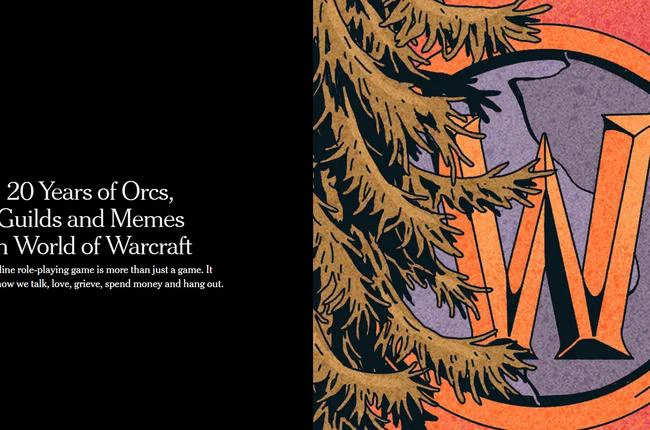
World of Warcraft launched on November 23, 2004, and by its twentieth anniversary in November 2024 it had outgrown the label of "video game." The New York Times marked the milestone with a retrospective on the orcs, guilds, and memes that turned an online role-playing game into a cultural fixture. This is a look at how a game about Azeroth ended up touching real-world politics, science, film, and the internet's sense of humor.
Key Takeaways
- World of Warcraft launched on November 23, 2004, and The New York Times marked its 20th anniversary with a November 2024 retrospective.
- WoW's guilds built lasting friendships and online communities years before Twitter and the wider social-media era took hold.
- Colleen Lachowicz won a 2012 Maine State Senate seat as an open WoW player after an attack on her play backfired, and the 2024 Harris-Walz campaign ran a Twitch event alongside live WoW.
- The 2005 Corrupted Blood incident, an accidental in-game plague, was later studied by real epidemiologists as a disease-spread model.
- Leeroy Jenkins and South Park's Emmy-winning "Make Love, Not Warcraft" carried WoW into mainstream pop culture.
- The 2016 Warcraft film broke box-office records in China, and 2019's WoW Classic proved the original game's pull was still strong.
With the milestones set, here is how each of those threads played out.
A Social Network Before Social Media
Long before feeds and follower counts, World of Warcraft was already a social platform. Guilds gave players a standing group to log in for, raid schedules became weekly commitments, and friendships that started in Azeroth often carried into real life. The game arrived in late 2004, ahead of the era when Twitter and a public Facebook reshaped how people stayed in touch online, and for many players a guild roster was their first real online community.
That social glue is a big part of why the game endured. People came for the questing and stayed for the other people, and Blizzard built systems around that, from in-game chat channels to guild perks, that kept the community as the real endgame.
When WoW Reached Politics and the Classroom
The game's reach eventually spilled into the real world. In 2012, Colleen Lachowicz won a Maine State Senate seat as an open WoW player after a political attack mocking her orc rogue backfired and rallied gamers to her side. More than a decade later, the 2024 Harris-Walz campaign leaned into the same audience with a Twitch event streamed alongside live WoW. The game has even surfaced on the floor of the U.S. House, where a 2023 speaker vote drew a "Leeroy Jenkins" comparison.
Researchers paid attention too. The 2005 Corrupted Blood incident, an accidental plague that escaped a raid encounter and swept through cities, became a real case study for epidemiologists modeling how people behave during an outbreak. A bug in a fantasy game turned into a footnote in actual disease research.
The Memes That Escaped Azeroth
Some of WoW's biggest cultural moments came from its players. The Leeroy Jenkins video, posted in 2005, immortalized a player charging into a boss fight and wiping his raid, and the clip is still quoted today, esports floor votes included. The community later confirmed it was staged, which did nothing to slow its spread.
Television noticed. South Park built an entire Emmy-winning episode, "Make Love, Not Warcraft", around the game in 2006, capturing both the obsession and the absurdity of grinding for hours. For a lot of non-players, that episode was their first real picture of what WoW even was.
From the Big Screen to a Classic Revival
The franchise made the jump to film in 2016 with director Duncan Jones's Warcraft. Western reviews were rough, but the movie became a box-office phenomenon in China, a reminder of how global the player base had become. The subscription model, often written off as outdated against free-to-play rivals, kept the game profitable for two decades.
Then came nostalgia. The 2019 launch of WoW Classic drew massive login queues and proved that players still wanted the slower, harder original game. Two decades in, World of Warcraft was simultaneously a live modern MMO and a museum of its own history, and the November 2024 New York Times feature treated it as exactly that.
Frequently Asked Questions
When did World of Warcraft launch?
World of Warcraft launched on November 23, 2004. Its twentieth anniversary fell in November 2024, which is the occasion The New York Times marked with its retrospective.
What is the Leeroy Jenkins video?
Leeroy Jenkins is a 2005 WoW clip in which a player charges into a boss pull while his guildmates are still planning, wiping the raid. It became one of gaming's most enduring memes and was later confirmed to be staged.
Did South Park really make a World of Warcraft episode?
Yes. South Park's "Make Love, Not Warcraft" aired in 2006 and won a Primetime Emmy. It follows the boys grinding in WoW to defeat a griefer and is one of the most recognized pieces of WoW pop culture.
What was the Corrupted Blood incident?
The Corrupted Blood incident was a 2005 in-game outbreak, originally a raid debuff, that spread uncontrollably through WoW's cities. Real epidemiologists later cited it as a model for studying how people react during an epidemic.
How did the Warcraft movie do?
The 2016 Warcraft film, directed by Duncan Jones, received mixed-to-negative reviews in the West but set box-office records in China, where the franchise has a huge following.
Is World of Warcraft still active 20 years later?
Yes. World of Warcraft remains a live game with regular expansions, and WoW Classic preserves the original 2004 experience alongside it. The dual offering is part of why the game stayed culturally relevant into its third decade.
Last reviewed 2026-06-23 against World of Warcraft's 20th anniversary (November 2024) — Maintained by WowCarry's WoW team.