Arator: A New Protagonist in Azeroth
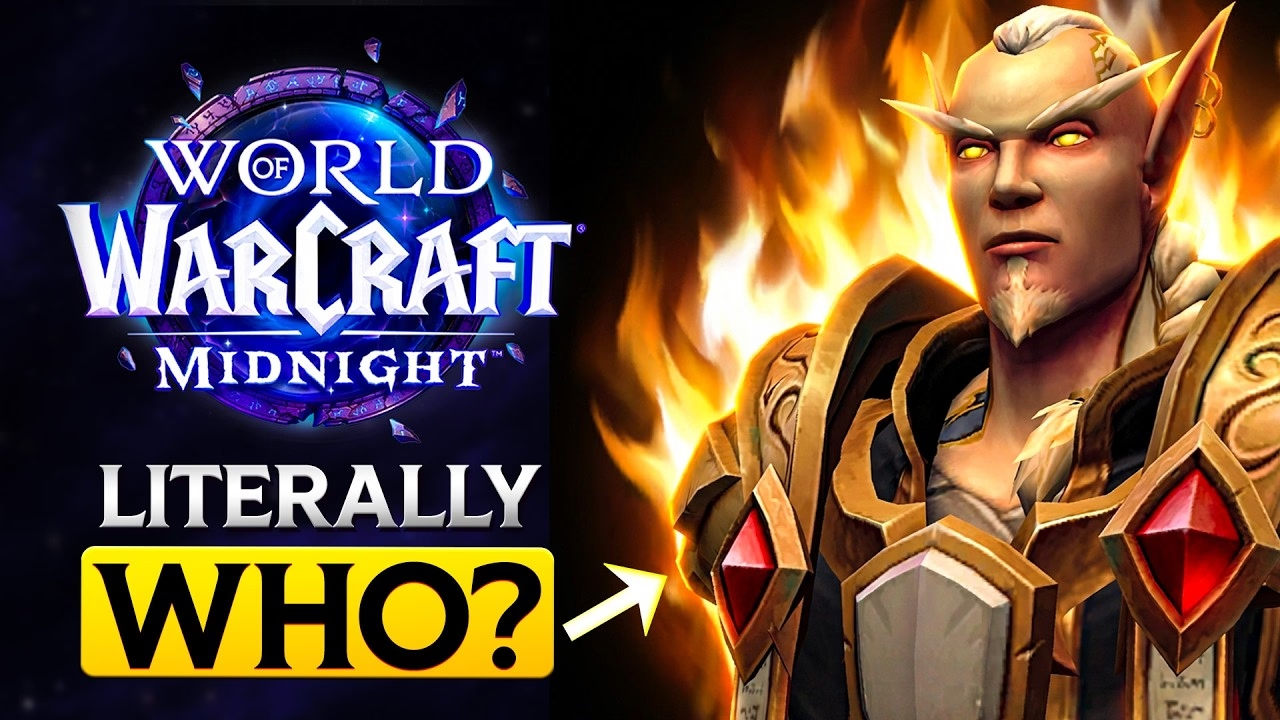
In the midst of Azeroth's unfolding chaos, Arator the Redeemer emerges as an unexpected focal point. Long known as a background figure in Burning Crusade content, his sudden prominence in WoW Midnight has led many to ask: who is he, and why does he matter? With a rich backstory shaped by two of Warcraft's most iconic characters, Arator represents the crossroads of light and void, yet his story is defined by his own choices rather than his parents' legacies.
Key Takeaways
- Arator is a half-elf son of Turalyon (a paladin devoted to the Light) and Alleria Windrunner (a void ranger), raised in Silvermoon after his mother vanished through the Dark Portal.
- He survived the Scourge invasion of Quel'Thalas, found refuge in Stormwind, then joined the Knights of the Silver Hand under Lord Grayson, eventually earning the title "the Redeemer".
- His defining trait is moral pragmatism: he builds alliances across factional lines and redeems outcasts rather than following rigid Silver Hand doctrine.
- During the Legion's fourth invasion he led Silver Hand forces against the dreadlord Balnazzar — his first act of independent command that proved his leadership beyond his parentage.
- The twin-snake tattoos on his skin symbolise his inheritance: light from Turalyon, void from Alleria.
- In the Midnight expansion, Arator drives the effort to reunite the elven tribes and the Windrunner family against the void threat advancing on Silvermoon.
Here is the full story of how Arator became one of Midnight's central figures.
Early Life and Formative Years
Arator's journey begins 32 years before the events of Midnight, when his mother entrusted him to his aunt before venturing through the Dark Portal, and was presumed dead. Raised in Silvermoon under the care of Lor'themar Theron, he trained with the Farstriders and developed wilderness and survival skills far removed from the paladin traditions of his father.
Key milestones of Arator's youth:
- Survival of the Scourge's Onslaught: During the Scourge invasion of Quel'Thalas, Arator found refuge in Stormwind after being rescued by his aunt.
- Exile and Identity Crisis: As Quel'Thalas transformed into the Blood Elves' new homeland, Arator felt displacement in both human and elven societies, belonging fully to neither.
- Enrollment in the Silver Hand: Seeking belonging, he joined the Knights of the Silver Hand, finding himself under the mentorship of the stern Lord Grayson.
These early experiences, shaped by loss, displacement, and self-determination, define the independent perspective Arator brings to the Midnight storyline.
A Different Path: Arator's Moral Compass
Arator's approach within the Silver Hand was distinctive from the start. Where others followed rigid doctrine, he sought redemption in unconventional places. His friendship with Jubbeka Shadowbreaker, a Forsaken with a morally complex history, exemplified his willingness to look past factional lines.
- His ideological clashes with Grayson produced tension but also earned results — Grayson's uncompromising standards pushed Arator to sharpen his judgement.
- His success within the order earned him the title "the Redeemer", signalling the Silver Hand's recognition that his methods, while unorthodox, produced outcomes.
That title would later carry a second meaning as Arator's role in Midnight expanded to reuniting fractured elven factions.
Charting His Own Course
At 18, Arator set out to establish his own legacy. The reopening of the Dark Portal presented an opportunity to search for his parents. Though the search was unsuccessful, the journey transformed him:
- Encounter with Danath Trollbane: In Outland, Arator allied himself with veteran commanders, gaining credibility and tactical experience beyond the Silver Hand's training halls.
- Personal growth: The experiences on Draenor confirmed his readiness for larger challenges and established his independence as a leader in his own right.
After impressing Danath with both combat and social skills, Arator traveled to Shattrath, where he met Khadgar and formed a connection with the naaru A'dal. Despite these interactions, he remained absent from the Wrath of the Lich King, Cataclysm, and Pandaria conflicts — his own arc unfolding on a different timeline from the major campaigns that defined WoW's middle chapters.
Arator's Role in the Legion's Return
The Legion's fourth invasion marked Arator's transition from promising knight to confirmed leader. He took decisive action by leading Silver Hand forces onto a Legion world to counter the dreadlord Balnazzar — a choice that required him to step out of his parents' shadow and commit to independent command. The act demonstrated mastery over the Light and earned the respect that the Silver Hand's senior ranks had withheld.
A timeline of Arator's major milestones:
| Age | Event | Significance |
|---|---|---|
| 0 | Left with aunt in Silvermoon | Begins life disconnected from his parents |
| 12 | Survived the Scourge invasion | Builds resilience; relocates to Stormwind |
| 18 | Joined the Silver Hand; later ventures to Outland | Earns title "the Redeemer"; gains independent command experience |
| ~32 | Leads Silver Hand against Balnazzar during Legion invasion | First act of fully independent military leadership |
Each milestone reflects a character shaped less by his famous parents and more by a series of deliberate choices in increasingly high-stakes situations.
The Symbolism of Arator's Tattoos
Arator's twin-snake tattoos — one of shadow, one of light — are among the most visually striking elements of his redesign in Midnight. They represent the duality he carries: the absolute devotion to the Light that defines Turalyon on one side, and the void-threaded power that reshaped Alleria on the other. Neither force is benign in its extremity, and the snakes facing each other capture that tension without resolving it.
The symbolism extends to his role in the Midnight storyline. Arator is not a character who has resolved the light-void conflict in himself — he is a character navigating it in real time, which is precisely what makes him compelling as a protagonist for an expansion focused on the void's advance on Quel'Thalas.
📌 Lore note: Players returning to Arator after the Burning Crusade will notice the significant visual and narrative update. His Outland appearance as a standard Blood Elf paladin NPC understated his parentage; the Midnight redesign foregrounds it. The tattoos are new to Midnight and carry deliberate story weight.
The Internal Battles of His Parents
Arator's parents are themselves narrative focal points in Midnight. Alleria, struggling against the void's influence, embodies the tension between light and darkness that defines the expansion's central conflict. Turalyon's encounters with the zealous forces of Order emphasise his devotion to the Light — a devotion that risks tipping into absolutism. Their internal battles mirror the cosmic conflicts surrounding Silvermoon, giving Arator's bridge-building role a personal as well as political dimension.
Proving Himself as a Leader
Despite his accomplishments, the Silver Hand repeatedly denied Arator advancement from knight to lord, citing the absence of a suitably heroic deed by their standards. That challenge is the driving premise of the novel Blood Ties, in which Arator ventures alongside his parents against a Burning Legion conspiracy led by Aridar, Sarathar. The mission requires him to build alliances between the Illidari and Black Harvest warlocks — factions the Silver Hand would never sanction — demonstrating the leadership qualities his order failed to recognise through its normal channels.
Arator's attributes as a leader on this mission:
- Builds alliances despite personal and historical grievances between factions.
- Prioritises the greater good over strictly defined lines of allegiance.
- Guides diverse groups toward shared goals without requiring ideological conformity.
- Balances his own growing legacy with the need for broader cooperation.
The Blood Ties storyline confirms that Arator's leadership model — pragmatic, inclusive, coalition-focused — is not a flaw in his Silver Hand training. It is his most important capability.
✏️ Reading tip: Players who want the full context for Arator's Midnight role should read Blood Ties before reaching the storyline quests in Silvermoon. His relationships with his parents and his approach to the Illidari read very differently once you know the novel's resolution.
Reuniting the Elven Tribes
In Midnight, Arator emerges as the key bridge-builder in the effort to unify Azeroth's elven factions. With void forces advancing on Silvermoon, his approach of valuing unity over ideological purity becomes structurally essential, not just admirable. His efforts to convene Blood Elves, High Elves, Void Elves, and Nightborne around a common defence carry the weight of his full backstory.
Arator's Vision and the Windrunner Reunion
Surrounded by visions of the void attacking Silvermoon, Arator calls for the reunion of the Windrunner sisters to defend their homeland. The effort does not proceed cleanly:
- Journey to Caresh: Arator meets his mother Alleria, who is focused on pursuing Zealot and cannot immediately commit.
- Finding Sylvanas: Arator locates Sylvanas, who acknowledges that Azeroth is not yet ready for her direct return but entrusts him with taking the lead.
- Support from Magister Umbrich: His search brings him to Umbrich, who agrees to defend the Sunwell in Alleria's absence.
- Allies mobilised: Verissa, leading the Silver Covenant, rallies High Elves and Void Elves to Silvermoon.
Although Arator's immediate goal — fully reuniting the Windrunner sisters — falls short in the opening chapters of Midnight, his effort draws together a coalition large enough to mount a defence. Verissa's Silver Covenant forces and Umbrich's Sunwell commitment demonstrate exactly the kind of outcome Arator's leadership style produces: partial alignment that holds the line while the larger story continues to develop.
Players looking to experience this storyline can find WowCarry's WoW Midnight services useful for reaching the story chapters at full pace.
⚠️ Story spoiler warning: This article covers Arator's backstory and his role through the early Midnight chapters. Players who want to experience the Windrunner reunion quests unspoiled should bookmark this page and return after completing the Silvermoon storyline.
Frequently Asked Questions
Who is Arator in World of Warcraft?
Arator the Redeemer is a half-elf paladin and son of Turalyon and Alleria Windrunner. He first appeared as a minor NPC in The Burning Crusade content at Honor Hold in Hellfire Peninsula. WoW Midnight dramatically expands his role, making him one of the central figures in the effort to defend Silvermoon and reunite the elven factions against the void.
Who are Arator's parents?
His father is Turalyon, a veteran paladin and former Champion of the Light, and his mother is Alleria Windrunner, a void-infused ranger and one of the three Windrunner sisters. Both were presumed dead after the Second War and spent decades in Outland before returning to Azeroth in Battle for Azeroth.
Why is Arator called "the Redeemer"?
He earned the title within the Knights of the Silver Hand for his practice of seeking redemption in unconventional places — including forging alliances with Forsaken and morally complex figures that his order would normally exclude. The title reflects his moral approach as much as any specific deed.
Where did Arator grow up?
He was raised in Silvermoon by the care of Lor'themar Theron and trained with the Farstriders. After the Scourge invasion of Quel'Thalas he relocated to Stormwind before eventually joining the Silver Hand.
What role does Arator play in the Midnight expansion?
Arator is the driving force behind the coalition defence of Silvermoon against the void. He attempts to reunite the Windrunner sisters, mobilises the Silver Covenant, and secures the Sunwell's defence. His arc explores the light-void duality of his heritage as it maps onto Midnight's central conflict.
What do Arator's snake tattoos represent?
The twin-snake tattoos — one of shadow and one of light — represent the duality of his parents: the absolute Light devotion of Turalyon and the void power of Alleria. They appear for the first time in Midnight's visual redesign of the character and are intentional story symbolism, not cosmetic decoration.
Is Arator a new character in WoW Midnight?
No — he first appeared in The Burning Crusade (2007) as an NPC at Honor Hold. He also features in the novel Blood Ties. Midnight significantly expands his role from background NPC to major storyline protagonist, supported by a full visual redesign and an expanded backstory drawn from existing lore.