Blizzard Ends Shadowlands Nightmare Once and for All
Blizzard recontextualizes the Shadowlands arc in Patch 11.2.7. Arator visits Sylvanas in the Maw while Vereesa Windrunner sees visions of Silvermoon under threat.
By:
John Langan
The Midnight prologue quests in Patch 11.2.7 lay the groundwork for these revelations. Here is what the story actually contains.
Blizzard is taking a bold step toward redefining the Shadowlands lore, with Patch 11.2.7 updates suggesting a shift in narrative focus. Rather than discarding past content, Blizzard is reinterpreting and recontextualizing the storyline, making the harshest aspects of the Shadowlands expansion arc a thing of the past. Gone are the rigid notions of the First Ones and the nebulous threats previously hinted at. The changes signal a deeper evolution in the game's lore, one that reaches back to the very foundations of Azeroth.

For readers who played through the original Shadowlands campaign, these revelations reframe familiar zones and characters in a new light.
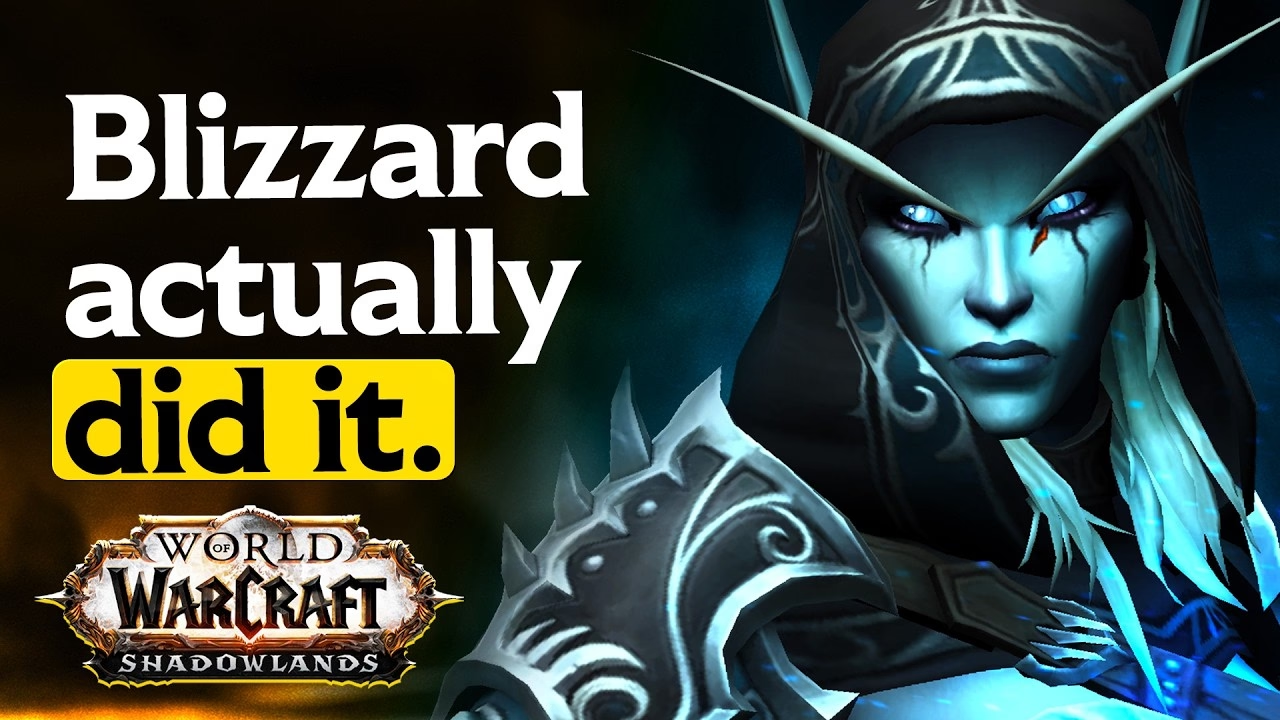
Patch 11.2.7 brings a pivotal development as Arator the Redeemer visits his aunt Sylvanas in the Maw. Since the demise of the Jailer, Sylvanas has been on a redemptive quest, saving souls trapped in the Maw. During this journey, a startling observation emerges: the Shadowlands feel too orderly and systematic, echoing a framework familiar to those who have studied Azeroth's deepest structures. For players attuned to Warcraft's lore, this hints at possible Titan involvement. Did the Titans create the Shadowlands? Blizzard's narrative adjustments in the Midnight prologue suggest just that.
Vereesa Windrunner, another central figure in this unfolding saga, experiences foreboding visions. Drawn to Kazalgar by a mysterious song emanating from Azeroth, she witnesses grim scenarios involving the Light and the Void. Her visions include:
These visions frame both immediate and looming threats from the Light and Void, showcasing Blizzard's intent to portray these cosmic forces as dual aspects of a complex and dangerous cosmology.
The Windrunner sisters stand at the heart of these unfolding conflicts. As Vereesa experiences her visions, Arator gives chase to Yria, determined to reunite the family. Capturing Yria's attention proves challenging, as she remains singularly focused on revenge against Zalot, who has begun an insidious campaign against her kin.
Despite a tumultuous past, Sylvanas persists in her mission within the Maw, reflecting on the familiar structures and unsettling order of the Shadowlands. Her conversations with Arator reveal a deepening suspicion: the Shadowlands, long thought to be an enigmatic realm of death, may in fact be a Titan construct.
| Aspect | Traditional Understanding | New Revelation |
|---|---|---|
| First Ones | Mysterious primordial creators | Recontextualized within Titan history |
| Shadowlands Order | Natural cosmic order of death | Possible deliberate Titan construct |
Sylvanas' insights add layers to the existing story, suggesting long-hidden truths about the Shadowlands' creation and purpose, aligning with the return of Titan-centric storytelling and adding drama to an evolving saga.
Speculation surrounding Titan involvement in the Shadowlands has real roots in evidence scattered across Azeroth and beyond. Sylvanas' revelation suggests the Titans' role may be far more significant than previously imagined. Key points supporting the theory:
These structural parallels form the backbone of the theory that the Titans' reach extends even into the realm of death.
Despite plausible evidence of Titan involvement, opposing narratives present counterarguments to the theory:
Both threads deserve serious attention. The evidence for Titan involvement is compelling, but so is the case against drawing certain conclusions.
The theory converges on the notion of a grand Titan-led narrative culminating in "The Last Titan," a forthcoming expansion deeply intertwined with Titan lore. This expansion promises to redefine what players know about the Titans' intentions and their role in shaping both Azeroth and the Shadowlands.
Blizzard's ongoing narrative development hints at unraveling these connections, balancing the preservation of established lore with bold new storytelling. Discussions and discoveries surrounding the Titans could reshape fundamental truths about Azeroth's past, present, and future, leaving significant room for interpretation and debate as the story continues.
A crucial aspect of Blizzard's current lore evolution is the shift in how Titan influence is perceived. Previously, the awe-inspiring elements of world creation were attributed to the mysterious First Ones. Recent developments suggest those wonders are now being reframed as Titan achievements, drawing a parallel to mythological narratives where a younger generation of gods supplants their predecessors.
This framing establishes Azeroth as a primordial font of creation, where Titan involvement reshapes the understanding of the Shadowlands. Sylvanas' observations and the Jailer's actions may ultimately become components of a broader Titan-driven lore arc, transforming the Shadowlands expansion's story weight into a prologue for what comes next.
With these narrative threads now established, a few questions come up regularly in the community.
Patch 11.2.7's Midnight prologue quests recontextualize the Shadowlands arc rather than erasing it. The rigid First Ones framework and the Jailer's threat are replaced by a deeper narrative suggesting Titan involvement; the "nightmare" of the expansion is resolved by fitting its events into a larger cosmic story.
Arator the Redeemer is the son of Alleria Windrunner and Turalyon. Since Alleria and Sylvanas are sisters, Sylvanas is Arator's aunt. The Midnight prologue quests send Arator into the Maw, where Sylvanas shares her suspicions about the Shadowlands' true origins.
Vereesa experiences foreboding visions of Light and Void forces threatening Silvermoon. The visions, which include magical conflict among Blood Elf mages and the city itself under assault, set up the core threat of the Midnight expansion, where the fate of Silvermoon and the Blood Elves takes center stage.
That question is the heart of the theory explored in Patch 11.2.7. Evidence includes Titan-style materials in Shadowlands zones, the machine of origination in Zereth Mortis, and constellar servants like Reicholon with duties that mirror Algolon's role on Azeroth. Blizzard has not confirmed the theory outright; conflicting evidence from Odyn's edicts and the First Ones' legacy keeps it an open question.
Zereth Mortis is the realm where the First Ones created the Shadowlands' afterlife infrastructure. The forge of afterlife located there closely resembles Titan forge constructions on Azeroth, and the presence of Titan-style automatons and an unknown Titan core suggests the Titans either built or heavily influenced the zone.
"The Last Titan" is an announced future WoW expansion expected to center on Titan lore, specifically the revelation of the Titans' full role in creating and maintaining Azeroth's cosmic order. The Shadowlands recontextualization in Patch 11.2.7 appears to be groundwork for this expansion's central revelations.
Yes. Blizzard's approach is to reinterpret the Shadowlands' events within a new framework, not to retcon them out of existence. The Jailer's actions, Sylvanas' arc, and the covenant storylines remain canon; they are simply being woven into a larger Titan-centered narrative going forward.