Key Takeaways
- The WoW Remix: Mists of Pandaria gem system replaced traditional gear stats — most items had minimal base attributes, and all real power came from socketed gems.
- Four gem categories covered distinct gear slots: Meta (helmet, 12 active abilities), Cogwheel (boots, 17 movement skills), Tinker (shoulders/hands/waist, 36 passives), and Prismatic (chest/legs/neck/rings/trinkets, 7 stat types).
- Cogwheel gems granted cross-class movement abilities — a Mage could slot Disengage, and a Warrior could use Blink from a Mage's kit.
- Gems dropped primarily from Caches of Infinite Treasure earned through quests, with additional sources from enemies like the Scarlet Evangelist and Bog Crocolisk.
- Each character was fully isolated, with no Auction House, no item transfers, and no profession access, making Caches the main reliable gem source.
- Higher item level gear held more sockets, meaning progression directly unlocked more gem customisation.
Here is what each gem category contributed to the Remix power system during the event.
How Gems Replaced Traditional Gear Stats
In standard World of Warcraft, gear drives character power through base stats like Intellect, Stamina, and secondary ratings. WoW Remix: Mists of Pandaria (May 16 to August 19, 2024) replaced that system entirely. Most items in the Remix event came with minimal intrinsic attributes. Power was instead concentrated in four categories of gems that players socketed into their gear, a design that let any player reach comparable strength through content engagement rather than luck-based stat rolls.
Each WoW Remix character was isolated from the shared economy. The Auction House was unavailable, professions were locked out, and items could not be transferred between characters. That meant every gem a player slotted was earned through their own gameplay, primarily from Caches of Infinite Treasure awarded for completing quests and dungeon content.
✏️ Tip: Players who discovered the Cogwheel gem system early often swapped cross-class movement abilities mid-progression. Picking up Roll on non-Monk classes was a common early advantage for navigating Pandaria's dungeons faster.
Meta Gems: Active Helmet Abilities
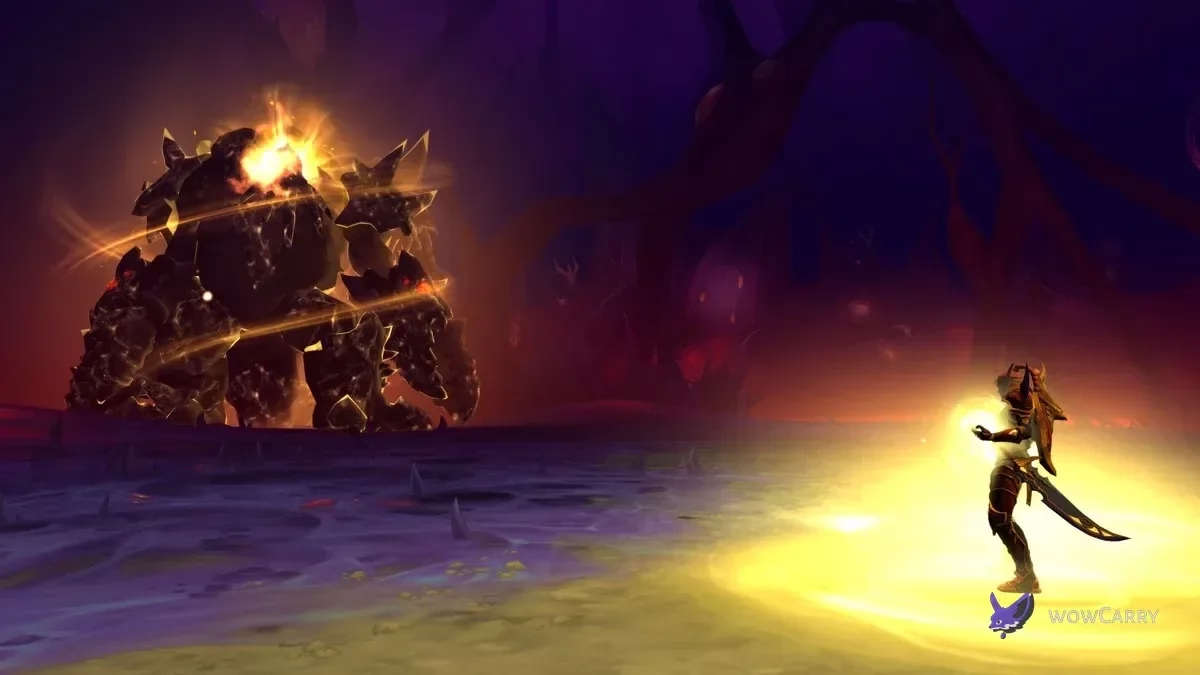
Meta gems slotted exclusively into helmet pieces and granted characters one of twelve active abilities on use. Unlike standard WoW meta gems, which provided passive conditional bonuses, Remix Meta gems were full spell abilities — major cooldowns or sustained effects that materially changed how a character played in encounters.
The twelve Meta gem options were:
- Chi-ji, the Red Crane
- Bulwark of the Black Ox
- Precipice of Madness
- Ward of Salvation
- Lifestorm
- Oblivion Sphere
- Tireless Spirit
- Funeral Pyre
- Thundering Orb
- Soul Tether
- Locus of Power
- Morphing Elements
Healing specs and support roles generally gravitated toward Chi-ji and Ward of Salvation, while DPS characters favoured Funeral Pyre and Oblivion Sphere for throughput. The right Meta gem depended heavily on primary content: solo questing rewarded different picks than group dungeon runs.
Cogwheel Gems: Cross-Class Movement Skills for Boots
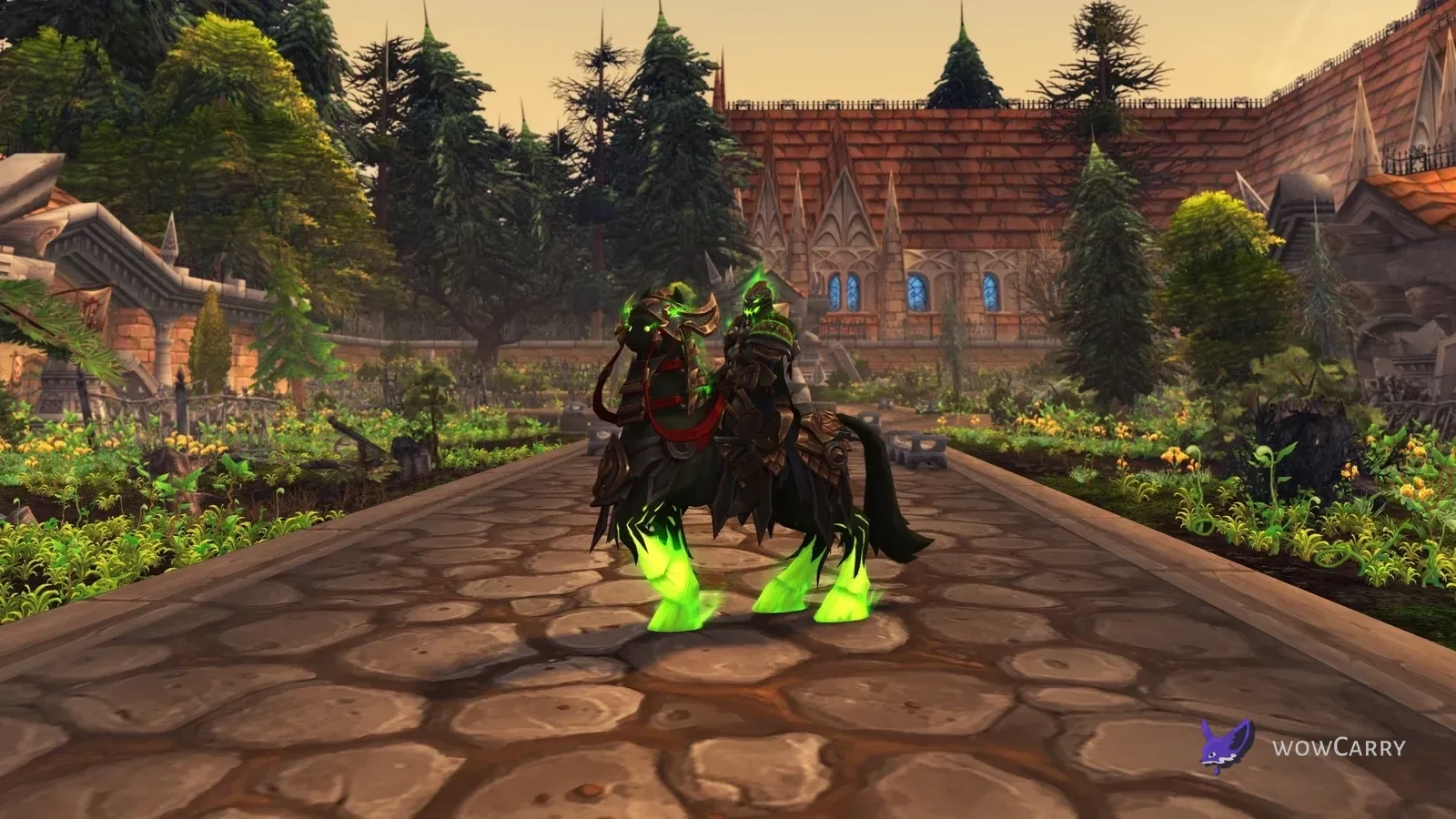
Cogwheel gems were the most immediately noticeable part of the Remix system. Slotted into boot pieces, they granted the wearer a movement ability normally associated with a specific class, entirely cross-class. A Mage could equip Disengage, a Hunter could use Blink, and a Paladin could slot Roll.
The seventeen Cogwheel gem options were:
- Blink
- Dark Pact
- Death's Advance
- Disengage
- Door of Shadows
- Heroic Leap
- Leap of Faith
- Pursuit of Justice
- Roll
- Soulshape
- Spirit Walk
- Spiritwalker's Grace
- Sprint
- Stampeding Roar
- Trailblazer
- Vanish
- Wild Charge
In group settings, Cogwheel gems created unusual compositions. A tank with Leap of Faith could reposition allies in dungeon pulls, and a healer with Stampeding Roar contributed raid-wide movement cooldowns normally exclusive to Druids.
📌 Common mistake: Many players defaulted to their class's native movement ability when a cross-class pick would have performed better. Sprint (Rogue) had one of the shortest cooldowns in the set and was broadly useful on melee specs that lacked native speed tools.
Tinker Gems: Passive Bonuses for Shoulder, Hand, and Waist Slots
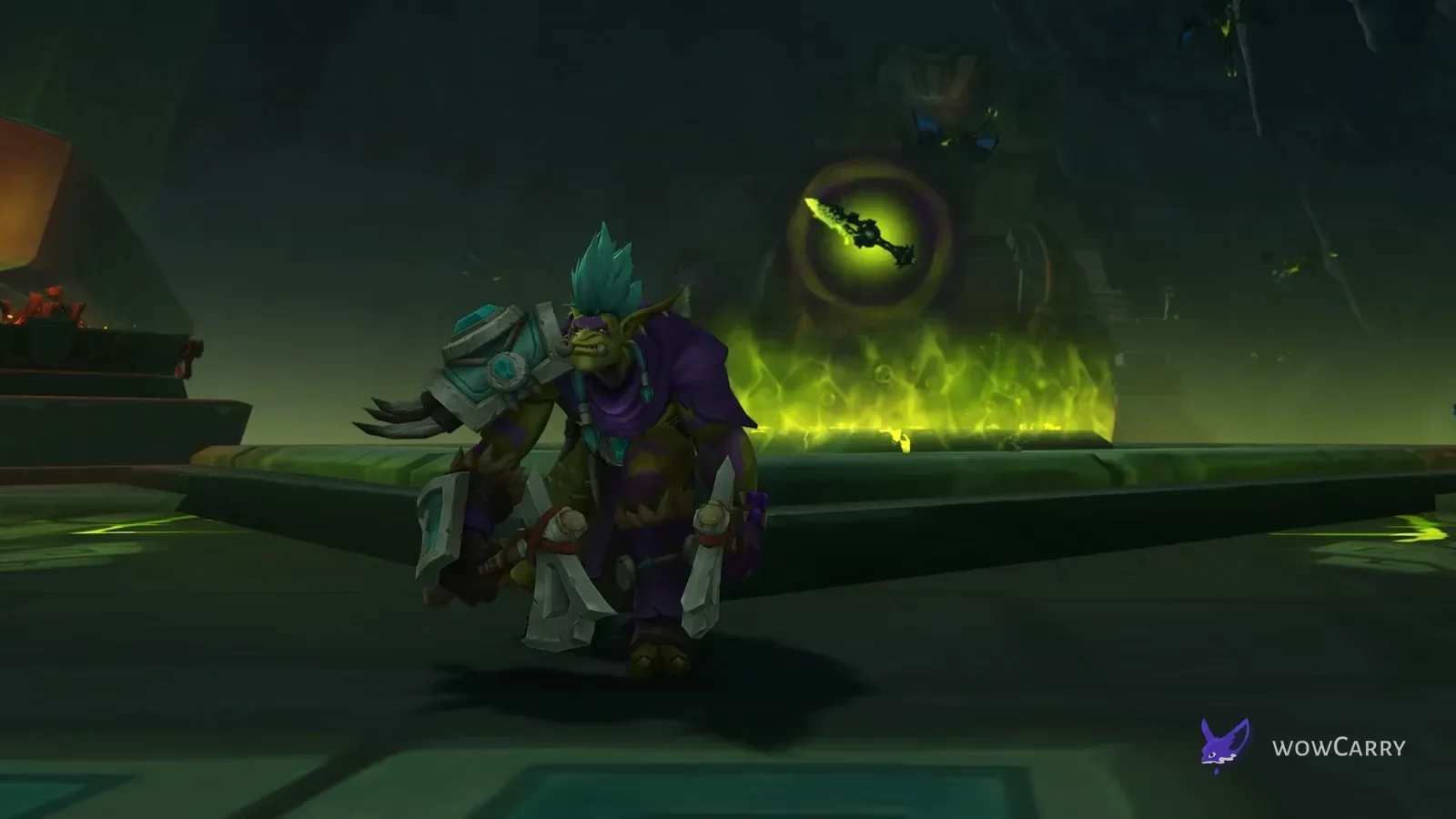
Tinker gems occupied shoulder, hand, and waist gear, each providing a passive ability. With thirty-six options spanning healing, damage, crowd control, and survivability, Tinker gems were where the deepest build customisation happened. Several were adapted from class cooldowns, while others were entirely new effects created for the Remix format.
The thirty-six Tinker gems included:
- Ankh of Reincarnation
- Arcanist's Edge
- Bloodthirsty Coral
- Brilliance
- Brittle
- Cold Front
- Deliverance
- Enkindle
- Explosive Barrage
- Fervor
- Freedom
- Frost Armor
- Grounding
- Hailstorm
- Holy Martyr
- Incendiary Terror
- Lightning Rod
- Mark of Arrogance
- Memory of Vengeance
- Meteor Storm
- Opportunist
- Quick Strike
- Righteous Frenzy
- Savior
- Searing Light
- Slay
- Static Charge
- Storm Overload
- Sunstrider's Flourish
- Tinkmaster's Shield
- Vampiric Aura
- Victory Fire
- Vindication
- Warmth
- Wildfire
- Windweaver
With three potential Tinker slots at full gear progression, players built distinct passive kits. A damage-focused solo player might stack Meteor Storm, Wildfire, and Quick Strike, while a group healer would layer Savior, Deliverance, and Warmth.
Prismatic Gems: Stat Bonuses for Core Gear Slots
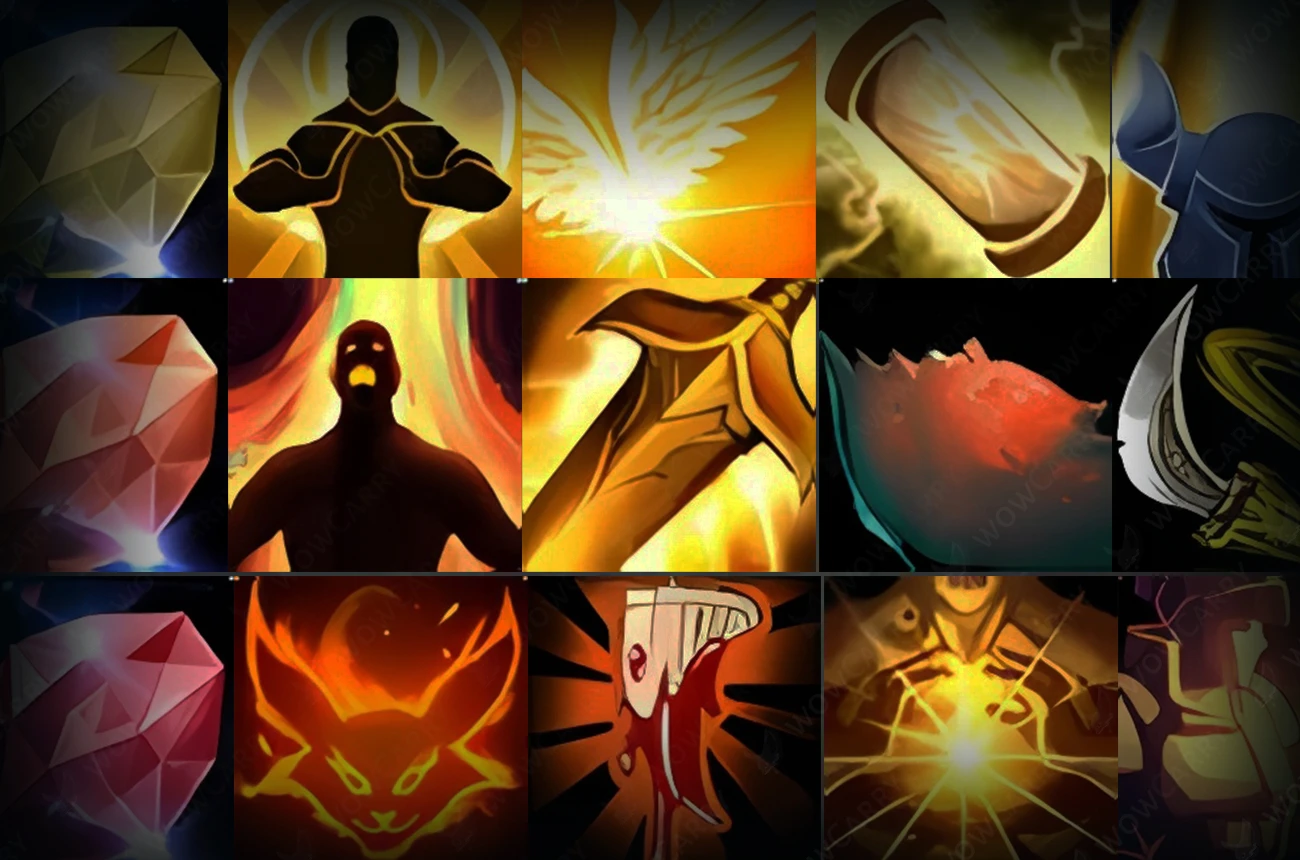
Prismatic gems handled the conventional stat-rating layer of the Remix system. They occupied chest, leg, neck, ring, and trinket pieces, each providing a specific secondary stat in four quality tiers, with higher quality giving larger bonuses. Seven gem types covered the full range of stats players needed:
- Deadly Sapphire: Critical Strike
- Masterful Amethyst: Mastery
- Quick Topaz: Haste
- Versatile Diamond: Versatility
- Hungering Ruby: Leech
- Stalwart Pearl: Armor
- Sustaining Emerald: Health Regeneration
- Swift Opal: Speed
With four quality levels per gem, upgrading Prismatic gems from common to rare quality was one of the most efficient stat-per-Bronze investments available throughout the event.
Where to Find Gems
The primary gem source throughout MoP Remix was Caches of Infinite Treasure, reward boxes for completing quests across Pandaria. Quest density was high enough that a focused session of daily questing in any zone produced a steady stream of Caches. Dungeon and raid completions also awarded Caches at a higher rate per run than standard questing.
Secondary gem sources included drops from specific enemy types. The Scarlet Evangelist in Scarlet Halls and the Bog Crocolisk in Pandaria's wetland zones were two documented drop sources. These were not efficient farming targets compared to Caches, but players grinding those encounters passively accumulated additional gem drops over time.
⚠️ Note: Higher item level gear contained more sockets, so upgrading gear as a priority unlocked additional gem slots and additional power slots, rather than relying on a single upgraded gem to carry performance.
Frequently Asked Questions
What were the four gem types in WoW Remix: Mists of Pandaria?
The four gem categories were Meta (helmet, 12 active abilities), Cogwheel (boots, 17 cross-class movement skills), Tinker (shoulders/hands/waist, 36 passive abilities), and Prismatic (chest/legs/neck/rings/trinkets, 7 stat types in four quality tiers).
Could any class use any Cogwheel gem?
Yes. Cogwheel gems were cross-class by design. A Mage could equip Disengage, a Warrior could use Blink, a Paladin could take Roll. The ability functioned as written regardless of the player's class, which was one of the most distinctive features of the MoP Remix system.
How did players earn gems in MoP Remix?
The main source was Caches of Infinite Treasure, which dropped from quests, dungeon runs, and raid completions. Specific enemies like the Scarlet Evangelist and Bog Crocolisk also had documented gem drop tables, though questing and dungeon content were consistently higher-yield sources.
What gear slots held the most gems?
Higher item level gear had more sockets across all slot categories. Prismatic gems fit the most slots (chest, legs, neck, rings, trinkets — up to five slots), making Prismatic gem quality upgrades one of the highest-impact investments for stat optimisation.
Were the MoP Remix gem abilities kept after the event?
No. The gem abilities were tied to the Remix event's isolated character system. When MoP Remix ended on August 19, 2024, Time Runner characters converted to standard level-70 characters, and the Remix gear and gem system was deactivated. Only cosmetic rewards such as transmogs, mounts, and titles persisted permanently.
How were Tinker gems different from Prismatic gems?
Tinker gems occupied shoulder, hand, and waist slots and provided passive combat abilities — unique effects like Meteor Storm, Wildfire, and Ankh of Reincarnation. Prismatic gems occupied chest, leg, neck, ring, and trinket slots and provided secondary stat bonuses (Critical Strike, Haste, Mastery, and so on). Tinkers were the build-identity layer; Prismatics were the stat-optimisation layer.
Is WoW Remix: Mists of Pandaria still running?
No. The event ended on August 19, 2024. A similar format later launched as explore WoW Remix: Legion, which applied the same Bronze-currency and gem-socket model to Legion expansion content.
Last reviewed 2026-06-10 against WoW Remix: Mists of Pandaria (May 16 – August 19, 2024) — Maintained by WowCarry's WoW team.