Key Takeaways
- Alexander Brazier (Xelnath) led the Mists of Pandaria Warlock redesign when the class had become the least-played in WoW. The secretive Black Harvest player council he assembled helped set the direction.
- Dark Apotheosis allowed Demonology Warlocks to remain permanently in Metamorphosis, trading damage for significantly stronger defensive capability, a focused solution born from scrapping a full tank spec prototype.
- The development team built and then discarded a complete Demonology tank specialization with taunts and survivability cooldowns before landing on Dark Apotheosis.
- Wild Imps were directly inspired by Pikmin: Brazier pushed for a minion-swarm identity that outlasted his time at Blizzard and shaped how Demonology plays to this day.
- The fast, mobile Metamorphosis-driven melee fighter prototyped during MoP strikingly resembles the Demon Hunter class that Blizzard shipped years later in Legion.
- Brazier's post-mortems feature candid accounts from Greg Street, Jeff Kaplan, Chris Kaleiki, and Ion Hazzikostas, offering rare firsthand perspective on live game design decisions.
With those highlights in view, here is how the full story played out across three stages of development.
Part 1: Redefining the Class
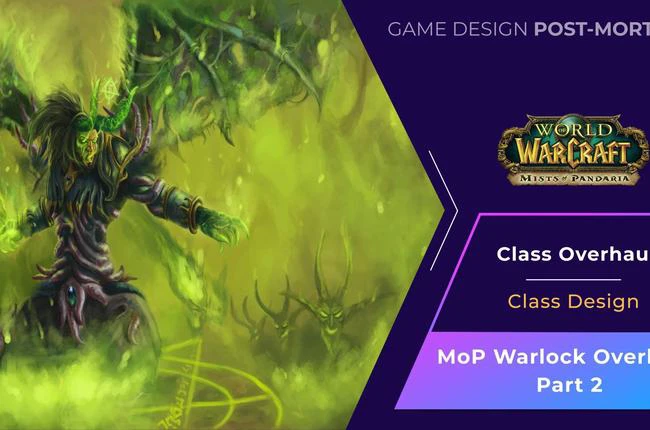
Mists of Pandaria overhauled virtually every aspect of what had become the least-played class in the game, introducing distinct new gameplay elements for all three Warlock specializations. While the first chapter of this story (which covers the origin of the Black Harvest player council) was released several years before, the tale was later completed with a look at the chaotic journey to redesign Demonology: from Pikmin-inspired Wild Imps to players swapping perspectives with their demon pets, and a full rebuild of melee combat to create a fast and mobile Metamorphosis-driven fighter bearing a striking resemblance to today's Demon Hunter.
Part 2: A Novel Resource System
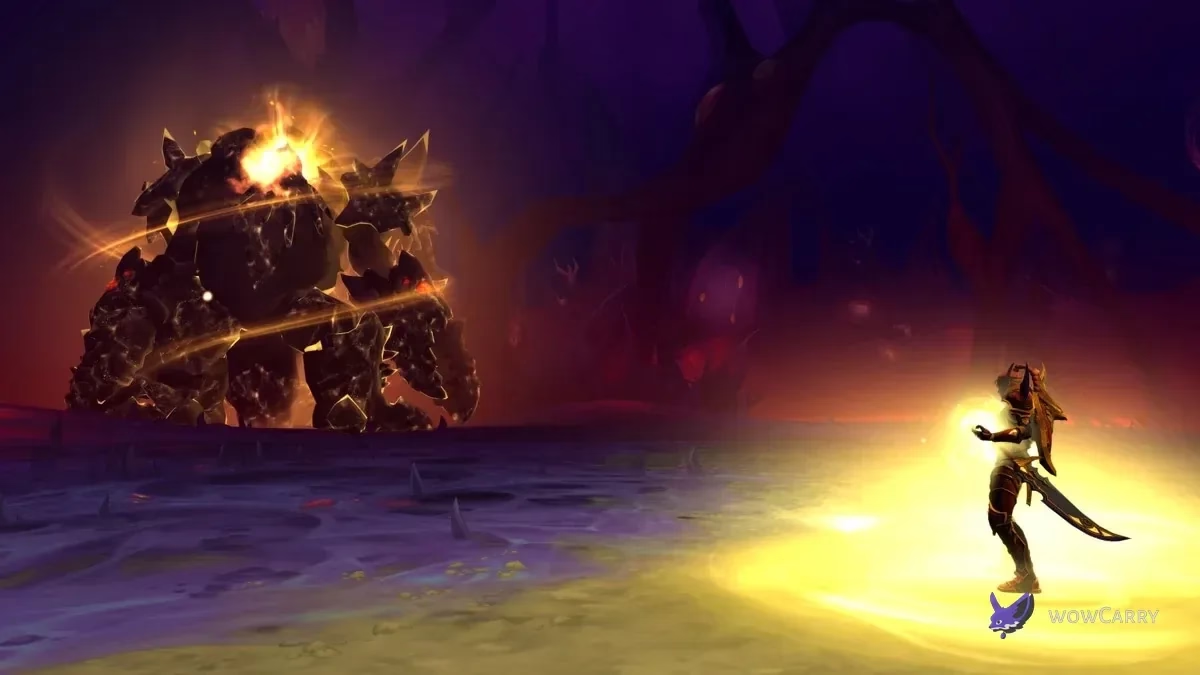
These concepts, including a serious attempt to turn Demonology into a full-fledged tank specialization complete with taunts and survivability cooldowns, were ultimately scrapped. That iterative process led directly to the development of Dark Apotheosis. Dark Apotheosis allowed Demonology Warlocks to remain permanently in Metamorphosis, trading damage for dramatically stronger defensive capability: a unique experience for players who wanted the tough, tanky demonic class fantasy.
Though Brazier's passion project ultimately led to parting ways with Blizzard, his post-mortems remain a rare look at the creative process behind class design. Personal anecdotes add texture throughout, with industry veterans Greg Street, Jeff Kaplan, Chris Kaleiki, and Ion Hazzikostas all appearing in the account.
Part 3: Going Wild
Throughout the Warlock redesign process, Brazier documented the more ambitious ideas the team explored. The Wild Imps concept, directly inspired by Pikmin, aimed to give Demonology a minion-swarm identity. The development team even prototyped a full Demonology tank spec (taunts included) before setting it aside. None of these reached the live game in their original form, but each experiment shaped what eventually did ship.
The Birth of Dark Apotheosis
Dark Apotheosis stood as the defining feature of the MoP Demonology specialization. Remaining permanently in Metamorphosis meant Warlocks could play an enduring demonic form that traded raw damage for strong defensive utility: something no other class offered at the time. The ability came directly from the tank-spec prototype work, as the defensive scaffolding survived even after the full tank ambition was discarded.
Lessons Learned
Brazier's post-mortems are valuable not just for what shipped, but for what didn't. The series captures frank design reflection that rarely surfaces publicly: how a passion project shapes a team, how player feedback redirects development mid-cycle, and how even scrapped work leaves its mark on the final product. The Shade of Aran series from Game Design Skills covers similar territory alongside the Warlock entries.
Players leveling a Warlock today can skip the Warlock leveling grind to reach endgame without replaying old content from scratch.
Frequently Asked Questions
Who was Xelnath in World of Warcraft?
Xelnath is the screen name of Alexander Brazier, a Blizzard game designer who led the Warlock class redesign during Mists of Pandaria. After leaving Blizzard he worked on League of Legends at Riot Games and contributed to Ori & the Will of the Wisps at Moon Studios, among other projects across more than twenty years in the industry.
What was Dark Apotheosis in Mists of Pandaria?
Dark Apotheosis was a Demonology Warlock ability that let players remain permanently in Metamorphosis form, trading damage output for dramatically stronger defensive capability. It emerged from a scrapped prototype for a full Demonology tank spec, and the defensive scaffolding from that prototype survived even after the tank ambition was abandoned.
What was the Black Harvest in WoW?
The Black Harvest was a secretive player council assembled at the start of Mists of Pandaria to involve high-level Warlock players directly in the class redesign. Their feedback helped shape the Burning Embers resource system and the direction that defined all three Warlock specs in MoP.
Did Blizzard try making Warlock a tank in MoP?
Yes. During the Mists of Pandaria design process the team prototyped a full Demonology tank spec with taunts and survivability cooldowns. The concept was shelved, but the defensive work from that prototype fed directly into Dark Apotheosis, the permanent Metamorphosis mode that shipped with MoP.
Why did the Wild Imps design resemble Pikmin?
Brazier directly cited Pikmin as the inspiration for Wild Imps: small demons flooding the field around the Warlock, creating a swarm identity for Demonology. The concept survived in spirit through several subsequent redesigns and still shapes how Demonology's minion management works today.
What games did Alexander Brazier work on after WoW?
After leaving Blizzard following the Mists of Pandaria cycle, Brazier worked on League of Legends at Riot Games and contributed to Ori & the Will of the Wisps at Moon Studios, among other AAA projects spanning more than two decades in the games industry.
Last reviewed 2026-06-08 against Patch 5.0.4 Mists of Pandaria — Maintained by WowCarry's WoW team.