Key Takeaways
- Confirm your group's party split before pulling — Group 1 handles the west/blue boss, Group 2 handles the east/red boss. Swapping assignments mid-fight is instantly fatal.
- Hot Impact is a double tank buster in every wave; communicate cooldown rotation with the other tank and use major mitigation on cast.
- Flame Floater tethers players to the arena wall — tethered players must spread clockwise to create safe zones for the untethered group.
- Water-debuff players stay west (blue boss mechanics) and fire-debuff players stay east. Crossing sides triggers fatal AoE overlap.
- In the Parallel Aerial phase, the fire tether passes through the Watery Grave add to deal damage; the water tether stays inner to avoid buffing the add's health. Swapping them prevents the DPS check from being met.
- Over the Falls is the hard enrage — both bosses must be defeated before it completes or the raid wipes.
Those six points cover the decisions that end most progression attempts. Each mechanic is detailed in the sections below.
Strategies for M10S Boss Fight
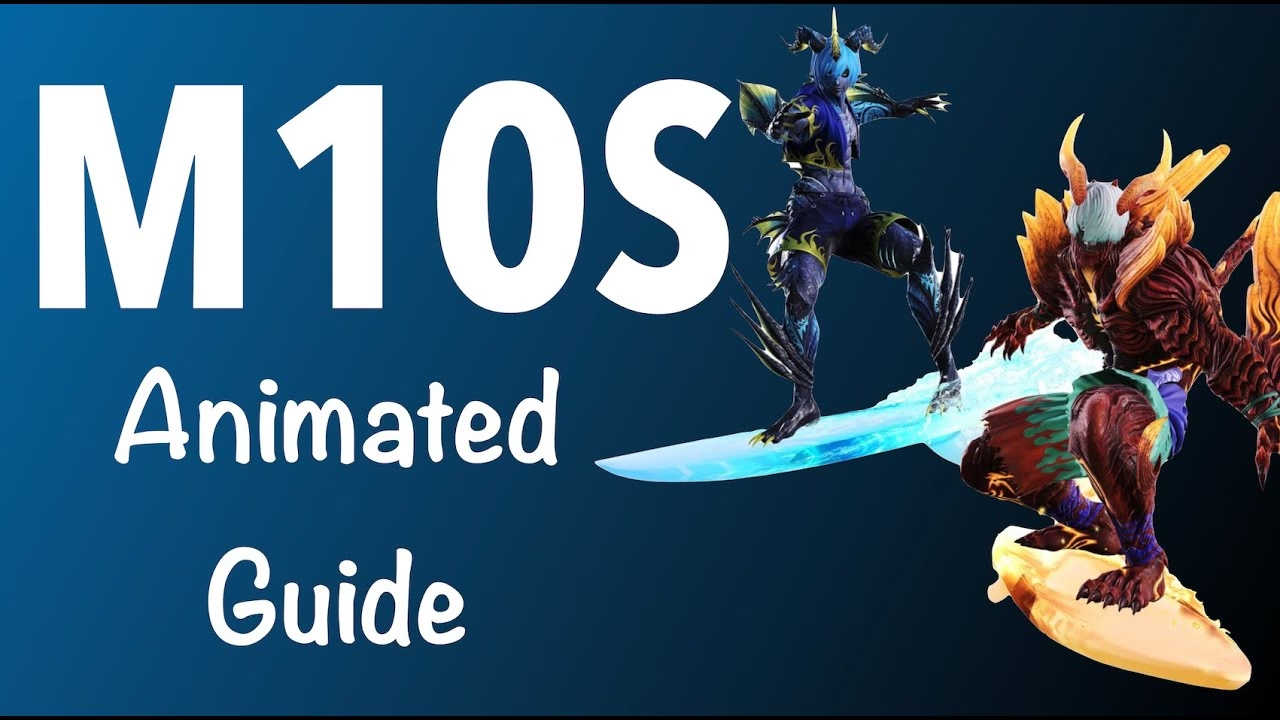
In the M10S boss fight from Final Fantasy XIV Dawntrail patch 7.1, you engage with a unique setup known as the Blick Streams. It requires the coordination of two light parties, subdivided to manage different tasks effectively. Here's how you can structure your approach:
Group Assignments
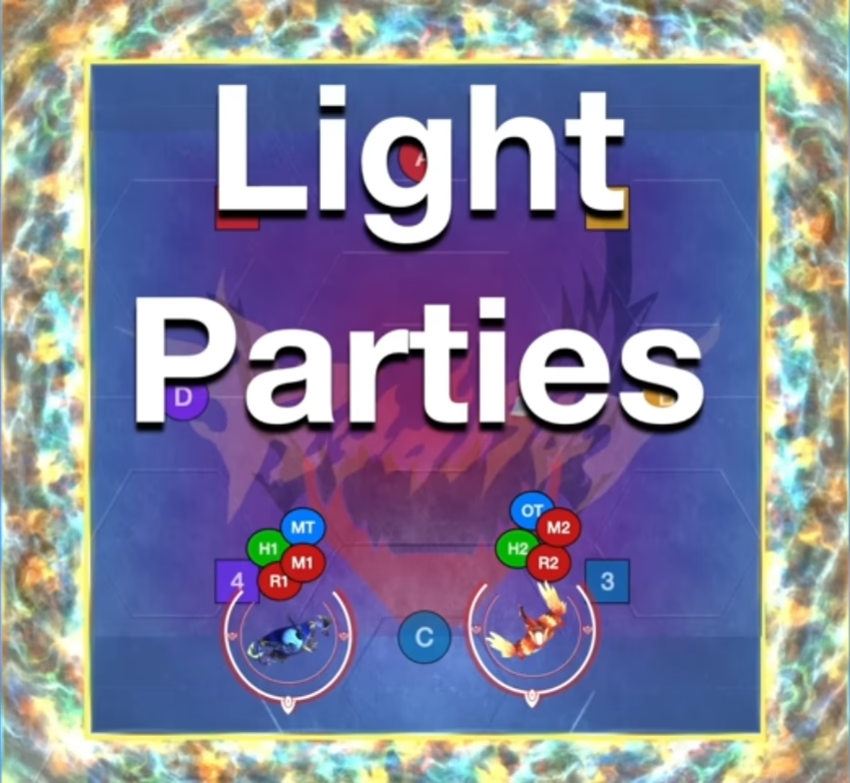
- Left Wall (Group One):
- Focus on the blue boss.
- Stick to designated positions for both wall-relative spreads and boss-relative clock positions.
- Right Wall (Group Two):
- Engage with the red boss.
- Maintain similar structured positioning as Group One.
With party assignments locked in, the fight opens with the core mechanics each group must execute.
Core Mechanics
- Fighting Red Hot:
- Initiate with "hot impact," a double tank buster requiring use of cooldowns.
- "Flame floater" tethers players to the wall. Spread tethered players clockwise around the arena to create safe zones.
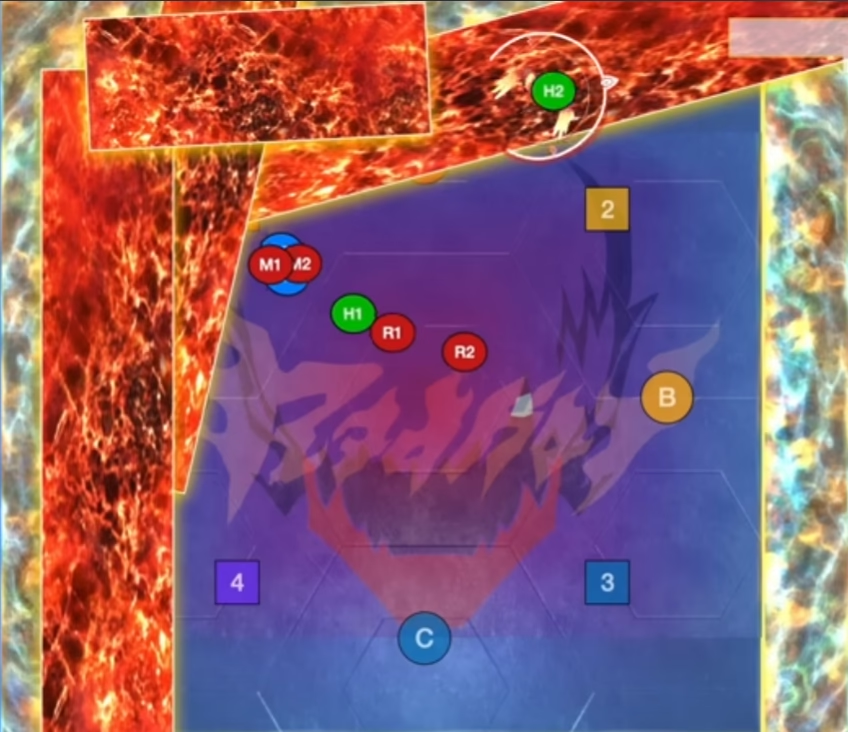
- Managing Fire Puddles:
- Interact with tethers methodically to avoid unsafe spaces.
- Clear fire puddles efficiently by dragging bosses out.
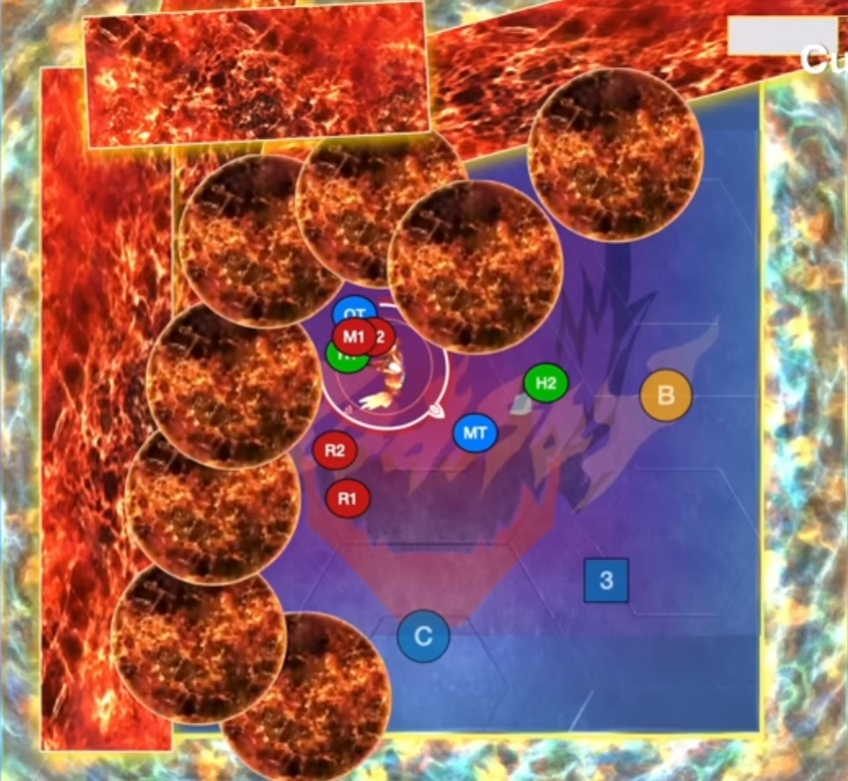
Those spread and puddle patterns establish the positioning framework each role maintains throughout the fight.
Key Positioning
- Tank and Melee Strategy:
- Stay close to the boss for optimal engagement during spreads and other mechanics.
- Healer and Support Strategy:
- Position slightly farther from the boss, often hugging the arena's edge for safety.
With base positioning set, the fight layers in more complex rotating mechanics.
Complex Mechanics and Rotation
The battle progresses with each phase introducing new mechanics:
- Aloop Inferno:
- Drop fire puddles individually and avoid the unsafe 330° cleave by stacking behind the boss.
- Pi Rotation:
- A multi-hit stack mechanic—move slowly back with each hit to avoid lasting fire damage.
The following table summarizes the mechanic assignments across the fight's main phases.
Table: Mechanic Assignments
| Phase | Boss | Key Attack | Strategy |
|---|---|---|---|
| Week 1 Planning | Red | Hot Impact | Double tank buster, requires cooldown use. |
| Deep Blue Phase | Blue | Six Swell | Wave spawned requiring specific spreads. |
| Deep Impact | Blue | Tank Buster | Take with cooldowns; avoid proximity. |
| Extreme Spectacular | Both | Ultimate Raid-wide | Move towards the North for safety. |
✏️ Technique: Memorize the surfboard indicator before each attack. Surfboard pointing down = spread AoEs; straight out = stack; angled = point-blank tank buster. Reading this on cast rather than at activation gives roughly two extra GCDs to reposition.
With the phase-by-phase breakdown in mind, the fight shifts into its simultaneous dual-boss sequence.
Balancing Act
Towards the battle's climax, both bosses must be fought simultaneously, involving:
- Coordinated efforts to prevent fire and water overlapping, which spawn damaging orbs.
- Understanding that boss health will automatically level out at intervals, allowing teams to focus on maximizing cleave damage.
Finally, pay attention to the specific markers (points one and three) the bosses jump towards—these involve three potential mechanics:
- Spread AoEs: If a surfboard is pointing down.
- Stacking Required: If surfboard points straight out.
- Tank Buster Mechanics: Pointed surfboards indicate point-blank AoEs, best handled with cooldowns.
This fight demands a well-synchronized team effort to balance damage, manage boss mechanics, and use space efficiently throughout the encounter.
Boss Mechanics and Strategies
In order to tackle this challenging encounter, understanding the boss mechanics is crucial. Each wave consists of four mechanics: a tank buster, stacking, spreading, and proximal debuffs. Here is how to manage these steps effectively:
- Tank Buster Mechanics: You will face at least one tank buster in each wave. Remember, these do not occur consecutively. Proper timing and cooldown usage are essential.
- Stack and Spread Mechanics: Each wave includes a stack and a spread AoE. Correctly identifying and positioning for these can prevent unnecessary damage.
- Proximity-Based Debuffs: After the initial wave, bosses jump to the center of the arena to redistribute health evenly. Each player group receives either a fire or water proximity baited debuff. These debuffs will dictate the player's mechanics, requiring effective communication and positioning.
Understanding those wave patterns is the foundation; the debuff system adds the positional layer on top.
Navigating Debuffs
Debuffs significantly affect the player's strategy and positioning in this encounter. Understanding how to position for water snaking and fire snaking is vital:
- Group Assignments:
- Water Blue Debuff: Blue debuff players manage their tasks on the west side of the arena.
- Fire Red Debuff: Fire debuff players handle the eastern side of the arena.
Each debuff type resolves differently depending on which boss is active on that side.
Water Debuff Strategy
With the blue debuff, players need to focus west, as the blue boss jumps to the west wall and performs an alley mechanic. Here's the sequence of events:
- Positioning for Baited Cleaves:
- Align tightly on the west wall to avoid hitting fire players on the opposite side.
- Bait initial cleaves, and if they reverse, dodge accordingly to avoid the impact.
- Subsequent Mechanics:
- Be wary of the blue boss casting "six swell," which demands attention to wall spawning wave.
- Navigate spread or stack mechanics based on the indicators visible on the spawning wave.
Fire debuff players follow a parallel but mirrored sequence on the east side.
Fire Debuff Strategy
Fire debuff players focus on the following:
- Formating for Baited Puddles/Spreads:
- Stay positioned along the east wall, creating a tight formation for inferno mechanics.
- After puddles/spreads go off, dodge towards the front of the fire boss but lean towards the blue boss if possible for safety.
- Tank and Healer Responsibilities:
- Tanks and healers must manage jumps and boss dashes. Each player must succeed without taking multiple hits to avoid fatal damage.
| Players' Positioning | East (Fire) | West (Water) |
|---|---|---|
| Initial Movement | Form tight spread | Position for baited cleaves |
| Main Mechanic | Inferno puddles | Wall-based wave mechanic |
| Safe Zones | Post-drops | Mid-front of the boss |
📌 Common mistake: The most frequent wipe in the debuff phase is fire-debuff players drifting to the west side of the arena. Keep strict east/west discipline even if the blue boss mechanic looks inviting — cross-side AoEs are non-survivable.
With both debuff sides resolved, the bosses reposition for the final transition.
Conclusion of Debuff Phase
Once both sets of debuff mechanics are managed, the bosses are repositioned to the center. Here are the final considerations:
- Divers' Raidwide: Be prepared for major raidwide damage as Diver's Dare is cast, requiring immediate stacking or spreading depending on your debuff and wave mechanics.
Thorough understanding and execution of these intricate mechanics lead to success in this demanding encounter. Each player's awareness and adaptability contribute to maintaining team coordination and effectively handling these challenges.
Managing Deep Aerial and Watery Grave
After addressing the debuffs, the bosses will adjust their health levels and commence new phases. The blue boss initiates the "Deep Aerial" phase by spawning a two-person tower in the arena's center. This setup changes the arena to a circular format. It's advisable to assign healers to this task due to their ability to heal and resurrect fallen teammates if necessary. However, relying on melee DPS is also a viable approach, excluding those classes that rely on mobility skills, which are disabled in the tower.
Once positioned, two players enter the tower and are enveloped in a water orb, turning the bosses untargetable and shifting the focus to the "Watery Grave" add. The add traps the players but simultaneously limits damage intake from specific attacks. The bosses then jump to those intercardinal points, setting the stage for the "Parallel Aerial" strategy.
Parallel Aerial Tether Strategy
- Positioning: Begin by positioning players between the two initial boss locations. Anticipate starting from their southern positions if they appear at the southern intercardinals.
- Tethers: Assign the tethers wisely:
- Fire Tether: Moves opposite to the bosses, aiming to pass through the watery grave to inflict heavy damage and trigger a raidwide attack.
- Water Tether: Remains on the inner side to avoid the watery grave, keeping the add's health from gaining a resilience buff.
- Execution: Once set, move all players to the B marker for safety against the bosses’ dashes, repeat this setup to maximize damage.
The sequence involves six dashes that can deplete the watery grave's health significantly. Aim to inflict a 15% damage per fire tether hit, needing only a minor contribution from the group to finish it off. Failure to defeat the watery grave before the final dash will result in a catastrophic explosion.
After the Parallel Aerial sequence, the Alioop phase introduces a new set of movement requirements.
Navigating the Alioop Mechanic
Once the watery grave phase concludes, prepare for Diver's Dare and subsequent mechanics. The red boss executes a firewall that bisects the arena, demanding spatial adjustments:
- Group Splitting: Assign Group 1 to the west and Group 2 to the east.
- Puddle Management: Spread out to manage and drop puddles efficiently. Tanks and ranged DPS head north, while healers and melee DPS position south.
As the mechanics unfold, players need to handle the Alioop sequences effectively:
- Alioop Mechanics: This involves new positioning challenges as the blue boss jumps and initiates attacks.
- Handling Double Dip vs. Reverse Alioop:
- Double Dip: Requires dodging AoEs and repositioning.
- Reverse Alioop: Involves stationary setups with minor repositioning.
Alioop positioning feeds directly into the debuff cleansing phase that follows.
The Insane Air and Debuff Cleansing
During this phase, Diver's Dare clears the arena again in preparation for proximity-baited debuffs:
- Elemental Explosions: It is crucial to pair correctly and trigger explosions at a safe distance. The sequence involves:
- Clearing blue debuffs using fire attacks.
- Clearing red debuffs with water attacks.
- Role-Specific Swaps:
- Tanks and Healers: Manage initial debuff cleanses, switching sides when necessary.
- DPS: As the fight progresses, DPS pairs follow suit, avoiding unplanned simultaneous explosions.
Success in executing these intricate mechanics reduces the looming threat of the overall encounter, advancing the encounter through each phase. Coordination, timing, and role-specific strategies remain pivotal in progressing through this challenging segment.
Finale Strategies: Overcoming Challenging Mechanics
The final phase of this encounter demands precise movement and timing. Initially, players need to avoid the alleyoop attack from the water boss by moving to the designated clock spots. After dodging clockwise, it's essential to quickly evade the impending explosion from the fire pedals, as they are activated by the water attack.
Here are the key steps to follow:
- Manage Clockwise Dodging:
- Start at the designated clock spots.
- Dodge clockwise to avoid incoming threats.
- React to Fire Pedal Explosions:
- Immediately move inward to avoid the explosion once the fire pedals are struck by water.
- Stack and Bait Responsibilities:
- The majority of the group should stack on the blue boss.
- The main tank needs to run out and bait the Deep Impact tank buster.
- Pop Knockback Immunity:
- To prevent being knocked into the wall, the tank responsible for baiting should use knockback immunity or strategically position themselves.
After handling these sequences, the party proceeds to rotate around the fire boss for a series of trio attacks. The main tank should rejoin the party after the tank buster, allowing for coordinated teamwork. As the fight progresses, a critical ability known as Diver’s Dare will cleanse the arena before the final Diver’s Dare is cast. The culmination of this battle comes with the bosses performing the “Over the Falls” cast. This is a pivotal moment where the team's combined damage output will determine success. Defeating the bosses before the completion of this ultimate ability is crucial as failing to do so will result in a team wipe.
⚠️ Warning: Over the Falls is a hard enrage. Any deaths during the Alioop or final debuff phases reduce the effective DPS available. Use all offensive cooldowns during the final push — there is no phase after this.
To summarize, staying focused and executing these mechanics accurately is vital for victory. The end comes swiftly, and preparation is key to emerge triumphantly from this formidable challenge.
The following questions cover the mechanics and decisions that come up most often in M10S progression.
FAQ
What is the two-party split in M10S?
M10S (AAC Heavyweight M2 Savage) pits your raid against two separate bosses simultaneously. Group 1 (light party 1) takes the left/west side and engages the blue boss; Group 2 (light party 2) takes the right/east side and engages the red boss. Assignments are locked in before the pull — there is no safe moment to swap once the fight begins.
How does the Hot Impact tank buster work in M10S?
Hot Impact is a double tank buster that targets both active tanks simultaneously. It appears in every wave of the fight. Both tanks must use major mitigation cooldowns on cast. Off-tanks should be ready to cover if the main tank's cooldown is on the previous wave's buster. Communicate the rotation in party chat before the pull.
How does Flame Floater work in M10S?
Flame Floater tethers specific players to the arena wall. Those tethered players must spread clockwise around the perimeter to separate the tether AoEs and create safe zones for the untethered group. If tethered players stack or move counterclockwise, the AoEs overlap and hit the remaining party.
How do water and fire debuffs differ in M10S?
After the bosses redistribute health at the arena center, each player receives either a water (blue) or fire (red) proximity debuff. Water-debuff players resolve their mechanic on the west side with the blue boss mechanics (wall cleaves, six swell wave). Fire-debuff players resolve on the east side (inferno puddles, spread formation). The two sides must not interfere — an errant explosion in the wrong area triggers a wipe.
How does Parallel Aerial tether assignment work?
During the Parallel Aerial phase, two tethers appear and must be assigned to specific players. The fire tether is assigned to a player who runs opposite the bosses so the tether passes through the Watery Grave add, inflicting heavy damage on it. The water tether is kept on the inner side to avoid the Watery Grave, which would otherwise gain a resilience buff. Six boss dashes follow; the fire tether needs to deal approximately 15% damage per hit to drop the add before the final dash.
What is the Watery Grave mechanic?
After two players enter the Deep Aerial tower in the arena center, they become enveloped in a water orb and are trapped by the Watery Grave add. The Watery Grave limits damage intake from some attacks but must be defeated before the six-dash sequence ends. Failure to destroy the Watery Grave before the final dash triggers a catastrophic explosion that wipes the raid.
What is Over the Falls in M10S?
Over the Falls is the ultimate ability cast jointly by both bosses at the end of the fight. It functions as the hard enrage — if both bosses are not defeated before Over the Falls completes, the entire raid is wiped. The DPS check becomes tighter if players have died earlier in the fight, so prioritize survival through the Parallel Aerial and Alioop phases to maintain full party damage in the final stretch.