M9S Guide: Initial Strategy and Mechanics
In the fierce battle of M9S, employing strategic positioning and awareness is crucial for mastering its mechanics. This guide opens with essential groundwork and tactics to streamline your approach.
Key Takeaways
- M9S begins with dividing into two light parties and assigning clock positions - precision carries every phase.
- The ether buff stacks each time players accidentally contact mechanics; at 8 stacks the boss AoE size and potency increase sharply.
- Vamp Stomp requires melees to trigger debuffs in strict sequence while healers and ranged stay at a safe distance.
- Ether Letting drops layered pizza-slice AoEs from the arena edges; the static strat uses preset markers for synchronized rotation.
- The AD phase spawns saws, door nails, and fatal flails that DPS must clear in priority order to prevent AoE expansion and enrage.
- The Hell in a Cell tower phase splits responsibility between groups: Group 1 soaks first clockwise, Group 2 handles ultrasonic spread and amp.
- Finale Fatal is a hard enrage cast - save all burst cooldowns and Limit Break for the final push.
With those mechanics in mind, here is a phase-by-phase breakdown of what to expect from the first pull to the kill.
Role Assignments and Initial Setup
To tackle the encounter effectively, players must divide into light parties and establish clock spots with unconventional placements:
- Melees: East and West
- Healers: Southern corners
Players using static strategies should follow standard positions, slightly angled for optimal execution. As the battle progresses, the boss accumulates an ether buff, increasing attack potency and AoE size. Players should avoid unnecessary contact with mechanics to prevent premature stack buildup, as this intensifies the challenge once the buff reaches eight stacks.
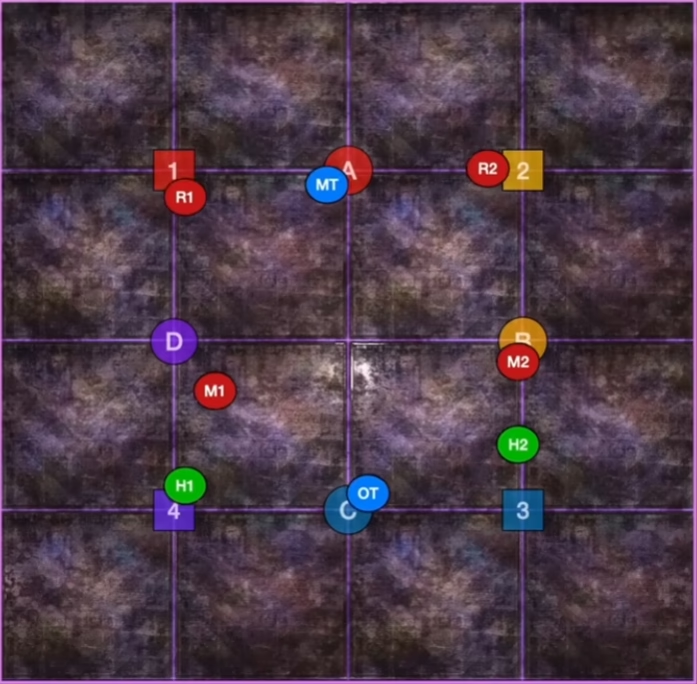
The opening setup locks in group positions for every subsequent mechanic, so spending time on clock assignments during practice pays dividends through the entire encounter.
Key Mechanics and Strategy
- Killer Voice: A raid-wide attack that demands attention at the fight's start.
- Hardcore: A tank buster hitting the top two aggro players, necessitating stance and mitigation from tanks.
- Tanks should maintain stances to absorb significant damage.
- Vamp Stomp: Players assume their clock positions as personal bats spawn, needing precise execution to cleanse debuffs without harming others. Players must:
- Avoid contact with fellow players during the cleansing.
- Melees explode their debuffs in sequence, while tanks wait a beat longer.
- Healers and ranged members stay at a distance to prevent accidental explosions.
- Brutal Rain: A multi-hit stack mechanic that intensifies with fight progression.
Each of these opening mechanics establishes the attentiveness and coordination rhythm the rest of the fight demands.
Additional Phases and Adjustments
In familiar patterns from normal mode, the boss transitions into ad phases, demanding adept dodging of telegraphed AoEs. Coordination is critical as players reposition and react to simultaneous AoE patterns and boss cleaves. Adapting to the phase shifts keeps maneuvering smooth through these complex sequences.
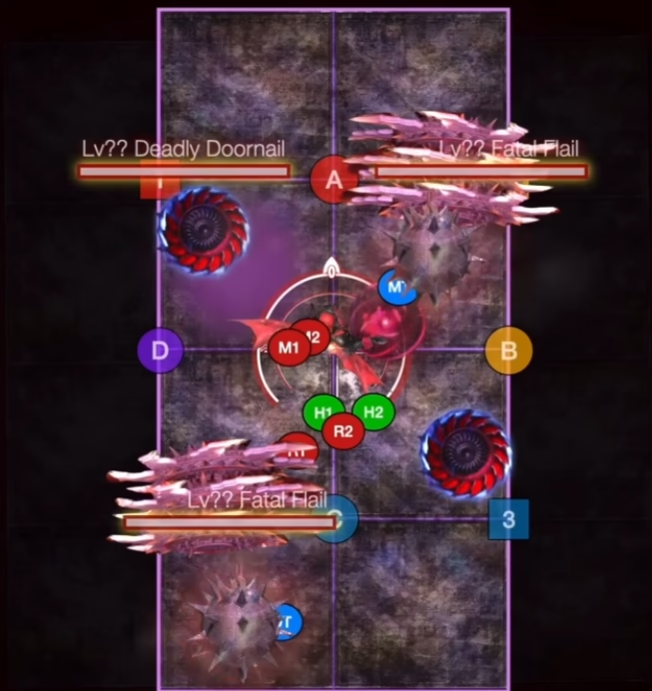
The mid-fight transitions are where most groups wipe during progression - communicate callouts early and prioritize safe positioning over pure damage uptime.
Ether Letting Mechanics
Ether letting involves a series of layered AoEs structured in pizza slice formations:
- Marker Assignments: Specific supports and DPS players take positions at arena edges to drop AoEs.
- Static Ether Letting Option: Players use predetermined starting positions, synchronizing movements to avoid AoE impact and maintaining clock alignment.
| Role | Initial Position | AoE Drop Strategy |
|---|---|---|
| Tanks & Melees | Close to boss | Rotate for DPS, then reset |
| Support & DPS | Edge markers | Rotate AoEs to clock spots |
By adhering to these strategies, players can effectively navigate AoEs, maintain safety, and optimize their damage output throughout the encounter. With focus and precision, the encounter transforms from chaotic to manageable, paving the way for a successful conquest of M9S.
Final Phases and Strategies
As the encounter progresses, players must navigate several complex mechanics. Avoiding AoE attacks becomes crucial, especially with the vamp stomp and half-moon attacks. When the boss has fewer than eight stacks, these attacks feature predictable patterns, which turn into powerful arena-cleaves when the stacks increase. Stay mobile and aware to mitigate damage from brutal rain and insatiable thirst, which delivers significant raid-wide damage.
The AD phase introduces slow-moving saws that must be avoided to prevent bleed damage. Players also face the challenge of tank buster towers and red AoEs, which spawn deadly door nails and fatal flails. Manage these carefully by:
- Assigning DPS to attack door nails immediately to prevent AoE expansion.
- Shifting melee attention to flails when AoEs grow too large.
- Destroying all threats quickly to mitigate enrage from barbed burst and prevent catastrophic damage from killer voice.
This pattern repeats three times, testing coordination and precision.
With the ad phase threats neutralized, the encounter shifts to a sequence of tower mechanics that demand precise group coordination.
Tower and Cage Dynamics
The hell in a cell phase spawns towers that players must soak while managing debuffs. Group dynamics are crucial:
- Towers Strategy:
- Group 1: Focuses on the first set of towers. Tanks start on the first tower, followed clockwise by healers. DPS positions are counterclockwise.
- Group 2: Handles the second set of towers, switching roles for ultrasonic spread and amp phases as needed.
After soaking, players are trapped and must defeat their personal charnel cell ads. Group 2 manages ultrasonic phases by spreading or stacking correctly to absorb the damage without overlapping.
Coordinated Movements During Undead Deathmatch
During the undead deathmatch phase, players must navigate two stacked towers shared by light parties and tethered to bats. Watch the following:
- Bats Movement:
- Stay close to avoid damaging chain tensions.
- Dodge alternating AoEs by moving to defined safe spots.
- React to telegraphed bat AoEs, avoiding point-blank effects or donut explosions using the boss's hitbox as a safe zone.
Repeat this sequence, adjusting movements as bats change directions.
Critical Phase and Final Push
The final phase introduces larger AoEs and intensified punk stomp and hardcore attacks. Tanks must lure these attacks towards markers, providing space for other roles. A sequence of Sanguin scratches and another insatiable thirst necessitates agile dodging and robust mitigation strategies.
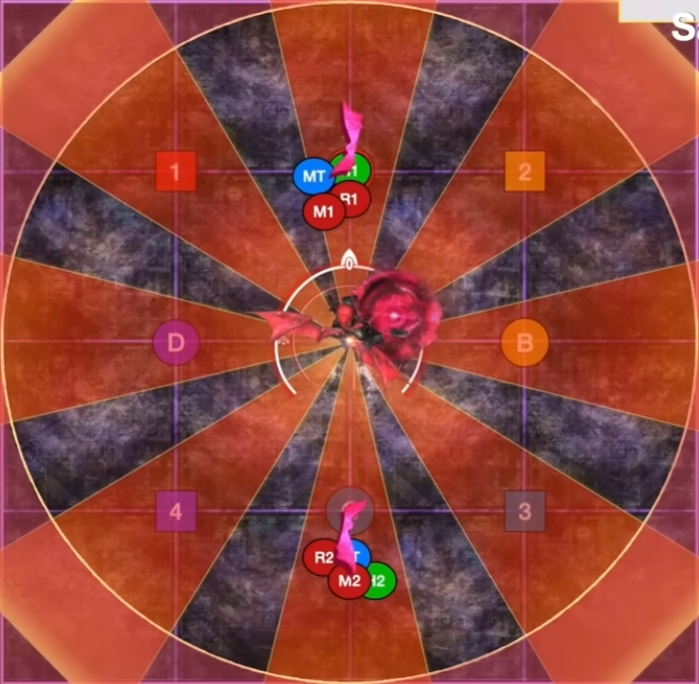
When the boss reaches its final ether stack threshold, the raid faces one last challenge: finale fatal. All resources must be directed to eliminate the boss before this cast concludes, or risk a complete wipe. For official patch notes and raid unlock information, the Final Fantasy XIV Lodestone is the authoritative publisher reference.
Frequently Asked Questions
How do you set up light parties in M9S?
Divide 8 players into two groups of 4 with one Tank, one Healer, and two DPS each. Melees take East and West clock spots; Healers take Southern corners. DPS use counterclockwise positions and Tanks clockwise from the Healer anchor.
What happens when the ether buff reaches 8 stacks?
At 8 stacks the boss's attack potency and AoE size increase significantly, making previously avoidable patterns into lethal arena-cleaves. Avoid triggering unnecessary mechanics throughout the fight to keep stacks controlled.
How does Vamp Stomp work in M9S?
All players move to clock positions as personal bats spawn. Melees detonate their debuffs in sequence; tanks hold a beat longer before triggering theirs. Healers and ranged stay at a distance to prevent accidental explosions from overlapping debuff zones.
What is Ether Letting and how does the static strat handle it?
Ether Letting drops layered pizza-slice AoEs from the arena edges. In the static strat, specific supports and DPS take predetermined marker positions and rotate in a synchronized pattern to avoid AoE impact while keeping clock alignment.
How do you handle the AD phase saws, door nails, and flails?
Assign DPS to burst door nails immediately so AoEs do not expand. Shift melee to flails when AoEs grow too large. Destroy all threats quickly before Barbed Burst completes its enrage cast and the follow-up Killer Voice fires. The pattern repeats three times.
How do you handle the Hell in a Cell tower phase?
Group 1 soaks the first tower set - Tanks clockwise first, then Healers, DPS counterclockwise. Group 2 soaks the second set, alternating to manage ultrasonic spread and amp phases. After soaking, each player must defeat their personal charnel cell ad before regrouping.
What is the strategy for M9S Finale Fatal?
Finale Fatal is a timed enrage cast. Pool all personal burst cooldowns, party buffs, and Limit Break for this window. Coordinate a full damage burst the moment the cast begins - if it resolves, the raid wipes.