WoW Boost 2026: How to Pick a Provider That Survives Midnight
WoW Midnight changed what a boost actually does for a player. Voidspire's mechanical density punishes pugs, Player Housing introduced a 500-decor grind nobody asked for, and the Mythic+ score curve in Season 1 is steeper than the previous expansion at the same content cadence. Picking a boost provider in 2026 is less about finding the cheapest listing and more about knowing which providers handle Midnight's specific content cleanly. This guide covers what to compare, what to avoid, and where WowCarry sits in the market.
Key Takeaways
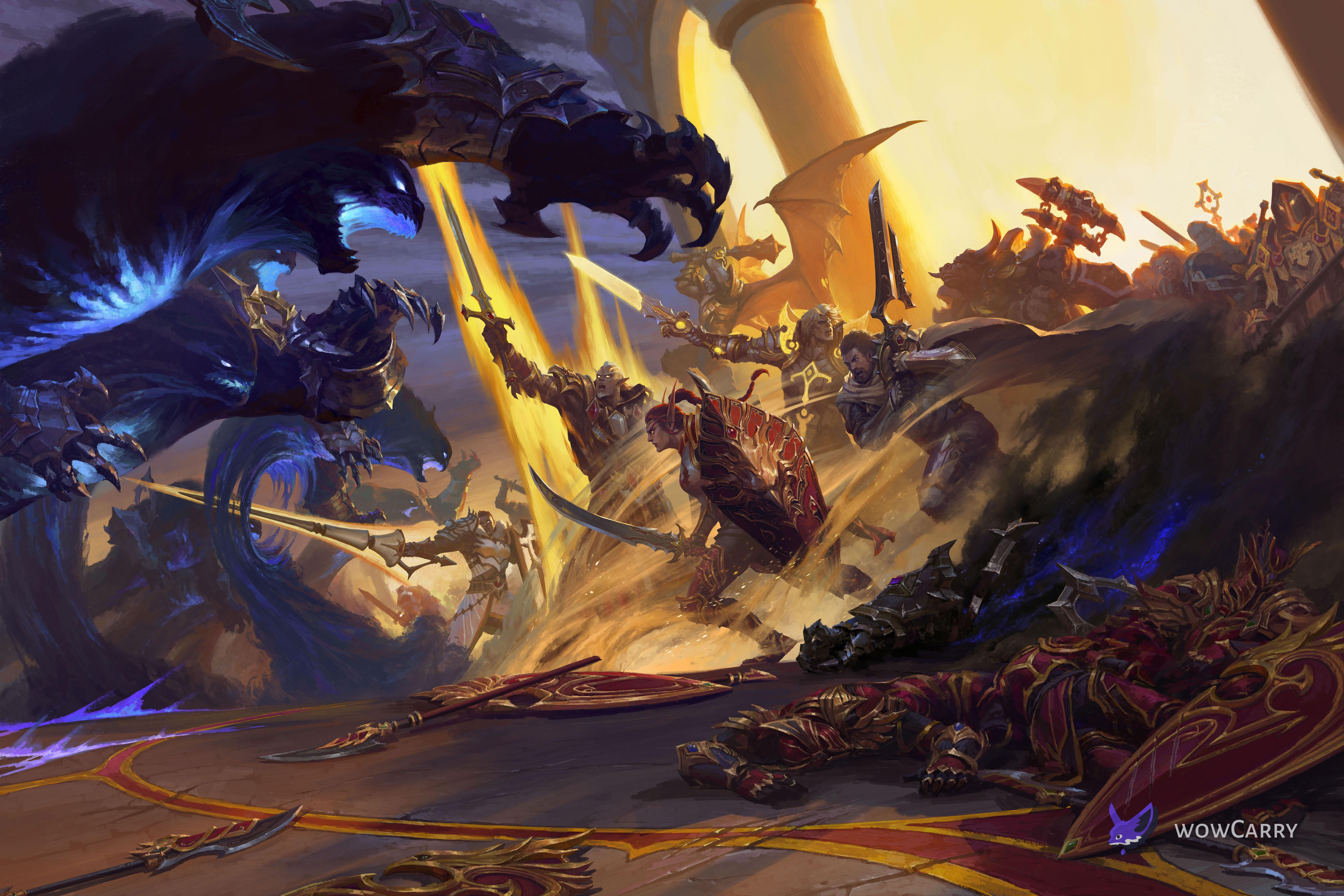
- Midnight Patch 12.0.5 (Lingering Shadows) launched April 21, 2026; Season 1 raids are the Voidspire (6 bosses, ending Crown of the Cosmos) and Dreamrift (Chimaerus).
- The Voidforge crystal system is the Midnight upgrade path; Mythic Voidspire pieces cap at 289 ilvl on the Myth track and can be pushed to 298 via Ascendant Voidforged upgrades.
- Player Housing requires The Furnished title (500 unique decor pieces); Razorwind Shores is the Horde neighborhood.
- Self-play remains the safest mode: the player stays online with the team rather than handing over credentials.
- Trustpilot reviews and named credentials (CE, R1, KSM) matter more than flashy site design; verify each provider's claims against public ladders.
- WowCarry has been operating for over a decade with manual gameplay only; account access for piloted modes is encrypted and credentialed boosters are vetted against in-game performance benchmarks.
The sections below walk through what changed in Midnight, the structural categories of provider, the credentials worth verifying, and the safety tradeoffs between self-play and piloted modes.
What Changed in Midnight That Makes Boost Quality Visible
Three Midnight-specific systems separate good providers from cheap ones:
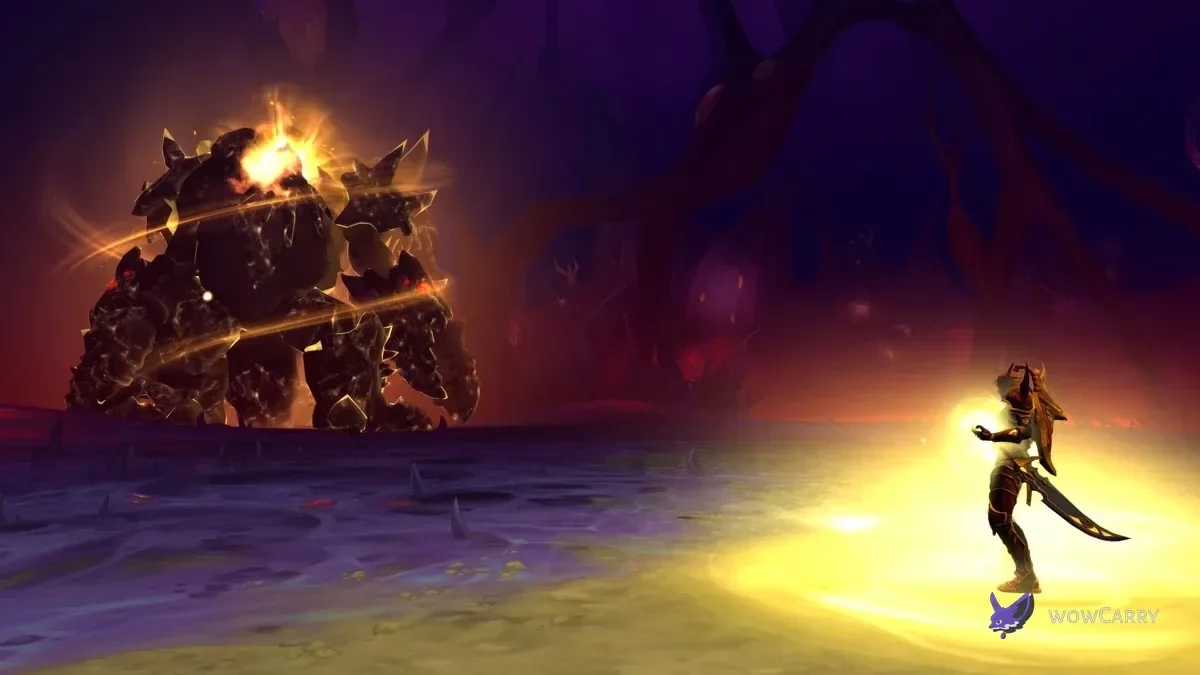
Voidspire mechanical density. Vorasius (boss 2) requires the third Blistercreep add to be tanked behind a crystal wall to break the room's Void Breath sweep. Pugs miss the positioning on first attempt and the encounter resets. A boost team that has cleared Vorasius on Mythic dozens of times handles the positioning automatically; a team that learned the fight from a guide last week does not.
Player Housing time cost. The Furnished title needs 500 unique decor pieces, many of which only drop from Razorwind Shores treasure hunts and seasonal events. Manually farming 500 decor pieces is 80-120 hours of solo play. Boost providers who automate this with bots get banned; providers who run it manually charge for the time honestly.
Mythic+ score curve. Title-tier scores (KSM, KSH, R1) require clean +12 to +15 timed runs across the 8-dungeon pool. A provider's M+ team is only as good as its lowest-tier player, a single underperformer on Pit of Saron's gauntlet costs the timer.
The Market: Marketplaces vs. Managed Services vs. Skim Sites
The 2026 boost market has three structural categories. Picking the right one matters more than picking the right brand:
- Marketplaces: Lowest prices because they aggregate anonymous individual sellers. Account recovery scams remain common: a seller reclaims your account after the warranty window expires, and the marketplace itself rarely arbitrates the dispute. Recommended only for low-value services where account compromise is acceptable.
- Large platforms: Real companies with established Trustpilot histories and tens of thousands of reviews in aggregate. The trade-off is impersonal service: support often goes through an AI-first triage layer, and order assignment can route to less-credentialed boosters during peak hours. Suitable for routine services where the team running it matters less than the price.
- Managed services (WowCarry tier): Direct team management with vetted boosters and dedicated support. Higher prices because the team is paid above marketplace rates so boosters never take shortcuts. Best for high-value services (Mythic Cutting Edge progression, R1 PvP, the full Voidforge gear track).
What to Verify Before Buying Any Boost
The credentials that actually mean something:
- Cutting Edge (CE) achievements on the current tier: a team that just earned Mythic Crown of the Cosmos CE the week before you talk to them. Verify against the team's character logs on Warcraft Logs.
- Title-score M+ runners (KSM, KSH, R1 M+) with current-season scores listed publicly. R1 M+ is the credential that matters for Mythic+ score boosts; Cutting Edge is the credential for raid carries.
- R1 Gladiator or Rank 1 arena rating for PvP teams: never CE for PvP boosts (wrong domain) or Gladiator for M+ boosts (also wrong domain). Each service type requires the credential that matches its content.
- Trustpilot or Sitejabber review count and recent date distribution: a five-star score with reviews only from 2019 is not the same as a 4.7 score with reviews from this month.
- Explicit refund policy: most legitimate providers offer a partial or full refund if the team can't complete the service within the promised window. Beware "all sales final" boilerplate on managed-service tier products.
- Payment processor diversity: providers who accept only crypto or PayPal-Friends-and-Family are signalling that they can't pass standard chargeback scrutiny.
✏️ Verification tip: Spend 10 minutes on the provider's named CE / R1 booster's Warcraft Logs profile or rated arena ladder page before paying. If the team can't surface a credential that holds up under public inspection, the boost won't either.
Self-Play vs. Piloted: The Safety Tradeoff
Every legitimate provider offers two delivery modes:
Self-play. The player stays online and runs the content alongside the team. The booster's account joins the group; the player's credentials never change hands. This is the safest mode by default, no account-access risk, no automation detection risk, and the player gets the content experience they paid for.
Piloted. The booster logs into the player's account and completes the run while the player is offline. Faster scheduling and lower price, but it requires trusting the provider with account access. Reputable providers encrypt credentials at rest, use vetted boosters with personal accountability, and rely on manual play rather than automation.
📌 Common mistake: Choosing piloted because the price is lower without considering the schedule cost. Many self-play orders complete in the same evening because the booster only needs the player available for the run window; the time saved by piloting is often illusory.
Whichever mode is chosen, the relevant guard is manual gameplay only. No bots, no scripts, no automation tools. Blizzard's anti-cheat catches automation; manual play with a real player at the keyboard does not trigger detection.
What a Managed-Service Tier Should Deliver
The expectations a managed-service tier (vs marketplace or large platform) should meet:
- Manual gameplay only. No bots, no scripts, no shortcuts. Every order is run by a vetted booster on their own account or yours (self-play vs. piloted as the player chooses).
- Vetted-booster-only roster. Order assignment is gated by the team's on-roster availability rather than by autoassign-to-anyone-online. That can stretch pickup during reset days or raid launch weeks; it never drops the credentialing bar.
- Two delivery modes. Self-play to experience the content alongside the team; piloted to delegate the grind while you sleep.
- Direct human support. Chat with a real team member rather than triaging through an AI layer.
For the Season 1 raid track, players can book a Voidspire 6/6 clear. For the M+ score track, order a Mythic+ keystone run. Alts catching up to the Season 1 ilvl curve can power-level a fresh Midnight alt, and the Player Housing time-sink is handled by services to skip the Midnight housing decor grind.
FAQ
What does Blizzard's account-sharing policy actually say?
Blizzard's End User License Agreement prohibits sharing account credentials with third parties. Self-play boosts comply by keeping the player on their own account throughout the run; the booster's account joins the group. Piloted modes (booster logs into the player's account) are technically a policy violation even when no automation is involved, which is why most reputable providers default to recommending self-play.
What is the difference between Voidspire and Dreamrift?
Voidspire is the six-boss flagship Midnight Season 1 raid, ending on Crown of the Cosmos (Alleria Windrunner). Dreamrift is a parallel one-boss raid against Chimaerus, the Undreamt God. Both are available in Normal, Heroic, and Mythic difficulty, with Mythic difficulties launching one week after Normal/Heroic. Loot from both feeds the Voidforge crystal upgrade system.
How long does a Voidspire raid clear typically last?
An organised Heroic Voidspire 6/6 run typically takes one 2-3 hour session. Dreamrift Heroic clears in 30-45 minutes once Chimaerus' two phases are drilled. Mythic Voidspire is multi-week progression by design — the Crown of the Cosmos kill is gated on the group's own progression rather than on a single run length.
What is the WoW Midnight max ilvl in Season 1?
The Mythic Voidspire Myth-track ceiling is 289 ilvl, with select pieces pushable to 298 through Ascendant Voidforged upgrades. Hero track caps at 276, Champion at 263. Mythic+ Great Vault offerings scale with the highest keystones cleared.
What is The Furnished title?
The Furnished is the Player Housing reward title for collecting 500 unique decor pieces. Decor sources include Razorwind Shores treasure hunts (Horde neighborhood), Mythic raid drops, world-event rewards, and Trading Post rotations. Manually farming 500 pieces is roughly 80-120 hours of solo play.
What is the Midnight Mythic+ Season 1 dungeon pool?
Eight dungeons including Magister's Terrace (TBC remix), Algeth'ar Academy (Dragonflight), Seat of the Triumvirate (Argus), Skyreach (Warlords of Draenor), Windrunner Spire (Midnight original), and Pit of Saron (the first Wrath dungeon ever brought into M+). Full pool list is on Wowhead's Midnight S1 overview.
The Midnight Boost Landscape
⚠️ Warning: Any provider promising "undetectable" automation, region-spoofing, or VPN-based safety is signalling that they expect to dodge Blizzard's anti-cheat. That posture eventually loses accounts. Manual gameplay with a vetted player is the only safety claim that holds.
Midnight raised the bar on what a boost service actually has to do. The Voidspire encounters punish under-credentialed teams; the Player Housing grind demands manual play; the M+ score curve requires every team member to clear their key on time. The provider categories (marketplace, large platform, managed service) each fit different stakes. Credentials verified against public ladders, a clear refund policy, and manual-only gameplay are the structural signals that hold up regardless of brand. Claims of "undetectable" automation are the structural red flag that doesn't.
Maintained by WowCarry's WoW team. Last reviewed 2026-05-19 against Midnight Season 1 (Patch 12.0.5).